Best Deep Water Cardio Exercises (2026 Guide)
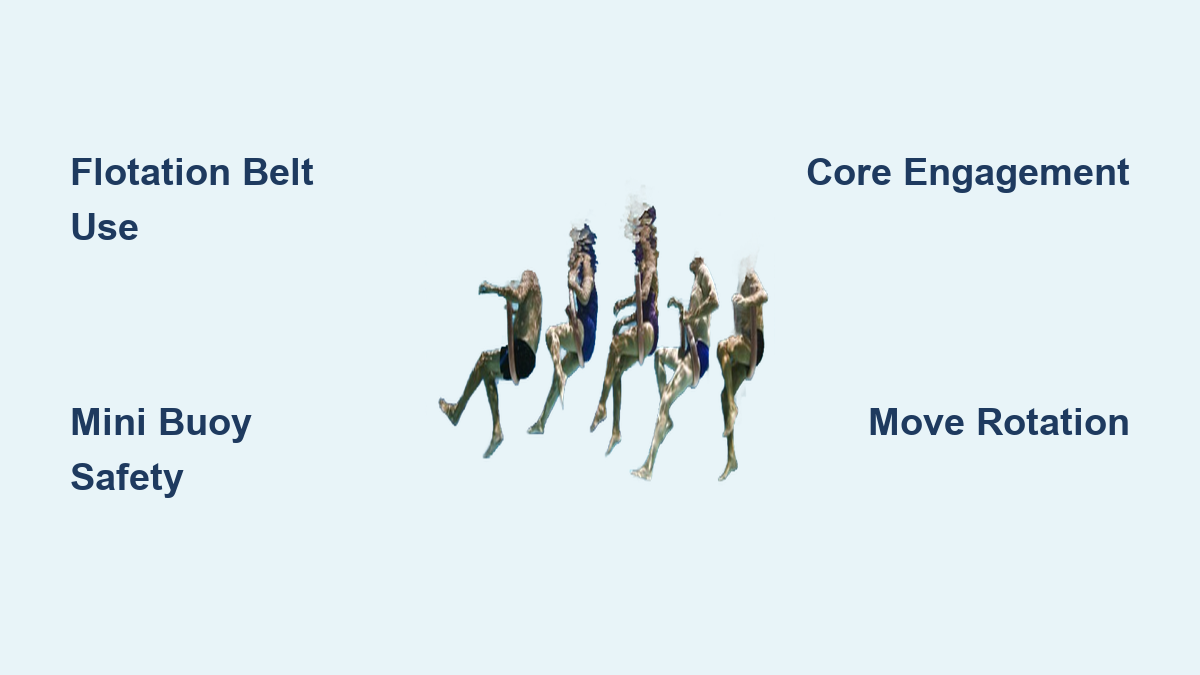
If you want a challenging cardio workout that protects your joints, deep water cardio exercises deliver results without the pounding of land-based training. Suspended in water with a flotation belt, you can perform dynamic movements that elevate your heart rate, build endurance, and strengthen muscles simultaneously. The zero-gravity environment unlocks lateral travel, spins, and suspended forms impossible on solid ground. Whether you’re recovering from injury, managing arthritis, or simply seeking variety, deep water cardio offers intense conditioning in a low-stress setting. This guide breaks down proven program structures, essential equipment, and real-world techniques used in professional aquatic fitness.
You’ll learn four distinct program formats, the equipment required for safety and performance, and how to structure your training for long-term results. From a 100-move continuous flow to modular 5-minute blocks, these methods are adaptable to any fitness level.
Program Types for Maximum Impact
The Seamless 100-Move Flow
This high-volume format keeps your heart rate elevated through constant movement variety. The full sequence features 100 distinct exercises, each performed for 30 seconds (two 32-count music phrases), totaling about 50 minutes of non-stop action. Designed for 60-minute classes, it includes time for warm-up and cool-down. Shorter 45-minute sessions require selective use of movement chunks.
Instead of teaching all 100 moves at once, instructors break them into manageable segments:
– Right/Left Sequence (Moves 6–12, 17–23): Alternating unilateral patterns to improve coordination.
– One-Legged Series (Moves 71–75, 86–90): Balance-focused drills that challenge stability.
– Core Block (Moves 46–61): A 15-minute continuous core segment integrating breath and movement.
Originally visualized during an eye surgery recovery in 2014, the program debuted at the International Aquatic Fitness Conference (IAFC) in 2015. Its strength lies in cognitive engagement. The constant shift in movement prevents mental fatigue and plateaus.
Pro Tip: Use this format weekly to avoid burnout. Rotate different chunks with jogging laps and HIIT bursts for variety.
ABC Segmented Conditioning

The ABC model divides the workout into three focused 15-minute blocks:
– A – Aerobic (15 min): Cardio-focused moves like deep jogging and cross-country skiing.
– B – Body Conditioning (15 min): Strength-endurance drills using water resistance.
– C – Core (15 min): Stabilization exercises in multiple planes of motion.
Each segment uses an add-on teaching method. You learn one move, repeat it, add a second, repeat both, and continue building. With 8 movements per block, participants master form before fatigue sets in, making this ideal for beginners and form refinement.
This structure is highly flexible. You can run a full 45-minute session or pull individual segments for shorter workouts. For example, pair “A” and “C” for a cardio-core combo in 30 minutes.
Why It Works: Repetition builds muscle memory, allowing participants to focus on alignment and breath under increasing load.
Deep Forces Modular Circuit
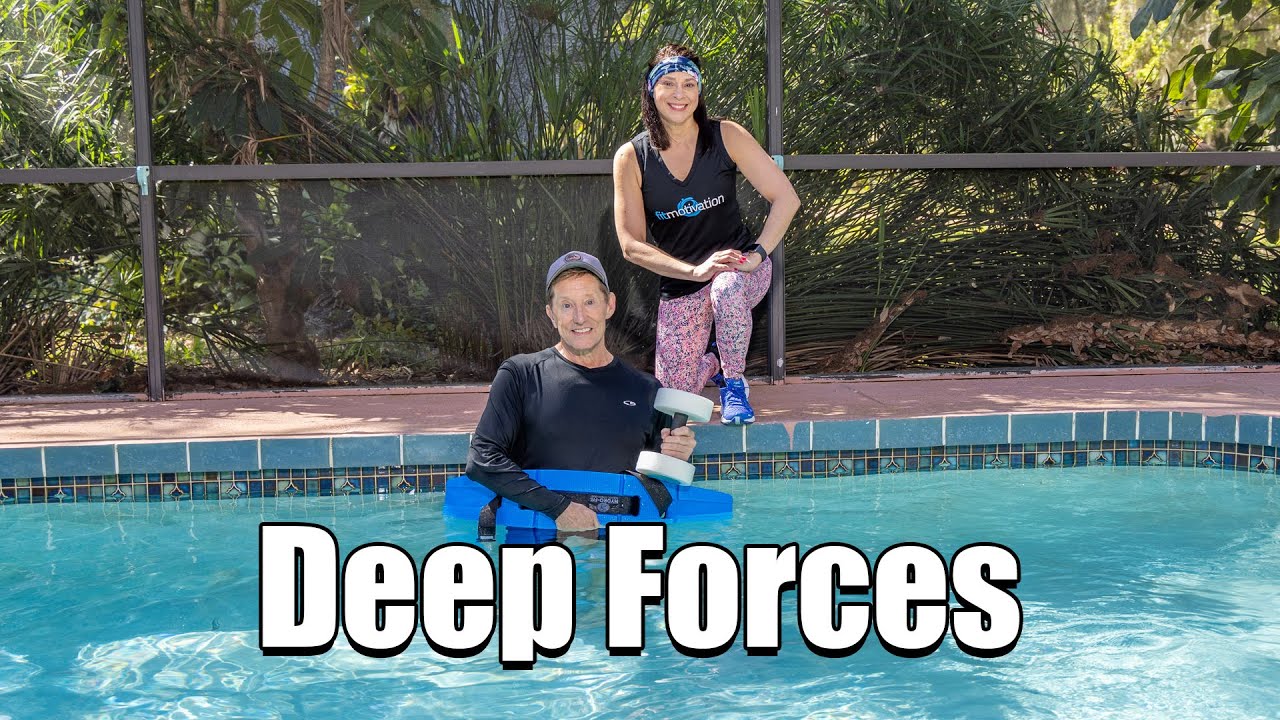
This 30-minute core program (plus warm-up and cool-down) uses six 5-minute blocks to deliver balanced conditioning:
1. Cardio (5 min): 10 high-cadence moves.
2. Core (5 min): Multi-directional stabilization drills.
3. Cardio & Core Challenge (10 min): Alternating intervals, no equipment.
4. Wall Push-Offs (5 min): Resistance-based propulsion using the pool wall.
5. Single-Buoy Cardio (5 min): Coordination challenge with one mini buoy.
6. Single-Buoy Core (5 min): Advanced core work with buoy held between feet.
Designed for intensity, this model combines steady-state cardio with equipment-based resistance, making it ideal for intermediate to advanced participants. The single-buoy segments force greater core engagement to counterbalance the added lift.
Best For: Those seeking progression beyond basic deep water jogging.
Station-Based Circuit Training

Perfect for group classes or self-guided workouts, this model sets up 10 equipment stations around the pool perimeter. Each station features a sign with the exercise and repetition goal.
Participants rotate independently or in small groups, spending 1–3 minutes per station. Total circuit time ranges from 20–40 minutes, depending on fitness level and number of rounds.
Sample Station Breakdown:
– Station 1: Cross Country Ski (10x/side), Jog with Triceps Pushdowns (10x)
– Station 4: Seated Cross-Overs (20x), Seated Bicycles (20x)
– Station 7: Bent Knee Twists (20x), Elbow to Knee Twists (20x)
– Station 10: Supine Jumping Jacks (20x), Vertical Jumping Jacks (20x)
Music at 120–155 BPM drives motivation, but due to poor underwater acoustics, instructors rely on visual cues and hand signals.
Instructor Tip: Use laminated signs with clear illustrations. This supports cognitive recall and reduces cueing errors.
Essential Equipment Guide
Flotation Belts (Non-Negotiable)

A properly fitted flotation belt is mandatory for all deep water cardio. It provides neutral buoyancy, freeing your limbs to move without fighting to stay afloat. Without it, energy is wasted on stabilization, reducing cardio and core effectiveness.
Safety First: Never attempt deep water exercise alone. A second person should always be present. The belt acts as a primary safety device, especially critical for beginners or those with limited swimming ability.
Top Pick: The HYDRO-FIT WAVE Belt offers optimal comfort, adjustability, and durability in chlorinated water. The older “Water Gym” belt is discontinued.
Warning: Improper fit can cause slippage or discomfort. Ensure the belt sits snugly at the waist or hips, depending on body composition.
Webbed Gloves for Resistance
While not required, webbed gloves significantly enhance upper body conditioning. They increase drag, making arm movements more challenging. More importantly, they provide upward propulsion, a game-changer for “sinkers” who naturally descend in water.
Key Benefits:
– Boosts upper body strength
– Assists with buoyancy control
– Enhances hand awareness in water
Recommended: HYDRO-FIT WAVE Mitts are designed for aquatic fitness, with open-finger construction for comfort and control.
Expert Note: Even with a belt, some users struggle to maintain vertical alignment. Gloves help offset natural sinking tendencies.
Mini Buoys Only

Using large or dense buoys in deep water is dangerous. Participants are already buoyant from the flotation belt. Adding a large buoy creates excessive lift, causing uncontrolled floating and poor form.
Use only Mini Hand Buoys (e.g., HYDRO-FIT Mini Hand Buoys). These provide light resistance without compromising safety.
Accessories: Hand Buoy Comfort Grips (Velcro straps) allow quick hand release during long sets. Slide hands in and out without dropping equipment.
Applications:
– Single-Buoy Cardio: One buoy held in hand to challenge coordination.
– Buoy-Between-Feet Core: Advanced drills requiring lower body stabilization.
Common Mistake: Using shallow water buoys in deep water. They’re too buoyant. Always size down.
Movement Mechanics and Exercise Breakdown
Zero-Gravity Motion Principles
Deep water allows for lateral travel, spins, and 360-degree movement, impossible in shallow water or on land. This suspended animation creates unique training effects:
– Reduced joint compression
– Increased range of motion
– Enhanced proprioception
Half Pipe Jog (Move #16):
– Cue: “Run sideways inside a tunnel.”
– Form: Body squared forward, core engaged.
– Motion: Alternate jogging from vertical to horizontal plane.
This move challenges balance and coordination while maintaining cardio intensity.
Core Engagement in All Planes
True core training isn’t just crunches. In deep water, multi-directional core exercises force stabilization under dynamic conditions.
Examples:
– Diagonal Lat Pulls with Knee Tucks: Combine upper pull with contralateral leg drive.
– Bent Knee Twists: Rotate torso while maintaining pelvic control.
– Elbow to Knee Twists: Dynamic contralateral engagement.
When using a buoy between the feet, the challenge intensifies. The buoy’s lift forces the core to work harder to prevent rotation or collapse.
Form Tip: Initiate movement from the core, not the limbs. Think “move from center.”
Wall Push-Off Combinations
The pool wall adds resistance and leverage. Use it for explosive drills:
– Push off with both feet, arms extended.
– Perform scissor kicks or flutter kicks during glide.
– Return with controlled resistance.
These drills build power and leg strength while minimizing joint strain.
Teaching and Safety Best Practices
Deck vs. In-Water Instruction
Deck Teaching:
– Instructor uses a stool or chair to demonstrate from above.
– Requires clear verbal cues and visual hand signals.
– Use a laminated flipbook to track complex sequences (e.g., 100-move list).
In-Water Teaching:
– Instructor performs alongside participants.
– Allows real-time form correction.
– More physically demanding for the instructor.
Best for Beginners: In-water teaching. For high-volume choreography, deck teaching is more practical.
Cueing for Clarity
Use visualization cues for complex moves:
– “Imagine running in a half pipe.”
– “Punch through water like thick syrup.”
Add-on Method: Teach one move, repeat, add a second, repeat both. Builds muscle memory before fatigue.
Chunking: Break 100-move sequences into 5-10 minute blocks. Prevents cognitive overload.
Safety Protocols
- Always wear a flotation belt.
- Never exercise alone in deep water.
- Use visual cues since music (120–155 BPM) may not be audible underwater.
- Start slow if new to deep water. Allow time to adapt to buoyancy.
Critical Reminder: Acoustic challenges in pools mean verbal cues alone aren’t enough. Pair voice with hand signals.
Real-World Application and Longevity
Who Benefits Most?
Deep water cardio is ideal for:
– Injury recovery: Zero impact protects joints.
– Arthritis or joint pain: Buoyancy reduces compression.
– High BMI individuals: Water supports body weight.
– Fitness enthusiasts: Adds variety and prevents overuse injuries.
Even in small home pools, participants adapt. Limited space doesn’t stop dedicated users. They squeeze in for the unique deep water experience.
Seasonal Demand and Engagement
In regions with short pool seasons, deep water classes become highly anticipated events. Attendance spikes in summer, driven by novelty and exclusivity.
Participant Feedback:
– The 100-move model prevents boredom.
– Add-on segments improve form.
– Buoy-between-feet drills are popular for advanced challenge.
Program Longevity
The modular design of these programs ensures long-term use:
– Rotate chunks from the 100-move list.
– Mix ABC segments.
– Reconfigure circuit stations.
This variety prevents plateaus and maintains motivation.
Maintenance Tip: Rinse belts and gloves after use. Store in a dry, shaded area. Hydro-Fit products use non-absorbent materials designed for chlorinated environments.
Frequently Asked Questions About Deep Water Cardio Exercises
What is the best flotation belt for deep water cardio?
The HYDRO-FIT WAVE Belt is recommended for optimal comfort, adjustability, and durability in chlorinated water. The older “Water Gym” belt has been discontinued. A properly fitted belt is mandatory for all deep water workouts.
How long should a deep water cardio workout last?
Workout duration depends on the format. The Seamless 100-Move Flow runs approximately 50 minutes of continuous movement. The ABC model uses three 15-minute segments for a 45-minute session. Circuit training ranges from 20–40 minutes depending on rounds completed.
Can you do deep water cardio without equipment?
Yes. The Seamless and Deep Forces programs can be performed with only a flotation belt. The Circuit model relies on Aqua Bells or mini buoys at each station. For pure cardio without handheld resistance, the belt-only formats work well.
Why are large buoys dangerous in deep water?
Participants already have buoyancy from the flotation belt. Adding a large or dense buoy creates excessive upward force, causing uncontrolled floating and poor form. Always use Mini Hand Buoys designed for deep water applications.
How often should you do deep water cardio exercises?
Weekly sessions using varied formats prevent burnout and plateaus. Rotate the 100-move chunks, ABC segments, and circuit stations to maintain engagement and challenge different energy systems.
Do you need swimming skills for deep water cardio?
Limited swimming ability is acceptable when wearing a properly fitted flotation belt. However, a second person should always be present in the pool area for safety. The belt provides neutral buoyancy, keeping you suspended without treading water.
Key Takeaways for Building Your Deep Water Cardio Practice
Deep water cardio exercises deliver elite-level conditioning with minimal joint stress. The four program formats (Seamless 100-Move Flow, ABC Segments, Deep Forces Modular Circuit, and Station-Based Training) offer flexibility for any fitness level or time constraint. Equipment selection matters: a flotation belt is mandatory, webbed gloves enhance upper body work and assist sinkers, and only mini buoys should be used in deep water.
Start with the ABC Segmented model if you’re new to deep water. The add-on teaching method builds form gradually without overwhelming you with choreography. Once comfortable, progress to the Deep Forces Modular Circuit for balanced intensity, then explore the Seamless 100-Move Flow for maximum variety.
Your next step: Invest in a quality flotation belt and locate a pool with adequate depth. Begin with one 15-minute aerobic segment from the ABC model, wearing your belt and maintaining vertical alignment. Add 5 minutes each session until you reach a full 45-minute workout.