Sprinting Cardio Workout: Quick Steps
You’re short on time but want maximum results, including more fat burned, faster speed, sharper endurance, and a stronger physique. Enter the sprinting cardio workout: a high-impact, high-reward training method that delivers in minutes what most workouts promise in hours. Unlike long jogs or moderate HIIT, sprinting pushes your body to its peak, triggering powerful metabolic, hormonal, and neurological shifts. This isn’t just running fast. It’s structured, explosive effort that transforms your fitness from the ground up.
Sprinting cardio workouts are scientifically proven to torch fat, boost VO2 max, and build lean muscle, all in under 20 minutes, two to three times a week. Whether you’re a runner aiming for a faster 5K or someone chasing fat loss and energy, sprinting offers unmatched efficiency. In this guide, you’ll learn how sprinting works, why it outperforms other cardio forms, and exactly how to implement safe, effective protocols. No track or elite fitness required.
Maximize Results in Minutes

Sprinting delivers elite-level fitness benefits with minimal time investment. The secret is intensity. A true sprinting cardio workout demands 90 to 100% of your max effort, activating fast-twitch muscle fibers and triggering powerful physiological responses that last long after you’ve cooled down.
Why Sprinting Beats Steady-State Cardio
Steady-state cardio, like 30-minute jogs, keeps your heart rate elevated but rarely pushes your limits. Sprinting forces your body into oxygen debt, creating an “afterburn” effect known as Excess Post-Exercise Oxygen Consumption (EPOC). During EPOC, your body burns calories for hours to restore balance, repair tissue, and clear lactic acid.
Studies show sprint interval training (SIT) reduces body fat by 2.31% on average, which is 40% more than HIIT and 92% more than moderate cardio, while requiring 71% less total time over a 10-week period. That’s real fat loss, in less than half the workout time.
The VO2 Max Advantage
VO2 max, the measure of how much oxygen your body can use during intense effort, is a strong predictor of long-term health and athletic performance. Higher VO2 max means you can run faster, recover quicker, and live longer. Research confirms that just three weeks of sprint training can boost VO2 max by 4 to 10%.
This isn’t just for athletes. Every unit increase in VO2 max is linked to a 21% lower risk of death from any cause, independent of cholesterol or blood pressure. Sprinting trains your body to process oxygen more efficiently, making everyday movement easier and more sustainable.
Unlock Fat Loss and Metabolic Power
Sprinting doesn’t just burn calories. It reprograms your metabolism. The intense effort forces your body to tap into stored fat for fuel, especially during recovery. This dual-phase fat burn during and after exercise makes sprinting one of the most effective tools for fat loss.
How EPOC Fuels the Afterburn
After a sprint session, your body works overtime to:
- Replenish ATP and creatine phosphate stores
- Restore oxygen levels in blood and muscles
- Lower elevated heart rate and body temperature
- Repair micro-tears in fast-twitch muscle fibers
This recovery process can elevate calorie burn for up to 48 hours, with some studies showing up to 200 extra calories burned post-workout, without lifting a finger.
Hormones That Transform Your Body
Sprinting spikes key hormones that regulate fat, muscle, and energy:
- Human Growth Hormone (HGH): Increases up to 5x baseline, promoting fat metabolism and tissue repair.
- Testosterone: Rises naturally, supporting muscle growth and metabolic rate.
- Insulin Sensitivity: Improves by up to 53%, helping shuttle glucose into muscles instead of storing it as fat.
Unlike chronic cardio, which can suppress hormones over time, sprinting creates a short, powerful stimulus that enhances hormonal balance and resilience.
Build Speed, Power, and Muscle
Sprinting is strength training in motion. It targets fast-twitch muscle fibers, the ones responsible for explosive movement, more effectively than lifting weights alone. When you sprint, you’re not just burning fat. You’re building a stronger, more powerful body.
Fast-Twitch Fiber Activation
:watermark(/images/watermark_5000_10percent.png,0,0,0):watermark(/images/logo_url.png,-10,-10,0):format(jpeg)/images/overview_image/4365/XWiIjA3PXDUG3dsFf34BA_P1_Skeletal_muscle_fiber_types_infographic_left_TZB.png)
Type II muscle fibers contract 10x faster than slow-twitch fibers but remain dormant during jogging or cycling. Sprinting recruits these fibers fully, creating micro-damage that leads to hypertrophy (muscle growth) during recovery.
Elite sprinters have massive glutes, quads, and hamstrings, not from bodybuilding, but from repeated high-intensity effort. You don’t need to be an Olympian to benefit. Just six sprint sessions can increase peak power by 2.4% and mean power by 2.8%, making you faster and stronger.
Neuromuscular Coordination
Sprinting improves your brain’s ability to fire muscles quickly and efficiently. This neuromuscular coordination leads to:
- Sharper reaction times (3.3% improvement)
- Better running form under fatigue
- Reduced risk of injury due to improved control
The result is a body that moves with precision, power, and grace, even outside the gym.
Prevent Injury with Proper Form
Sprinting at full speed without technique is a recipe for strain or injury. Proper form ensures you maximize power while protecting joints and tendons. Think of sprinting as a skill, not just an effort.
Key Sprinting Cues
- Upright Posture: Keep your chest up and spine neutral. Avoid leaning forward from the waist.
- High Knee Drive: Lift knees toward the chest to generate forward propulsion.
- Heel Under Glute: As your foot cycles back, bring your heel close to your butt for optimal stride recovery.
- Arm Action: Bend arms at 90 degrees and drive them powerfully. Elbows back, hands forward.
- Foot Strike: Land on the ball of your foot, directly under your center of mass. Avoid overstriding, which acts as a brake.
Avoid Common Mistakes
- Slouching: Reduces lung capacity and power output.
- Overstriding: Increases braking force and stress on knees.
- Heavy Footfalls: Loud slapping sounds mean poor form. Focus on quick, light steps.
- Looking Down: Breaks neck alignment and disrupts balance.
Practice form drills like high knees, butt kicks, and A-skips before every sprint session to groove proper movement patterns.
Warm Up to Perform and Protect
A proper warm-up is non-negotiable for sprinting. Cold muscles and an unprepared nervous system increase injury risk and limit performance. Spend 5 to 10 minutes priming your body before the first sprint.
Dynamic Warm-Up Routine
- Light Jog or Skip (3 min): Increase blood flow and muscle temperature.
- Bodyweight Squats (15 reps): Activate quads, glutes, and core.
- High Knees (20 sec per leg): Engage hip flexors and improve coordination.
- Walking Lunges (10 per leg): Mobilize hips and stretch hip flexors.
- Leg Swings (10 forward/back, 10 side/side per leg): Loosen hamstrings and adductors.
- Hamstring Scoops (10 per leg): Activate posterior chain with controlled movement.
This sequence prepares your joints, fires up fast-twitch fibers, and reduces the risk of hamstring strains, the most common sprint-related injury.
Choose the Right Sprint Protocol
Not all sprint workouts are the same. Your goals, whether fat loss, speed, endurance, or power, determine the best structure. Below are proven sprinting cardio workout templates, scalable from beginner to advanced.
Fat Burn: 20/40 Sprint Protocol
- Sprint: 20 seconds at 100% effort
- Recovery: 40 seconds of walking or slow jogging
- Rounds: 10 total (10-minute core session)
- Best for: Busy schedules, maximum calorie burn
This protocol maximizes EPOC in minimal time. After warming up, go all-out for 20 seconds. Form matters, but effort is everything. Walk or jog to recover, then repeat. Add 2 to 3 rounds every 2 weeks as fitness improves.
Speed and Endurance: 30/90 Beginner Sprint
- Sprint: 30 seconds at 90% effort
- Recovery: 90 seconds of walking
- Rounds: 6 to 10 (start low, build up)
- Best for: New sprinters, general fitness
This classic format builds speed and work capacity. Focus on maintaining form throughout. If your last sprint looks sloppy, extend recovery or reduce rounds next time.
Power and Strength: Hill Sprint Protocol
- Incline: 5 to 15% (grass or treadmill)
- Sprint: 15 to 30 seconds uphill at 90 to 95% effort
- Recovery: 2 to 3 minutes walking down
- Rounds: 8 to 10
- Best for: Leg strength, joint safety, power
Hill sprints reduce impact while increasing resistance. The incline forces greater glute and quad activation, building raw power. On a treadmill, use side rails to hop on and off safely.
Advanced: The 10-1-9 Plan
- Sprint: 1 minute at 9/10 effort
- Recovery: 1 minute of walking
- Rounds: 10
- Best for: Lactate threshold training
This endurance-focused session teaches your body to clear lactic acid and sustain speed. It’s mentally tough. Each sprint should feel challenging but controlled.
For Distance Runners: 60-Meter Power Burst
- Sprint: 60 meters at max effort
- Recovery: 2 to 3 minutes of walking
- Rounds: 6 to 8
- Best for: Marathoners, 5K/10K racers
This short, explosive burst improves anaerobic capacity and late-race kick. Perform on a track or flat surface. Focus on acceleration and turnover.
Optimize Recovery and Frequency

Sprinting is demanding, on muscles, joints, and the central nervous system (CNS). Overtraining leads to injury, fatigue, and stalled progress. Smart scheduling is key.
How Often to Sprint
- Beginners: 2 times per week
- Advanced: 3 times per week (only with proper recovery)
- Rest Between Sessions: At least 48 hours
Never sprint the day before heavy leg workouts or long runs. Your CNS needs time to reset. If you’re sore or can’t hit max speed, take an extra rest day.
Post-Sprint Recovery Steps
- Cool Down: Walk for 3 to 5 minutes to lower heart rate.
- Stretch: Hold static stretches for 30 seconds each:
– Hamstrings
– Quads
– Calves
– Glutes - Hydrate: Drink water immediately and continue sipping.
- Refuel: Eat protein and carbs within 60 minutes (e.g., Greek yogurt + banana).
Monitor for signs of overtraining: persistent soreness, irritability, poor sleep, or declining performance. Use a simple 10-second tap test (how many times can you tap your foot?) to check CNS readiness. Fewer taps than usual? Take a day off.
Progress Safely Over Time
Progressive overload ensures continuous gains without injury. Gradually increase demand on your body, but never all at once.
3-Phase Progression Plan
Phase 1: Build Foundation (Weeks 1 to 4)
– Intensity: 80 to 90%
– Rounds: 6 to 8
– Rest: Full recovery (90 to 120 sec)
– Focus: Technique and consistency
Phase 2: Increase Volume (Weeks 5 to 8)
– Add 1 to 2 rounds per session
– Or increase sprint duration by 5 to 10 seconds
– Maintain full recovery
Phase 3: Boost Intensity (Weeks 9+)
– Push to 100% effort
– Reduce rest intervals (e.g., 30s sprint, 30s rest)
– Add hill sprints or ladder drills
Adjust every 2 to 3 weeks. If performance drops, reduce volume or add rest. Don’t push through fatigue.
Choose the Best Surface and Gear
Your environment impacts safety and performance. Sprinting on concrete increases joint stress, while proper footwear enhances grip and comfort.
Ideal Surfaces
- Grass: Low impact, forgiving on joints
- Tartan Track: Excellent traction, consistent surface
- Treadmill: Controlled environment; use safety clip
- Avoid: Wet pavement, gravel, or cracked concrete
Footwear Tips
- Outdoor: Cushioned running shoes with good forefoot support
- Track: Sprint spikes for competition (not needed for training)
- Treadmill: Secure, grippy shoes with flexible sole
For indoor shuttle sprints, mark 10 to 15 meters with cones or tape. Turn sharply but controlled. Plant the outside foot and pivot.
Who Should Avoid Sprinting?
Sprinting is powerful but not for everyone. Certain conditions require caution or medical clearance.
When to Consult a Doctor
- Recent joint or muscle injuries
- History of heart disease or hypertension
- Chronic pain in knees, hips, or lower back
- Uncontrolled diabetes or metabolic disorders
Start with low-intensity intervals or strides if you’re new to high-impact exercise. Build strength and mobility first.
CNS Fatigue Warning Signs
- Can’t reach max speed despite effort
- Persistent muscle soreness
- Mood swings, insomnia, or low motivation
- Declining coordination or balance
If you notice these, take 3 to 5 days off. Sprinting should leave you energized, not drained.
Frequently Asked Questions About Sprinting Cardio Workouts
How long should a sprinting cardio workout last?
Most effective sprinting cardio workouts last between 10 and 20 minutes, excluding warm-up and cool-down. The actual sprint time is often under 5 minutes total, broken into short bursts with recovery. This makes sprinting one of the most time-efficient training methods available.
Can beginners do sprinting cardio workouts safely?
Yes, beginners can safely start sprinting by using lower intensity (80 to 90% effort), shorter sprints (10 to 20 seconds), and longer recovery periods. Protocols like the 30/90 split are ideal for newcomers. Always focus on proper form and build volume gradually over several weeks.
How often should I do sprinting cardio workouts per week?
Most people should sprint 2 times per week to allow adequate CNS recovery. Advanced athletes with strong recovery habits may handle 3 sessions weekly. Always allow at least 48 hours between sprint workouts, and never sprint the day before heavy leg training or long runs.
What is the difference between sprinting and HIIT?
Sprinting (SIT) involves maximum 10/10 effort with very short work intervals (around 27 seconds) and longer recovery. HIIT operates at 6 to 8/10 intensity with longer work intervals (2 to 4 minutes) and shorter rest. Sprinting produces stronger physiological responses per second of effort, making it more time-efficient for fat loss and VO2 max gains.
Do sprinting cardio workouts build muscle?
Yes, sprinting builds lean muscle, especially in the glutes, quads, and hamstrings. It activates Type II fast-twitch fibers that remain dormant during jogging. Studies show peak power increases by 2.4% and mean power by 2.8% after just six sprint sessions, contributing to a stronger, more athletic physique.
What should I eat before a sprinting cardio workout?
Eat a light meal with carbs and moderate protein 60 to 90 minutes before sprinting. Good options include a banana with peanut butter, Greek yogurt with berries, or toast with eggs. Avoid heavy, fatty foods that sit in your stomach. Hydrate well in the hours leading up to your session.
Key Takeaways for Your Sprinting Cardio Workout Journey
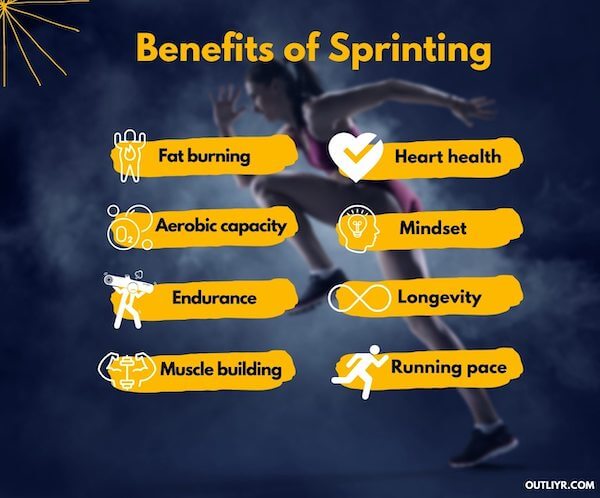
Sprinting cardio workouts deliver elite fitness results in minimal time, burning 40% more fat than HIIT and 92% more than steady-state cardio while requiring 71% less total exercise time. The secret lies in maximum effort, short bursts, and strategic recovery that triggers EPOC, hormonal spikes, and fast-twitch fiber activation.
Start with the 20/40 or 30/90 protocol, master your form, and progress gradually over 8 to 12 weeks. Always warm up for 5 to 10 minutes, cool down properly, and allow 48 hours between sessions for full CNS recovery. Choose safe surfaces like grass or tracks, and wear appropriate footwear.
Your next step is simple: pick one protocol from this guide, schedule two sessions this week, and commit to four weeks of consistent effort. Track your progress, listen to your body, and watch as your speed, strength, and body composition transform in ways steady-state cardio never could.