Best Cardio Combination Exercises (2026 Guide)
You’re short on time, but you want real results: more stamina, stronger muscles, and a healthier heart. You’ve tried long runs and heavy lifting, but progress stalls and motivation fades. What if you could get the benefits of both cardio and strength training in one efficient workout? Enter cardio combination exercises, a science-backed strategy that merges aerobic and resistance training to boost fitness, burn fat, and build strength in less time.
Research shows this approach isn’t just convenient. It’s more effective for overall health than doing either type of exercise alone. A landmark 2024 study in the European Heart Journal found that people who split their workouts between 30 minutes of cardio and 30 minutes of strength training lowered LDL cholesterol, shrank waistlines, and improved both endurance and muscle strength. No single-modality group achieved all of these results, and participants stuck with combined routines longer.
In this guide, you’ll learn how to structure powerful combined workouts, choose the best exercises, and avoid common mistakes, all while saving time and maximizing results. Whether you’re at home, in the gym, or outdoors, you’ll discover practical protocols that fit your schedule and fitness level.
Understand the Science Behind Dual Training
Cardio combination exercises work because they tap into two different energy systems: aerobic (with oxygen) and anaerobic (without oxygen). Cardio boosts heart and lung function, while strength training builds muscle and increases resting metabolism. When combined, they create a synergy that enhances fat loss, improves heart health, and prevents plateaus.
The key lies in how each system responds:
– Aerobic exercise improves circulation, lowers blood pressure, and increases mitochondrial efficiency, the energy factories in your cells.
– Anaerobic strength training triggers muscle growth through micro-tears, which repair and strengthen over time.
By alternating or blending these activities, you challenge your body in new ways, keeping adaptations ongoing and engagement high.
Boost Metabolism and Burn More Calories

One of the biggest advantages of combining cardio and strength is the metabolic boost. Muscle burns more calories at rest than fat does. So, when you build muscle through resistance training, your resting metabolic rate (RMR) increases, meaning you burn more calories even when sitting.
Studies confirm this dual effect:
– Strength training elevates RMR for up to 72 hours post-workout (known as excess post-exercise oxygen consumption, or EPOC).
– Adding cardio amplifies calorie burn during the session.
This makes combined workouts ideal for fat loss and long-term weight management.
Combine Cardio and Strength Efficiently
Alternate Days for Full Recovery
This model separates cardio and strength workouts onto different days. It’s ideal if you want to go all-out in each session without fatigue compromising performance.
Example Weekly Schedule:
– Monday: Strength (Lower Body)
– Tuesday: Cardio (30-min run)
– Wednesday: Strength (Upper Body)
– Thursday: Cardio (Cycling)
– Friday: Full-Body Strength
– Saturday: Active recovery (walking or yoga)
– Sunday: Rest
Best for: Beginners, those recovering from injury, or anyone prioritizing form and intensity.
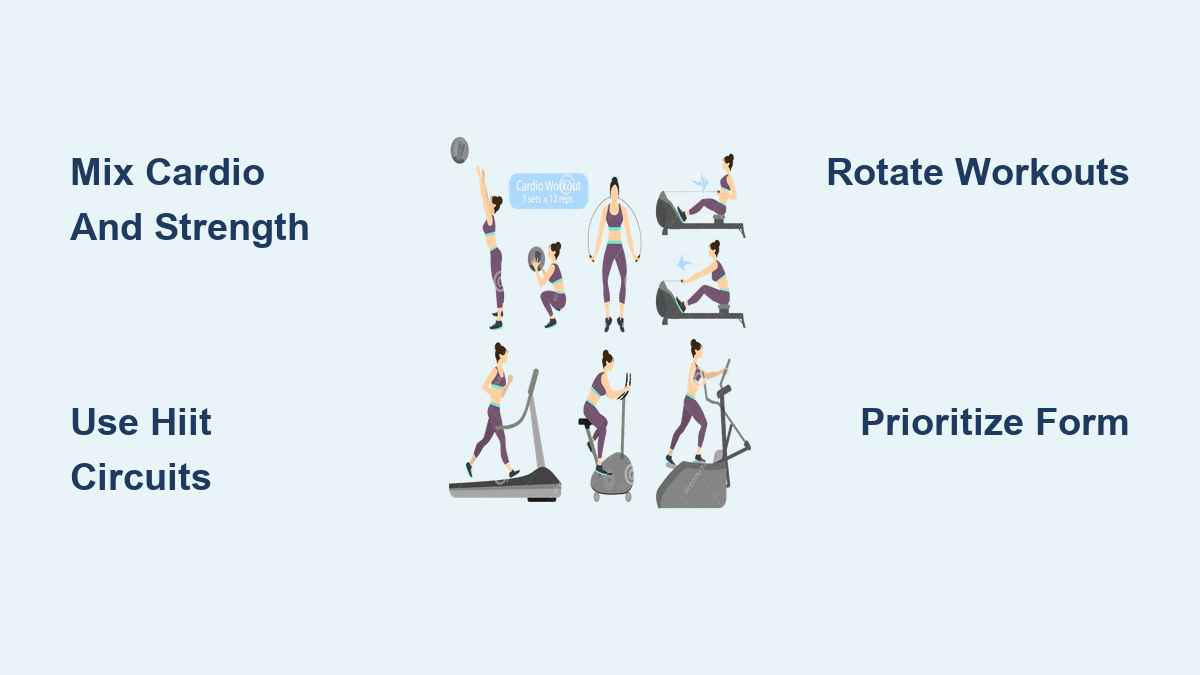
Mix Cardio and Strength in One Session
Also known as concurrent training, this method combines both types in a single workout. You might do 15 minutes of cardio, followed by strength sets, then finish with another cardio burst.
Sample Routine:
1. 10-min warm-up jog
2. Dumbbell squats (3 sets of 12)
3. 3-min rowing sprint
4. Push-ups (3 sets of 10–15)
5. 3-min jump rope
6. Plank (3 sets of 45 sec)
7. 5-min cooldown walk
Best for: Intermediate exercisers looking to save time and increase workout density.
Try HIIT Circuits for Maximum Efficiency
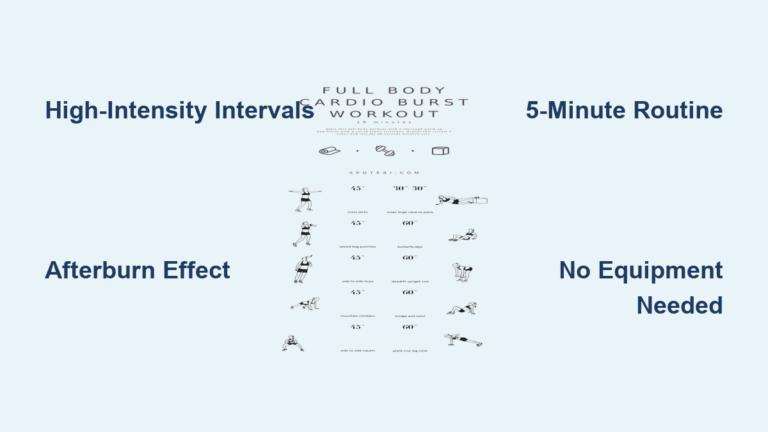
High-Intensity Interval Training (HIIT) circuits are the ultimate time-saver. These workouts alternate short bursts of intense effort with brief recovery periods, blending strength and cardio into one dynamic flow.
Why it works:
– Keeps heart rate elevated
– Builds endurance and strength simultaneously
– Triggers EPOC for continued calorie burn
Sample HIIT Circuit (3 rounds):
– Burpees – 30 sec
– Rest – 30 sec
– Kettlebell swings – 30 sec
– High knees – 30 sec
– Rest – 30 sec
Best for: Advanced exercisers or anyone with 20–30 minutes to spare.
Rotate Cardio Machines to Avoid Burnout
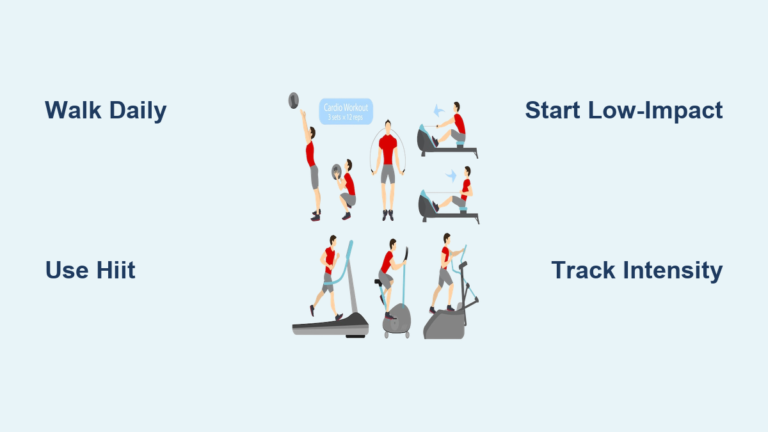
If you’re focusing on cardio but want variety, rotate between machines like the treadmill, elliptical, and stationary bike. This keeps workouts fresh and works different muscle groups.
Example 30-Minute Rotation:
– 10 min treadmill (incline walk)
– 10 min elliptical (resistance level 6)
– 10 min stationary bike (moderate pace)
Add bodyweight squats or push-ups between segments to introduce strength elements.
Best for: Gym users who dislike monotony or are rehabbing from injury.
Build Effective Combined Workouts

Follow the 30-Minute Express Protocol
Perfect for busy schedules, this fast-paced circuit delivers full-body results in half an hour.
Structure:
– Warm-up: 5 min light jogging or jumping jacks
– Main Circuit (3 rounds):
– Bodyweight squats – 45–60 sec
– Jumping jacks – 30 sec
– Push-ups – 45–60 sec
– High knees – 30 sec
– Plank – 45–60 sec
– Mountain climbers – 30 sec
– Cooldown: 5 min stretching
Pro Tip: Focus on form over speed. As you get fitter, shorten rest or increase reps.
Use the 40-Minute Strength-First Plan
This protocol prioritizes muscle building, then finishes with a cardio blast to torch calories.
Structure:
– Warm-up: 5 min dynamic stretches (arm circles, leg swings)
– Strength Block (20 min):
– Goblet squats – 3×10–12 (60 sec rest)
– Dumbbell rows – 3×10–12
– Push presses – 3×10–12
– Romanian deadlifts – 3×10–12
– Cardio Block (10 min HIIT):
– 30 sec sprint (in place or jump rope)
– 30 sec rest
– Repeat 10 times
– Cooldown: 5 min static stretching
Why it works: Lifting first ensures maximum strength output before fatigue sets in.
Try the 60-Minute Full-Body Burn
For a comprehensive session, this plan balances strength, cardio, and recovery.
Structure:
– Warm-up: 10 min light cardio + dynamic stretches
– Strength Block (30 min):
– Upper Body: Bench press, pull-ups, shoulder press, bent-over rows (3×10–12)
– Lower Body: Barbell squats, lunges, deadlifts, calf raises (3×10–12)
– Rest 60 sec between sets
– Cardio Block (20 min):
– Moderate-intensity steady state (MISS): jogging, cycling, or elliptical
– Maintain target heart rate (64–76% max)
– Cooldown: 10 min deep stretching
Best for: Weekend warriors or those preparing for endurance events.
Optimize Progress and Avoid Plateaus
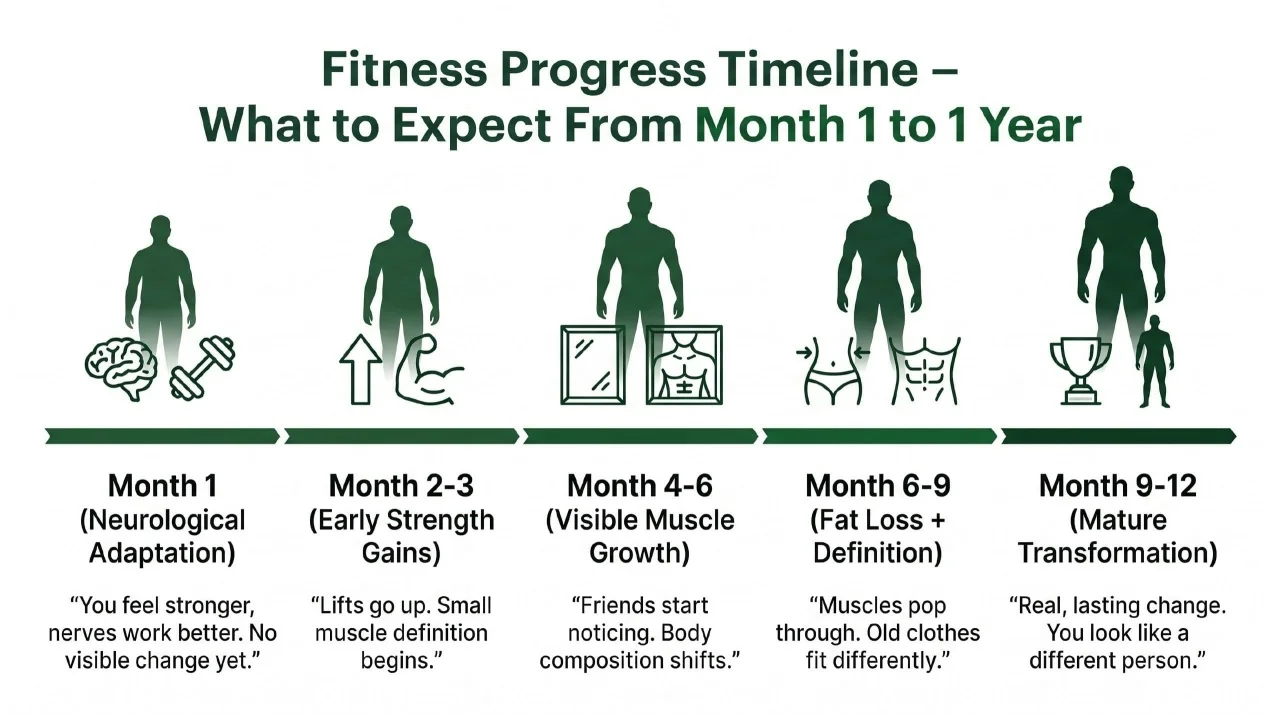
Progress Cardio Gradually
To keep improving, you must challenge your cardiovascular system. Use these progression tactics:
– Increase duration: Add 5 minutes weekly until you reach 45–60 minutes.
– Boost intensity: Run faster, increase incline, or raise resistance.
– Add intervals: Turn steady-state cardio into HIIT by inserting 1–2 minute sprints.
Visual Cue: If you can talk easily during cardio, it’s time to push harder.
Progress Strength Safely
Muscle growth requires progressive overload, which means gradually increasing demand on your muscles.
How to apply:
– Increase weight: Add 5–10% once you can do all reps with good form.
– Add reps or sets: Go from 3×10 to 3×12, then increase weight.
– Reduce rest time: Shorten rest from 90 sec to 60 sec between sets.
Warning: Never sacrifice form for heavier weights. This increases injury risk.
Break Through Fitness Plateaus
Plateaus happen when your body adapts. The best way to overcome them is to change your routine every 4–6 weeks.
Strategies:
– Switch from alternating days to mixed sessions
– Replace squats with lunges or leg press
– Swap running for cycling or swimming
– Try a new HIIT format (e.g., EMOM—every minute on the minute)
Pro Tip: Track your workouts. When you stop seeing progress in reps, weight, or endurance, it’s time to switch things up.
Prevent Injury and Stay Consistent
Warm Up and Cool Down Properly
Skipping warm-ups increases injury risk and reduces performance. Always include:
– Warm-up (5–10 min): Light cardio + dynamic stretches (leg swings, arm circles)
– Cooldown (5–10 min): Static stretching (hold each stretch 20–30 sec)
What to look for: Warm muscles feel looser and more responsive. Cool-downs should lower your heart rate gradually.
Schedule Smart Recovery
Rest is when your body repairs and grows. Overtraining leads to fatigue, injury, and burnout.
Follow these recovery rules:
– Allow 48–72 hours before working the same muscle group again
– Take 1–2 full rest days per week
– Use active recovery (walking, yoga) on off days
Example: Don’t do heavy squats on Monday and again on Wednesday. Your legs need time to heal.
Master Form Before Increasing Intensity
Poor technique is the number one cause of exercise-related injuries. If you’re unsure how to perform an exercise, get help.
Common mistakes to avoid:
– Arching your back during push-ups
– Letting knees cave in during squats
– Rounding the spine during deadlifts
Solution: Record yourself or work with a certified trainer for a form check.
Adapt Workouts for Any Environment
You don’t need a gym to do cardio combination exercises.
Outdoor Option:
– Run 1 mile
– Stop and do 20 push-ups, 30 squats, 10 burpees
– Repeat 2–3 times
Home Option:
– Use water bottles as weights
– Do step-ups on stairs
– Jump rope or do jumping jacks
Pro Tip: Use park benches for step-ups, tricep dips, or incline push-ups.
Meet Official Exercise Guidelines

Hit Weekly Cardio Targets
The CDC and ACSM recommend:
– 150 minutes of moderate cardio per week (e.g., brisk walking)
– Or 75 minutes of vigorous cardio (e.g., running)
You can split this:
– 30 min, 5 days/week (moderate)
– 25 min, 3 days/week (vigorous)
Heart rate zones:
– Moderate: 64–76% of max heart rate
– Vigorous: Above 76%
Complete Required Strength Sessions
Strength train at least 2 days per week, hitting all major muscle groups:
– Upper: Chest, back, shoulders, arms, core
– Lower: Quads, hamstrings, glutes, calves
Standard volume: 3 sets of 10–15 reps per exercise
Key: Choose weights that cause muscle fatigue by the last few reps.
Combine to Exceed Guidelines
When you merge cardio and strength, you often exceed minimums without extra time.
Example:
– 30 min cardio + 30 min strength = 60 min of exercise
– Meets both weekly cardio and strength goals in one session
This is especially effective for people with overweight or obesity, who showed higher adherence in the 2024 study.
Sustain Long-Term Success
Fight Workout Boredom
Monotony kills motivation. The variety in cardio combination exercises keeps workouts fun, challenging, and mentally engaging.
Ways to stay engaged:
– Change your circuit every 3 weeks
– Try new exercises (e.g., battle ropes, sled pushes)
– Use music or podcasts to power through tough sets
Build a Sustainable Routine
The 2024 study found that people who combined weights with cardio stuck with it longer than those doing cardio alone, especially those with overweight or obesity.
Why? Strength training adds variety, builds confidence, and creates visible changes in body composition.
To build habit:
– Start with 2–3 sessions per week
– Schedule workouts like appointments
– Track progress with photos or measurements
Listen to Your Body
Pushing too hard leads to burnout. Pay attention to warning signs:
– Persistent soreness
– Trouble sleeping
– Loss of motivation
– Elevated resting heart rate
When in doubt: Take an extra rest day or switch to active recovery.
Frequently Asked Questions About Cardio Combination Exercises
What are cardio combination exercises?
Cardio combination exercises merge aerobic activity (like running or cycling) with strength training (like squats or push-ups) in one routine. This approach improves heart health, builds muscle, and burns more calories in less time than either method alone.
How often should I do combined cardio and strength workouts?
The CDC and ACSM recommend at least 150 minutes of moderate cardio and 2 strength sessions per week. Most people benefit from 3–5 combined workouts weekly, with 48–72 hours of rest between sessions targeting the same muscle group.
Can I do cardio and strength on the same day?
Yes. This is called concurrent training. You can alternate between cardio and strength blocks within a single session. Many people prefer this method because it saves time and keeps workouts engaging.
What is the best exercise to combine with cardio?
Compound movements like burpees, kettlebell swings, and squat presses work well because they engage multiple muscle groups while elevating heart rate. These hybrid exercises deliver both strength and cardiovascular benefits simultaneously.
Will combining cardio and strength help me lose belly fat?
Combined training reduces waist circumference and body fat more effectively than cardio alone. The 2024 European Heart Journal study found a 1-inch reduction in waist circumference for participants who combined both modalities.
Do I need a gym to do cardio combination exercises?
No. You can perform effective combined workouts at home or outdoors using bodyweight exercises like push-ups, squats, and jumping jacks. Park benches can substitute for benches, and stairs can replace step-up platforms.
Key Takeaways for Building Your Cardio Combination Routine
Cardio combination exercises offer a superior path to total-body fitness by merging aerobic and resistance training into efficient, engaging workouts. The 2024 European Heart Journal study confirms that this approach uniquely improves both cardiovascular fitness and muscular strength while lowering LDL cholesterol and shrinking waistlines.
Start by choosing a model that fits your schedule: alternating days for focused intensity, mixed sessions for time efficiency, or HIIT circuits for maximum calorie burn. Follow the 30-, 40-, or 60-minute protocols, warm up properly, and prioritize form before adding weight or speed.
Your next step: Pick one protocol from this guide and commit to three sessions this week. Track your reps, weight, or endurance, then reassess after four weeks. Consistency and gradual progression will deliver results that neither cardio nor strength training can achieve alone.