30-Minute Cardio Workout: Quick Guide
You don’t need hours at the gym to get results. A 30-minute cardio exercise session, when structured correctly, can boost heart health, burn fat, sharpen focus, and elevate mood, all without a massive time commitment. With rising rates of sedentary lifestyles and chronic disease, finding efficient ways to stay active is more important than ever. The good news is that just half an hour a day can make a measurable difference in your overall well-being.
Backed by research, 30-minute cardio workouts deliver real benefits, including improved cardiovascular function, enhanced metabolic efficiency, and better mental clarity. Whether you’re squeezing in a morning blast before work or unwinding with an evening routine, these sessions are proven to help manage weight, regulate blood sugar, and reduce stress. Thanks to flexible formats like HIIT and steady-state training, you can tailor your workout to your fitness level and goals, with no equipment required.
In this guide, you’ll learn how to structure your 30-minute cardio exercise for maximum impact, explore science-backed protocols, and discover how to avoid common pitfalls. From calorie burn estimates to recovery strategies, we’ll show you how to turn limited time into powerful results.
Choose Your Cardio Style
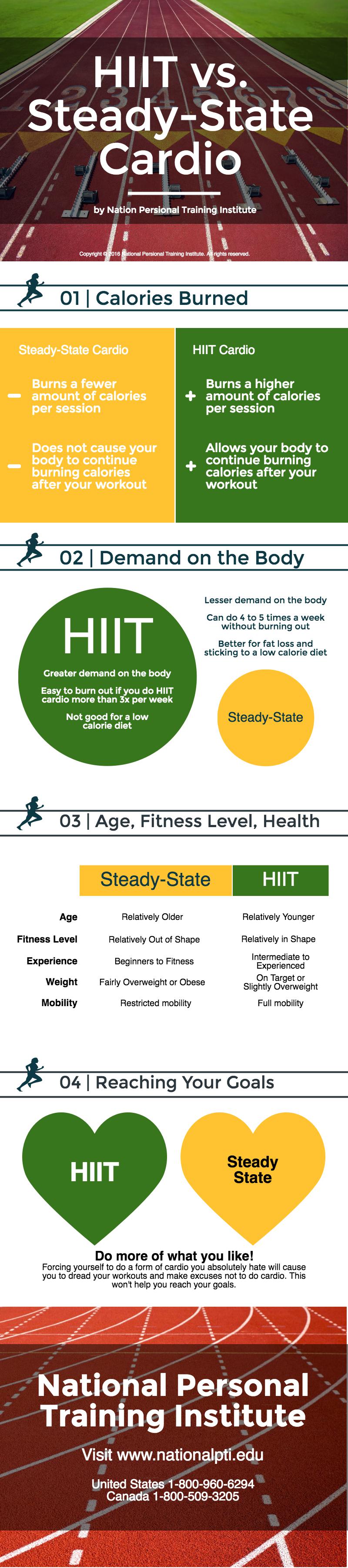
Not all 30-minute cardio sessions are created equal. The key to effectiveness lies in selecting the right format for your goals, fitness level, and schedule.
HIIT: Burn More in Less Time
High-Intensity Interval Training (HIIT) alternates short bursts of maximum effort with brief recovery periods. This method is ideal if you want to burn 200 to 500 calories in 30 minutes while boosting metabolism long after your workout ends.
- Best for: Fat loss, time efficiency, improving cardio fitness
- Effort level: 8 to 9 out of 10 intensity during work intervals
- Example: 45 seconds sprinting, 15 seconds walking, repeated for 20 minutes
HIIT triggers excess post-exercise oxygen consumption (EPOC), meaning your body continues burning calories at an elevated rate for up to 24 hours post-workout. Studies show it delivers comparable or superior cardiovascular and metabolic benefits to longer, moderate sessions.
Pro Tip: Limit HIIT to 2 to 3 times per week. Its high physical demand requires adequate recovery to prevent overtraining and joint stress.
Steady-State Cardio: Build Endurance Safely
Steady-state cardio involves maintaining a consistent pace, like jogging, cycling, or swimming, at a moderate intensity (6 to 7 out of 10 effort) for the full 30 minutes.
- Best for: Aerobic base building, heart health, beginners
- Calorie burn: Roughly 200 to 300 calories (varies by weight and pace)
- Weekly target: Pair with HIIT or strength training to meet 150 minutes of moderate activity
This format is joint-friendly and sustainable, making it excellent for long-term adherence. It also supports mental well-being through rhythmic movement and steady endorphin release.
Expert Note: Ideal for recovery days or as a warm-up before HIIT. Perfect for those new to exercise or managing fatigue.
Hybrid Workouts: Best of Both Worlds
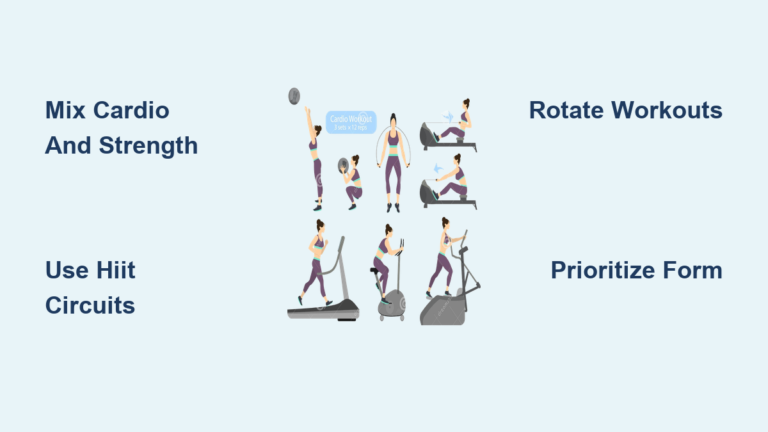
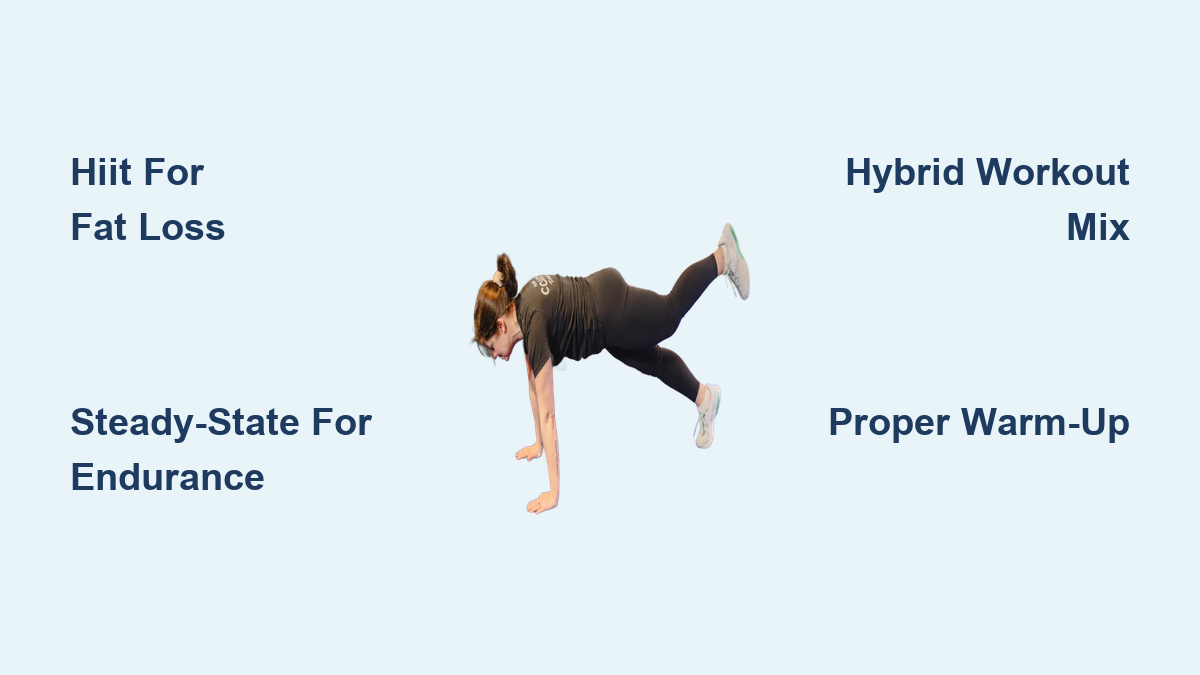
Combine steady-state with interval bursts for a balanced 30-minute cardio exercise that builds endurance and torches calories.
Sample Structure:
– 10 min light jog (warm-up + aerobic base)
– 15 min HIIT intervals (e.g., 30s sprint / 30s walk)
– 5 min cooldown walk + stretch
This approach prevents monotony, challenges multiple energy systems, and keeps motivation high, especially for those who dislike running.
Time-Saving Hack: Use gym machines like treadmills, ellipticals, or Stairmasters to seamlessly transition between intensities.
Unlock Health Benefits Fast
A daily 30-minute cardio session is not just about weight loss. It reshapes your body and mind from the inside out.
Strengthen Heart and Vessels
Cardiovascular exercise strengthens the heart muscle, enabling it to pump blood more efficiently. Over time, this leads to:
- Lower resting heart rate
- Reduced systolic and diastolic blood pressure
- Improved circulation and oxygen delivery
Regular participation decreases the risk of heart disease and stroke, the leading causes of death worldwide. Even moderate efforts like brisk walking contribute significantly when done consistently.
Fact: Just 30 minutes of daily walking reduces heart disease risk by up to 30%.
Regulate Blood Sugar and Metabolism
Cardio enhances insulin sensitivity, helping your body manage glucose more effectively. This is crucial for preventing or managing type 2 diabetes.
- Muscles absorb more glucose during and after exercise
- Liver glycogen stores are replenished post-workout
- Triglyceride levels decrease with consistent training
You don’t need to run marathons. Just moving consistently improves metabolic markers. Combine this with nutrition for amplified results.
Boost Mood and Mental Clarity
Exercise is one of the most effective natural antidepressants. A single 30-minute cardio session can:
- Trigger endorphin and serotonin release
- Reduce cortisol (stress hormone) levels
- Improve sleep quality and duration
Research shows that 15 minutes of running or 1 hour of walking daily lowers depression risk by 26%. The mental reset from cardio helps combat brain fog, anxiety, and emotional fatigue.
Quick Win: Schedule cardio in the morning to set a positive tone for the day.
Design Your Ideal 30-Minute Routine
Follow these structured protocols to turn 30 minutes into peak performance, with no guesswork needed.
Goal-Based Bodyweight Circuit
This customizable plan uses six dynamic movements. Pick your goal to determine timing and structure.
Exercises:
1. Touchdown Squat
2. Mountain Climber Cross
3. Jump Lunge
4. Single-Leg Push-Up
5. Skaters
6. Burpee Push-Up
Build Endurance
- Work: 30 sec per exercise
- Rest: 30 sec between exercises
- Rounds: Complete all 6 exercises, then repeat 5 times
Focus on continuous movement. Use this for aerobic development and stamina.
Improve Stamina
- Work: 45 sec per exercise
- Rest: 15 sec between exercises
- Rounds: 5 full circuits
Increases work density. Ideal for intermediate exercisers pushing limits.
Strengthen Muscles
- Reps: 8 to 15 per exercise
- Timing: Perform reps at the top of each minute, rest remainder
- Rounds: 5 circuits
Prioritizes form and control. Builds muscular endurance without equipment.
Maximize Performance
- Time: 30-minute clock
- Strategy: Self-paced, high-quality reps
- Reps: 8 to 15 per exercise
- Rest: Only as needed to maintain form
Best for advanced users refining technique and consistency.
Visual Cue: If your form breaks down, slow down. Quality over quantity.
At-Home HIIT Routine (No Equipment)
Burn fat fast with this zero-cost, high-impact plan.
Warm-Up (5 Minutes)
- Jumping Jacks – 1 min
- Arm Circles – 1 min
- Leg Swings – 1 min
- Torso Twists – 1 min
- High Knees – 1 min
Purpose: Raise heart rate gradually and activate major muscle groups.
Main Workout (20 Minutes)
- Format: 45 seconds work / 15 seconds rest
- Repeat full circuit twice
- Jumping Jacks
- High Knees
- Butt Kicks
- Mountain Climbers
- Push-Ups
- Squat Jumps
- Plank Shoulder Taps
- Skater Jumps
Intensity Tip: Push hard during work intervals. You should be breathless by the end.
Cool-Down (5 Minutes)
- March in Place – 1 min
- Standing Forward Fold – 1 min
- Seated Spinal Twist – 1 min per side
- Child’s Pose – 1 min
- Deep Breathing – 1 min
Check: If your heart rate hasn’t dropped below 100 BPM, extend cool-down.
Gym-Based HIIT Variations

Take your 30-minute cardio exercise to the next level with equipment-enhanced routines.
Dumbbell Strength HIIT
- Target: Full-body power and muscle endurance
- Circuit: 3 rounds, 1 min rest between
- Dumbbell Shoulder Press – 10 reps
- Dumbbell Squats – 15 reps
- Bent-Over Row – 12 reps
- Floor Press – 10 reps
- Reverse Lunges – 8 per leg
Benefit: Combines strength and cardio for lean muscle growth.
Advanced Bodyweight Burner
- Structure: Complete all sets of one exercise before moving on
- Burpees – 30s work / 30s rest (3 rounds)
- High Knees – 45s / 30s
- Star Jumps – 45s / 15s
- Mountain Climbers – 30s / 30s
- Jump Rope – 45s / 15s
- Plank Jacks – 30s / 30s
- Squat Jumps – 30s / 30s
- Side Step Toe Touch – 30s / 15s
Challenge: Minimal rest maximizes calorie burn and cardio output.
Machine Hybrid Workout
- Segment 1: Treadmill jog at 6/10 effort for 10 min
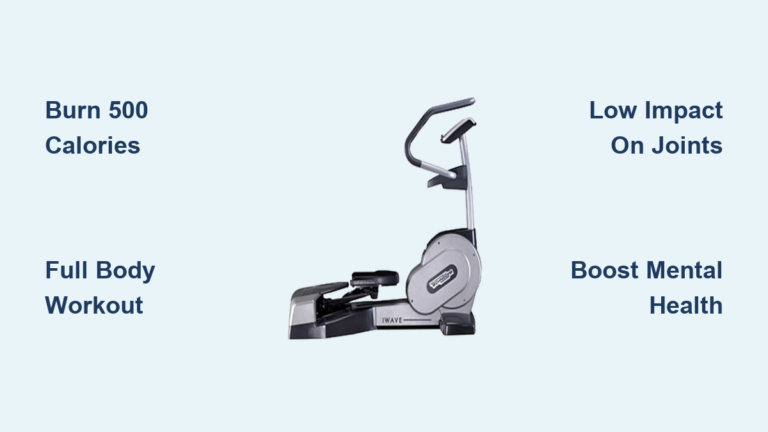
- Segment 2: 3 rounds of HIIT (Elliptical: 90s steady / 45s max speed)
- Segment 3: Stairmaster at 8/10 effort for 10 min
Advantage: Low-impact, high-resistance options protect joints while challenging lungs and legs.
Master Proper Form
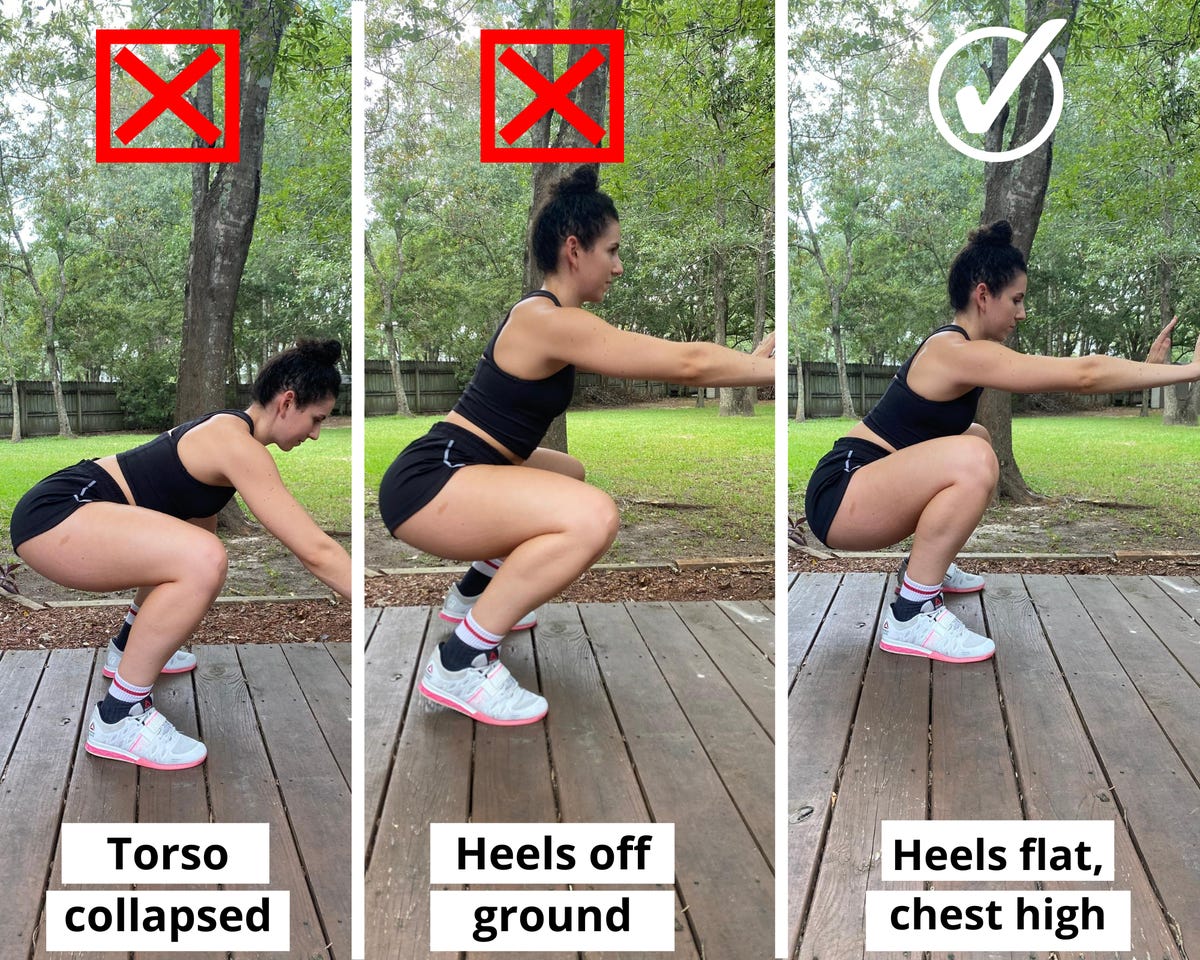
Even the best 30-minute cardio exercise fails if form is compromised. Poor technique reduces effectiveness and increases injury risk.
Touchdown Squat: Power and Precision
- Start: Stand hip-width, arms at sides
- Action: Hop into shoulder-width stance, squat down, hands touch floor
- Return: Push through heels, jump back to start
- Mistake to Avoid: Letting knees cave inward. Keep them aligned with toes
Engagement Tip: Squeeze glutes at the top for full-body activation.
Mountain Climber Cross: Core Stability
- Start: High plank, shoulders over wrists
- Action: Drive knee toward opposite elbow
- Form Focus: Keep hips level; don’t let them rock side to side
- Pace: Controlled and deliberate, not rushed
Why It Matters: This variation increases oblique engagement over standard climbers.
Jump Lunge: Plyometric Control
- Start: Split stance, front knee bent
- Action: Jump vertically, switch legs mid-air
- Land: Softly, with control, in opposite lunge
- Warning: Avoid landing with straight legs. Absorb impact through joints
Progression: Start with stationary lunges before adding the jump.
Single-Leg Push-Up: Balance and Strength
- Start: Hands on floor, one leg lifted behind
- Action: Lower chest to floor, push back up
- Stability: Keep back flat; engage core to prevent hip drop
- Scale Down: Perform on knees or against a wall
Benefit: Builds unilateral upper-body strength critical for real-world movement.
Skaters: Lateral Power
- Start: One leg behind and across, arms extended
- Action: Push off front leg, jump sideways
- Land: On opposite leg, trailing arm reaches across
- Flow: Continuous motion, like ice skating
Common Error: Short, choppy jumps. Focus on distance and balance.
Prevent Injury and Burnout
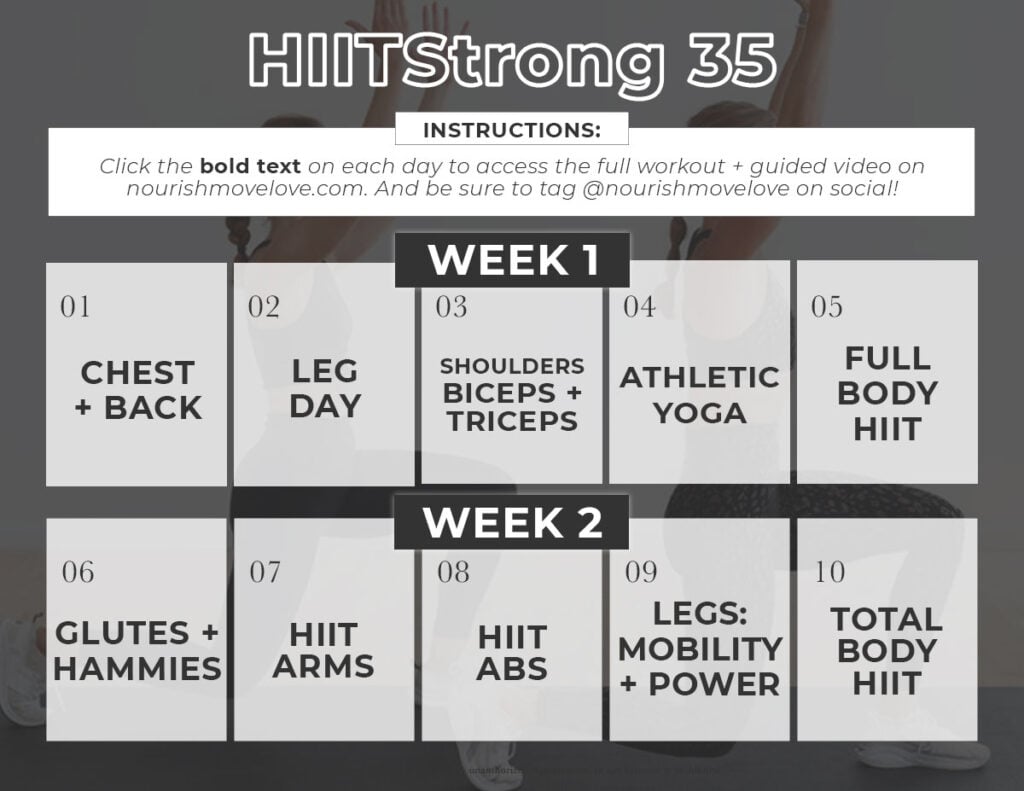
A sustainable 30-minute cardio exercise habit requires smart planning, not just intensity.
Warm Up Properly
Cold muscles are injury-prone. Always begin with 5 minutes of dynamic movement:
- Jumping jacks
- Leg swings
- Arm circles
- Torso twists
Rule: If you feel stiffness, extend warm-up by 2 to 3 minutes.
Schedule Recovery Days
HIIT is powerful but taxing. Overuse leads to:
- Hormonal imbalance
- Joint pain
- Mental fatigue
Recommended Frequency:
– HIIT: 2 to 3 times per week
– Steady-state: 3 to 5 times per week
– Rest: At least 1 full day per week
Listen to Your Body: Persistent soreness or low energy means you need more recovery.
Refuel Within Two Hours
Post-workout nutrition speeds recovery and preserves muscle.
Ideal Combo: Protein + carbohydrates
- Greek yogurt + berries
- Protein smoothie
- Lean chicken + sweet potato
- Plant-based shake with oats
Science Note: Consuming nutrients within 2 hours replenishes glycogen and repairs micro-tears in muscle.
Scale Intensity Gradually
Beginners should start with 15 to 20 minutes of low-impact cardio (e.g., brisk walking) and build duration and intensity over 4 to 6 weeks.
Progression Plan:
– Week 1 to 2: 20 min walk/jog intervals
– Week 3 to 4: 25 min steady jog
– Week 5+: Add 30-min HIIT once weekly
Avoid: Jumping straight into advanced routines. Consistency beats intensity.
Make It Work for Your Life
The best 30-minute cardio exercise is the one you’ll actually do. Tailor it to your lifestyle.
For the Time-Crunched Professional
Use the Goal-Oriented Bodyweight Circuit during lunch breaks or before work. No commute, no equipment, just results.
Pro Tip: Lay out clothes the night before. Reduce friction to increase follow-through.
For the Fitness Beginner
Start with 15 to 20 minutes of brisk walking, gradually increasing to 30. Use a simple app or watch to track progress.
Motivation Boost: Walk with a podcast or audiobook to make time fly.
For the Bored Exerciser
Switch up movements weekly. Try:
- Skaters instead of jumping jacks
- Burpee variations instead of squats
- Stair climbing instead of treadmill
Psychology Hack: Novelty increases dopamine, making workouts more enjoyable.
For the Home Workout Warrior
Invest in a $10 yoga mat for traction and joint protection. Most HIIT moves require only floor space.
Budget Win: Zero equipment means zero ongoing cost.
Frequently Asked Questions About 30-Minute Cardio
How many calories does a 30-minute cardio exercise burn?
A 30-minute cardio exercise can burn anywhere from 200 to 500 calories, depending on the type of workout, your body weight, and the intensity of effort. HIIT sessions typically burn more calories than steady-state cardio in the same timeframe.
Is 30 minutes of cardio a day enough to lose weight?
Yes, 30 minutes of cardio a day can support weight loss when combined with proper nutrition. Research shows that individuals who combine diet and exercise are 17.5 times more likely to lose weight than those making no changes. Exercise alone makes you only 5.2 times more likely to lose weight.
How often should I do HIIT workouts per week?
HIIT workouts should be limited to 2 to 3 times per week. The high intensity places significant stress on your hormones, joints, and mental health, requiring adequate recovery to prevent overtraining and injury.
Can I do 30-minute cardio exercises without any equipment?
Absolutely. Many effective 30-minute cardio exercises use only your bodyweight, including jumping jacks, high knees, mountain climbers, and burpees. A yoga mat is recommended for traction and joint comfort, but no other equipment is required.
What is the best time of day to do cardio?
The best time of day to do cardio is whenever you can consistently fit it into your schedule. Morning workouts can set a positive tone for the day and boost mental clarity, while evening sessions can help relieve stress. Consistency matters more than timing.
Should I eat before or after a 30-minute cardio workout?
You should refuel within two hours after your workout with a combination of protein and carbohydrates to replenish glycogen and repair muscle. Pre-workout nutrition depends on your comfort level, but a light snack 30 to 60 minutes before can provide energy for higher intensity.
Key Takeaways for Your 30-Minute Cardio Routine
A well-structured 30-minute cardio exercise is one of the most efficient ways to improve your health, burn calories, and boost mental clarity. The key is choosing the right format for your goals, whether that’s HIIT for maximum calorie burn, steady-state for sustainable endurance, or a hybrid approach for balanced results.
Consistency and proper form will always outperform sporadic intensity. Start where you are, scale gradually, and prioritize recovery through rest days and post-workout nutrition. Pair your effort with mindful eating, and you’ll see measurable changes in energy, mood, and body composition faster than you think.
Your next step is simple: pick one protocol from this guide and commit to it three times this week. Lay out your clothes, set a time, and just begin. Your future self will thank you.