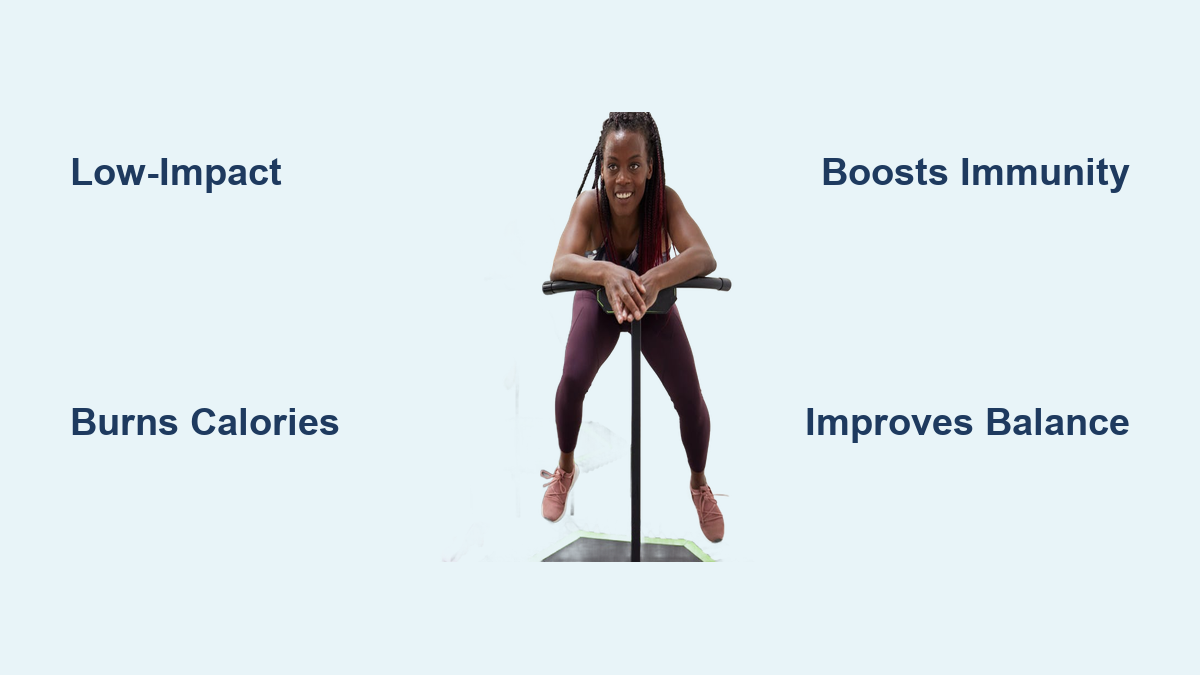
Trampoline Cardio: Top Health Benefits
You step onto the trampoline, start bouncing, and suddenly realize your heart is racing, your muscles are firing, and you’re actually smiling. That mix of fun and intensity is exactly why trampoline cardio has become one of the most effective workout methods available. Backed by NASA research and clinical studies, this bouncy routine burns calories, strengthens your entire body, and protects your joints all at once.
Unlike running on pavement or grinding through high-impact aerobics, rebounding uses a flexible surface that absorbs up to 80% of shock. At the same time, it activates more than 400 muscles, supercharges your lymphatic system, and delivers cardiovascular gains that rival (or beat) traditional exercise. Whether you’re recovering from an injury, managing your weight, or simply bored with the gym, this guide will show you why trampoline cardio deserves a place in your routine.
Low-Impact, High-Efficiency Exercise That Protects Your Joints
Rebounding separates workout intensity from joint strain. You can push your cardiovascular system hard without the pounding that leads to knee pain, shin splints, or stress fractures.
Absorbs 80% of Impact Force
The trampoline mat absorbs most of the shock that would otherwise travel through your ankles, knees, and lower back during running. This makes trampoline cardio a smart choice for people with arthritis, joint sensitivity, or old injuries. Research shows that on hard surfaces, G-forces concentrate heavily at the ankle, but on a trampoline, those forces distribute evenly across your entire body, preventing localized wear and tear.
68% More Efficient Than Running
A landmark NASA study found that rebounding delivers 68% greater biomechanical efficiency than treadmill running at the same oxygen consumption level. That means you get more physical benefit for the same effort. The trampoline’s bounce amplifies gravitational forces in a controlled way, stimulating more muscle fibers and activating gravireceptors, which are key sensors that prevent deconditioning.
Spring-Free Models Add Extra Protection
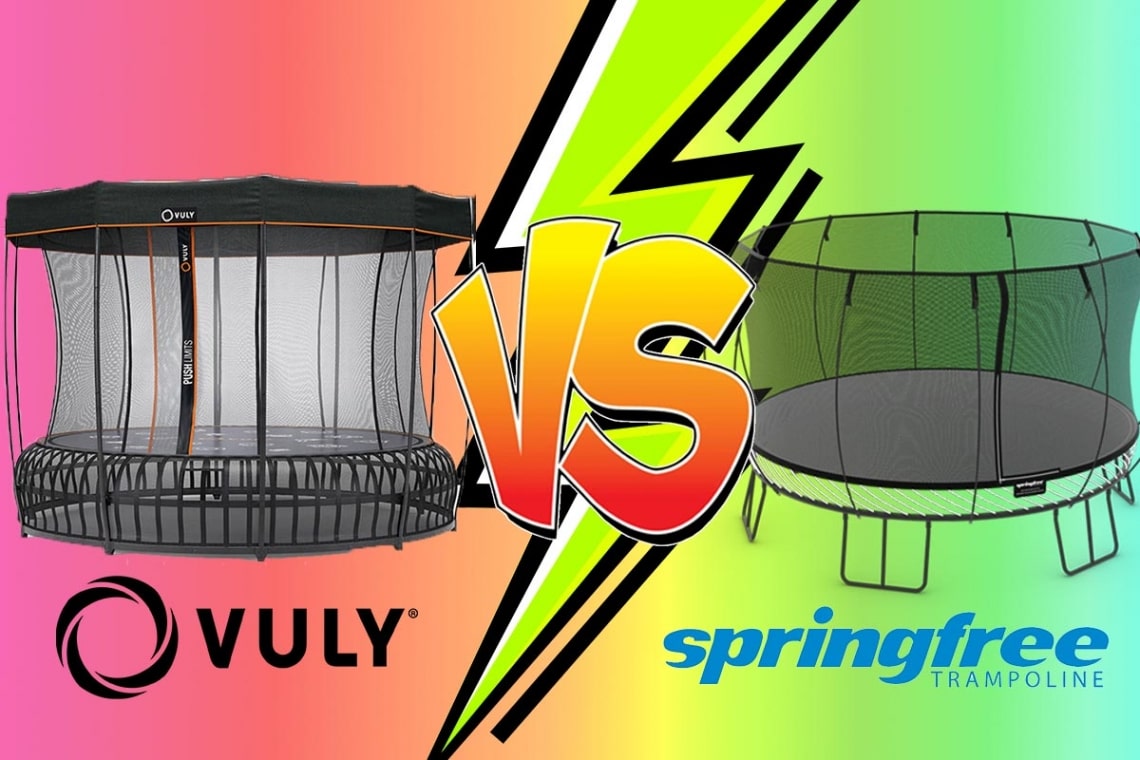
Not all trampolines perform the same. Spring-free rebounders with elastic bands or bungee cords offer up to 30 times more shock absorption than traditional spring models. If joint protection is your priority, especially for seniors or anyone in rehab, choose a low-profile mini-trampoline with a padded, flexible surface.
Cardiovascular Gains and Calorie Burn That Rival Running

Trampoline cardio isn’t just gentle. It’s a serious workout that strengthens your heart and burns calories at an impressive rate.
Matches Running in 20 Minutes
According to the American Council on Exercise, 20 minutes of rebounding burns the same calories as running at 6 mph. In one study, a 150-pound person burned 82 calories in just 12 minutes on a trampoline, compared to 71 calories on a treadmill. Men averaged 12.4 calories per minute and women averaged 9.4, both exceeding standard fitness guidelines for caloric expenditure.
Triggers the Afterburn Effect
Like high-intensity interval training, rebounding activates EPOC, or excess post-exercise oxygen consumption. Your metabolism stays elevated after the session ends, so you continue burning calories while you cool down. This afterburn effect supports fat loss and improves body composition over time.
Feels Easier Than It Actually Is
Here’s the secret most rebounders discover quickly: the workout feels lighter than it really is. Participants in ACE studies rated their perceived exertion at about 11.7 (light to moderate), while their heart rate and oxygen use indicated an intensity that should have felt like 13. This 11% perceived exertion gap helps you stick with the workout longer and more consistently.
Full-Body Muscle Activation Across 400+ Muscles
Rebounding doesn’t just sculpt your legs. It engages your entire body, from deep core stabilizers to your pelvic floor, with every single bounce.
Engages Your Entire Body at Once
From the moment you leave the mat, your body recruits hundreds of muscles to stabilize, balance, and propel you. The unstable trampoline surface forces constant micro-adjustments, activating deep stabilizer muscles that traditional workouts often ignore.
Targets Core and Pelvic Floor
Your core fires continuously to keep you upright. Your pelvic floor engages reflexively with each landing, making rebounding more effective than isolated Kegels for building pelvic strength, especially after pregnancy or with age-related weakness.
Builds Strength from Head to Toe
A single rebounding session works multiple muscle groups at once:
- Lower Body: Glutes, quads, hamstrings, and calves power every takeoff and landing.
- Upper Body: Arm swings, jumping jacks, and overhead reaches engage shoulders, arms, and back.
- Posture Muscles: Erector spinae and deep neck flexors activate to maintain alignment throughout the session.
Improves Bone Density and Joint Health Safely

Rebounding is a weight-bearing exercise that strengthens bones without damaging joints, making it ideal for osteoporosis prevention and long-term skeletal health.
Stimulates Bone Growth Without Stress Fractures
The vertical gravitational loading during bouncing applies healthy stress to bones, encouraging mineral density increases, especially in the hips and spine. Competitive trampolinists show higher bone density, larger bone area, and superior bone strength compared to non-jumpers.
Safe for Seniors and Rehab Patients
Even gentle bouncing provides enough stimulus to slow age-related bone loss. For older adults, rebounding is a rare exercise that builds strength and balance without high injury risk. One study found that 14 weeks of mini-trampoline use improved balance recovery by 35%, drastically reducing fall risk.
Promotes Joint Lubrication Naturally
The rhythmic compression and decompression of cartilage during bouncing helps circulate synovial fluid, nourishing joints and reducing stiffness. This benefit is especially valuable for those with mild arthritis or joint immobility.
Supercharges Lymphatic Drainage and Immune Function
Your lymphatic system clears toxins, fights infection, and reduces inflammation, but it has no built-in pump. Rebounding acts as a natural “lymph pump” through gravity shifts.
Increases Lymph Flow by 15–30 Times
The cycle of acceleration (down), weightlessness (up), and deceleration (landing) opens lymphatic valves, driving fluid movement throughout your body. Studies show lymph circulation can increase 15 to 30 times during rebounding compared to rest, flushing waste, reducing swelling, and boosting immune function.
Reduces Edema and Inflammation
People with chronic swelling, post-surgical fluid retention, or inflammatory conditions often report reduced puffiness after regular rebounding. The enhanced lymph flow helps drain excess interstitial fluid from tissues.
Supports Stronger Immune Defense
With better lymph circulation, immune cells travel faster and more efficiently. Over time, this may lead to fewer colds, quicker recovery from illness, and improved allergy and digestive symptoms.
Enhances Balance, Coordination, and Fall Prevention
Rebounding sharpens your body’s sense of space and movement, which is critical for injury prevention and motor skill development at any age.
Stimulates the Vestibular System
The inner ear’s balance sensors get a workout with every bounce. This improves spatial awareness and reduces dizziness, especially in older adults or those recovering from vestibular disorders.
Sharpens Proprioception
Proprioceptors in your joints and muscles constantly send feedback to your brain. Rebounding challenges these sensors, refining coordination and joint control for smoother movement and better injury prevention in daily life.
Reduces Fall Risk by 35%
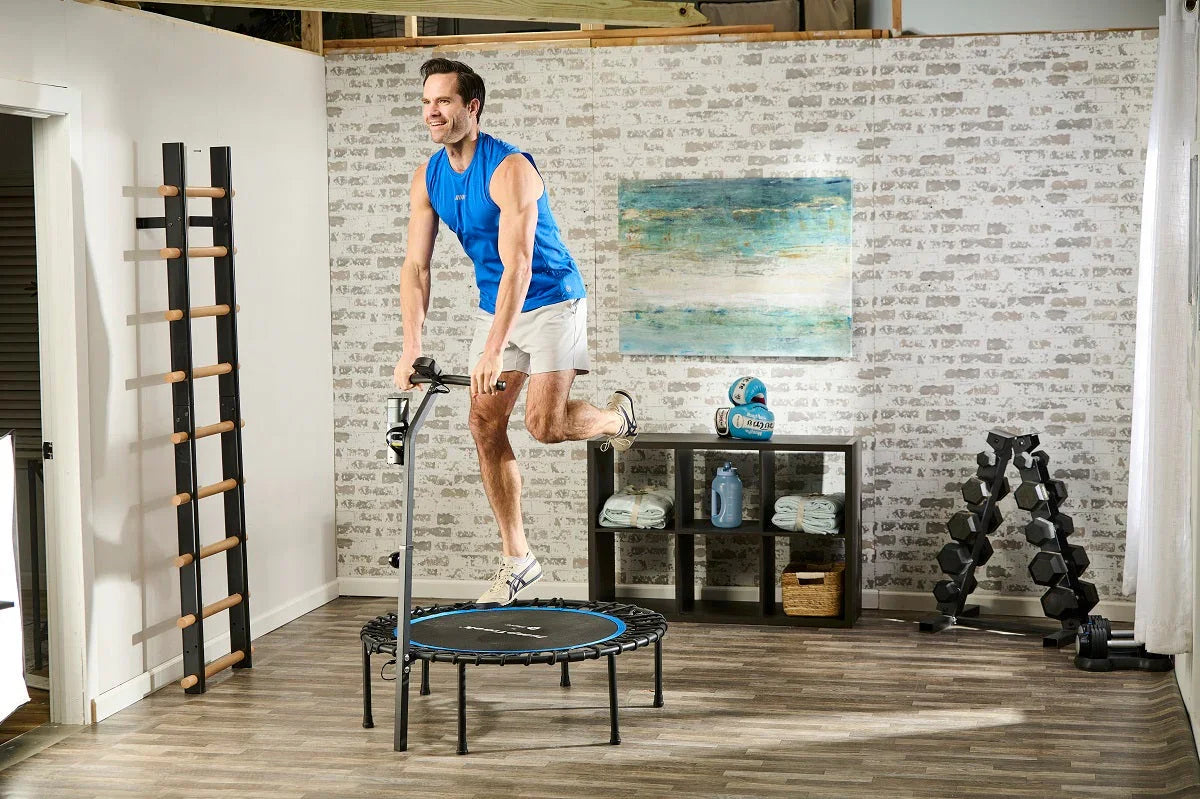
A 14-week study found that seniors who rebounded regularly improved their ability to regain balance before falling by 35%. Simple exercises like single-leg bounces or slow twists build neuromuscular control safely and progressively.
Boosts Mental Health and Sleep Quality
The psychological benefits of rebounding go beyond endorphins. It’s a mood-lifting, stress-relieving, brain-boosting activity that feels more like play than punishment.
Elevates Mood and Reduces Anxiety
Aerobic movement triggers endorphin release, naturally reducing symptoms of stress, anxiety, and depression. Users consistently report feeling lighter and more energized after even a 10-minute session.
Cuts Poor Mental Health Days by 40%
Regular rebounders experience over 40% fewer days of poor mental health. The combination of rhythmic motion, playfulness, and physical release creates a mental reset that’s hard to match with traditional exercise routines.
Improves Sleep Quality
Physical exertion plus muscle relaxation leads to deeper, more restorative sleep. Many users report falling asleep faster and waking less during the night after consistent rebounding sessions.
Easy Workouts for Every Fitness Level
You don’t need to be an athlete to benefit. Just 10 minutes a day delivers measurable results. Start simple and progress at your own pace.
The Minimum Effective Dose: 10 Minutes Daily
Even 5 to 10 minutes can kickstart lymphatic flow and improve circulation. For cardiovascular and metabolic benefits, aim for 10 to 30 minutes, 3 to 5 times per week.
Beginner-Friendly Exercises to Start With
Try these low-impact moves on a mini-trampoline:
- Marching in Place: Lift knees gently while focusing on balance.
- Mini Jumps: Soft bounces with feet together and arms at your sides.
- Side-to-Side Steps: Step lightly from one side to the other.
- Arm Circles: Add upper body movement to boost coordination.
Progress to Advanced Moves
As your stability improves, level up with these options:
- Jumping Jacks
- Squat Jumps
- Tuck Jumps
- Twists and Swivel Hips
Use a circuit format: 3 minutes per exercise, repeated 1 to 2 times.
Safety Tips for Injury-Free Bouncing
Rebounding is safe for most people, but proper form and equipment help prevent issues and maximize benefits.
Choose the Right Equipment
- Use a mini-trampoline (rebounder) for indoor workouts.
- Opt for spring-free models for maximum shock absorption.
- Add safety bars if balance is a concern, especially for seniors.
Use Proper Form Every Session
- Land softly with knees slightly bent, never locked.
- Keep your spine neutral, head aligned, and core engaged.
- Avoid jerky head movements and keep motion controlled.
Know When to Stop
- Stop immediately if you feel pain, dizziness, or shortness of breath.
- Consult a doctor before starting if you have heart conditions, vertigo, or recent surgery.
- Start slow if you’re new. Mild dizziness is common initially and usually passes quickly.
Frequently Asked Questions About Trampoline Cardio
How many calories does trampoline cardio burn compared to running?
Research from the American Council on Exercise shows that 20 minutes of rebounding burns the same calories as running at 6 mph. A 150-pound person can burn approximately 82 calories in just 12 minutes on a trampoline, which is more than they’d burn on a treadmill in the same time.
Is rebounding safe for people with joint pain or arthritis?
Yes. The trampoline surface absorbs up to 80% of impact force, making it one of the safest cardio options for people with joint sensitivity, arthritis, or past injuries. Spring-free models offer up to 30 times more shock absorption than traditional spring trampolines for added protection.
How often should I rebound to see results?
Most experts recommend a minimum of 10 minutes per day to achieve health benefits. For cardiovascular and metabolic improvements, aim for 10 to 30 minutes, 3 to 5 times per week. Even 5 to 10 minutes daily can kickstart lymphatic flow and circulation.
Can trampoline cardio really improve bone density?
Yes. Rebounding is a weight-bearing exercise that applies healthy gravitational loading to bones, stimulating mineral density increases, especially in the hips and spine. Competitive trampolinists show measurably higher bone density and strength than non-jumpers, and regular recreational rebounding provides enough stimulus to slow age-related bone loss.
Does rebounding help with lymphatic drainage and immunity?
Yes. The unique gravitational cycle of bouncing (acceleration, weightlessness, and deceleration) opens lymphatic valves and increases lymph flow by 15 to 30 times compared to rest. This enhanced drainage helps flush toxins, reduce inflammation, and support immune function.
What type of trampoline is best for home workouts?
A mini-trampoline (rebounder) designed for indoor use is ideal. Spring-free models with elastic bands or bungee cords offer the best shock absorption and joint protection. Look for a low-profile design with a sturdy frame and, if needed, a safety bar for balance support.
Key Takeaways: Why Trampoline Cardio Belongs in Your Fitness Routine
Trampoline cardio delivers a rare combination: high-intensity results with low-impact safety. It burns calories as efficiently as running, activates more than 400 muscles per session, strengthens bones, supercharges your lymphatic system, and improves balance, all while feeling more like play than punishment.
The science is clear. NASA research confirms its biomechanical efficiency. Clinical studies show measurable improvements in cardiovascular health, bone density, and mental wellness. And the “perceived exertion gap” means you’ll actually want to keep doing it.
Your next step: Start with just 10 minutes a day on a mini-trampoline. Focus on soft landings, proper form, and simple moves like marching or mini jumps. As your confidence and stability grow, add variety and intensity. Within weeks, you’ll likely notice better energy, improved mood, and a workout you genuinely look forward to.