Best Cardio Exercises for Flat Stomach (2026 Guide)
You’ve probably spent hours doing crunches, only to look in the mirror and still see the same soft layer covering your abs. Here’s the truth: cardio exercises for flat stomach results come from lowering overall body fat, not spot training. The fat sitting on top of your abdominal muscles must be burned systemically before any “six-pack” becomes visible. This means combining high-intensity cardio, compound strength moves, and a calorie deficit to target visceral fat, which is the dangerous deep belly fat wrapped around your organs.
In this guide, you’ll learn exactly how belly fat works, the most effective cardio and HIIT exercises that torch calories fast, ready-to-use workout routines you can do at home, and the critical nutrition and lifestyle factors that make or break your progress.
How Belly Fat Actually Works
Subcutaneous vs. Visceral Fat: What’s Hiding Under Your Skin
Not all belly fat is the same. Subcutaneous fat is the soft, pinchable layer under your skin. It affects how you look but poses fewer health risks. Visceral fat is the real danger. It sits deep in your abdomen, wrapping around your liver, intestines, and other organs. This fat is metabolically active and releases inflammatory chemicals that disrupt hormones, raise blood pressure, and increase diabetes risk. Even slim people can carry dangerous levels.
The good news? Visceral fat is more metabolically active than subcutaneous fat, so it’s often the first to shrink when you create a calorie deficit through cardio and diet. Mesenteric fat, a subtype of visceral fat around the intestines, also responds quickly to consistent exercise.
Why Spot Reduction Is a Myth
Doing 500 crunches a day will strengthen your abs, but it won’t burn the fat covering them. When your body needs energy during exercise, it pulls from fat stores across your entire body, not just the area you’re working. This is why spot reduction is physiologically impossible.
To reveal a flat stomach, you must lower your total body fat percentage. The most effective approach combines full-body cardio with resistance training to preserve muscle and keep your metabolism high. Studies consistently show that people who combine aerobic exercise with strength training lose more belly fat than those who only do ab work.
Muscle Mass: Your Fat-Burning Engine
Muscle tissue burns more calories at rest than fat tissue. When you build lean muscle through resistance training, your resting metabolic rate climbs, meaning you burn more energy 24/7, even while sitting at your desk. Cardio burns calories during the workout, but muscle keeps the furnace hot afterward. This synergy is why combining HIIT with compound strength moves like squats, kettlebell swings, or deadlifts delivers better belly fat results than cardio alone.
Best Cardio Types for Burning Belly Fat
HIIT: The Ultimate Fat Torcher
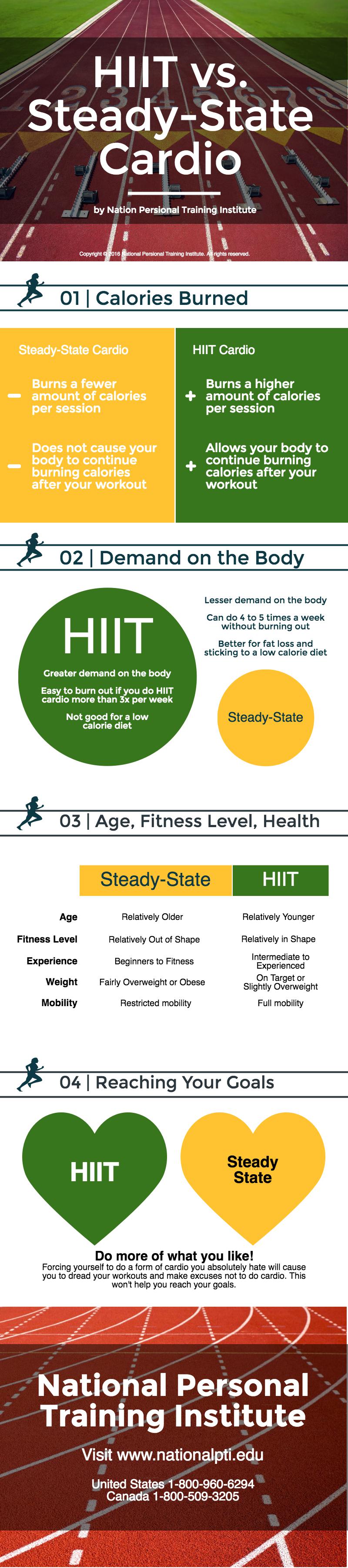
High-Intensity Interval Training (HIIT) is the most time-efficient way to burn belly fat. It spikes your heart rate, burns massive calories in short bursts, and triggers EPOC (Excess Post-exercise Oxygen Consumption), also known as the “afterburn effect.” This means your body keeps burning calories for hours after your workout ends.
A standard HIIT session alternates short bursts of max effort with rest. Try 30 seconds of all-out effort (like burpees or sprints) followed by 30 seconds of rest, repeated for 15–20 minutes. You can also use the 5/20/30 method: 5 seconds max effort, 20 seconds moderate pace, 30 seconds easy recovery. Research shows that just 10 fast burpees can match the metabolic boost of a 30-second sprint.
Start with 2 HIIT sessions per week to allow recovery. HIIT reduces both belly and liver fat, even without major diet changes.
Steady-State Cardio: The Endurance Builder
While HIIT burns fast, steady-state cardio builds your aerobic base and supports daily fat oxidation. This includes brisk walking, jogging, cycling, or swimming at a consistent pace for 30+ minutes. The “fat-burning zone” sits at 60–70% of your maximum heart rate, roughly 108–126 bpm for a 40-year-old.
The American Heart Association recommends 150 minutes per week (30 minutes, 5 days). However, for stubborn belly fat, some research suggests 60 minutes daily may be more effective, especially for postmenopausal women. If you’re new, start with 20–30 minutes and add 5 minutes each week. Consistency beats intensity: daily walking often outperforms sporadic sprints.
Fasted Cardio: Helpful or Hype?
Exercising before breakfast, when glycogen stores are low, forces your body to tap into fat for fuel. The theory is solid, but real-world results are mixed. Studies show no significant difference in total fat loss between fasted and fed cardio, as long as the calorie deficit is identical.
That said, if you tolerate it well and feel energized, fasted cardio can help you burn fat early in the day. Warning: Avoid fasted HIIT unless you’re experienced, as it can cause dizziness. Stick to moderate walking or light cycling. Ultimately, consistency and calorie control matter more than workout timing.
Top Fat-Burning Cardio Exercises
Burpees: The Full-Body Calorie Killer
Burpees combine a squat, plank, push-up, and explosive jump into one move. They recruit nearly every muscle in your body and spike your heart rate instantly. Research confirms that 10 fast burpees equal the metabolic boost of a 30-second sprint.
How to do one:
1. Start standing, feet shoulder-width apart.
2. Drop into a squat and place hands on the floor.
3. Kick feet back into a high plank.
4. Perform a push-up (optional for beginners).
5. Jump feet forward toward your hands.
6. Explode upward into a vertical jump.
Modify by stepping back instead of jumping if needed. Do 30 seconds on, 30 seconds off, for 5–10 rounds.
Mountain Climbers: Core + Cardio Combo
Mountain climbers target your abs while elevating your heart rate. Start in a high plank position. Drive one knee toward your chest, then quickly switch legs in a running motion. Keep your hips low and back flat to maximize core engagement.
Beginners should aim for 15–20 reps per side. Advanced users can increase speed. Use them in HIIT intervals or as a core finisher. This move strengthens the rectus abdominis, the “six-pack” muscle, while burning serious calories.
Jump Squats: Explosive Power Move
Jump squats build explosive leg power and torch fat. Start with feet shoulder-width apart. Lower into a squat until thighs are parallel to the floor, then explode upward into a jump. Land softly with bent knees to protect your joints.
This move engages your quads, glutes, hamstrings, and core. Do 10–15 reps in 30 seconds. Pair with push-ups or lunges in a circuit. Caution: Skip this exercise if you have knee issues; regular squats are a safer alternative.
Kettlebell Swings: Hip-Driven Fat Burner
The kettlebell swing is a dynamic hip-hinge movement that builds glutes, burns fat, and improves core stability. Stand with feet shoulder-width apart, kettlebell on the floor. Hinge at the hips, grab the bell, and swing it between your legs. Thrust your hips forward to swing the weight to chest height. Let momentum, not your arms, do the work.
Keep your back flat and core tight throughout. Do 20–30 reps in 30 seconds. This move blends strength and cardio perfectly, making it ideal for fat loss circuits.
Rowing Machine: Total-Body Calorie Burner
The rowing machine engages 86% of your muscles, making it one of the most efficient calorie-burning machines available. A 30-minute session can burn 250–500 calories, depending on intensity. It works your legs, back, arms, and core simultaneously.
For maximum fat burn, alternate 30-second sprints with 1-minute easy rows. Focus on proper form: drive with your legs first, lean back slightly, then pull with your arms. Avoid hunching or jerking the handle. Rowing builds endurance and reduces visceral fat faster than many other cardio machines.
Core Exercises That Strengthen Your Foundation
Planks: The Ultimate Ab Builder
Planks are far more effective than crunches for building a strong, flat midsection. They engage your entire core, including the deep transverse abdominis, and burn more calories due to full-body tension.
Hold a high plank with your body in a straight line from head to heels. Keep elbows under shoulders and glutes tight. Start with 20–30 seconds and build to 1–2 minutes. For more challenge, try side planks or plank jacks. Pro Tip: Planks improve posture and reduce lower back pain, both of which help your stomach appear flatter.
Bicycle Crunches: Oblique Sculptor
Bicycle crunches target both the rectus abdominis and the obliques, the muscles on the sides of your waist. Lie on your back with hands behind your head. Bring your right elbow to your left knee while extending your right leg. Alternate sides in a pedaling motion. Keep your lower back pressed to the floor.
Aim for 3 sets of 12–20 reps. This move helps define the sides of your waist, critical for a sculpted look.
Leg Raises: Lower Ab Specialist
Leg raises target the often-neglected lower abs. Lie flat with legs straight. Lift your legs to 90 degrees, hold for 1–2 seconds, then slowly lower them without letting your feet touch the floor. Keep your lower back flat to avoid strain.
Do 3 sets of 10 reps. For more challenge, add ankle weights or use sliders. This move helps tighten the lower belly, where many people struggle with puffiness.
Ready-to-Use Flat-Stomach Workout Plans
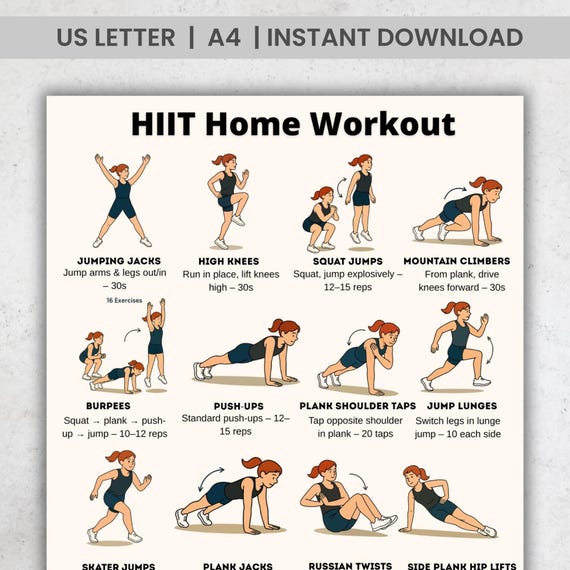
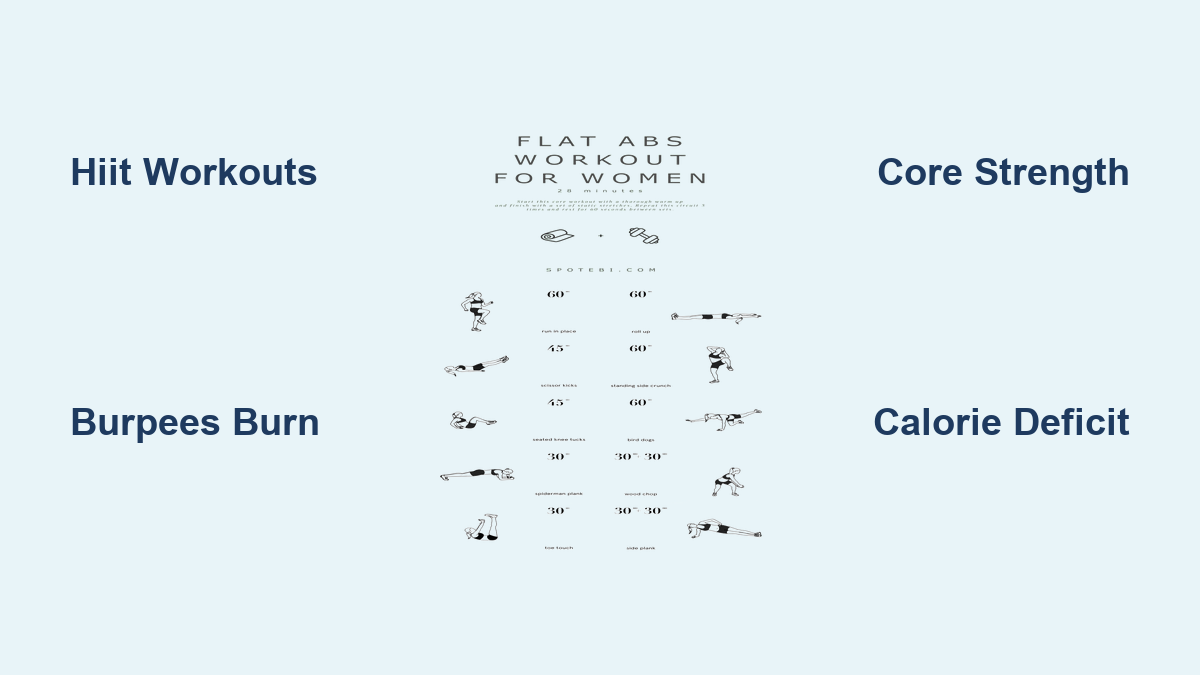
20-Minute No-Equipment HIIT Routine
This home-friendly routine burns fat fast with zero gear.
- High Knees: 30 seconds. Run in place, driving knees as high as possible.
- Mountain Climbers: 30 seconds. Alternate knee drives from plank position.
- Burpees: 15 reps. Full or modified based on fitness level.
- Jump Squats: 30 seconds. Explode upward, land softly.
- Bicycle Crunches: 30 seconds. Finish strong with oblique work.
Rest 15–30 seconds between exercises. Repeat the circuit 3–4 times.
Love Handles and Lower Belly Circuit
Target stubborn side and lower belly fat with this focused routine.
- Mountain Climbers: 20 seconds
- Jump Lunges: 15 reps
- Bicycle Crunches: 30 seconds
- Side-to-Side Skaters: 15 reps
Rest 1 minute between rounds. Repeat 3–5 times.
Strength + Cardio Hybrid Workout
Build muscle while torching fat in this full-body session.
- Squats: 10 reps (bodyweight or dumbbells)
- Push-Ups: 10 reps (modify on knees if needed)
- Resistance Band Rows: 10 reps
- Jump Rope: 30 seconds (or mimic the motion)
Rest 60 seconds. Repeat 3 rounds.
Nutrition Strategies That Reveal Your Abs

Calorie Deficit Is Non-Negotiable
No amount of cardio will give you a flat stomach without a calorie deficit. To lose 1 pound of fat, you need a 3,500-calorie deficit, roughly 500 calories per day. You cannot out-train a bad diet.
Track your food intake using an app or journal. Focus on whole foods: lean protein, vegetables, healthy fats, and complex carbs. Avoid liquid calories like soda, juice, and sweetened coffee, as they add up fast. Even healthy foods like nuts and avocado are calorie-dense, so measure your portions.
Prioritize Protein and Cut Sugar
Protein preserves muscle during fat loss and keeps you feeling full. Aim for 0.8–1 gram per pound of body weight. Choose lean meats, eggs, Greek yogurt, tofu, and legumes.
Reduce sugar aggressively. Excess glucose spikes insulin, which promotes fat storage, especially in the belly. Cut sugary drinks, desserts, and processed snacks. Prioritize fiber-rich vegetables like broccoli, spinach, peppers, and Brussels sprouts to stay full and support digestion.
Hydration and Sleep Are Critical
Drink water before meals to reduce hunger and prevent bloating. Aim for 8–10 glasses daily. Dehydration mimics hunger, often leading to overeating.
Sleep 7–9 hours per night. Poor sleep increases ghrelin (the hunger hormone), decreases leptin (the fullness hormone), and raises cortisol, which directly promotes belly fat storage. Schedule rest days and prioritize recovery just as much as workouts.
Common Mistakes That Sabotage Flat-Stomach Goals
Overtraining and Ignoring Diet
Doing intense workouts daily may feel productive, but overtraining spikes cortisol, a hormone that promotes belly fat storage. It also increases injury risk and burnout. Stick to 2–3 HIIT sessions per week and balance with steady-state cardio or rest days.
Never rely solely on ab exercises. Sit-ups won’t burn fat. Only full-body cardio combined with calorie control will reveal your abs.
Genetics Play a Role
Where you lose fat first is genetically determined. Some people lose face fat first; others lose belly fat last. Don’t compare your progress to influencers or friends. Stay consistent. Over time, belly fat will reduce. If progress stalls, reassess your calorie intake, sleep quality, or stress levels. Consider consulting a nutritionist or doctor, especially if hormonal issues like menopause or low testosterone are at play.
Track Progress Beyond the Scale
The scale lies. Water retention, muscle gain, and digestion affect your weight daily. Use better metrics to track real progress:
- Waist-to-height ratio: Your waist should be less than half your height.
- Monthly photos: Take front and side shots in the same lighting.
- Clothing fit: Pants feeling looser is a clear win.
- Workout performance: More reps or less rest means you’re getting stronger.
Frequently Asked Questions About Cardio for a Flat Stomach
How long does it take to get a flat stomach with cardio?
Visible results typically take several weeks to a few months of consistent effort. Safe fat loss occurs at 1–2 pounds per week. Genetics, starting body fat percentage, and diet adherence all influence the timeline.
Can I get a flat stomach without doing crunches?
Absolutely. Crunches strengthen muscles but don’t burn the fat covering them. A flat stomach comes from reducing overall body fat through cardio, strength training, and a calorie deficit. Core exercises like planks and leg raises are more effective than endless crunches.
Is running or cycling better for losing belly fat?
Both are effective. HIIT running sprints tend to burn more calories per minute and trigger the afterburn effect. Cycling is lower-impact and easier on the joints. The best choice is the one you can do consistently.
How often should I do cardio to lose belly fat?
Aim for 150 minutes of moderate cardio per week (like brisk walking) or 75 minutes of vigorous cardio (like HIIT running). Adding 2–3 HIIT sessions per week accelerates belly fat loss. Consistency matters more than intensity.
Does spot reduction work for belly fat?
No. Spot reduction is a myth. Your body burns fat from all over, not just the area you exercise. You must lower your total body fat percentage to reveal a flatter stomach.
Should I do cardio before or after strength training?
For fat loss, strength training before cardio is ideal because it preserves muscle and boosts metabolism. However, doing either first will produce results as long as you maintain a calorie deficit. Prioritize the workout you’ll actually complete.
Key Takeaways for Flattening Your Stomach
A flat stomach comes from systemic fat loss, not isolated ab work. Prioritize HIIT, compound cardio moves, and full-body strength training to maximize calorie burn and preserve muscle. Combine this with a calorie-controlled, high-protein diet, 7–9 hours of sleep, and stress management to keep cortisol in check.
Avoid spot-reduction myths and overtraining. Be patient; visible results take weeks to months of consistency. The best “ab exercise” is the one that keeps your heart rate up and your body moving.
Your next step: Pick one workout routine from this guide and commit to it 3 times this week. Pair it with a 500-calorie daily deficit, and you’ll be on your way to a visibly flatter stomach within weeks.