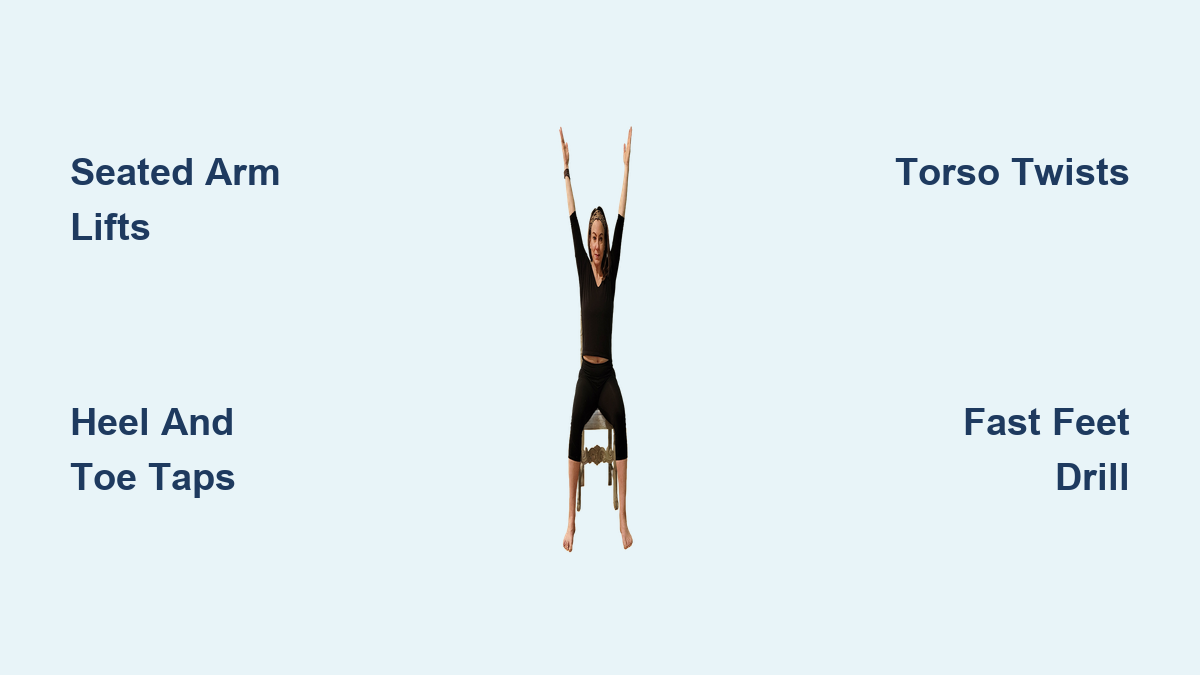
Chair Cardio Exercises for Seniors: Quick Guide
If you’re a senior looking to improve heart health, boost energy, and stay active without putting stress on your joints, chair cardio exercises are an excellent solution. Designed specifically for low-impact safety and accessibility, these seated workouts deliver real cardiovascular benefits with no standing required. Perfect for limited mobility, post-recovery stages, or daily wellness, chair cardio exercises for seniors can be done at home with just one tool you already own: a sturdy chair.
This 5-minute seated cardio blast is aligned with heart-healthy guidelines, helping lower blood pressure, support circulation, and reduce the risk of heart disease. It combines upper and lower body movements to elevate your heart rate safely, using rhythmic arm pumps, leg taps, and torso twists. Each move is simple, repeatable, and adaptable to your pace. Whether you’re new to exercise or maintaining an active lifestyle, this routine fits seamlessly into your day. In the following sections, you’ll learn each move step-by-step, how to perform them correctly, and tips to maximize results and avoid common mistakes.
Warm Up Safely First
Before jumping into the main circuit, prepare your body with gentle activation. Skipping warm-up increases injury risk, especially for seniors with stiff joints or reduced flexibility.
Shoulder Rolls for Mobility
Start with shoulder rolls to loosen tight upper muscles.
– Sit tall near the edge of the chair, feet flat on the floor.
– Gently roll your left shoulder backward in a circular motion 3 times.
– Repeat with the right shoulder.
– Then, alternate both shoulders together for 3 more rolls.
This warms up the rotator cuff, improves posture, and readies your arms for pumping motions later.
Seated Neck and Spine Check
- Slowly tilt your head side to side, ear toward shoulder (no touching).
- Gently rotate your neck clockwise and counterclockwise.
- Perform 2 slow torso side bends. Reach right hand overhead to the left, then switch.
These micro-movements increase blood flow and reduce stiffness before dynamic work begins.
Upper Body Combo: Arm Lifts and Pulls
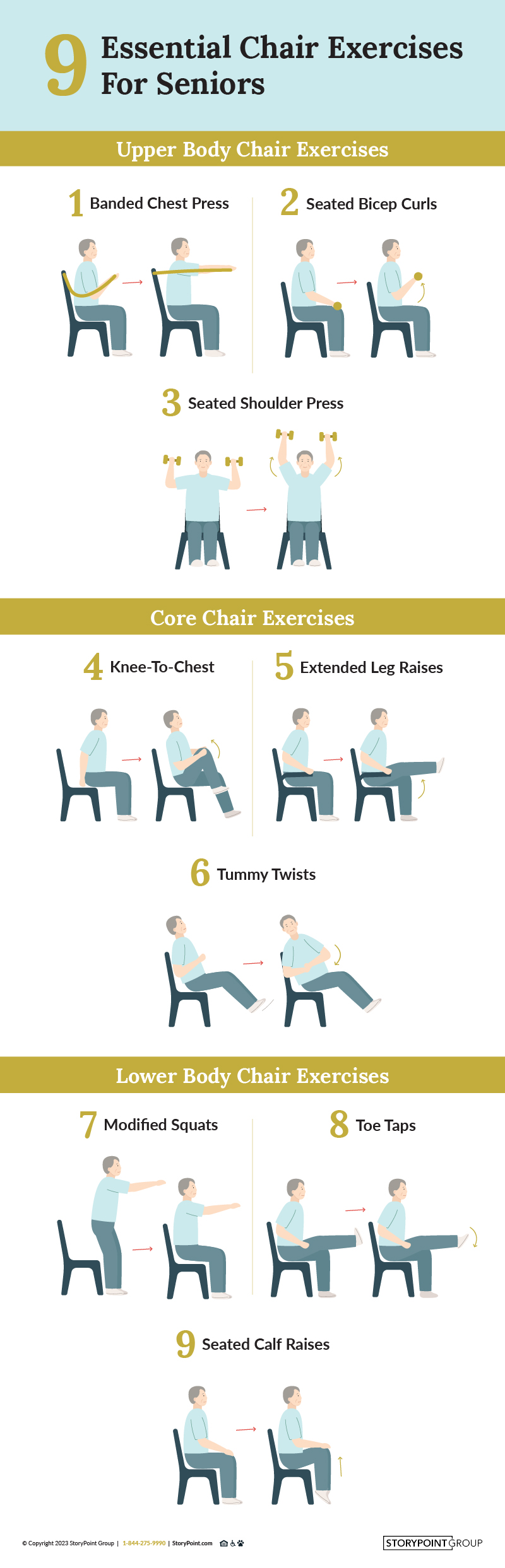
Engaging the arms elevates heart rate when done rhythmically. These seated moves target shoulders, back, and chest while supporting cardiovascular endurance.
Shoulder Shrug and Release
Perform 4 repetitions.
– Sit tall, arms at sides.
– Inhale as you lift shoulders toward ears.
– Exhale as you slowly lower them back down.
– Keep neck relaxed. Don’t tense jaws or hold breath.
Pro Tip: Imagine squeezing a pencil between your shoulder blades on the way down to activate the upper back.
Reach and Pull Motion
Complete 16 controlled reps.
– Extend arms forward at shoulder height.
– Pull elbows back, squeezing shoulder blades together.
– Bring hands down to hips or thighs at the end of each pull.
– Move with breath: reach on inhale, pull on exhale.
This mimics rowing and builds postural strength while boosting circulation.
Double Arm Pull Down
Repeat 16 times for full upper-body engagement.
– Reach both arms overhead.
– Pull arms down to your sides like closing a curtain.
– Squeeze shoulder blades at the bottom of the motion.
– Gently lift heels off the floor with each pull to add light resistance.
Visual Cue: Your elbows should brush past your ears on the way down.
Lower Body Activation: Heel and Toe Taps
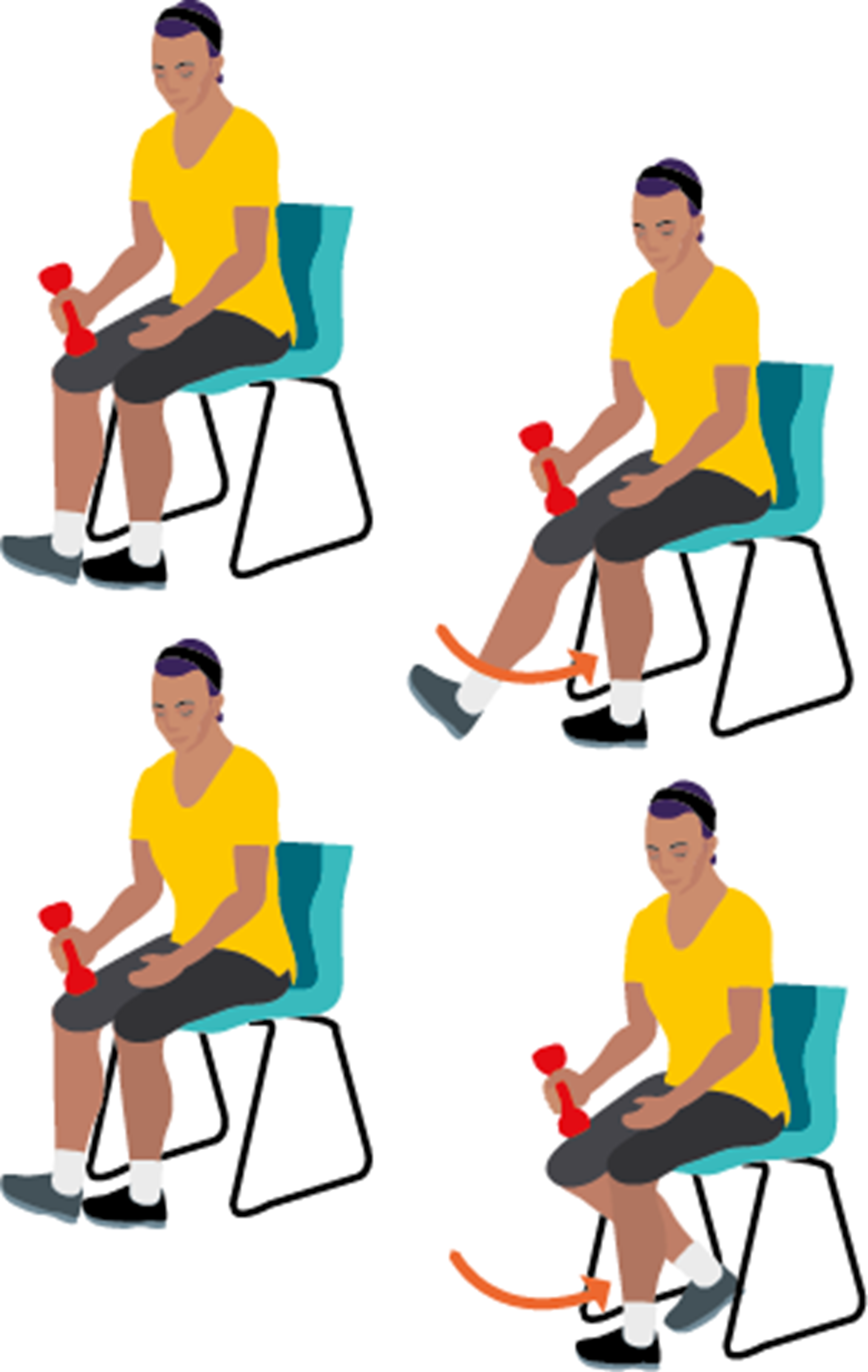
Even seated, your legs can power up your heart rate. These simple taps improve circulation, prevent blood pooling, and support joint flexibility.
Alternating Heel Tap
Do 8 taps per leg.
– Keep toes on the floor, tap right heel forward.
– Swing left arm forward in coordination.
– Return to center, then tap right heel back behind you.
– Extend left arm upward as you tap back.
Repeat on the left leg. This cross-body movement enhances coordination and brain-muscle connection.
Common Mistake: Don’t lock the knee. Keep a slight micro-bend to protect the joint.
Fast Feet Drill
Perform 16 quick taps.
– Alternate tapping the balls of your feet rapidly on the floor.
– Keep movements small, about 1 inch off the ground.
– Pump arms gently at your sides to increase intensity.
This elevates heart rate quickly and mimics walking or light running.
Difficulty Indicator: Start slow. Speed up only if balance and comfort allow.
Side Tap and Leg Extension Moves
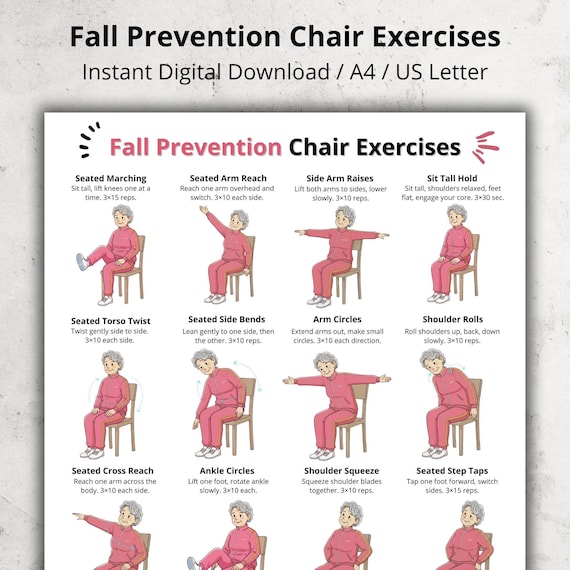
Lateral movements challenge stability and engage core muscles subtly. These seated side taps improve hip mobility and coordination.
Single Side Tap with Arm Cross
Alternate 8 times per side.
– Tap right heel out to the right, keeping toes up.
– Cross both arms in front of your chest.
– Return to center, then tap left heel out and repeat.
– Add a gentle torso lean toward the tapping side if comfortable.
This move activates the obliques and outer hips.
Double Side Tap with Push Motion
Do 8 double taps per side.
– Tap right toe out twice to the right.
– With each tap, reach right arm across your body and push toward the left.
– Use controlled motion. Don’t jerk.
– Switch to left side and repeat.
Why It Works: The arm push increases resistance and heart demand, turning a mobility move into cardio.
Side Leg Combo with Arm Reach
Repeat 16 times.
– Step right leg out to the side (even if only a few inches).
– Raise both arms overhead as you extend.
– Pull arms down to sides as you return to center.
– Switch to left leg and repeat.
Even small leg movements count. Range of motion improves over time.
Core and Torso Engagement
Twisting motions activate the core and improve spinal mobility. When combined with arm movement, they become powerful cardio boosters.
Torso Twist with Arm Drive
Complete 16 total twists (8 per side).
– Sit tall, feet flat, hands behind head or on shoulders.
– Gently rotate upper body to the right, leading with the ribs.
– Twist to the left.
– Keep hips square. Only the upper body turns.
Safety Note: Never force the twist. Let your comfort guide your range.
Pro Tip: Add light arm pumps, swinging opposite arm forward with each twist, for extra cardio effect.
Full-Body Coordination Circuits
Now that individual moves are mastered, combine them into a flowing circuit that maximizes heart rate elevation and coordination.
Knee-Kick Combo (Seated March with Twist)
Repeat 8 times per side.
– Lift right knee toward chest.
– Twist torso to the right as you lift.
– Lower knee, then “kick” foot forward slightly.
– Extend left arm forward toward the kicked leg.
– Switch sides and repeat.
This mimics marching with coordination, engaging abs, hips, and arms.
Modification: Skip the kick if balance is a concern. Just march in place.
Single Leg Pump: Right and Left
Do 8 pumps per leg.
– Tap right heel forward and back rapidly.
– Pump both arms at your sides like running.
– Keep core engaged to prevent leaning.
– Switch to left leg after 8 taps.
Time Estimate: This 16-tap sequence takes about 20–30 seconds total.
Energy Boost Tip: Breathe deeply. Inhale through nose, exhale through mouth to fuel oxygen delivery.
Build a Longer Routine
The original 5-minute circuit can be extended easily to 10 or 15 minutes for greater benefit.
Repeat the Full Circuit
- Complete the entire sequence once.
- Rest 1–2 minutes. Sit tall, breathe deeply, hydrate.
- Repeat 1–2 more times for a 10- to 15-minute total workout.
Heart Rate Goal: You should feel warm, breathe slightly faster, but still be able to speak in short sentences.
Add Intensity Gradually
Ways to increase challenge without risk:
– Shorten rest between moves.
– Increase tap speed.
– Add light hand weights (1–2 lbs) for arm resistance.
– Focus on squeezing muscles with each rep.
Avoid: Holding breath, locking joints, or rushing form.
Safety Tips for Seniors
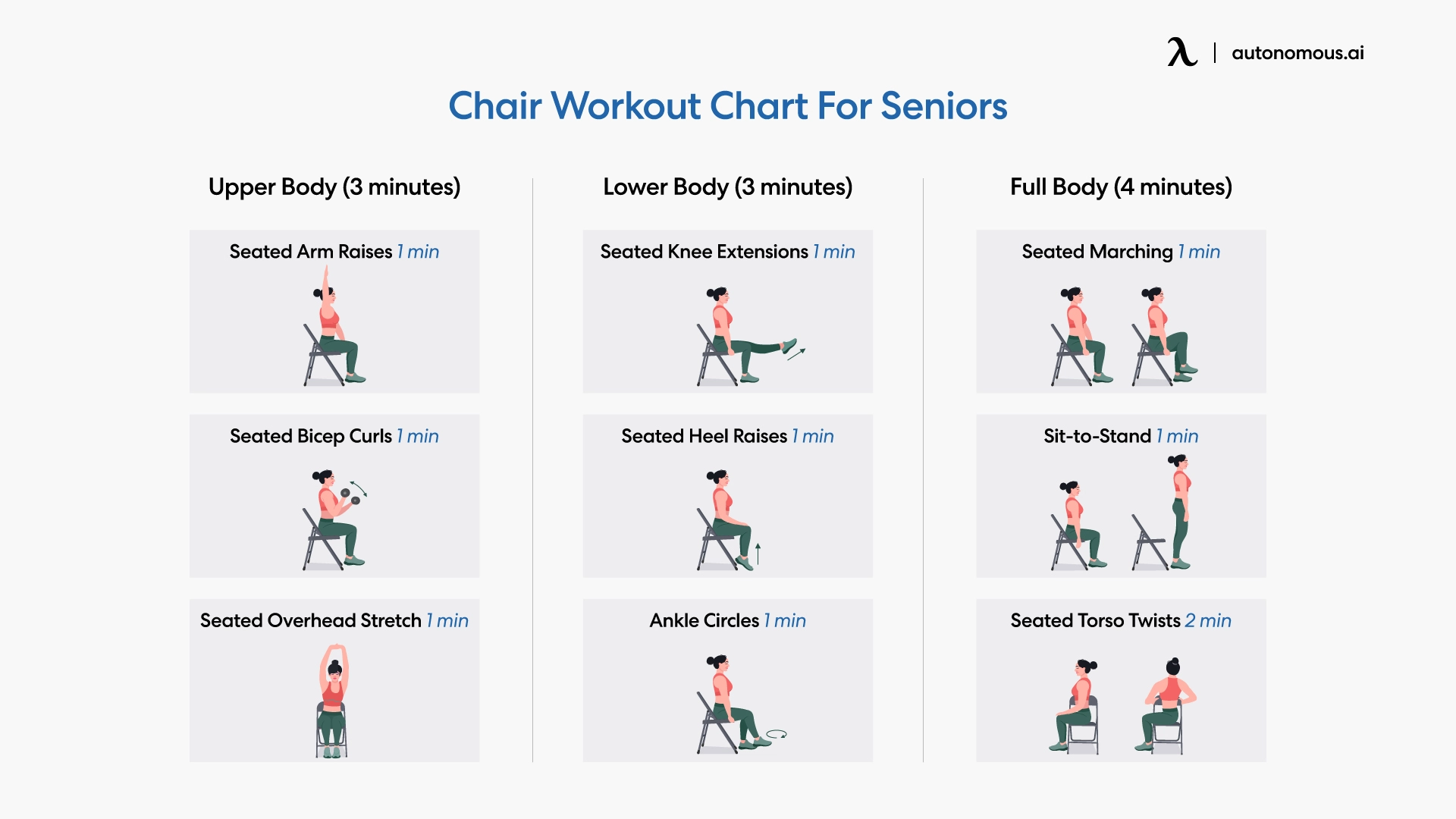
Even low-impact exercise requires caution. Protect your body and maximize results with these key guidelines.
Choose the Right Chair
Use a sturdy, armless chair that won’t slide.
– Dining chair or office chair (without wheels) works.
– Avoid plush sofas or recliners. They reduce stability.
– Place chair against a wall if balance is a concern.
Visual Check: Chair height should allow feet to rest flat on the floor.
Monitor for Warning Signs
Stop immediately if you experience:
– Chest pain or pressure
– Dizziness or lightheadedness
– Shortness of breath beyond mild exertion
– Joint pain or sharp discomfort
Rule of Thumb: Exercise should feel like effort, not pain.
Consult Your Doctor First
Always talk to your doctor before starting any new exercise program, especially if you have heart conditions, osteoporosis, or recent surgeries.
Chair cardio exercises for seniors are safe for most, but personalized advice ensures long-term success.
Daily Benefits of Seated Cardio
You don’t need intense workouts to gain real health improvements. Just 5 minutes a day delivers measurable results.
Heart Health Improvements
Regular chair cardio lowers:
– Resting heart rate
– Blood pressure
– Risk of stroke and heart attack
Even short bursts improve circulation and vascular function over time.
Mobility and Independence
Daily movement prevents stiffness and supports joint health. Seniors who stay active maintain better balance and reduce fall risk, even when seated.
Mood and Energy Boost
Physical activity increases endorphins. Many seniors report better sleep, less anxiety, and more daytime energy after starting a seated routine.
Sample Weekly Plan
Get started with this simple 7-day schedule.
| Day | Workout | Duration |
|---|---|---|
| Monday | Full 5-min circuit | 5 min |
| Tuesday | Upper body focus | 5 min |
| Wednesday | Repeat circuit + 1 extra round | 10 min |
| Thursday | Rest or gentle stretch | — |
| Friday | Lower body + fast feet | 5 min |
| Saturday | Full circuit with light weights | 10 min |
| Sunday | Rest or walk + seated cool down | — |
Progression Tip: After two weeks, aim for 10 minutes daily.
Frequently Asked Questions About Chair Cardio for Seniors
How often should seniors do chair cardio exercises?
Most seniors benefit from doing chair cardio exercises 3 to 5 times per week. Daily short sessions of 5 minutes are also safe and effective for building consistency and cardiovascular health.
Can chair cardio help lower blood pressure?
Yes, regular chair cardio can help lower blood pressure over time. Rhythmic movement improves circulation and supports heart health, especially when paired with doctor-approved lifestyle changes.
What type of chair is best for seated cardio?
A sturdy, armless chair without wheels works best. Dining chairs or stable office chairs allow feet to rest flat on the floor and provide the support needed for safe movement.
Is chair cardio safe for seniors with limited mobility?
Chair cardio is specifically designed for seniors with limited mobility. All movements are performed while seated, reducing fall risk while still delivering cardiovascular and strength benefits.
Do I need any equipment for chair cardio workouts?
No equipment is required to start. A sturdy chair is the only tool needed. Light hand weights (1–2 lbs) can be added later to increase intensity once you master the basic moves.
How long until seniors see results from chair cardio?
Many seniors report improved energy and easier movement within 2 weeks of consistent practice. Measurable heart health benefits typically develop over several weeks of regular, doctor-approved exercise.
Final Tips for Making Chair Cardio a Daily Habit
Chair cardio exercises for seniors work best when done consistently. Five minutes a day beats 30 minutes once a week, so anchor your workout to a daily habit like after breakfast or during a TV commercial break. Track small wins such as easier breathing, faster completion time, and better posture. Pair your routine with water and balanced nutrition for full heart-health support. Start today, stay consistent, and let this simple 5-minute seated cardio blast become your daily act of self-care.