Pilates Cardio Exercises: Quick Guide
You love Pilates for its precision, core focus, and long, lean results, but if you’re only doing traditional mat work, you might be missing a key piece: cardiovascular conditioning. Pilates cardio exercises bridge the gap between strength and stamina, turning a toning session into a calorie-torching, heart-healthy workout. These hybrid routines combine the controlled movements of Pilates with heart-pumping intervals to deliver faster fat loss, improved endurance, and full-body sculpting, all without sacrificing form or joint safety.
Unlike high-impact cardio like running or HIIT, pilates cardio exercises are low on joints but high on efficiency. You will maintain your core stability and alignment while elevating your heart rate, making it ideal for those seeking sustainable fitness that lasts a lifetime. Whether you’re a beginner looking to lose weight or an athlete aiming to boost power and coordination, this guide delivers actionable routines, proven methods, and science-backed results, all rooted in expert-designed protocols. By the end, you’ll know exactly how to turn your Pilates practice into a dynamic, energizing cardio experience.
Blend Pilates and Cardio Safely
Know Your Intensity Zone
To get real cardiovascular benefits, your heart rate must rise, but not to the point of gasping. The sweet spot is moderate intensity, where you’re working hard but still able to speak in short sentences. This ensures your body burns fat efficiently without overloading your system.
Use this simple test: during a cardio interval, try saying, “This feels challenging but sustainable.” If you can’t finish the sentence without pausing for breath, slow down. There is no universal target heart rate, so your body’s feedback is more reliable than any monitor.
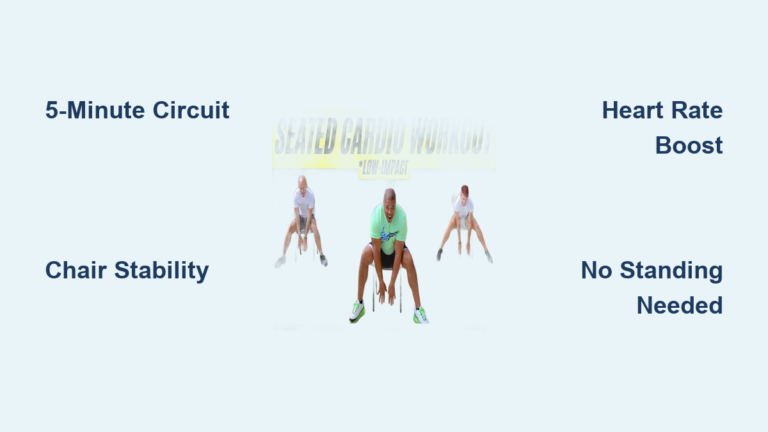
Start slow. If you’re new to movement or recovering from injury, remove jumps, reduce speed, or perform exercises seated. Over time, increase duration before boosting intensity. This prevents burnout and builds lasting endurance.
Warm Up for Dynamic Movement
Jumping straight into cardio-Pilates risks injury. A 10-minute warm-up prepares your joints, muscles, and cardiovascular system for the work ahead.
Begin with:
– Marching in place (2 mins)
– Arm circles and shoulder rolls (1 min)
– Gentle spinal twists (1 min)
– Light jogging on the spot (2 mins)
– Hip circles and ankle rolls (2 mins)
Focus on smooth, controlled motion. Your goal is to feel warm and loose, not exhausted before the main workout begins.
Prioritize Form Over Speed
Speed doesn’t equal results if your form breaks down. In pilates cardio exercises, control is king. Even during fast intervals, maintain:
– Neutral spine
– Engaged core with ribcage aligned with pelvis
– Even weight distribution
– Full-body awareness
If you find yourself hunching, holding your breath, or losing balance, reduce the pace. It is better to do 20 perfect reps slowly than 40 sloppy ones.
Choose Your Workout Style
Interval Circuit Model

This format alternates 30 seconds of cardio with 20 reps of Pilates, maximizing calorie burn while preserving muscle tone.
How it works:
– Complete one cardio burst plus one Pilates move
– Repeat the pair twice
– Move to the next group
– Total: 7 groups (approx. 28 minutes)
Best for: Home workouts, fat loss, time efficiency
Sample Pair:
– Cardio: Lunge Jacks (30 sec)
– Pilates: Double Leg Stretch (20 reps)
– Repeat x2
This method keeps your heart rate elevated while giving muscles brief recovery. You’ll torch calories and sculpt abs, glutes, and thighs, all in under 30 minutes.
Timed Rotation Routine
In this 30-minute circuit, each exercise lasts 60 seconds, followed by a 30-second Side Mountain Climber transition.
Structure:
– 7 exercises
– 3 full rounds
– 1 minute rest between rounds
Equipment: Dumbbells (or water bottles), mat
Why it works: The consistent timing builds endurance. The Side Mountain Climber acts as active recovery, keeping your core engaged and heart rate steady.
Ideal for: Intermediate users wanting structure and progression
Pro Tip: Use a timer app with interval alerts to stay on track without checking your phone.
Jumpboard Aerobic Pilates
For a unique, low-impact cardio boost, try Reformer jumpboard training. This method uses supine (lying down) jumps to activate fast-twitch muscle fibers with minimal joint stress.
Key benefits:
– Builds leg power (great for athletes)
– Safe for knees and ankles
– Burns more calories than traditional Reformer work
Class Flow:
1. Warm-up: Foot patterns (red and blue springs)
2. Add hand movements
3. Introduce light weights (2 lbs)
4. Play music, increase speed
5. Simulate “running uphill” (more springs) or “on the moon” (less resistance)
6. Cool down with stretches (Elephant, Mermaid)
Best for: Studio classes, rehab, baby boomers, and athletes
Note: This is not just “fast Pilates.” It is a choreographed, music-driven format that feels like dancing on a trampoline while lying down.
Split-Session Strategy
Can’t handle cardio and Pilates together? Do them separately.
Option 1: Cardio in the morning, Pilates in the evening
Option 2: Cardio 3x/week, add Pilates 1–2x/week
Why it works:
– Prevents overtraining
– Boosts metabolism all day
– Improves sleep quality
– Enhances recovery
Perfect for beginners or anyone sensitive to intense back-to-back workouts. Even one day of Pilates per week improves posture and movement efficiency, helping you perform better in cardio sessions.
Core Cardio Moves
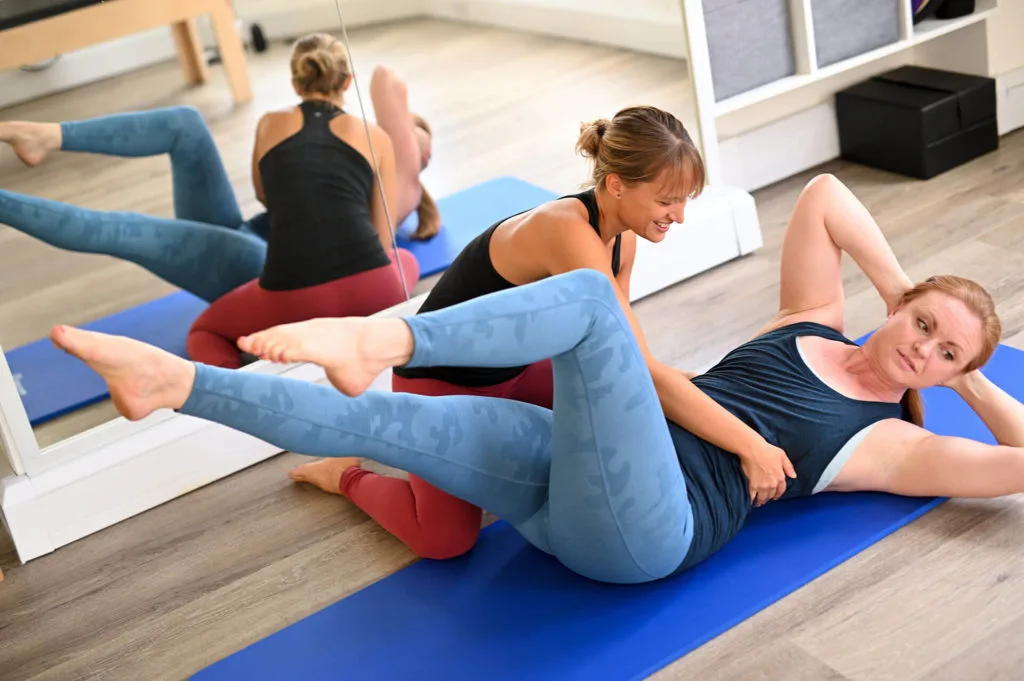
Criss Cross at Cardio Pace
This classic Pilates move becomes a cardio burner when sped up, all without losing form.
How to:
– Lie on back, spine neutral
– Lift head and chest slightly
– Hands behind head, elbows wide
– Bring opposite elbow to knee while extending the other leg
– Alternate sides with control
Intensity tip: Increase speed gradually. Stop if your lower back lifts off the mat.
Modifications:
– Keep head down, move legs only
– Do one side at a time
– Bend both knees if hip flexors cramp
Duration: 40 seconds work / 20 seconds rest
Avoid if: Pregnant (after first trimester) or have osteoporosis; use head-down version only.
Jumping Oblique Twists
A fast-paced twist that fires up the obliques and heart.
How to:
– Stand with feet hip-width
– Cross arms in front of chest
– Jump and rotate 90 degrees to one side
– Land softly, immediately jump to the other side
Keep it safe:
– Land with bent knees
– Rotate from the waist, not the neck
– Engage core to protect lower back
Easier version: Step instead of jump
Harder version: Hold light weights or increase jump height
Use this as a 30-second burst before side-lying Pilates work.
Dynamic Boat with Weights
Sit, balance, and burn. This seated move challenges your deep core and hip flexors while raising your heart rate.
How to:
– Sit on mat, knees bent
– Hold two dumbbells (or water bottles) at chest level
– Lean back slightly, lift feet off floor
– Extend legs to 45 degrees
– Pulse legs up and down while maintaining balance
Focus on:
– Keeping spine long
– Ribcage stacked over pelvis
– Breathing steadily
Duration: 60 seconds
Modification: Keep feet on the floor and pulse knees instead.
Lower Body Power Builders
Squat to Toes
A full lower-body ignition that activates glutes, quads, and calves with a cardio kick.
How to:
– Feet hip-width, toes slightly out
– Sit back into hips (like sitting in a chair)
– Keep chest lifted, weight in heels
– Push through feet to stand, then rise onto toes
– At the top, body forms a straight line
Form cues:
– Knees aligned with toes
– Core engaged throughout
– Avoid leaning forward
Duration: 40 seconds work / 20 seconds rest
Modification: Hold a wall or chair for balance
Lunge to Hop
Builds single-leg strength, balance, and power, perfect for athletic performance.
How to:
– Step forward into a lunge
– Front knee at 90°, back knee hovering
– Push off front foot, bring back leg forward
– Jump upward, switch legs mid-air
– Land softly in a lunge with opposite leg forward
Landing safety:
– Absorb impact with both legs
– Keep torso upright
– Don’t let front knee collapse inward
Easier version: Step back instead of hopping
Harder version: Increase jump height
Duration: 20 seconds per side (40 sec total)
Ski Jumps for Agility
Mimics skiing motion to boost lateral power and coordination.
How to:
– Start in a squat
– Jump sideways to the left, landing softly
– Immediately jump to the right
– Keep low and move quickly
Keep it controlled:
– Bend knees deeply
– Arms can mimic pole plants
– Core tight to prevent wobbling
Modification: Step side-to-side instead of jumping
Duration: 40 seconds work / 20 seconds rest
Use this to fire up the glutes and improve agility, great for winter sports prep.
Full Body Fusion Moves
Squat and Walk Out Plank
One move, total-body payoff. This links lower body, core, and upper body in a flowing sequence.
How to:
– Start standing, feet hip-width
– Squat down, place hands on floor
– Walk hands out to high plank
– Optional: Tap opposite shoulder with hand
– Walk hands back to feet
– Stand up
Form focus:
– Keep back flat during plank
– Engage glutes and core
– Move with control, not speed
Modification: Drop knees in plank
Challenge: Add shoulder taps or increase pace
Duration: 40 seconds work / 20 seconds rest
This move builds functional strength and endurance, ideal for daily movement patterns.
High Plank Toe Touch
A core and shoulder burner that doubles as cardio when done fast.
How to:
– Start in high plank, hands on dumbbells
– Engage core, keep hips still
– Reach right hand back to touch left foot
– Return to plank, then touch left hand to right foot
– Alternate quickly
Key cues:
– Don’t let hips rock side to side
– Keep neck neutral
– Breathe steadily
Modification: Perform without weights or on knees
Duration: 60 seconds
This move improves shoulder stability and oblique control, essential for injury prevention.
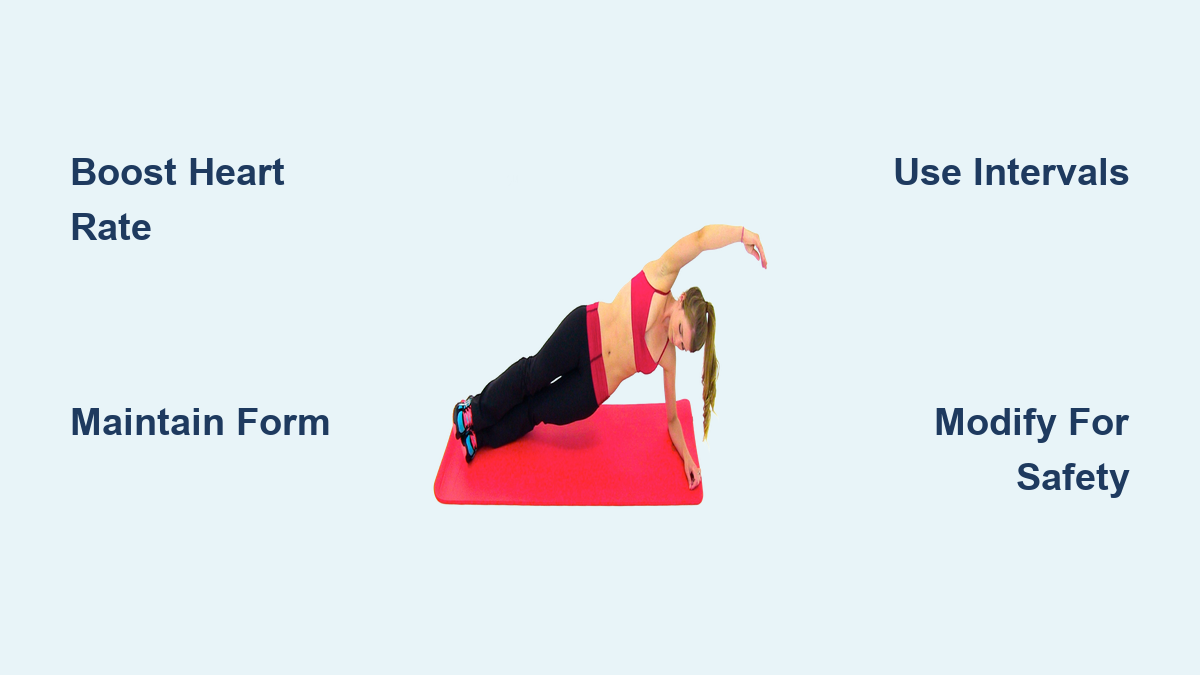
Side Mountain Climber
Used as active transition, this move keeps your heart rate up between exercises.
How to:
– Start in high plank
– Drive right knee toward right elbow
– Return, then drive left knee to left elbow
– Alternate quickly
Keep it sharp:
– Hands under shoulders
– Back flat, glutes engaged
– Minimize bouncing
Duration: 30 seconds between main exercises
Perfect for keeping momentum in timed circuits, and your obliques will feel the burn.
Customize for Your Level
Modify for Joint Safety
If you have knee, ankle, or back issues, you don’t need to skip cardio. Use these smart swaps:
| Original Move | Safe Alternative |
|---|---|
| Lunge to Hop | Step-back lunge |
| Ski Jumps | Side steps with squat |
| Jumping Jacks | Step jacks |
| Criss Cross | Head-down leg twists |
The jumpboard is especially joint-friendly. Supine jumps reduce impact by up to 70% compared to standing jumps.
Scale for Pregnancy and Osteoporosis
Certain moves must be modified:
- After first trimester: Avoid supine rotational work (e.g., Criss Cross). Use seated or standing twists instead.
- Osteoporosis: Skip head-up rotations. Perform leg movements only, with head supported.
Always consult your healthcare provider before starting a new program.
Progression Path
Build intensity the smart way:
- Remove impact (step instead of jump)
- Reduce range (shallow squat, smaller twist)
- Separate movements (squat, then twist)
- Add support (use chair or wall)
- Increase speed or resistance
This hierarchy ensures safety while allowing long-term progress.
Fuel Results with Routine
Burn 168–252 Calories in 28 Minutes
Traditional Pilates burns 3–6 calories per minute. Add cardio intervals, and that jumps to 6–9 calories per minute.
A single 28-minute session can burn:
– 168–252 calories (depending on weight and effort)
That’s double the calorie burn, without leaving the Pilates framework.
Pro tip: Combine with a healthy diet rich in vegetables, whole grains, lean protein, and nuts. Exercise won’t compensate for poor nutrition.
See Changes in 2–3 Weeks
With 3–5 sessions per week, visible results appear fast:
- Reduced bloating
- Tighter core
- Improved posture
- Better endurance
Consistency beats intensity. Even 20 minutes daily delivers more progress than one hour weekly.
Stay Motivated with Fun
Many people hate treadmills, but love dancing, laughing, and moving to music.
Incorporate:
– Disco or upbeat playlists
– Instructor-led pattern calls
– Group energy (in class)
This reduces perceived effort and boosts adherence, especially in fall and winter months when motivation dips.
Frequently Asked Questions About Pilates Cardio Exercises
How many calories do pilates cardio exercises burn compared to regular Pilates?
Traditional Pilates burns 3–6 calories per minute, while pilates cardio exercises burn 6–9 calories per minute. A 28-minute blended session can total 168–252 calories burned, which is roughly double the rate of standard mat work.
Can beginners do pilates cardio exercises safely?
Yes, beginners can start safely by removing jumps, reducing speed, or performing exercises seated. A 10-minute warm-up and proper form are essential. Gradually increase duration before boosting intensity to build endurance without burnout.
Are pilates cardio exercises safe for bad knees?
Yes, especially when using a Reformer jumpboard. Supine jumps reduce impact by up to 70% compared to standing jumps. You can also swap lunges for step-backs and ski jumps for side steps to protect your joints.
How often should I do pilates cardio exercises each week?
You can perform these workouts 3–5 times per week due to their low impact on specific muscle groups. To prevent plateaus, rotate between different workout structures like the Interval Circuit and the Weighted Rotation.
Can I do pilates cardio exercises while pregnant?
After the first trimester, avoid supine rotational work like the standard Criss Cross. Use modified versions with your head down, or switch to seated or standing twists. Always consult your healthcare provider before starting.
What equipment do I need for pilates cardio exercises at home?
At minimum, you need a mat. For weighted routines, dumbbells or water bottles work well. For jumpboard aerobic Pilates, you’ll need access to a Reformer with a jumpboard and variable spring resistance.
Key Takeaways for Building Your Pilates Cardio Routine
Pilates cardio exercises offer a powerful hybrid approach that doubles your calorie burn while preserving the core strength, alignment, and joint safety that make Pilates so effective. You can choose from interval circuits, timed rotations, jumpboard training, or split sessions depending on your fitness level and schedule. Start with one method, master the moves with proper form, and progress gradually by removing impact first, then adding speed or resistance over time. With 3–5 sessions per week and a healthy diet, visible changes in core tone, posture, and endurance can appear in just 2–3 weeks.
Your next step: Pick one workout style from this guide and commit to three sessions this week. Track how your body responds, then rotate to a new method next week to keep your routine fresh and your results compounding.