Rowing Machine Cardio Benefits: Full Guide
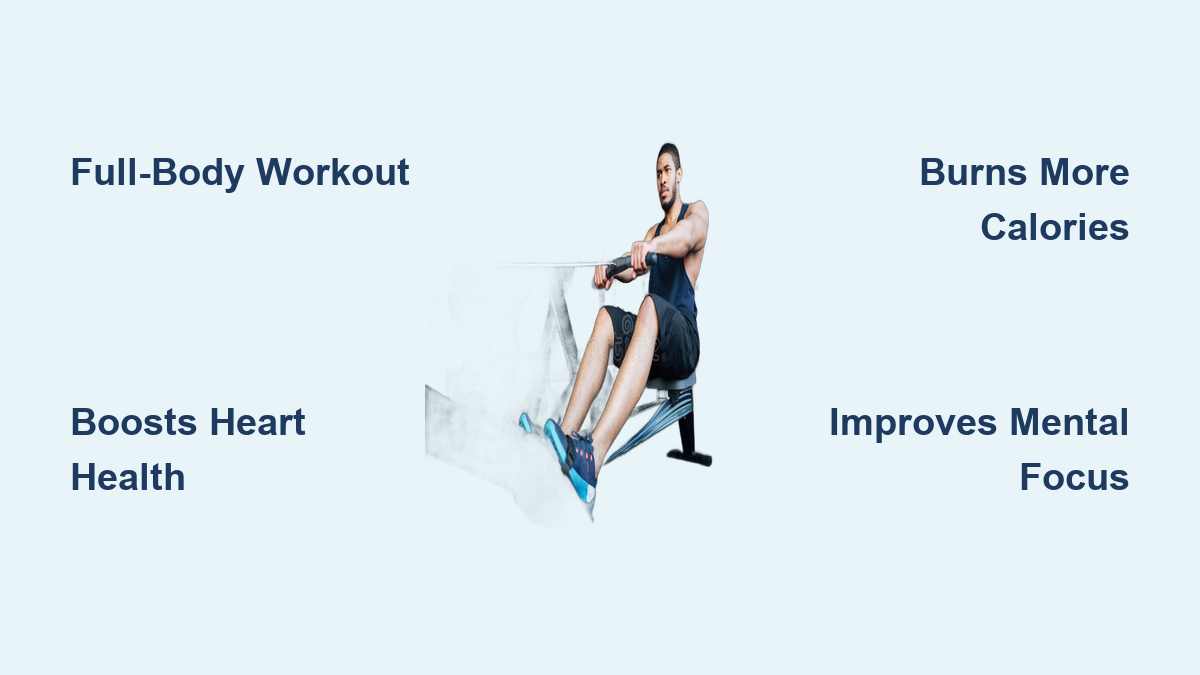
Looking for one workout that strengthens your heart, builds muscle, and burns serious calories without wrecking your joints? The rowing machine delivers all of this in a single, fluid motion. Unlike treadmills or ellipticals that target mostly the lower body, rowing machine cardio benefits extend across 86% of your major muscle groups, making it one of the most efficient forms of cardiovascular training available.
Each stroke activates your legs, core, back, shoulders, and arms simultaneously, pushing your heart and lungs to work harder than isolated cardio exercises. Research shows that consistent rowing can boost your VO₂ max by 10% in just eight weeks, while also lowering blood pressure, reducing body fat, and sharpening brain function. It is low-impact, suitable for nearly all fitness levels, and fits into tight schedules with sessions as short as 20 minutes.
In this guide, you’ll discover exactly how rowing transforms your body and mind, how it compares to other cardio machines, and how to use it safely for maximum results.
Strengthen Your Heart with Every Stroke
Rowing ranks among the most effective aerobic exercises for cardiovascular health. By demanding high oxygen delivery to large muscle groups at once, it forces your heart to become stronger and more efficient over time.
Cut Heart Disease Risk by 36%
Decades of research confirm that regular aerobic exercise like rowing can reduce the risk of heart disease by 36%. This protection comes from improved circulation, reduced arterial stiffness, and better lipid profiles. A 2015 study found that consistent rowing lowered LDL (“bad”) cholesterol and triglyceride levels, two key contributors to plaque buildup in arteries.
Because rowing is low-impact, individuals with existing heart conditions or those recovering from cardiac events can often perform it safely under medical supervision. The seated position also reduces strain on the circulatory system compared to upright, weight-bearing exercises like running.
Lower Blood Pressure Naturally
High blood pressure often goes unnoticed until it causes serious damage, but rowing helps regulate it through consistent vascular conditioning. Over time, your heart pumps blood more efficiently, reducing both systolic and diastolic pressure. Aim for moderate-intensity sessions (60–75% of max heart rate) lasting 20–30 minutes, 3–5 times per week to align with CDC guidelines.
Pro Tip: Track your resting heart rate weekly. As your heart strengthens, you should see a gradual decline of 5–10 beats per minute within 6–8 weeks.
Improve Cholesterol and Free Fatty Acid Levels
Beyond lowering LDL cholesterol, rowing specifically targets plasma free fatty acids (FFA), molecules linked to insulin resistance and heart disease. In an 8-week study of people with type 2 diabetes, rowing reduced FFA concentrations by 2.6%, contributing to better metabolic health overall.
Boost VO₂ Max Faster Than Cycling
VO₂ max measures the maximum amount of oxygen your body can use during intense exercise. It serves as a gold-standard indicator of aerobic fitness. Rowing excels at elevating this metric, especially for beginners.
Reach 92%+ of Max Heart Rate Safely
Unlike running, where joint impact limits intensity, rowing allows you to hit 92% or more of your maximum heart rate without pounding your knees or hips. This makes it ideal for heavier individuals or anyone with joint sensitivities who still wants high-intensity training.
A 2021 study showed that beginners who rowed three times per week (two steady 30-minute sessions and one HIIT session) improved their VO₂ max by about 10% in eight weeks. That is comparable to gains seen in elite athletes using more complex training protocols.
Match Cycling Performance at Peak Output
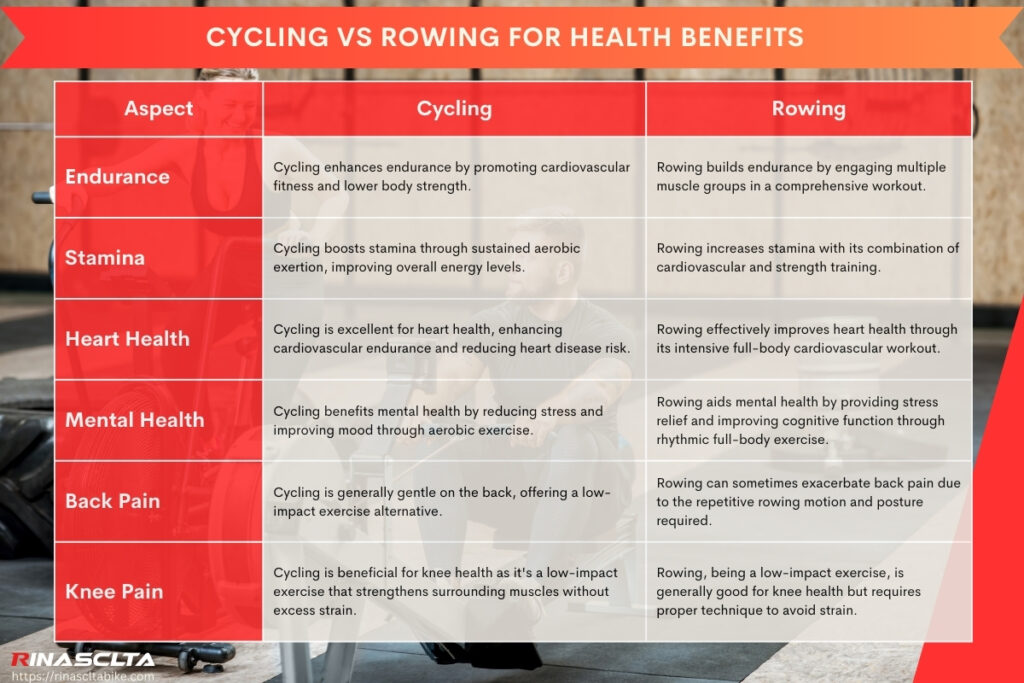
Research from 1995 found that elite athletes achieved the same peak VO₂ on a rower as on a stationary bike, proving the machine can fully tax the aerobic system. But rowing goes further by adding significant muscular resistance, turning it into a hybrid cardio-strength workout.
Why it matters: You get the aerobic payoff of cycling plus the added benefit of full-body muscle engagement, something cycling cannot match.
Sustain High Intensity Longer Than Running
Running may burn slightly more calories at top speed, but most people cannot sustain sprinting for long. Rowing lets you maintain high cardiac output for extended periods thanks to its smooth, rhythmic motion. This sustained effort leads to greater cumulative calorie burn and better aerobic adaptation.
Burn More Calories Than Ellipticals
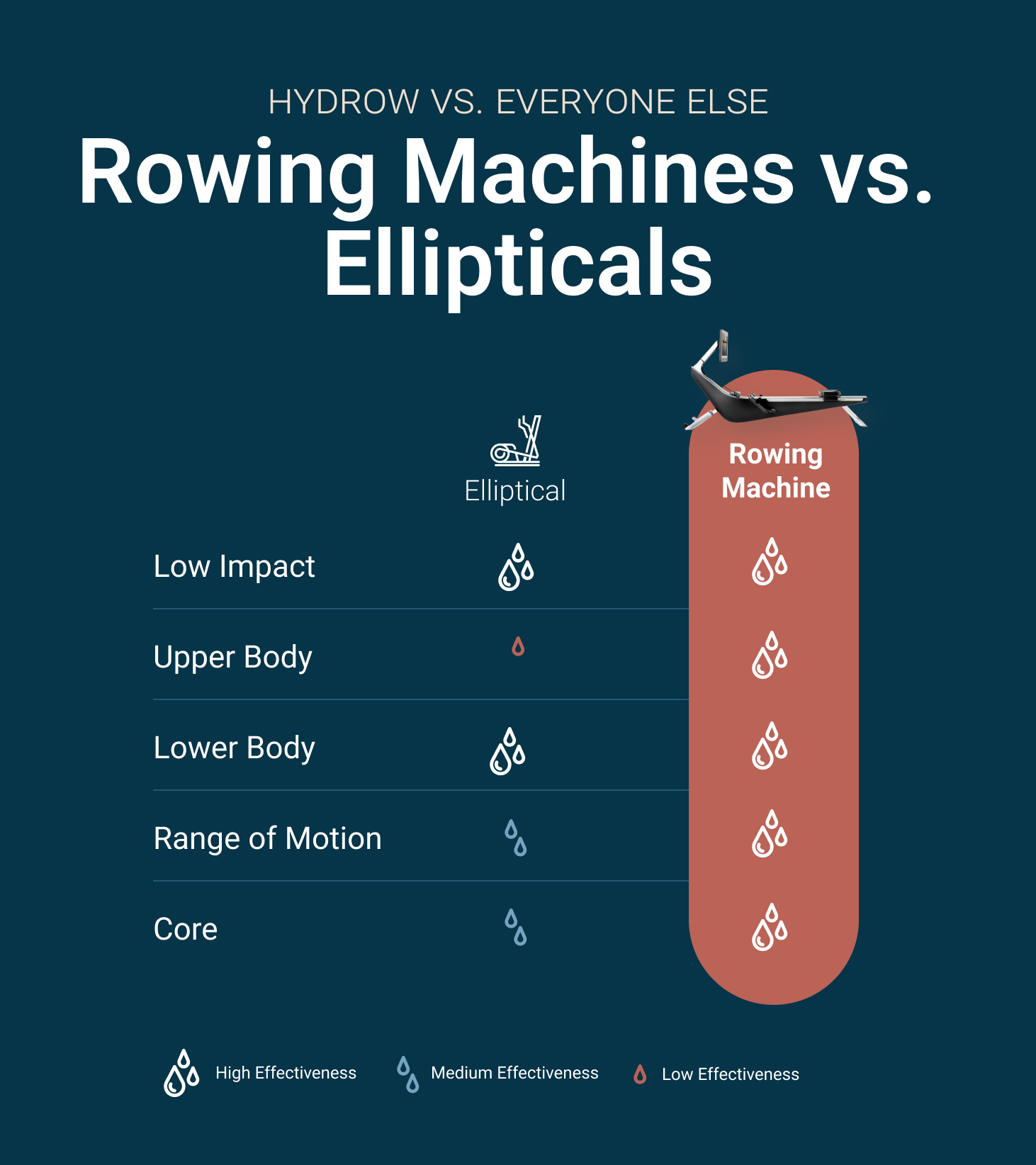
When it comes to calorie expenditure, rowing consistently outperforms other low-impact cardio machines, especially for heavier users. More muscle activation equals higher energy demand.
30-Minute Calorie Burn Comparison
| Body Weight | Rowing (Vigorous) | Elliptical (Vigorous) |
|---|---|---|
| 125 lbs | ~255 calories | ~270 calories |
| 155 lbs | ~369 calories | ~324 calories |
| 185 lbs | ~440 calories | ~378 calories |
While lighter individuals may burn slightly more on an elliptical, rowers pull ahead as body weight increases. At 185 lbs, rowing burns 62 more calories in 30 minutes, a 16% advantage.
Afterburn Effect Lasts 24–48 Hours
Rowing triggers a powerful Excess Post-Exercise Oxygen Consumption (EPOC), commonly called the “afterburn effect.” After a vigorous session, your body continues burning extra calories for up to two days as it repairs muscles, replenishes energy stores, and restores oxygen levels.
This effect is amplified because rowing combines strength and cardio. The greater the muscle mass involved, the higher the EPOC. You will often feel warmer and breathe heavier long after stepping off the machine.
Trim Belly Fat with Full-Body Effort
You cannot spot-reduce fat, but rowing hits the core hard with every stroke. The abdominal muscles contract continuously to stabilize your torso during the drive and recovery phases, acting like dynamic planks. Combined with the caloric deficit rowing creates, this leads to measurable reductions in visceral and subcutaneous abdominal fat.
One study found participants lost 5.4–16.1% of total body fat in just four weeks of indoor rowing, results rivaling sprint interval training.
Control Blood Sugar and Fight Diabetes
For people with type 2 diabetes or insulin resistance, rowing offers a powerful non-pharmaceutical tool to improve glucose metabolism.
Lower Fasting Blood Glucose by 8.5%
An 8-week rowing program resulted in an 8.5% decrease in fasting blood glucose levels among diabetic participants. This improvement stems from increased glucose uptake by working muscles, especially large leg and back groups that act as metabolic sinks.
Reduce HbA1C by 3.9%
HbA1C measures average blood sugar over 2–3 months. In the same study, participants saw their HbA1C drop by 3.9%, a clinically significant change that reduces long-term complication risks like neuropathy and retinopathy.
HIIT on a Rower Beats Longer Workouts
Even low-volume HIIT sessions under 15 minutes on a rower produce glucose control benefits equal to or better than longer moderate workouts. Try this protocol:
- Warm-up: 3 minutes easy rowing
- Intervals: 8 rounds of 30 seconds all-out, 90 seconds recovery
- Cool-down: 3 minutes
This short, intense format improves insulin sensitivity quickly and fits into busy schedules.
Build Strength and Protect Your Bones

Most cardio machines focus on endurance, but rowing uniquely builds both strength and stamina. Each stroke is a compound movement that develops power, tones muscles, and protects joints.
Develop Full-Body Power and Muscle Tone
The drive phase generates explosive force from the legs, transferred through the core and amplified by the back and arms. This builds functional strength, the kind you use in daily life. Over time, users report visible definition in their shoulders, back, arms, core, and legs. You do not need weights to build muscle, just consistent rowing with proper form.
Increase Bone Density in Key Areas
Despite being low-impact, rowing applies resistance that stimulates bone growth. After seven months of training, participants showed a 2.9% increase in lower lumbar spine density and a 4.2% improvement in overall bone mineral content. This makes rowing a smart choice for osteoporosis prevention, especially in postmenopausal women and older adults.
Protect Joints While Building Strength
Rowing eliminates ground-impact forces, making it ideal for people with arthritis, knee pain, hip issues, or those recovering from injury. A 2022 study found that adults with mild knee osteoarthritis who rowed for 12 weeks experienced reduced knee pain, stronger thigh muscles, and improved ability to stand from a chair.
The full range of motion also lubricates joints, embodying the principle that “motion is lotion,” reducing stiffness and improving mobility.
Sharpen Your Mind and Reduce Stress
The benefits of rowing extend well beyond the physical. Its rhythmic, repetitive motion creates a meditative effect that calms the mind and sharpens cognitive function.
Cut Anxiety and Fight Depression
The catch-drive-finish-recover cycle creates a natural rhythm that promotes mindfulness. Focusing on stroke technique helps quiet racing thoughts, while physical exertion releases endorphins that elevate mood and reduce stress. A 2022 review in JAMA Psychiatry found that just over two hours of weekly movement, including indoor rowing, was linked to a significantly lower risk of depression.
Grow Brain Memory Centers by 3.2%
Aerobic exercise like rowing increases hippocampal volume, the brain region responsible for memory and learning. After 12 weeks, participants saw 2–3.2% growth in hippocampal size, effectively reversing age-related decline.
Boost Concentration and Reaction Time
Six months of rowing elevates BDNF (Brain-Derived Neurotrophic Factor), a protein that supports neuron health. One study showed a 45% increase in concentration levels, while another found 12.4–24.2% faster reaction times after eight weeks, valuable for athletes, drivers, and aging adults alike.
Sleep Tip: Row at moderate intensity earlier in the day to improve sleep quality. Avoid vigorous sessions within 2 hours of bedtime.
Safe for Seniors, Visually Impaired, and Chronic Conditions
Rowing is one of the most inclusive forms of exercise, adaptable to nearly any ability level.
Ideal for Older Adults
Seniors benefit from rowing because it is seated (reducing fall risk), builds core and leg strength, improves posture, and enhances balance indirectly. The low-impact nature protects aging joints while still providing enough resistance to maintain muscle and bone mass.
Proven Safe for Low Vision and Blindness
A 2015 study confirmed that indoor rowing is safe and effective for people with visual impairments. With proper instruction and orientation, blind athletes can perform strokes accurately and gain the same cardiovascular and strength benefits.
Suitable for POTS and Other Conditions
People with Postural Orthostatic Tachycardia Syndrome (POTS) often struggle with upright exercise. Rowing allows them to train in a reclined position, minimizing orthostatic stress while still improving cardiovascular fitness.
Prevent Injury with Proper Form
Despite being low-impact, rowing can cause injury if performed incorrectly. The most common issue is low back pain, affecting 25–81% of male rowers.
Avoid Back Pain with a Leg-First Drive
The number one mistake is starting the drive with the back instead of the legs. This places excessive load on the lumbar spine. Use this correct sequence:
- Push with legs
- Lean back with core
- Pull with arms
Reverse the order on recovery: arms, body, legs.
Keep Your Core Engaged Always
Your abs should be tight throughout the stroke to stabilize your spine. Imagine balancing a book on your head; this encourages neutral spine alignment.
Do Not Pull Too High
Pull the handle to your upper abdomen or lower chest, not to your chin. Pulling too high strains the shoulders and can lead to rotator cuff issues.
Set Shin Angle at the Catch
At the catch position, your shins should be vertical. If your knees go past your toes, you risk hip impingement and labral tears.
Get Started with Smart Workouts
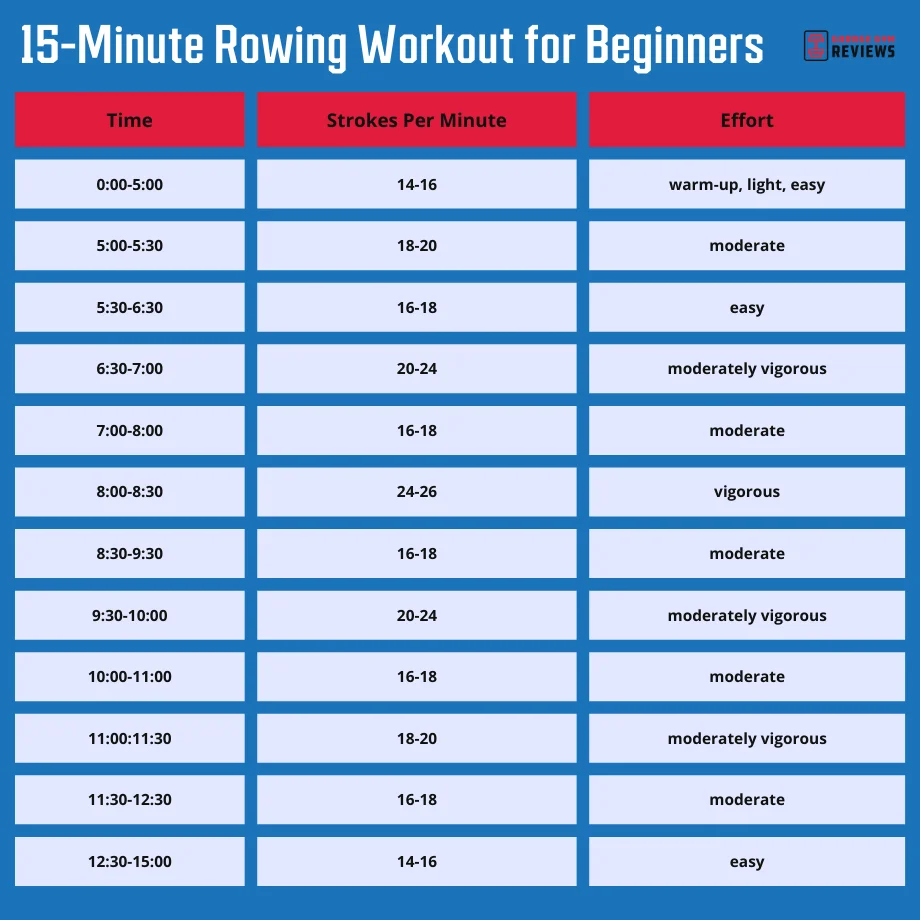
You do not need hours to benefit from rowing. Even 5 minutes a day helps, but 20 minutes is the sweet spot for cardiovascular gains.
Beginner Plan: Build Endurance Safely
- Frequency: 3–5 days per week
- Duration: Start with 10 minutes, build to 20
- Intensity: Moderate (able to talk in short phrases)
- Focus: Perfect form before increasing speed
Use a stroke rate of 20–26 spm (strokes per minute) for steady pacing.
Advanced: Try HIIT or Time Trials
2km Time Trial (Benchmark Test)
- Warm-up: 10 minutes with 3 x 20-stroke bursts
- Row 2,000 meters at even pace
- Record split time and retest every 6 weeks
Low-Volume HIIT (Under 15 Minutes)
- 30 seconds max effort, then 90 seconds rest
- Repeat 6–8 times
- Boosts fitness and glucose control
Row-and-Lift Circuit
- 5 rounds of 400m row, 10 kettlebell deadlifts, and 8 strict push-ups
- Rest 60 seconds between rounds
Timeline of Real Results
You will feel the benefits of rowing long before you see them.
| Timeframe | Physical and Mental Changes |
|---|---|
| Day 1 | Mood lift, increased energy |
| 2 Weeks | Better posture, less breathlessness |
| 4 Weeks | Body fat down 5.4–16.1% |
| 8 Weeks | Glucose down 8.5%, VO₂ max up 10% |
| 6 Months | Sharper focus, stronger muscles, better sleep |
Frequently Asked Questions About Rowing Machine Cardio Benefits
How many calories does 30 minutes of rowing burn?
A 30-minute vigorous rowing session burns approximately 255 calories for a 125-pound person, 369 calories for a 155-pound person, and 440 calories for a 185-pound person. This consistently outperforms elliptical training for individuals over 155 pounds.
Is rowing good for weight loss?
Yes, rowing is highly effective for weight loss. Studies show participants lost 5.4–16.1% of total body fat in just four weeks. The combination of high calorie burn, full-body muscle engagement, and a 24–48 hour afterburn effect makes it one of the best cardio machines for shedding fat.
Can rowing help lower blood pressure?
Regular rowing helps regulate blood pressure by improving cardiovascular efficiency. Aim for moderate-intensity sessions (60–75% of max heart rate) lasting 20–30 minutes, 3–5 times per week for best results. Many users see a 5–10 beat per minute drop in resting heart rate within 6–8 weeks.
Is rowing safe for people with knee problems?
Rowing is one of the best exercises for people with knee issues because it eliminates ground-impact forces. A 2022 study found that adults with mild knee osteoarthritis who rowed for 12 weeks experienced reduced pain and stronger thigh muscles. Always maintain proper form and avoid excessive knee bend at the catch.
How often should I row each week?
Beginners should start with 3 sessions per week and build to 5. More advanced users can row 4–6 times per week, mixing steady-state sessions with HIIT workouts. Even 5 minutes daily provides benefits, though 20 minutes is optimal for cardiovascular gains.
Does rowing build muscle or just endurance?
Rowing builds both. Each stroke is a compound movement that develops functional strength in the legs, core, back, shoulders, and arms while simultaneously improving cardiovascular endurance. You do not need weights to see visible muscle definition with consistent rowing.
Final Thoughts on Rowing Machine Cardio Benefits
The rowing machine is far more than another cardio option. It is a complete fitness system that builds a stronger heart, leaner body, sharper mind, and healthier joints, all with minimal wear and tear. Whether you want to lose weight, manage a chronic condition, or boost athletic performance, rowing delivers unmatched efficiency.
The three most important takeaways: rowing engages 86% of your muscles in one motion, it outperforms ellipticals and matches cycling for VO₂ max gains, and just 20 minutes a day produces measurable results in body fat, blood sugar, and aerobic capacity within 8 weeks.
Your next step: Start with a 10-minute beginner session today, focusing on the leg-core-arm sequence. Within two weeks, you will notice better posture and easier breathing. Within eight weeks, you will have measurable improvements in your fitness and health markers.