7 Best Glute-Focused Cardio Exercises for 2026
You want a firmer, rounder backside, but heavy lifting isn’t your only option. That’s exactly where glute-focused cardio exercises come in. Unlike standard cardio that burns calories with minimal muscle benefit, these workouts are built to activate, shape, and tone your glutes while torching fat at the same time.
This guide shows you how to turn any cardio session into a glute-building tool. You’ll learn the exact techniques, machines, and routines that force your gluteus maximus, medius, and minimus to fire on every rep. No fluff, no guesswork, just proven methods for visible lift and definition.
Optimize Glute Activation Before You Start
Before touching any machine, you need to shift from passive movement to intentional muscle engagement. This is the foundation that makes every glute-focused cardio exercise actually work.
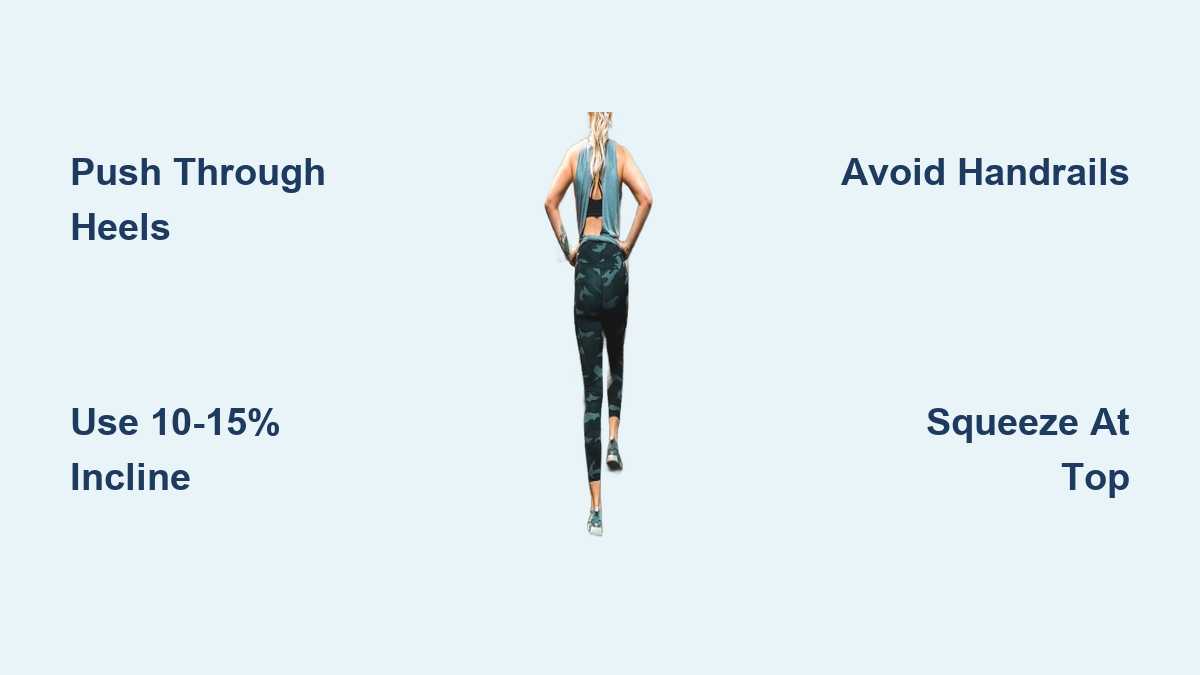
Push Through Your Heels
Foot mechanics determine which muscles do the work. Pushing through your heels shifts the load from your quads to your posterior chain. On treadmills, stair climbers, or ellipticals, keep your weight in the back of your foot. If you feel burning mostly in your thighs, you’re leaning forward or pressing through your toes.
Visual cue: Imagine pressing the floor away with your heels. This activates the glutes at the top of every stride.
Lean Forward from Your Ankles
Tilting at the waist engages your quads. Leaning from the ankles keeps your torso aligned and forces glutes to fire. This subtle shift matters most on inclines and sprints.
Pro tip: Keep your core tight and chest up. Your body should form a straight diagonal line from head to heel during uphill movement.
Squeeze at the Top of Every Rep
Most people miss the peak contraction. At the top of each step or squat, squeeze your glutes hard for 1 to 2 seconds. This mind-muscle connection increases activation and improves neuromuscular recruitment over time.
Stair Climber Protocols for Maximum Glute Activation
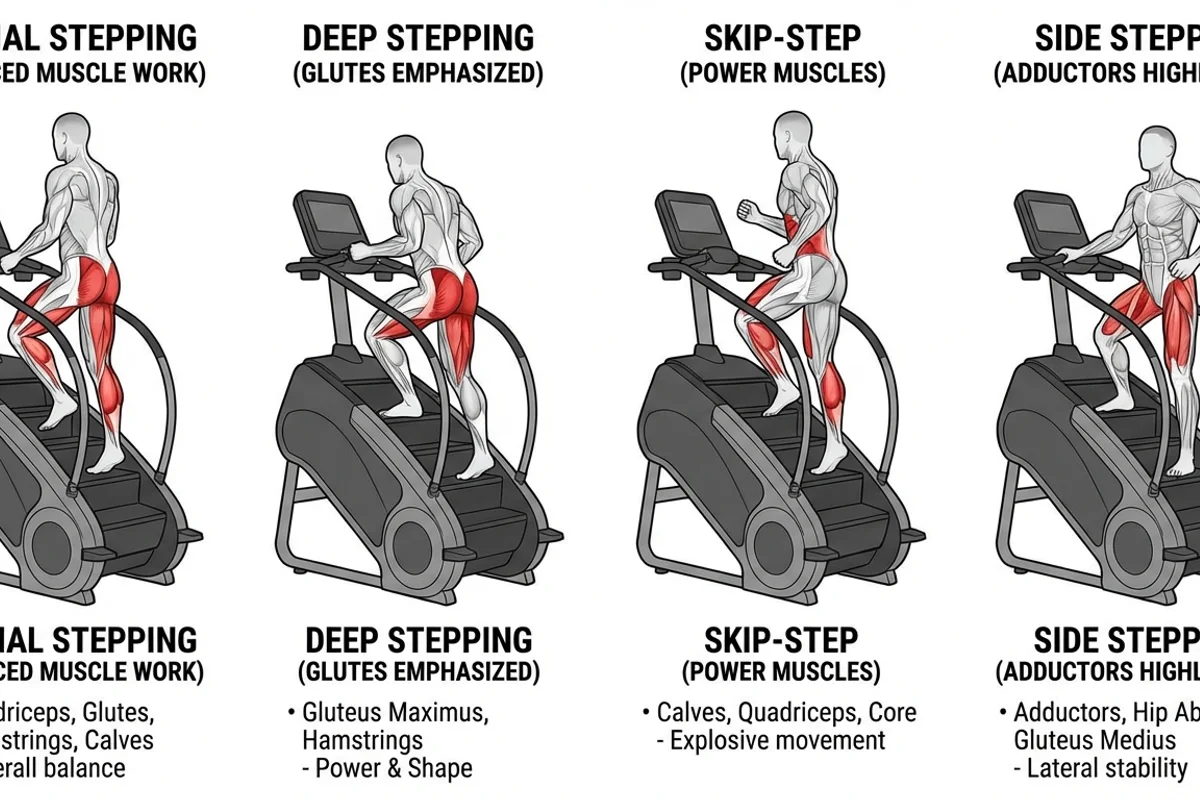
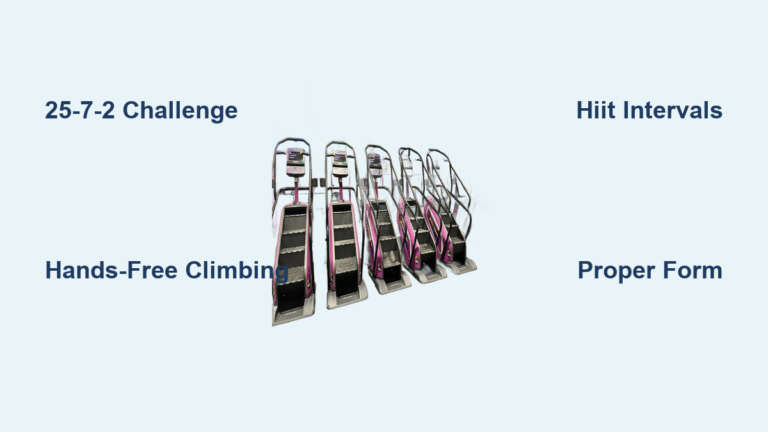
The StairMaster is one of the best machines for glute development when used with proper technique.
Avoid Holding the Rails
Gripping the handrails reduces lower-body load by up to 30%. Keep your hands off to force your glutes and legs to do the work. Use your core for balance instead.
If balance is a struggle:
– Lower the speed
– Reduce resistance
– Try side steps at a slower pace
Use a Full Range of Motion
Shallow steps produce minimal results. Step deeply to fully extend your hip and compress the glute at the top. Think “climb over a high step” with every rep.
Warning: Bouncing at the bottom increases joint stress. Control each descent.
Try Advanced Step Variations
Change your step pattern to hit all three glute muscles:
Skip a Step
Take two steps at once. This increases stride length and resistance, targeting the gluteus maximus.
When to use: Every 1 to 2 minutes during a 20-minute session.
Side Steps
Step laterally across the machine. This isolates the gluteus medius and minimus, improving hip stability and outer glute definition.
How to: Step right for 30 seconds, then left. Keep toes pointed slightly outward.
Backward Stepping
Walk backward on the machine. This recruits glutes from a different angle and improves coordination.
Tip: Start slow and focus on heel press and hip extension.
Kickbacks
Hold the rail, lift one leg behind you in a kickback motion. This isolates glutes mid-workout.
Use: As a finisher, 3 sets of 10 per leg after your main session.
Treadmill Incline Strategies That Actually Work
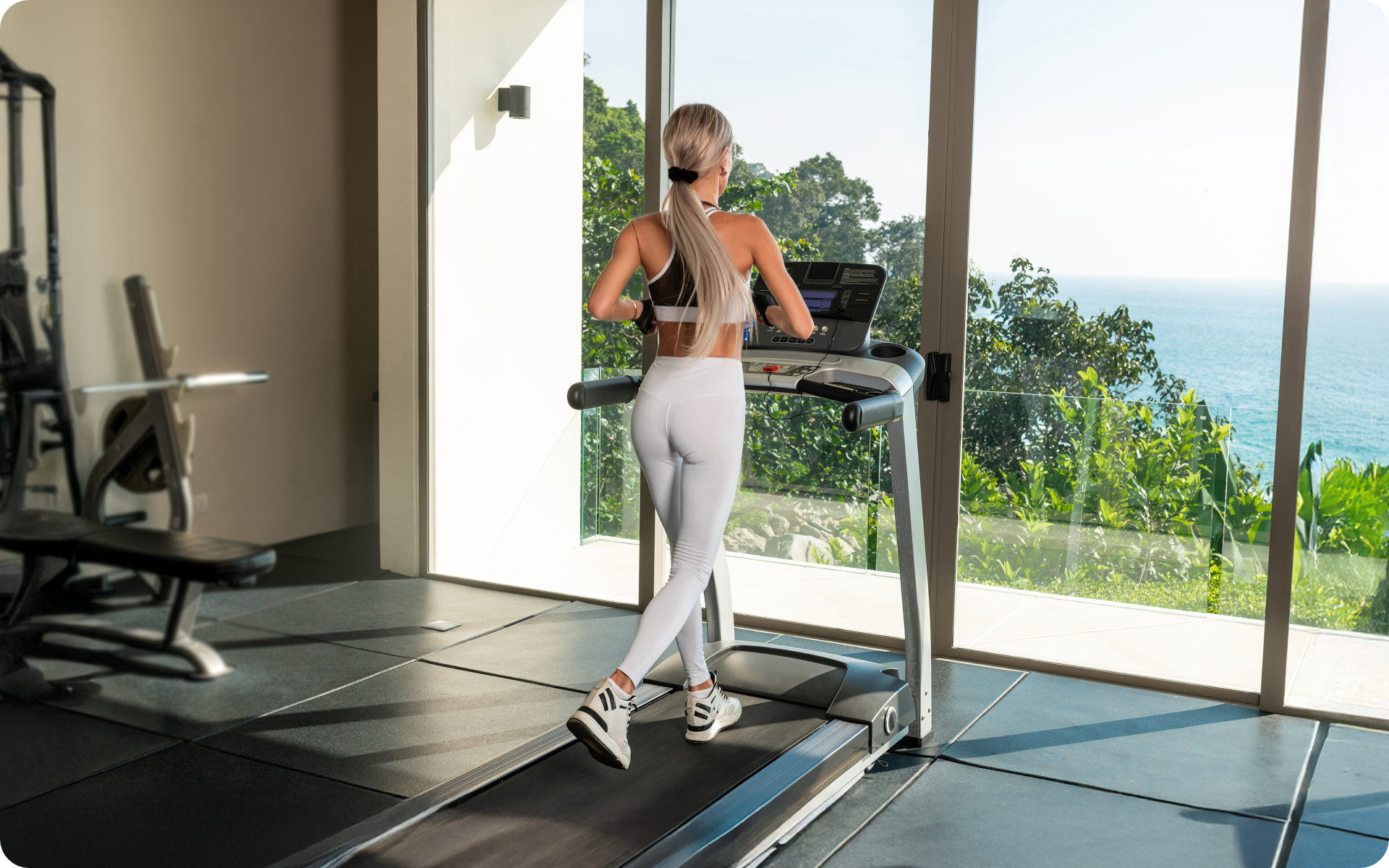
Flat treadmill walking barely touches your glutes. Incline is the game-changer.
Set Incline Between 10% and 15%
Glute activation spikes at 10% to 15% incline compared to flat walking. This mimics hill climbing and forces your posterior chain to work harder.
Sweet spot:
– 10% to 12% at 3.0 to 3.5 mph for moderate intensity
– 15% at 2.8 to 3.0 mph for high glute recruitment
Avoid going too fast. Speed reduces time under tension.
Walk Hands-Free
Just like the StairMaster, don’t hold the rails. Let your arms swing naturally to increase energy expenditure and glute engagement.
Troubleshooting: If you feel unstable:
– Drop speed by 0.2 to 0.5 mph
– Shorten your stride
– Gradually increase duration
Use Interval Incline Cycling
Maximize fat burn and glute activation with structured intervals.
25-Minute Incline Walk Routine
| Interval | Incline | Speed | Duration |
|---|---|---|---|
| A | 10% to 12% | 3.0 to 3.5 mph | 3 min |
| B | 15% | 2.8 to 3.0 mph | 2 min |
| C | 8% | 3.0 to 3.5 mph | 1 min (recovery) |
Repeat 4 times. Finish with 5 minutes at 0% to 2% to cool down.
Why it works: Alternating high and moderate inclines keeps glutes challenged and heart rate elevated throughout.
Elliptical Glute Activation Fixes
Most people use the elliptical wrong, defaulting to quad dominance. Fix this with resistance and posture adjustments.
Set Resistance to Level 7 to 12
Low resistance equals endurance mode. High resistance (7 to 12) forces muscle-building effort.
Goal: Feel the burn in your glutes and hamstrings, not your calves.
Adopt the “Almost Squat” Position
Push hips back, bend knees slightly, and lean forward from your ankles. This mimics a partial squat and places tension on the glutes.
Visual cue: Pretend you’re sitting back into a chair with every stride.
Press Through Heels, Not Toes
Lifting your toes or pushing off the ball of your foot shifts work to quads and calves. Keep your entire foot planted and drive through the heel.
Check: Can you lift your toes without losing balance? If yes, you’re heel-dominant.
Pedal Backward
Reverse pedaling changes muscle recruitment, emphasizing glutes and hamstrings.
Try this:
– 3 minutes forward (Resistance 7 to 8)
– 2 minutes backward (Resistance 8 to 9)
– Repeat for 20 to 30 minutes
Bonus: Reduces quad fatigue while maintaining intensity.
Cycling Adjustments for Glute Growth
Cycling can build glutes, but only if you adjust form and resistance properly.
Rise Into a Hover Position
Sitting too low lets quads take over. Lift slightly out of the seat, push hips back, and lean forward. This hover or standing climb forces glutes to generate power.
Best for: Stationary bikes and outdoor hill climbs.
Use High Resistance
Low resistance plus fast pedaling equals quad burn. High resistance forces glute recruitment throughout the pedal stroke.
Target cadence:
– 50 to 60 RPM at high resistance
– Focus on powerful, controlled strokes
Pro tip: Imagine pedaling through mud, slow and strong.
Try Standing Sprints
In spin class or outdoors, do 30-second standing sprints at high resistance.
Example:
– 30 seconds sprint (standing, high resistance)
– 30 seconds recovery (seated, low resistance)
– Repeat 6 to 8 times
This burns fat and builds explosive glute strength.
HIIT Glute Blast Circuit
High-Intensity Interval Training builds endurance, burns fat, and tones glutes in under 30 minutes.
Warm Up Properly (3 Minutes)
Activate glutes before explosive moves:
-
Bodyweight Squats (1 minute):
– Feet shoulder-width apart
– Lower deep, push through heels
– Squeeze glutes at the top -
Leg Swings (30 seconds per leg):
– Hold a wall for balance
– Swing leg forward and back
– Loosen hip flexors -
Walking Lunges (1 minute):
– Step forward, lower until both knees reach 90 degrees
– Push through the front heel
Main HIIT Circuit (Repeat 3 to 4 Times)
Each exercise: 30 seconds work, 15 seconds rest.
Jump Squats
- Explode upward from squat position
- Land softly, absorb impact with glutes
- Glute focus: Maximal recruitment on ascent and landing
Backward Lunges
- Step back, lower until knee nearly touches the floor
- Push through the front heel to stand
- Glute focus: Front leg glute fires during the drive phase
Burpees with Jump Squat
- Drop to plank, add push-up
- Jump feet in, then explode into jump squat
- Glute focus: Final jump recruits all three glute muscles
Rest 60 to 90 seconds between rounds.
Cool Down and Stretch (5 Minutes)
Recovery prevents tightness and improves mobility.
-
Pigeon Pose (1 minute per side):
– From plank, bring one knee forward
– Extend opposite leg back
– Sink hips for deep glute stretch -
Standing Quad Stretch (30 seconds per leg):
– Pull heel to glute
– Keep knees close together -
Seated Hamstring Stretch (1 minute):
– Legs straight, reach toward toes
– Keep back flat -
Child’s Pose (1 minute):
– Knees wide, sit back on heels
– Arms extended, chest to floor
– Releases lower back and hips
Sprinting for Glute Power
Sprinting is one of the most effective glute-focused cardio methods when done correctly.
Use Short, Powerful Bursts
Long runs burn muscle. Sprints preserve and build glutes.
Recommended protocols:
– 40 seconds sprint, 20 seconds rest
– 30 seconds sprint, 30 seconds rest
– Total: 15 to 20 minutes
Intensity: 70% to 85% of max effort. You should be breathless but not collapsed.
Focus on Long Strides
Short, choppy steps equal quad dominance. Long, powerful strides require maximum glute firing.
Form cues:
– Drive knees up
– Push off hard from the back foot
– Lean slightly forward from ankles
Try Treadmill Sprints
Treadmill sprints are safer than outdoor sprints and easier to control.
Sample workout:
– Warm-up: 5 minutes walking at 2% incline
– Sprint: 30 seconds at 8 to 10 mph, 10% to 12% incline
– Walk: 30 seconds at 3 mph, 2% incline
– Repeat 8 times
– Cool-down: 5 minutes walking
Why incline sprints work: Gravity increases resistance, forcing glutes to work harder on every stride.
Common Mistakes That Kill Glute Activation
Even the best exercises fail if technique is off.
Fix Quad Dominance
Symptom: Thighs burn, glutes feel nothing.
Causes:
– Leaning too far forward
– Pushing through toes
– Low resistance or incline
Fix:
– Push hips back
– Drive through heels
– Increase incline or resistance
– Squeeze glutes at peak contraction
Stop Using Handrails
Consequence: Up to 30% less calorie burn and glute activation.
Solution:
– Use core for balance
– Reduce speed or incline if needed
– Practice short intervals without hands
Avoid Long, Slow Cardio
Risk: Muscle breakdown over time.
Better option: Replace 60-minute jogs with 20 to 30 minutes of HIIT, sprints, or resistance-based cardio.
Exception: Light walking (30 to 45 minutes) on rest days is fine for recovery.
Maximize Range of Motion
Problem: Shallow steps equal weak stimulus.
Fix:
– On stairs: Step fully up, squeeze glutes at top
– On elliptical: Use long, controlled strides
– On treadmill: Take longer steps at higher incline
Weekly Glute Cardio Plan
Integrate cardio strategically so it supports rather than interferes with strength gains.
Beginner (2x per week)
- Monday: 20-minute incline treadmill walk
- Friday: 15-minute StairMaster with basic steps and side steps
Intermediate (3x per week)
- Tuesday: 25-minute HIIT glute circuit
- Thursday: 20-minute elliptical at high resistance with reverse intervals
- Saturday: 15-minute sprint intervals
Advanced (3 to 4x per week plus pre-lift activation)
- Monday: 15-minute StairMaster before squat day
- Wednesday: 20-minute incline sprints
- Friday: 25-minute HIIT circuit
- Sunday: 30-minute cycling at high resistance with standing intervals
Note: Never do intense glute cardio before heavy lifting unless it’s a brief warm-up.
Frequently Asked Questions About Glute-Focused Cardio
Can cardio alone build glutes?
Cardio alone won’t produce significant hypertrophy, but glute-focused cardio exercises can tone, shape, and reveal muscle by reducing fat over the glutes. For substantial growth, combine cardio with resistance training.
How often should I do glute cardio each week?
Two to three sessions per week is optimal for most people. This frequency balances stimulus with recovery while supporting strength training goals.
What incline is best for glute activation on a treadmill?
Research shows glute activation spikes between 10% and 15% incline. Below 10%, your glutes receive minimal stimulus compared to flat walking.
Is the StairMaster better than the treadmill for glutes?
Both machines work when used correctly. The StairMaster allows for step variations like skipping and side steps that target all three glute muscles. The treadmill excels at incline walking and sprint intervals.
Will running make my glutes smaller?
Long-distance, steady-state running can break down muscle over time. Short sprints and resistance-based cardio preserve and build glute muscle while burning fat.
How long until I see results from glute cardio?
With consistent training (2 to 3 sessions per week) and proper nutrition, visible changes in firmness and definition typically appear within 4 to 6 weeks.
Key Takeaways for Glute-Focused Cardio Success
Glute-focused cardio isn’t about logging miles. It’s about strategic muscle activation using incline, resistance, proper form, and interval training to burn fat, build endurance, and shape your glutes in one session.
The best part? You don’t need hours. Just 20 to 30 minutes, 2 to 3 times per week, with full focus on technique, can transform your lower body. Combine these methods with strength training, and you’ll see visible lift, definition, and firmness over time.
Remember these essentials:
– Push through heels, not toes
– Use 10% to 15% incline or high resistance
– Avoid handrails and quad dominance
– Prioritize HIIT, sprints, and StairMaster over long runs
– Squeeze glutes at the top of every move
Pick one machine from this guide, apply the technique cues, and start your first session today. Your glutes will thank you.