Cardio Burst Workouts: Quick Tips
You’re short on time but still want a sweat-inducing, mood-boosting, calorie-torching workout? Cardio burst workouts are engineered for that exact moment. These high-intensity, short-duration routines push your body to its max for brief intervals, delivering powerful fitness benefits in as little as five minutes. Unlike steady-state cardio, cardio burst workouts rely on explosive effort and strategic recovery to trigger the afterburn effect, where your body continues burning calories long after the session ends.
Backed by metabolic science and user-tested for real-world results, cardio burst workouts come in two main styles: full-body HIIT-style circuits and low-impact, music-synced routines. Whether you’re in a rush, working out in a small apartment, or just need a mental reset, there’s a burst protocol that fits. You don’t need a gym, just a mat, maybe a pair of dumbbells, and high-energy music. In this guide, you’ll learn how to execute both protocols safely, scale intensity, and use timing, music, and movement to maximize results fast.
Maximize Calorie Burn with EPOC

Cardio burst workouts are built to exploit Excess Post-exercise Oxygen Consumption (EPOC), commonly known as the afterburn effect. When you push your body to near-maximum effort, it consumes more oxygen during recovery to restore balance, repairing muscle, replenishing energy, and lowering heart rate. This process keeps your metabolism elevated for hours post-workout, leading to greater total calorie burn.
How High-Intensity Triggers Afterburn
Short bursts of all-out effort deplete your body’s immediate energy stores and create an oxygen debt. The harder the burst, the greater the debt, and the longer your body spends recovering. User data confirms that even a 5-minute cardio burst can elevate metabolism for several hours, especially when compound movements are used.
- Key factors that boost EPOC:
- Full-body engagement (e.g., mountain climbers, deadlift rows)
- Minimal rest between efforts
- High movement turnover (reps per minute)
- Resistance integration (dumbbells increase demand)
Protocol Comparison: Calorie Output
While exact numbers vary by individual, cardio burst workouts outperform steady-state cardio per minute. Here’s a realistic comparison:
| Workout Type | Duration | Estimated Calories Burned | Afterburn Duration |
|---|---|---|---|
| Brisk Walking | 30 min | 120–150 | Minimal |
| Running (6 mph) | 30 min | 300–350 | 1–2 hours |
| Cardio Burst (Protocol A) | 20 min | 250–300 | 6–12 hours |
| Cardio Burst (Protocol B) | 5 min | 50–70 | 3–6 hours |
Even the 5-minute music-synced burst delivers measurable metabolic impact, ideal for time-crunched days.
Avoid the “Easy Pace” Trap
One common mistake is reducing effort to avoid breathlessness. But EPOC only activates when intensity crosses a threshold, typically 70–85% of max heart rate. If you’re not breathing hard, you’re not bursting.
Pro Tip: Use the talk test. If you can speak in full sentences, push harder. During peak intervals, you should only manage short phrases.
Full Body Burst Circuit: 20-Min Power Session
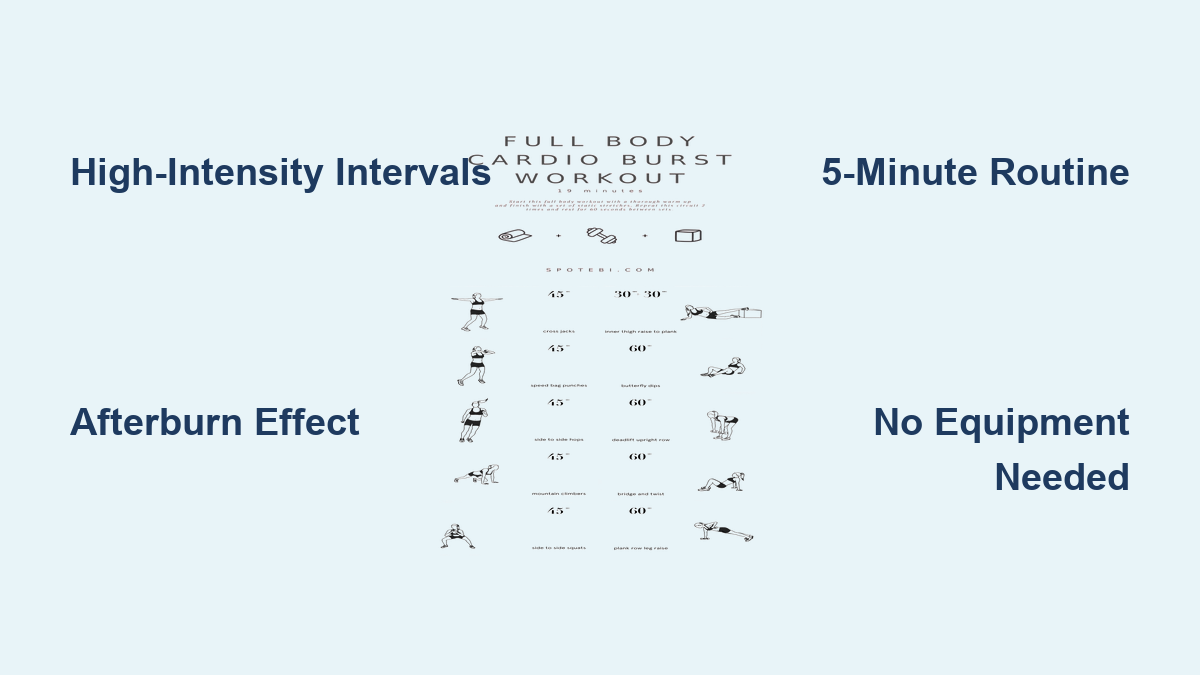
Protocol A is designed for maximum output. This 10-exercise circuit combines strength and cardio in timed intervals, repeated twice with a full minute of rest in between. It’s ideal for building endurance, burning fat, and sculpting muscle, all in under 20 minutes.
Equipment and Setup
- Required: Dumbbells, step or box, yoga mat
- Space: Clear a 4×6 ft area for lateral and plank movements
- Prep: Warm up with 3–5 minutes of light cardio (jog in place, arm circles, leg swings)
Circuit Layout and Timing
Each exercise is performed for a set duration. No rest between moves, only 60 seconds after completing all 10.
| Exercise | Duration |
|---|---|
| Cross Jacks | 45 sec |
| Inner Thigh Raise to Plank | 60 sec (30 sec/side) |
| Speed Bag Punches | 45 sec |
| Butterfly Dips | 60 sec |
| Side to Side Hops | 45 sec |
| Deadlift Upright Row | 60 sec |
| Mountain Climbers | 45 sec |
| Bridge and Twist | 60 sec |
| Side to Side Squats | 45 sec |
| Plank Row Leg Raise | 60 sec |
Repeat the entire circuit once.
Exercise Execution Tips
Cross Jacks (45 sec)
Jump while crossing arms and legs mid-air. Focus on landing softly to protect joints. Keep core tight to stabilize the torso.
Inner Thigh Raise to Plank (30 sec/side)
On the box, lift the hip without letting it touch the floor. Squeeze the inner thigh. Keep shoulders stacked over elbows to avoid wrist strain.
Speed Bag Punches (45 sec)
Rotate forearms rapidly while shifting weight side to side. Keep elbows high and core engaged; don’t hunch.
Butterfly Dips (60 sec)
Press hips up using triceps and glutes. Avoid sagging in the lower back. Move slowly to maintain control.
Side to Side Hops (45 sec)
Hop laterally with both feet. Stay low and quick, imagining hopping over a small line. Land on the balls of your feet.
Deadlift Upright Row (60 sec)
Hinge at hips, not back. Pull dumbbells to chest with elbows flared. Drive through heels to stand.
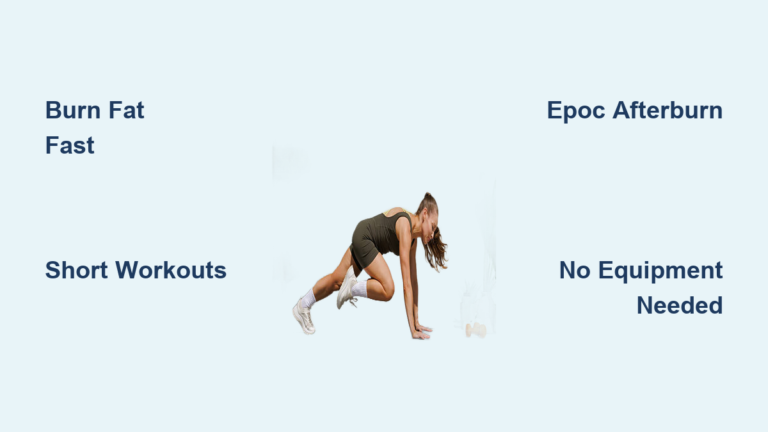
Mountain Climbers (45 sec)
Keep hips level and back flat. Drive knees toward the center of the chest. Don’t let hips rise.
Bridge and Twist (60 sec)
Lift hips high in bridge. Twist slowly to avoid collapsing. Keep both shoulders grounded.
Side to Side Squats (45 sec)
Step and squat in one motion. Keep chest up and knees behind toes. Use arms for balance.
Plank Row Leg Raise (60 sec)
Alternate row and leg lift. Don’t rotate the torso during the row. Squeeze glutes on leg raise.
Common Mistakes to Avoid
- Rushing form for speed: Sacrificing technique reduces effectiveness and increases injury risk.
- Holding breath: Breathe rhythmically; exhale on effort, inhale on return.
- Sagging hips in plank moves: Keep core braced throughout.
Difficulty Level: Advanced
Time Commitment: ~20 minutes
Best For: Fat loss, strength endurance, HIIT training
5-Minute Music Burst: Fun, Low-Impact Cardio
Protocol B proves you don’t need jumping or heavy weights to get results. Synced to the beat of “Holding Out for a Hero” by Bonnie Tyler, this routine uses rhythm, coordination, and continuous movement to spike heart rate without leaving the ground.
Why Music Syncing Works
The brain-body connection strengthens when movement matches music. The predictable beat of an ’80s power ballad provides natural pacing cues, helping you stay on track without checking a timer. Users report increased focus and enjoyment, making it easier to push through fatigue.
- Song tempo: ~116 BPM (beats per minute)
- Workout length: 4:45–5:00 minutes
- Reps per move: 8 per side
Step-by-Step Routine
1. Side Toe Tap with Arm Push (8 reps/side)
Tap left foot out, press right arm across body. Twist torso. Alternate sides. Add a small bounce to increase intensity.
2. Lunge and Drive (8 reps/side)
Step back into a reverse lunge. As you stand, drive the back knee forward and punch arms upward, like a jumping jack without the jump.
3. Lateral Lunge (8 reps/side)
Shift weight to one side, bending knee while keeping the other leg straight. Return to center. Keep chest up.
4. Arm/Leg Coordination Challenge (8 reps/side)
Stand tall. Lift right leg and left arm forward simultaneously, then switch. Focus on balance and rhythm.
5. Lateral Lunge with Toe Touch (8 reps/side)
Lunge to one side, then reach down to touch the toe of the bent leg. Return to start. Stretch gently; don’t force it.
6. Lateral Side Step with Arm Rotation (8 reps/side)
Step right while rotating arms clockwise overhead. Step left, rotate counterclockwise. Engage core to control twist.
Repeat the entire sequence until the song ends.
Modifications for Beginners
- Slow it down: Practice each move at half-speed before syncing to music.
- Reduce range: Don’t go as deep in lunges or touches.
- Skip coordination: Perform arm and leg moves separately at first.
Pro Tip: Use grip socks on hardwood or tile to prevent slipping during twists and taps.
Why It Feels Like Fun, Not Work
The combination of nostalgic music, rhythmic movement, and continuous flow triggers dopamine release, boosting mood instantly. Users report laughing, smiling, and replaying the workout immediately. This emotional payoff increases long-term adherence far more than traditional cardio.
Difficulty Level: Beginner to Intermediate
Impact Level: Low
Best For: Apartment workouts, joint sensitivity, mood enhancement
Choose the Right Protocol for Your Goals
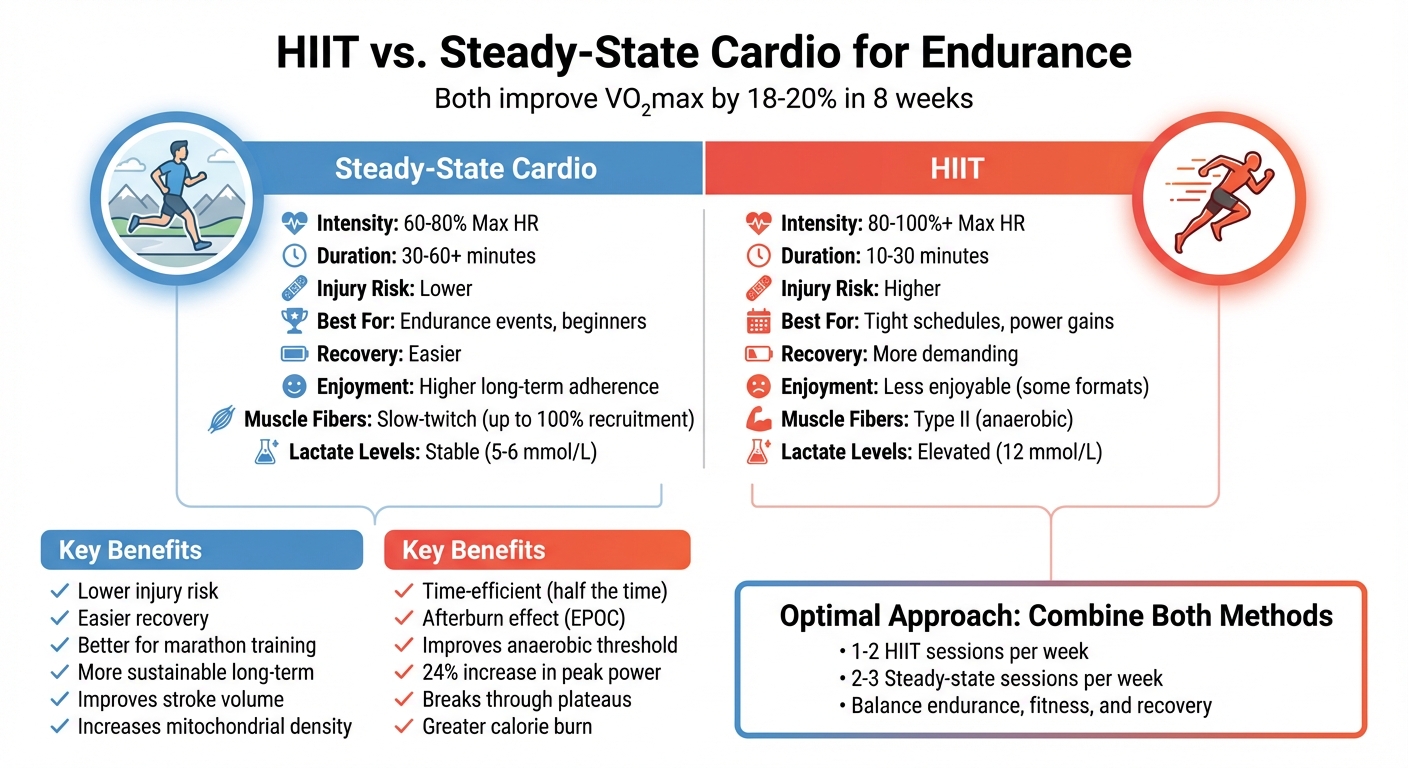
Not every cardio burst is the same. Your choice depends on time, fitness level, equipment, and desired outcome.
When to Use Protocol A
- You want maximum calorie burn
- You have dumbbells and a step
- You’re comfortable with jumping and planks
- You’re using it as a standalone strength-cardio session
Ideal Schedule: 2–3 times per week, non-consecutive days
When to Use Protocol B
- You have 5 minutes or less
- You live in an apartment
- You’re new to fitness or recovering from injury
- You need a mental boost
Ideal Schedule: Daily, as a morning energizer or afternoon reset
Hybrid Option: Upgrade the Low-Impact Burst
Make Protocol B more challenging by:
– Adding 1–3 lb dumbbells
– Increasing bounce height
– Doubling the number of rounds
– Swapping in faster songs (e.g., “Eye of the Tiger”)
Optimize Form to Prevent Injury
Even short workouts carry risk if form breaks down. These cues ensure safety and effectiveness.
Critical Form Checks
| Move | Key Cue |
|---|---|
| Plank Variations | Shoulder directly over elbow |
| Deadlift Upright Row | Torso parallel to floor at bottom |
| Mountain Climbers | Flat back, no hip hike |
| Lunge Variations | Knee behind toes, chest up |
| Leg Raises | No arching back; press lower back into mat |
Warm-Up and Cool-Down Essentials
Skipping warm-up increases injury risk, especially in high-speed bursts.
Pre-Workout (3–5 min):
– March in place (1 min)
– Arm circles (30 sec forward/backward)
– Leg swings (30 sec per leg)
– Torso twists (1 min)
Post-Workout (3–5 min):
– Seated forward fold (1 min)
– Figure-four stretch (30 sec/side)
– Shoulder cross-body stretch (30 sec/side)
– Deep breathing (1 min)
Boost Results with Smart Scheduling
Cardio burst workouts are most effective when integrated strategically.
As a Standalone Workout
- Protocol A: 2–3x/week for fat loss and fitness
- Protocol B: Daily for maintenance and mood
As a Supplement
- Add after strength training (5-min burst for extra calorie burn)
- Use as a finisher to running or cycling sessions
- Insert between weight sets for active recovery
For Habit Building
- Schedule at the same time daily (e.g., post-lunch burst)
- Pair with a habit (e.g., after brushing teeth)
- Track streaks: Use a calendar to mark completed days
Pro Tip: Set a recurring phone reminder with the song title as the alert (“Time for Hero Burst!”).
Frequently Asked Questions About Cardio Burst Workouts
How long should a cardio burst workout be to be effective?
A cardio burst workout can be effective in as little as 5 minutes. The key is pushing to near-maximum effort during the intervals. Even short sessions trigger the afterburn effect that keeps your metabolism elevated for hours afterward.
Can I do cardio burst workouts every day?
Yes, especially with low-impact protocols like the 5-minute music burst. These routines are designed for daily use as morning energizers or afternoon resets. For high-intensity circuits, aim for 2–3 sessions per week on non-consecutive days to allow recovery.
Do cardio burst workouts burn more calories than running?
Per minute, cardio burst workouts often match or exceed running calorie burn, and they generate a longer afterburn effect. A 20-minute burst circuit can keep your metabolism elevated for 6–12 hours, while a 30-minute run typically produces only 1–2 hours of afterburn.
What equipment do I need for cardio burst workouts?
The minimum is a yoga mat and grip socks. For the full-body circuit, you’ll also need dumbbells and a step or box. The 5-minute music-synced routine requires no equipment at all, just a music source and enough space for lateral movements.
Are cardio burst workouts good for beginners?
Yes. The low-impact music-synced protocol is beginner-friendly and barre-inspired, making it easy to follow once you learn the rhythm. Start by practicing each move without music to master the form, then add the beat for pacing.
Will cardio burst workouts help with weight loss?
Cardio burst workouts support weight loss by maximizing calorie burn during the session and elevating metabolism for hours afterward. Combining them with consistent scheduling and proper nutrition produces the best results.
Final Note
Cardio burst workouts deliver elite efficiency: maximum metabolic impact, mood elevation, and time savings in a single package. Whether you crush a 20-minute full-body circuit or dance through a 5-minute music burst, you’re investing in both physical and mental health. The key is consistency, not perfection. Start where you are, use what you have, and let the beat carry you. Over time, those short bursts add up to big results. Ready to burst? Press play.