Upper Body Cardio Moves Guide
Injured knee, sore hips, or just tired of running? Upper body cardio moves can save your fitness when your legs can’t carry you. These workouts spike your heart rate using only your arms, shoulders, chest, and core, giving you real cardiovascular benefits without pounding your joints.
This guide covers the most effective upper body cardio moves you can do at home, in the gym, or in the pool. You’ll find equipment-based options, no-equipment circuits, and ready-to-use workouts designed for every fitness level.
Who Needs Upper Body Cardio
Athletes Recovering From Lower Body Injuries
Inactivity is brutal on your fitness. VO2 max drops 4 to 8 percent within a week, and mitochondrial function in your muscles falls by nearly 50 percent in that same window. After two months off, you could lose 20 percent of your fitness. Upper body cardio moves keep your heart and lungs working while your legs heal, so you return to training closer to where you left off.
People With Joint Pain or Mobility Limits
Arthritis, chronic knee issues, or wheelchair use can make traditional cardio painful or impossible. Upper body workouts offer a low-impact path to better heart health, stronger arms, and improved body composition without stressing the ankles, knees, or hips.
Healthy Athletes Wanting Balanced Training
Even without injuries, upper body cardio prevents muscular imbalances and reduces overuse injuries from leg-heavy sports like running or cycling. It also builds lean muscle in your arms and shoulders while improving posture.
Best Equipment-Based Upper Body Cardio Moves

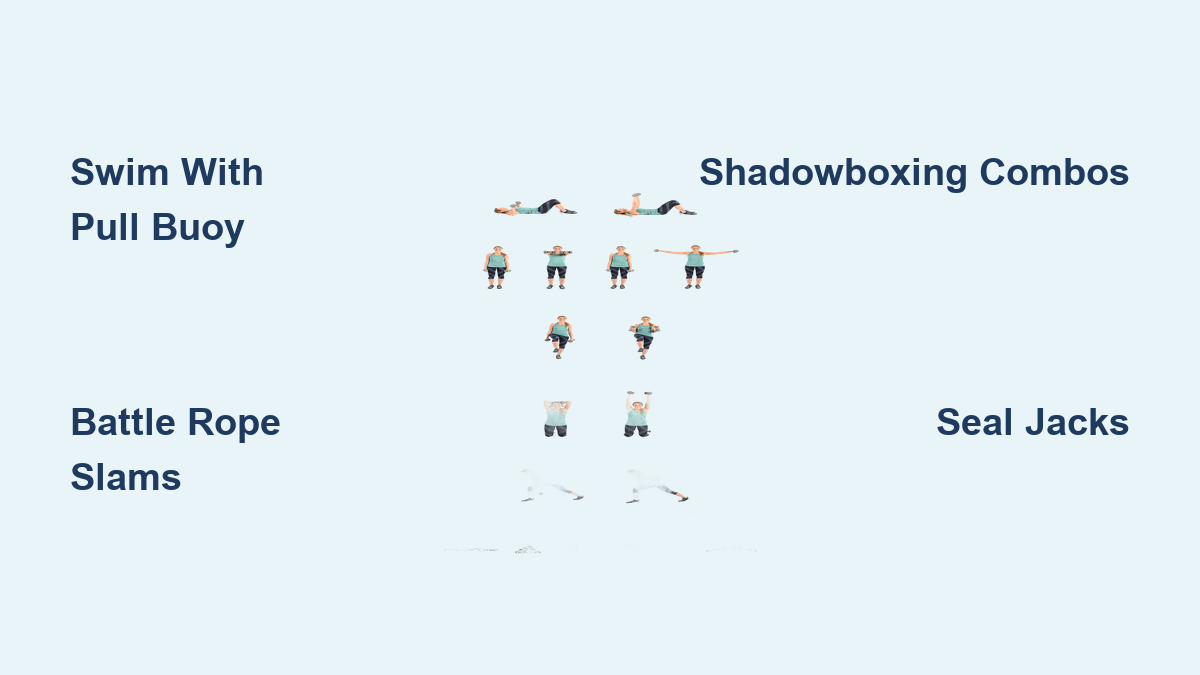
Swim With a Pull Buoy
A pull buoy is a small foam wedge you place between your thighs to keep your legs afloat and still. With your lower body immobilized, every stroke comes from your arms, shoulders, and core. Water resistance forces your heart to work harder than air-based exercise, making this one of the most effective upper body cardio moves available. Just confirm any casts or bandages are waterproof before getting in the pool.
Use an Arm Ergometer
An arm ergometer (or hand bike) is a stationary machine you pedal with your hands instead of your feet. It’s a staple in rehab centers for spinal cord injuries and post-surgery recovery. Research shows that adding just one to three sessions per week for 12 weeks can increase upper body strength by 13 percent. Start with 5 to 10 minutes at low resistance because arm muscles fatigue faster than legs.
Row With Arms Only
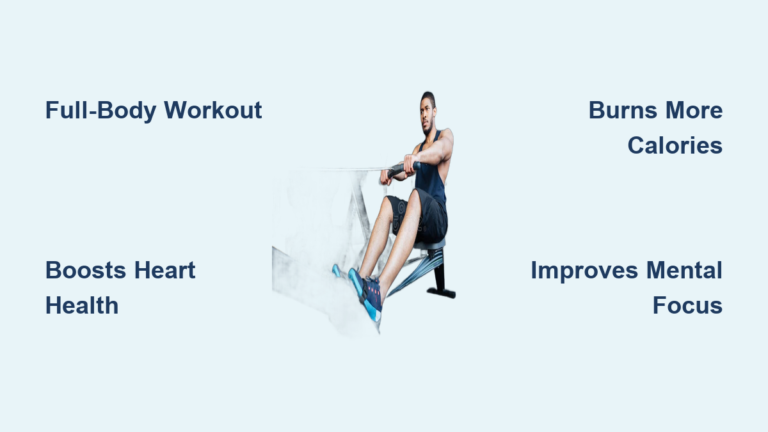
Standard rowing uses your legs for power, but you can strip that out. Sit on the rower with your feet unstrapped or resting on the rails, then pull the handle using only your arms and back. This still elevates your heart rate and works your lats, rhomboids, and biceps. If one leg is healthy, strap it in and let the injured leg glide on a skateboard.
Battle Rope Intervals
Battle ropes deliver intense cardio through fast arm waves, slams, and circles. You can stand, kneel, or sit to eliminate leg use entirely. Try 30 to 45 seconds on and 15 seconds off. The constant tension spikes oxygen consumption fast, and even elite athletes gas out in minutes.
Sledgehammer Tire Strikes
Swinging a sledgehammer against a tire engages your shoulders, core, and back in explosive, rhythmic motions. Alternate sides to keep the workload balanced. Use a 10 to 16 pound hammer and aim for controlled, full-range swings. Always check your flooring for safety before starting.
No-Equipment Bodyweight Cardio Moves

Push-Up to Shoulder Tap Chains
Perform push-ups at a fast pace, then add a shoulder tap at the top of each rep to increase core engagement. Do 20 to 30 seconds non-stop. If your wrists or shoulders protest, do them on an elevated surface like a countertop or wall.
Shadowboxing Combos
Throw jabs, crosses, hooks, and uppercuts in rapid succession for 30 to 60 seconds. Rotate your torso to fire up your obliques. You can stand or sit, making this perfect for limited mobility. Just three minutes of non-stop punching can push your heart rate into the fat-burning zone.
Seal Jacks
Lie on your back with legs wide and flat, arms overhead. In one motion, bring your arms forward to clap at chest level while bringing your legs together. Return to start. This move isolates your shoulders, chest, and triceps while eliminating all impact.
Traveling Plank
Start in a high plank. Step your right hand and right foot laterally, then your left hand and left foot, moving across the floor. Keep your hips level and your core tight. This turns a static hold into a full upper body burner. Do 30 seconds per direction.
Arm Circles (Forward and Backward)
Stand or sit with arms extended straight out to the sides. Rotate your arms in small to large circles for 30 to 60 seconds, then switch directions. This deceptively tough move increases blood flow, warms up your joints, and elevates your heart rate.
Weighted Cardio Circuits

Dumbbell Supersets With Cardio Bursts
Pair opposing muscle groups with minimal rest to keep your heart rate elevated:
- 10 bicep curls plus 10 tricep extensions, then 1 minute of burpees or seal jacks
- 10 chest flys plus 10 reverse flys, then 1 minute of high knees or seated punches
- 10 shoulder presses plus 10 lateral raises, then 1 minute of butt kickers or arm circles
Use light weights (3 to 15 pounds) and keep rest under 20 seconds between rounds.
Kettlebell Holds (Seated)
Sit on the floor or a bench and hold a kettlebell at chest level with both hands for 30 to 60 seconds. This isometric hold forces your arms, shoulders, and core to work continuously, raising your heart rate without dynamic movement. Add slow arm raises to increase intensity.
Ready-to-Use Upper Body Cardio Workouts
The 20-Minute Upper Body Burner
Goal: Maximum calorie burn with zero leg use
Equipment: Battle ropes or dumbbells
Format: 45 seconds work, 15 seconds rest, 3 rounds
- Battle rope slams or dumbbell shoulder press
- Push-ups
- Seated row (resistance band or row machine arms only)
- Plank hold
- Shadowboxing
- Seal jacks
- Arm circles
- Traveling plank
Rest 1 minute between rounds.
No-Equipment Home Circuit
Goal: Build endurance without any gear
Format: 30 seconds per move, no rest between, 30 seconds rest after each round
- Mountain climber (arms only, feet elevated or on sliders)
- Seal jack
- Arm circle (forward)
- Cross punch (seated or standing)
- Standing lat pull (mimic the motion)
- Traveling plank
- Knee driver (arm pull-down motion)
- Arm circle (backward)
Repeat 3 times.
Strength-Cardio Hybrid With Dumbbells
Goal: Build muscle and burn fat
Format: Superset plus cardio burst
- Superset 1: 10 bicep curls plus 10 tricep extensions, then 1 minute of jumping jacks or seal jacks
- Superset 2: 10 chest flys plus 10 reverse flys, then 1 minute of burpees or seated punches
- Superset 3: 10 lateral raises plus 10 front raises, then 1 minute of butt kickers or arm circles
- Superset 4: 10 overhead presses plus 10 dumbbell pullovers, then 1 minute of high knees or shadowboxing
Complete 2 to 3 rounds, 2 to 3 times per week.
Safety and Technique Tips for Upper Body Cardio
Protect Your Shoulders
Your shoulder joint takes a beating during repetitive upper body work. Always engage your rotator cuff by visualizing “screwing your hands into the floor” during planks and push-ups. Avoid flaring your elbows excessively; keep them at about 45 degrees. Warm up with arm circles and shoulder rolls for 2 to 3 minutes before starting.
Modify for Limited Mobility
Wrist pain? Use push-up handles or make fists on the ground. Limited shoulder range? Perform push-ups on an elevated surface like a counter or wall. Can’t stand? Do battle ropes, shadowboxing, or arm circles while seated in a chair.
Know When to Stop
Pain that feels sharp, sudden, or different from normal muscle fatigue means stop immediately. Upper body cardio should feel challenging but not damaging. If you feel numbness or tingling, discontinue and consult a professional.
Why Upper Body Cardio Actually Works

Smaller Muscles, Faster Heart Rate
Arm muscles are smaller than leg muscles, so they fatigue faster and demand more cardiovascular effort to keep moving. This pushes your heart rate into the fat-burning zone (70 to 85 percent of max heart rate) within minutes.
High Calorie Burn in Short Time
While arm ergometers burn fewer calories than running, battle ropes, boxing, and circuits can match or exceed lower body HIIT in metabolic demand. A 10-minute battle rope session can burn 100 or more calories at high intensity.
Prevents Fitness Loss During Downtime
Research confirms that deep water running and arm cranking preserve VO2 max and mitochondrial function during injury. Even two to three sessions per week can prevent the 20 percent fitness drop seen after two months of inactivity.
Frequently Asked Questions About Upper Body Cardio Moves
Can you get a good cardio workout using only your arms?
Yes. Upper body cardio moves elevate your heart rate into the fat-burning zone and improve cardiovascular endurance just like lower body exercise. Because arm muscles are smaller and fatigue faster, your heart works harder to deliver oxygen, making these workouts surprisingly effective.
What is the best upper body cardio exercise?
Swimming with a pull buoy is widely considered the top option because water provides constant resistance while eliminating impact. Battle ropes and arm ergometers are also excellent choices for raising heart rate quickly without using your legs.
How long should an upper body cardio workout last?
Most effective sessions run 15 to 30 minutes. Because arm muscles fatigue faster than legs, shorter high-intensity workouts often work better than long steady-state sessions. Start with 10 to 15 minutes and build up as your endurance improves.
Can I do upper body cardio every day?
You can do light upper body cardio daily, but intense sessions should have at least 48 hours of recovery between them. For strength-cardio hybrid workouts, aim for 2 to 3 sessions per week to allow muscles to repair and grow.
Are upper body cardio moves good for weight loss?
Yes. These workouts burn significant calories, especially battle ropes, boxing, and circuit formats. Combined with a balanced diet, upper body cardio can support fat loss while building lean muscle in your arms, shoulders, and chest.
Do upper body cardio moves build muscle?
They can. Weighted circuits and high-rep bodyweight moves create muscle tension that stimulates growth, especially in the shoulders, chest, arms, and core. Using moderate weights with minimal rest maximizes both the cardio and muscle-building effects.
Key Takeaways for Building Your Upper Body Cardio Routine
Upper body cardio moves are a powerful tool for anyone who wants to protect their joints, recover from injury, or add balance to their training. These exercises deliver real cardiovascular benefits, burn serious calories, and preserve your fitness when your legs can’t do the work.
Start with one workout this week, focus on form, and gradually increase intensity as your endurance builds. Consistency matters more than perfection, and even short sessions keep your heart healthy and your metabolism active.