Light Cardio Exercises: Quick Guide
Feeling overwhelmed by intense workouts but still want to boost your health? You’re not alone. Many people avoid exercise because they think it has to be punishing to count. But light cardio exercises offer a powerful, sustainable way to improve heart health, manage weight, and increase energy without strain or injury risk. Unlike high-intensity workouts that leave you gasping, light cardio keeps your breathing steady and your heart rate gently elevated, making it ideal for beginners, seniors, or anyone recovering from injury.
These low-impact, joint-friendly movements are more than just a warm-up. They are a proven path to better circulation, improved mood, and long-term fitness. Whether you are walking around the block, doing seated leg lifts, or swimming laps, light cardio helps you build endurance safely. In this guide, you’ll discover science-backed routines, easy home-based exercises, and expert tips to make movement a natural part of your day, no gym required.
How Light Cardio Exercises Work in Your Body
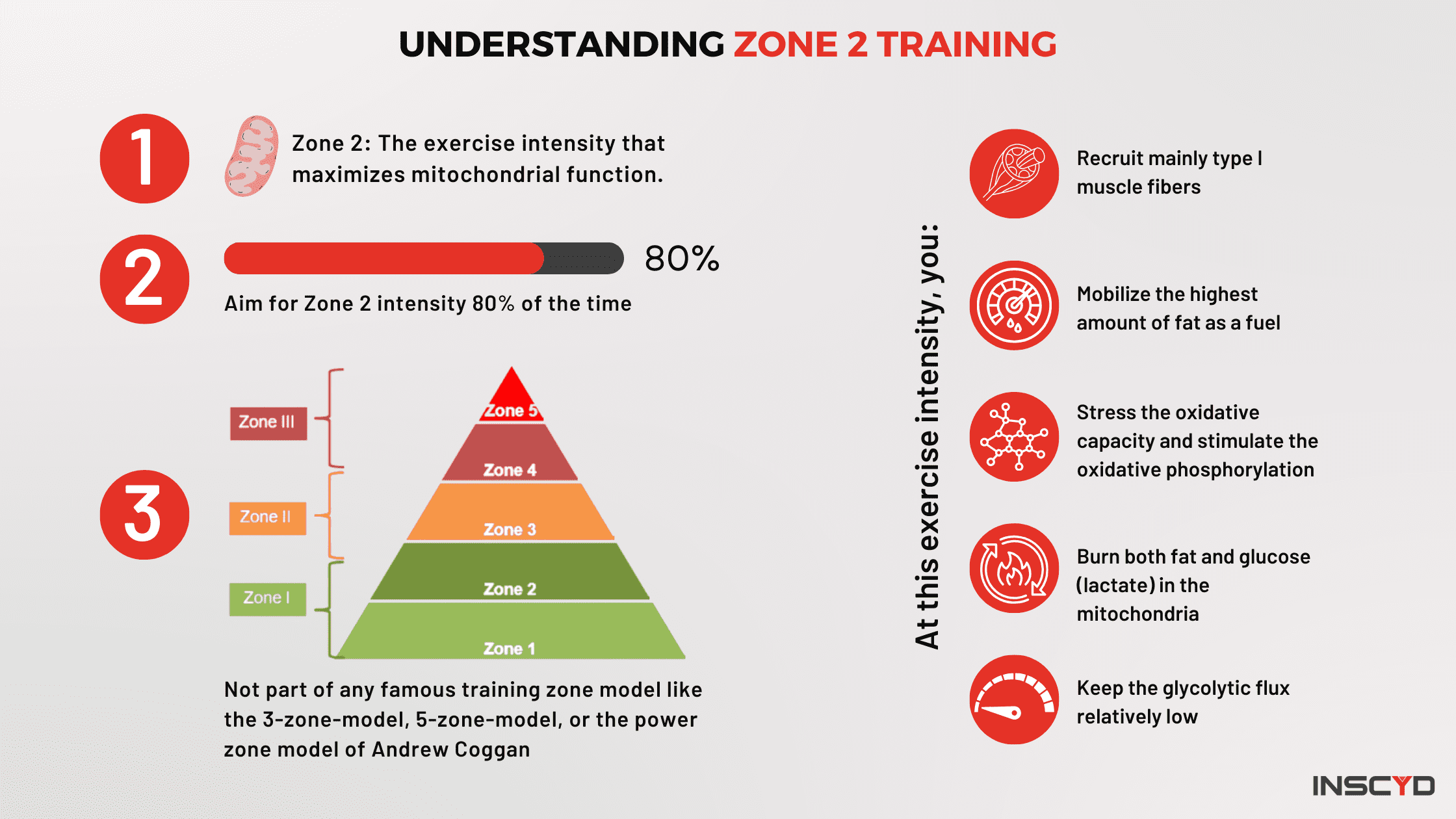
Light cardio, also known as low-intensity steady-state (LISS) cardio, uses gentle, continuous movement to engage large muscle groups without overexertion. It is not about speed or power. It is about consistency and sustainability. The goal is to raise your heart rate just enough to improve circulation and oxygen delivery, while still being able to speak or even sing comfortably.
This form of exercise taps into your aerobic energy system, meaning your body burns fat and glucose using oxygen, rather than relying on stored energy like in high-intensity workouts. Because it is less stressful on the body, you can do it daily, making it perfect for building lifelong fitness habits.
Find Your Target Heart Rate for Light Cardio
To stay in the light cardio zone, aim for about 50% of your maximum heart rate. Use this simple formula: subtract your age from 220 to estimate your max heart rate, then take half of that number.
For example, a 50-year-old has a max heart rate of roughly 170 bpm. Half of 170 equals 85 bpm, which is the target.
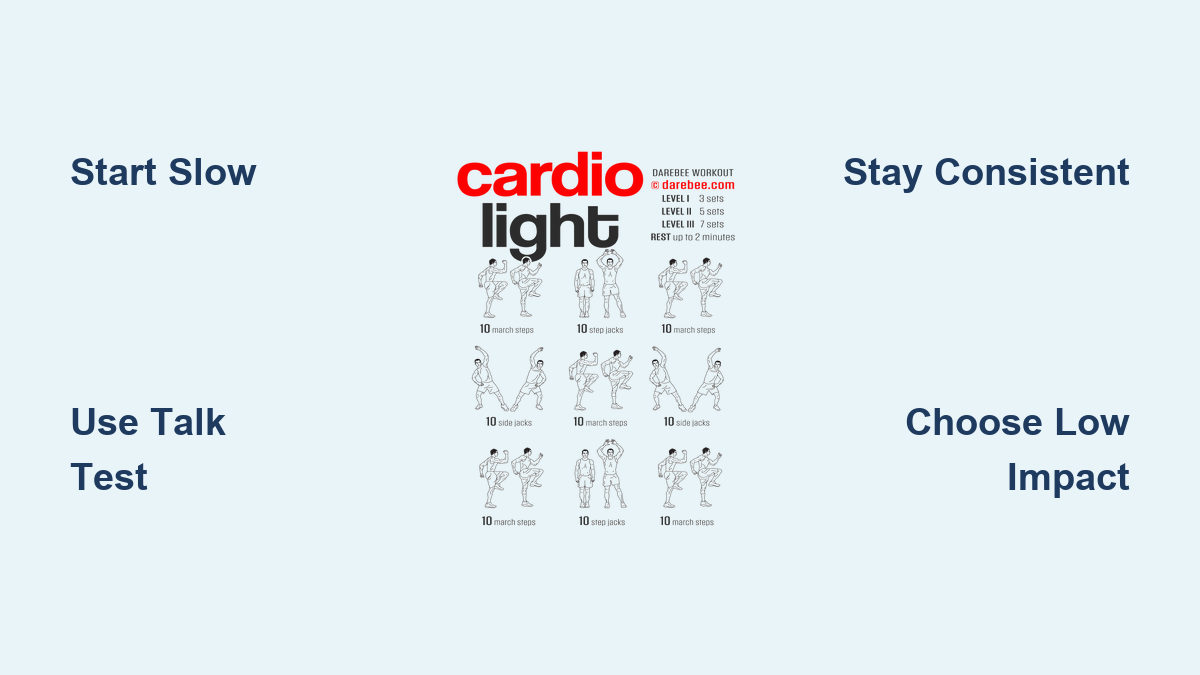
You don’t need a monitor to get close. Just use the conversation test:
– Can you sing? Too easy.
– Can you talk easily? Perfect for light cardio.
– Can’t speak in full sentences? Too hard.
Who Benefits Most from Light Cardio?
Light cardio is not just for out-of-shape beginners. It is essential for:
– Seniors improving balance and mobility
– Recovering athletes using active recovery days
– People with joint pain or arthritis
– Cardiac patients rebuilding strength safely
– Pregnant individuals staying active
– Anyone building fitness gradually
Because it is low stress, it supports mental health by reducing anxiety and boosting endorphins without the crash of intense training.
Measure Your Effort Correctly During Light Cardio
Knowing how hard you are working is key to staying in the light cardio zone. Push too hard, and you risk injury or burnout. Go too easy, and you miss the benefits. Use these simple tools to stay on track.
Use the Rate of Perceived Exertion Scale
The Rate of Perceived Exertion (RPE) scale runs from 6 to 20. For light cardio, aim for 8 to 10:
– 6–7: Resting or very light, like slow walking
– 8–10: Light effort, you feel warm, breathing is slightly faster, but no strain
– 11–14: Moderate, you can talk but can’t sing
– 15+: Hard or maximal effort
If you are at an 8–10, you are in the sweet spot.
Apply the Talk Test for Light Cardio
No numbers needed. Just ask yourself:
– Can I hold a conversation? Yes means you are in the right zone.
– Am I breathing through my nose? Likely too easy.
– Am I starting to breathe through my mouth? You are on track.
If you can talk in full sentences without pausing, you are doing light cardio right.
Watch for Warning Signs
Even gentle exercise requires caution if you have health concerns. Stop immediately if you feel:
– Chest pain or pressure
– Dizziness or lightheadedness
– Irregular heartbeat
– Severe joint pain
– Shortness of breath that won’t ease
Consult your doctor first if you have heart disease, high blood pressure, diabetes, or mobility issues.
20-Minute Circuit Workout for Beginners
This structured circuit builds endurance, boosts circulation, and can be done at home with no equipment. It is perfect for starting your fitness journey or staying active on recovery days.
Warm Up First (5 Minutes)
Never skip this step. A proper warm-up increases blood flow and prepares joints.
March in Place (2 min)
– Stand tall with feet hip-width apart
– Lift knees comfortably and swing arms
– Keep it slow and focus on rhythm, not speed
Shoulder Rolls (1 min)
– Roll shoulders backward in slow circles
– Add arm swings to increase range
Ankle Circles (2 min)
– Lift one foot and rotate the ankle 10 times each way
– Switch feet
The 6-Exercise Circuit (Repeat 3 Times)
Do each move for 1 minute, then rest 1–2 minutes after the full set.
Low Impact Jumping Jacks
– Step right foot out while raising right arm overhead
– Return to center, then step left foot out with left arm up
– Alternate smoothly, no jumping required
– Pro Tip: Hold soup cans for light resistance
Speed Skaters (Low Impact)
– Step right leg behind and across left, like a curtsy
– Swing left arm down and right arm up for balance
– Push off the left foot and bring the right leg forward
– Repeat on the opposite side
– Keep movements controlled, not rushed
Standing Oblique Crunch
– Place hands behind head with elbows out
– Bend right, bringing right elbow toward right knee
– Return to center and repeat on the left
– Engage your core and don’t pull on your neck
Lateral Shuffle
– Slightly bend knees and stay low
– Shuffle right 10 steps, then left 10 steps
– Bring feet together between steps
– Stay on the balls of your feet for agility
Squat to Jab
– Stand with feet slightly wider than hips
– Lower into a squat with chest up and butt back
– Stand up and punch right arm across body
– Alternate arms each rep
– Keep your back straight and don’t lean forward
V-Steps
– Step right foot out diagonally forward
– Then step left foot out diagonally forward to form a wide V
– Step right foot back to center, then left
– Add arm lifts for more intensity
– Move slowly to avoid losing balance
After all six, rest 1–2 minutes. Repeat the full set two more times.
10-Minute Starter Plan for Absolute Beginners
If 20 minutes feels too long, start here. This plan builds tolerance gradually so you don’t get burned out.
How This Plan Works
- Do 2–3 times per week
- Start with 10–20 seconds per exercise
- Repeat each move 8–12 times
- Rest briefly between exercises
- Gradually increase time and reps
Sample Routine
Marching on the Spot (1 min total)
– March in place and lift knees gently
– Add arm swings to boost heart rate
Side Taps (1 min)
– Tap right foot to the side and return
– Repeat on the left
– Add arm raises as you tap
Knee Raises with Hand Tap (1 min)
– Lift right knee and tap with left hand
– Alternate sides
– Go slow because balance matters more than speed
Seated Star Jump Alternative (1 min)
– Sit on a sturdy chair
– Extend legs out to sides and arms out
– Return to start
– No impact, full-body engagement
Front Kicks (1 min)
– Hold a chair for balance
– Kick right leg forward, bent knee first, then straighten
– Lower and repeat on the left
– Keep toes pointed up
Repeat the entire sequence once more. As you improve, aim to do each exercise for 30 seconds straight with less rest.
30-Minute LISS Walk for Endurance Building

Once you are comfortable with shorter workouts, build endurance with sustained low-intensity sessions.
Why 30+ Minutes Matters
LISS cardio becomes most effective when done for 30 minutes or more. At this duration, your body starts to tap into fat stores more efficiently and improves cardiovascular stamina.
How to Execute This Routine
- Choose an activity: Brisk walking, cycling, elliptical, or swimming
- Pace: Steady and comfortable at RPE 8–10
- Heart rate: Roughly 50% of max
- No stops: Keep moving continuously
Sample Power Walk Routine
- Start slow (5 min): Easy pace to warm up
- Main phase (20 min): Increase to a brisk pace where you can talk but not sing
- Finish strong (5 min): Add a slight incline or faster arm swing to maintain effort
- Cool down (5 min): Slow walk with deep breathing
Do this 3–5 times per week. Add hills or light hand weights to increase difficulty without raising impact.
Seated and Adaptive Light Cardio Options
You don’t need to stand to get heart-healthy benefits. These seated exercises are perfect for those with balance issues, joint pain, or those recovering from surgery.
Seated Marching (2 min)
- Sit tall with feet flat
- Lift one knee, then the other
- Add arm pumps for more intensity
Seated Side Taps (2 min)
- Tap right foot out to the side and return
- Repeat on the left
- Add shoulder lifts with each tap
Ball Throw and Catch (3 min)
- Sit facing a wall or partner
- Throw a soft ball and catch it
- Use both hands, then alternate
- Boosts coordination and alertness
Towel Slams Seated Version (2 min)
- Hold a towel in both hands
- Lift to shoulder height, then slam down to thighs
- Pick up and repeat
- Engages core and arms safely
Repeat the circuit 2–3 times. These moves are also great for office breaks or post-surgery rehab.
Best Low-Impact Cardio Machines for Light Cardio
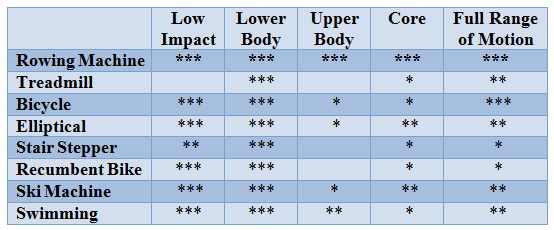
If you prefer structured equipment, these machines deliver excellent light cardio with minimal joint stress.
Elliptical Trainer
- Why it works: Mimics running without impact
- Tip: Use both arms and legs for a full-body burn
- Set resistance low and focus on time, not speed
Stationary Bike
- Why it works: Zero impact and great for knees
- Tip: Sit upright and don’t hunch
- Try virtual classes to stay engaged
Rowing Machine
- Why it works: Engages legs, back, arms, and core
- Tip: Use smooth, steady strokes with no jerking
- Keep RPE at 8–10
Treadmill (Walking Only)
- Why it works: Controlled environment with pace tracking
- Tip: Add a 1–2% incline to mimic outdoor walking
- Avoid running if you are doing light cardio
Use any of these for 20–30 minutes, 3–5 times per week.
Daily Life Activities That Count as Light Cardio
You don’t need a formal workout to get benefits. Everyday tasks can be light cardio if done with purpose.
Examples That Qualify
- Gardening (raking, planting, weeding)
- House cleaning (vacuuming, mopping, dusting)
- Walking the dog
- Grocery shopping with a cart
- Stair climbing at work
How to Maximize These Activities
- Keep arms moving by swinging them like you are walking
- Engage your core slightly
- Don’t rush, but don’t dawdle. Maintain steady effort
- Aim for 10-minute bursts throughout the day
These count toward the NHS 150-minute weekly goal for moderate activity, even if they feel like just chores.
Cool Down Properly After Light Cardio
Cooling down helps your heart rate return to normal and prevents stiffness or dizziness.
Active Recovery (3–5 min)
- Light marching on the spot
- Gentle arm circles
- Keep moving and don’t sit down immediately
Stretches to Finish Your Session
Ankle Rolls (1 min per side)
– Lift your foot and rotate the ankle clockwise and counterclockwise
– Improves circulation and joint health
Spinal Rotations (2 min)
– Sit or stand with arms crossed
– Gently twist your upper body left and right
– Keep hips facing forward
Side Stretch (1 min per side)
– Reach one arm overhead and lean to the opposite side
– Hold for 10 seconds and breathe deeply
– Stretches obliques and ribs
Cool-downs make recovery faster and reduce next-day soreness.
Why Light Cardio Beats HIIT for Long-Term Health
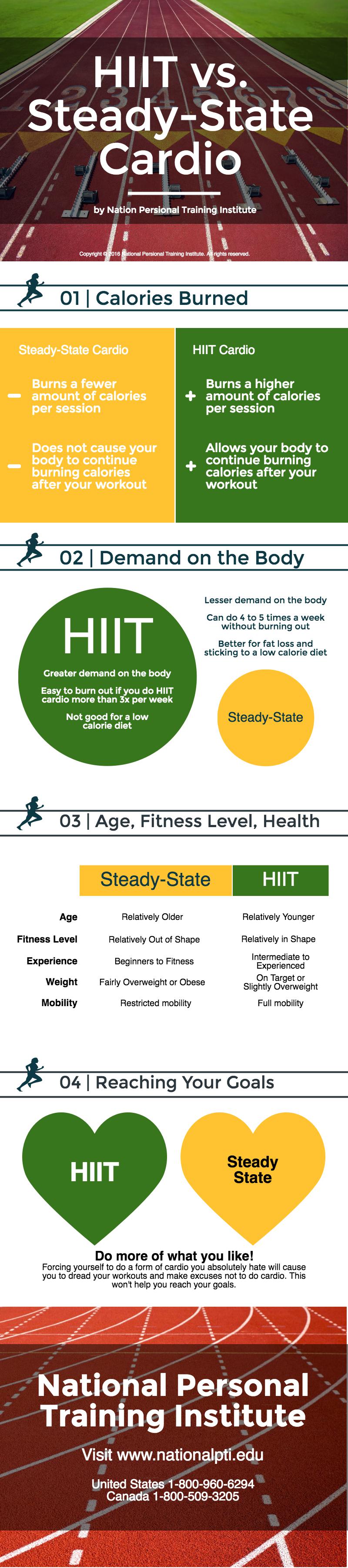
While high-intensity interval training (HIIT) gets attention, light cardio is the foundation of sustainable fitness.
Key Advantages of Light Cardio
- Lower injury risk: No jumping, sprinting, or heavy loads
- Easier recovery: You won’t feel drained afterward
- Higher adherence: People stick with it longer
- Better for joints: Ideal for arthritis or past injuries
- Supports heart health without strain: Safer for hypertension or cardiac rehab
HIIT has its place, but LISS should be 70–80% of your weekly activity, especially if you are new, older, or managing health conditions.
Combine Both Wisely
- 3–4 days of light cardio
- 1–2 days of moderate or HIIT (if approved by your doctor)
- Use light cardio as active recovery the day after hard workouts
This balance prevents burnout and builds lasting fitness.
Troubleshoot Common Light Cardio Problems
Even simple workouts come with challenges. Here is how to fix them.
“It Feels Too Easy”
- Add light weights like cans or dumbbells
- Increase arm movement with bigger swings
- Extend duration by adding 5–10 minutes
- Try resistance bands during seated exercises
“I Get Bored”
- Listen to music or podcasts
- Watch TV while walking or cycling
- Join a dance or water aerobics class
- Walk with a friend
“My Joints Hurt”
- Switch to zero-impact options like swimming, cycling, or seated work
- Avoid hard surfaces and walk on grass or tracks
- Wear supportive shoes
- Stop any move that causes sharp pain
“I Feel Dizzy”
- Hydrate before and after
- Breathe continuously and don’t hold your breath
- Cool down slowly
- Sit down immediately if dizziness persists
Frequently Asked Questions About Light Cardio Exercises
What heart rate should I aim for during light cardio?
For light cardio, target roughly 50% of your maximum heart rate. Calculate your max heart rate by subtracting your age from 220, then take half of that number. For a 40-year-old, that works out to about 90 beats per minute. If you don’t have a monitor, use the conversation test. You should be able to talk in full sentences without gasping.
How often should beginners do light cardio?
Beginners should aim for 2 to 3 sessions per week, starting with 10–20 minutes per session. As your fitness improves, gradually increase to 3–5 sessions per week and extend duration toward 30 minutes. The NHS recommends 150 minutes of moderate activity weekly, and light cardio contributes to that goal.
Can light cardio help with weight loss?
Yes, light cardio supports weight management by burning calories and improving metabolic health. While higher-intensity exercise burns more calories per minute, light cardio is easier to sustain daily, which leads to greater total calorie burn over time. Combine it with a balanced diet for best results.
Is light cardio safe during pregnancy?
Light cardio is generally safe and encouraged during pregnancy, but you should consult your healthcare provider first for personalized guidance. Stick to low-impact activities like walking, swimming, or stationary cycling. Avoid exercises that risk falling or involve lying flat on your back after the first trimester.
What is the difference between light cardio and LISS?
The terms are essentially interchangeable. LISS stands for Low-Intensity Steady-State, which describes any sustained, low-effort cardio activity. Light cardio is the more common name for the same concept. Both target roughly 50% of max heart rate and emphasize consistency over intensity.
Do I need equipment for light cardio at home?
No equipment is required for most light cardio exercises. Bodyweight movements like marching, side taps, and seated exercises work perfectly. Optional items like soup cans, resistance bands, or a sturdy chair can add variety or intensity, but they are not necessary to get started.
Key Takeaways for Building a Light Cardio Routine
Light cardio exercises are your secret weapon for lifelong health. They are safe, effective, and accessible to nearly everyone, regardless of age, fitness level, or physical limits. By focusing on consistency over intensity, you will build a stronger heart, better mood, and greater energy without injury or burnout.
Start small. Try the 10-minute beginner routine or a daily 20-minute walk. Use the conversation test to stay in the right zone. Add variety with seated moves, machines, or daily chores. Most importantly, make it enjoyable, because the best workout is the one you will actually do.
With light cardio, progress is not measured in sweat or soreness, but in stamina, stability, and sustainability. And that is the real win.