Cardio After Strength Training: Key Benefits
You just finished a heavy lifting session—muscles are pumped, weights are racked, and now you’re staring at the treadmill. Should you hop on? For most fitness goals, the answer is a clear yes. Performing cardio after strength training amplifies fat burning, preserves hard-earned muscle, and speeds up recovery when timed correctly. This sequence taps into your body’s post-lift metabolic state to deliver results without sabotaging gains.
Unlike random workout planning, timing matters here. Starting with resistance training ensures you attack heavy lifts with fresh muscles, preserving power and form. Once glycogen is depleted from lifting, your body shifts toward burning fat during subsequent cardio—making your endurance work far more effective. Research also shows heart rate climbs up to 12 bpm higher during post-lift cardio, meaning you torch more calories at the same intensity.
Whether you want to build muscle, lose fat, or boost overall health, understanding how and why cardio after strength training works can transform your routine. Below, we break down the science-backed benefits, ideal protocols, and key adjustments based on your goals—while busting common myths like “cardio kills gains.”
Maximize Fat Burning Post-Lift

Leverage Glycogen Depletion
Strength training drains stored glycogen—your body’s preferred fuel for high-intensity efforts. Once those reserves run low, your body turns to fat for energy during cardio. By lifting first, you create a metabolic environment where fat oxidation accelerates faster than it would with full glycogen stores.
This doesn’t mean you enter a “fat-burning zone” only after lifting—but the transition happens quicker. Studies show individuals burn a higher percentage of fat during cardio when it follows resistance training, especially during steady-state sessions lasting 20–30 minutes.
Enter the Fat-Burning Zone Faster
When glycogen stores are low, your body adapts by relying more on fatty acids for fuel. This shift typically takes 15–20 minutes during fasted or low-energy cardio. After lifting, that timeline shortens. You essentially “pre-fatigue” the carb-burning system, allowing your body to tap into fat stores earlier in the session.
For best results:
– Perform moderate-intensity cardio at 60–75% of your max heart rate
– Keep duration between 15–30 minutes
– Choose low-impact options like incline walking or cycling to protect your joints
Pro Tip: Skip high-intensity sprints immediately after heavy leg day. While effective for calorie burn, they spike soreness and delay recovery.
Preserve Muscle and Strength Gains
Train with Fresh Muscles
Lifting heavy demands neuromuscular precision, stability, and full force production. If you do cardio first—especially high-intensity or long-duration work—you fatigue stabilizer muscles and drain energy stores before touching a single weight.
Fatigued muscles can’t generate maximum tension. This compromises form, reduces training volume, and limits the mechanical stress that drives hypertrophy. Research shows one-rep max performance drops significantly when strength training follows cardio.
By reversing the order, you:
– Maximize power output
– Maintain proper lifting technique
– Increase total work capacity across sets, reps, and load
Minimize the Interference Effect
There’s a long-standing concern that combining cardio and strength training causes the “interference effect”—where endurance signaling (AMPK) suppresses muscle-building pathways (mTOR). While real, this effect is overblown for most people.
Key insights:
– Interference is minimal when cardio follows lifting
– It primarily affects advanced athletes doing high-volume endurance work
– Separating sessions by 4+ hours nearly eliminates the risk
For natural lifters and general fitness enthusiasts, the benefits of combined training far outweigh theoretical interference—especially when strength comes first.
Support Recovery with Blood Flow
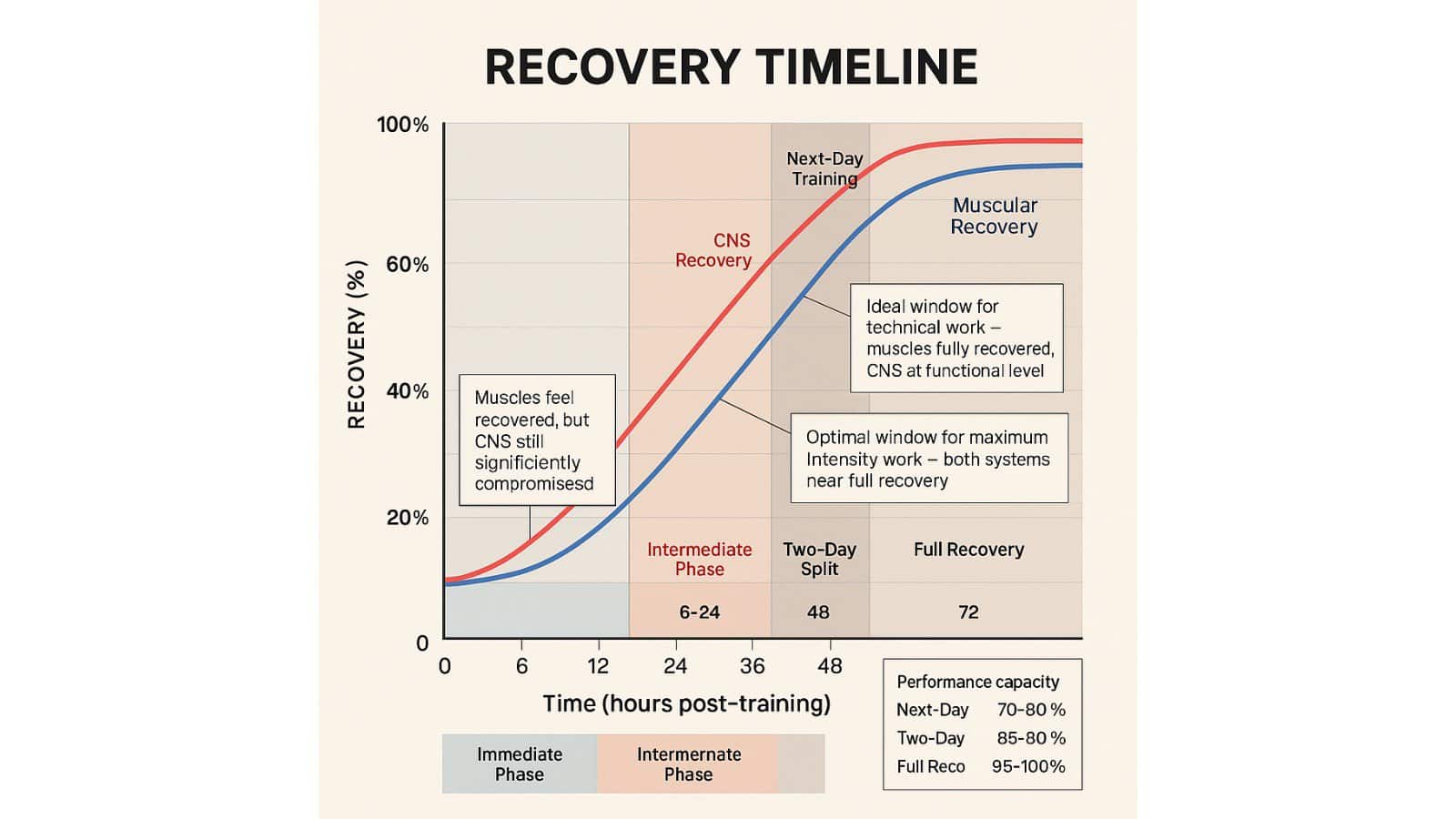
Low-intensity cardio after lifting—walking or cycling—boosts circulation to worked muscles. This enhanced blood flow delivers oxygen and nutrients while clearing metabolic waste like lactate, potentially reducing next-day soreness.
Think of it as active recovery: light movement flushes out inflammation without adding significant fatigue.
Expert Note: Use LISS (Low-Intensity Steady State) post-lift if muscle growth is your goal. Avoid HIIT after heavy lower-body sessions to protect CNS recovery.
Boost Calorie Burn and EPOC
Amplify the Afterburn Effect
Excess Post-Exercise Oxygen Consumption (EPOC) refers to the elevated calorie burn that continues after your workout ends. The harder the workout, the greater the oxygen debt—and the longer the afterburn.
Strength training alone creates a strong EPOC due to micro-tears, hormonal responses, and repair demands. Adding cardio afterward extends this effect:
– Higher total energy expenditure
– Prolonged metabolic elevation
– Increased fat utilization during recovery
A 2018 review found that combined sessions produce higher EPOC than either modality alone—provided intensity is managed.
Elevate Heart Rate More Efficiently
An ACE-sponsored study revealed a surprising finding: participants had 12 beats per minute higher heart rates during cardio when it followed strength training—even at identical speeds and inclines.
Why?
– Residual sympathetic nervous system activation from lifting
– Elevated core temperature
– Partial glycogen depletion forcing greater cardiovascular demand
This means you get more metabolic bang for your buck during the exact same cardio workout.
Takeaway: Same treadmill run, but harder on the body when done post-lift equals more calories burned.
Optimize Workout Order by Goal

Build Muscle? Lift First, Then LISS
If your priority is hypertrophy or strength:
– Sequence: Warm-up → Strength → LISS (optional)
– Cardio Duration: 15–20 minutes
– Intensity: Zone 2 (able to talk comfortably)
– Best Modalities: Incline walk, elliptical, rowing
This preserves energy for lifting and avoids CNS overload. Excessive post-lift cardio can spike cortisol, which over time may hinder muscle growth.
Lose Fat? Combine Weights + Moderate Cardio
For fat loss and improved body composition:
– Sequence: Warm-up → Strength → Cardio (20–30 min)
– Cardio Type: Steady-state jogging, cycling, or short HIIT (2–3x/week)
– Rationale: Depleted glycogen plus elevated heart rate equals optimal fat oxidation
Studies show this sequence leads to greater fat loss over time compared to cardio-first or isolated training.
Caution: Don’t extend cardio beyond 30 minutes unless recovery allows. Overdoing it risks muscle loss, especially in a calorie deficit.
Train for Endurance? Prioritize Cardio First
Endurance athletes aiming to improve race times should do cardio before lifting—or better yet, separate sessions by 4+ hours.
Why?
– Strength training impairs time-to-exhaustion in subsequent high-intensity cardio
– Neuromuscular fatigue reduces rate of force development (RFD) and endurance performance
Study Data:
– After hypertrophy-focused leg training, time to exhaustion dropped by 23%
– After plyometrics, it decreased by 17%
For marathoners or triathletes, fresh legs are non-negotiable for quality endurance work.
Workaround: If combining, keep post-cardio strength sessions light and technical (core, mobility, accessory lifts).
Choose the Right Cardio Type
Match Modality to Muscle Use
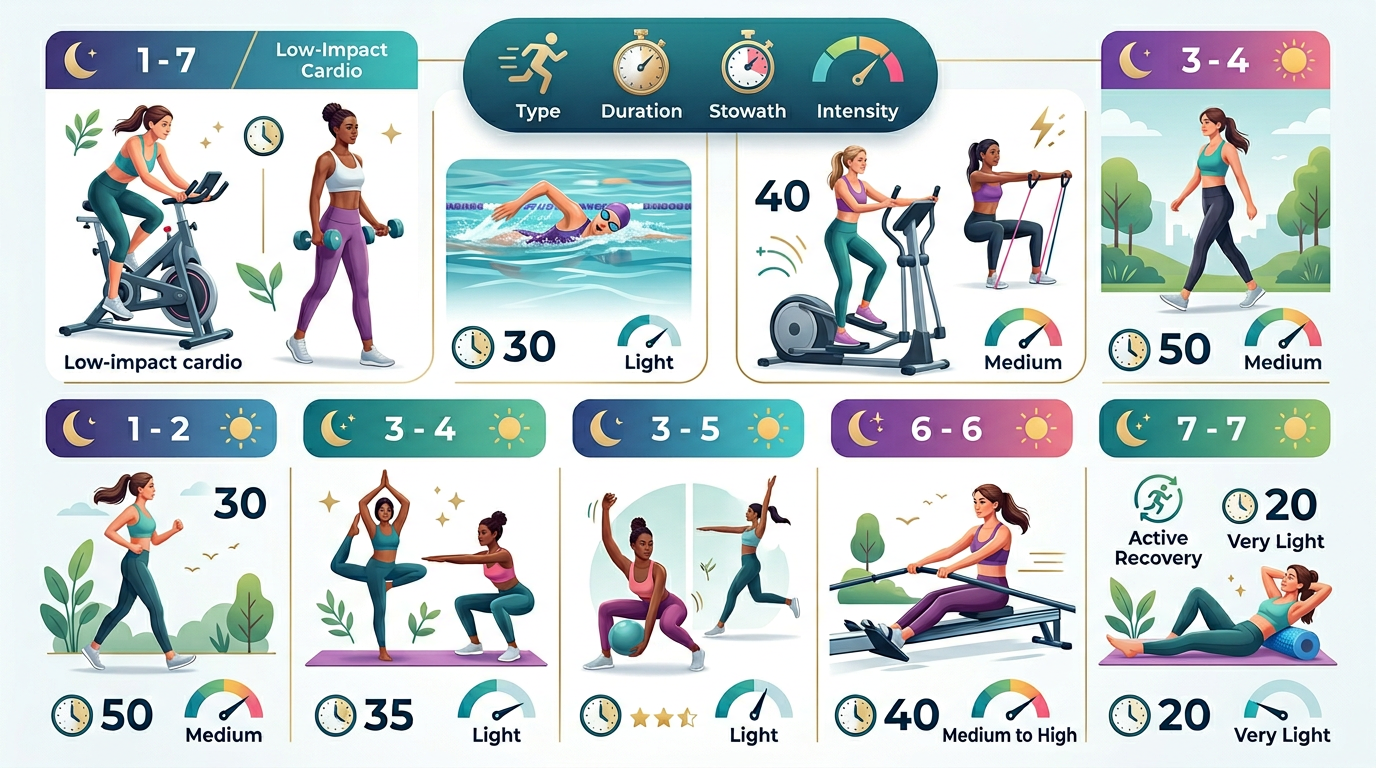
Avoid cardio that heavily recruits recently trained muscles. For example:
– Running after heavy squats increases quad fatigue and soreness
– Rowing after upper-body lift creates minimal overlap
– Cycling after deadlifts causes less hamstring strain than sprinting
Smart pairing prevents overuse injuries and supports recovery.
Recommended Post-Lift Cardio Options
| Type | Best For | Duration | When to Use |
|---|---|---|---|
| LISS (Incline Walking) | Muscle retention, recovery | 20–30 min | After any lift |
| Steady-State Jogging | Fat loss, endurance base | 20–40 min | After upper-body days |
| Cycling/Elliptical | Low-impact fat burn | 20–30 min | After leg or full-body |
| Rowing | Full-body conditioning | 15–25 min | After upper-body focus |
| Bodyweight Circuits | Home workouts, engagement | 10–20 min | Time-efficient finisher |
Avoid: High-impact sprints or long runs after heavy lower-body training. Save them for separate days.
Fuel and Recover Smartly
Eat Enough Protein
To prevent muscle breakdown when combining modalities:
– Aim for 2 grams of protein per kg of body weight daily
– Include protein in both pre- and post-workout meals
Example: A 70 kg (154 lb) person needs ~140g of protein per day.
Time Your Nutrition
- Pre-Workout: Small carb + protein snack (banana + whey) 30–60 min before lifting
- Post-Workout: Within 60 minutes, consume 20–40g protein + complex carbs (chicken + rice)
This replenishes glycogen and jumpstarts muscle repair.
Stay Hydrated and Replenish Electrolytes
Extended sessions increase sweat loss—especially sodium, potassium, and magnesium. Dehydration impairs performance and recovery.
Tips:
– Drink water throughout the day
– Add electrolyte mix if training longer than 75 minutes
– Monitor urine color (pale yellow means well-hydrated)
Prioritize Sleep and Rest
Recovery isn’t just about nutrition—it’s hormonal. Deep sleep boosts growth hormone and testosterone, both critical for muscle repair.
- Aim for 7–9 hours per night
- Take rest days: allow 48 hours between training the same muscle groups
- Use active recovery: walking, yoga, foam rolling
Debunk Common Myths
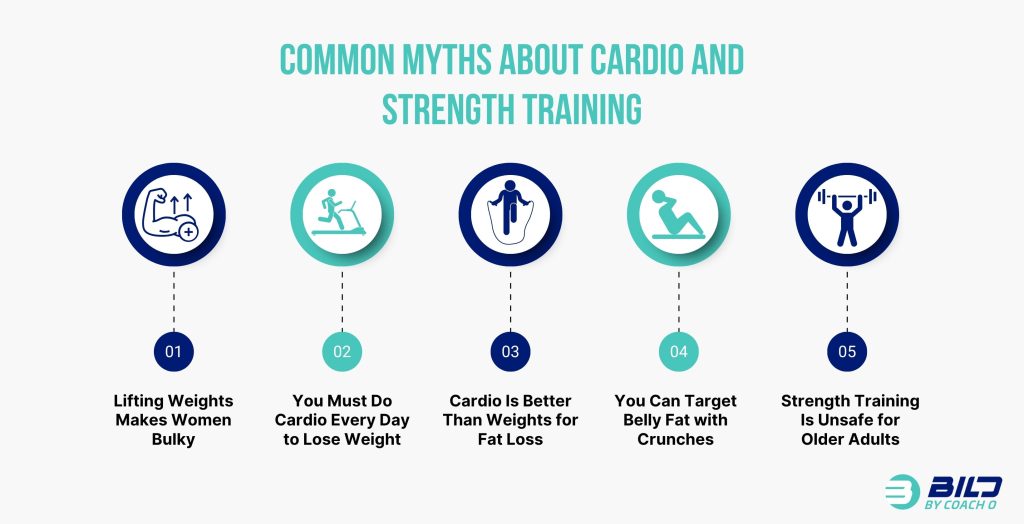
Myth: “Cardio kills muscle gains”
Truth: Moderate cardio does not destroy muscle—especially when done after lifting. Better cardiovascular fitness actually improves recovery between sets, letting you lift heavier over time. Only excessive volume (10+ hours weekly) combined with low protein and calorie deficits leads to muscle loss.
Myth: “Fasted cardio burns more fat”
Truth: Fasted cardio offers no significant fat-loss advantage over fed-state cardio. Worse, doing it before lifting can reduce strength performance. Having a small meal pre-workout improves power output—leading to a stronger stimulus and higher metabolic rate long-term.
Myth: “HIIT is always better than LISS”
Truth: HIIT burns more calories in less time—but it’s extremely taxing on the nervous system. If you’re already lifting heavy, too much HIIT increases injury risk and overtraining. LISS is safer, sustainable, and equally effective for fat loss when paired with strength training.
Myth: “You can’t do both on the same day”
Truth: Thousands do it daily with great results. The key is order, intensity, and recovery. Lifting first followed by moderate cardio is a proven formula for body recomposition.
Monitor for Overtraining
Even the best plan can backfire if recovery lags. Watch for these red flags:
- Persistent fatigue despite rest
- Declining strength or endurance
- Poor sleep or mood changes
- Frequent injuries or joint pain
- Loss of motivation
If you notice these, adjust:
– Reduce post-lift cardio to 10–15 minutes
– Switch from HIIT to LISS
– Separate workouts by time of day (lift AM, cardio PM)
– Add a recovery day
Rule of thumb: If you’re dreading workouts, you’re doing too much.
Frequently Asked Questions About Cardio After Strength Training
Does cardio after lifting really burn more fat?
Yes. Lifting first depletes glycogen stores, forcing your body to rely more heavily on fat for fuel during subsequent cardio. This can lead to a higher percentage of fat calories burned during the session.
How long should I wait between lifting and cardio?
Ideally, keep the transition under 30 minutes. Waiting longer than 4 hours between modalities reduces the metabolic synergy, though it also minimizes interference effects for advanced athletes.
Will cardio after weights make me lose muscle?
Not if you keep it moderate. Limit post-lift cardio to 20–30 minutes at a conversational pace, eat enough protein (2g/kg daily), and avoid extreme calorie deficits.
Can I do HIIT after strength training?
You can, but use it sparingly. HIIT after heavy lifting increases CNS fatigue and injury risk. Save high-intensity intervals for days when you’re not lifting, or keep them very short (10–15 minutes).
What’s the best cardio machine to use after lifting?
Low-impact options like the elliptical, stationary bike, or rowing machine are ideal. They elevate heart rate without stressing joints already fatigued from lifting.
Should beginners do cardio after weights?
Yes. Beginners benefit from the structure of lifting first, which preserves energy for learning proper form. Consistency matters more than perfect sequencing at this stage.
Key Takeaways for Combining Cardio and Strength Training
Performing cardio after strength training is a science-backed strategy that enhances fat loss, preserves muscle, and improves overall fitness for most people and most goals.
Quick Action Plan:
- Start with weights—always prioritize your main goal
- Follow with 15–30 min of cardio—LISS for muscle, steady-state for fat loss
- Choose low-impact, non-overlapping modalities (walk after legs)
- Eat enough protein (2g/kg/day) and hydrate well
- Sleep 7–9 hours and listen to your body
Who Should Avoid It?
- Pure endurance athletes (prioritize cardio first or split sessions)
- Beginners still learning form (focus on consistency over sequence)
- Those in extreme calorie deficits (risk of muscle loss)
For everyone else, lift first, then cardio—it’s the most efficient, effective way to build a leaner, stronger, healthier body. The best routine is the one you stick to, but if you’re looking to maximize results, the evidence is clear: strength before cardio wins.