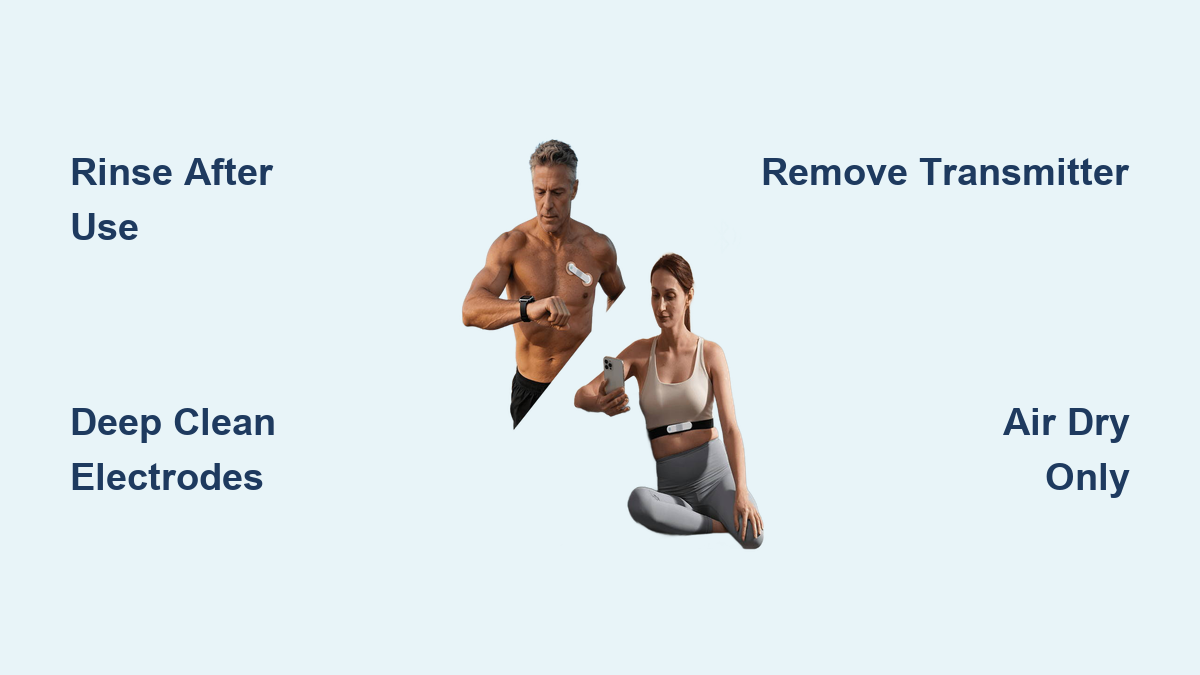
How to Clean Heart Rate Monitor Strap
If your heart rate monitor strap is giving inconsistent readings, smelling funky, or just feels grimy after workouts, it’s probably overdue for a clean. Sweat, salt, and bacteria build up quickly on the fabric and electrode patches, which can degrade performance and shorten the strap’s lifespan. The good news: cleaning your heart rate monitor strap is simple, quick, and only requires a few basic supplies.
Whether you’re using a Garmin, Polar, Wahoo, or another brand, this guide covers the best practices for keeping your strap accurate, odor-free, and durable. You’ll learn how to rinse it properly after every use, deep clean electrode patches, safely handle the transmitter, and avoid common mistakes like tossing it in the dryer.
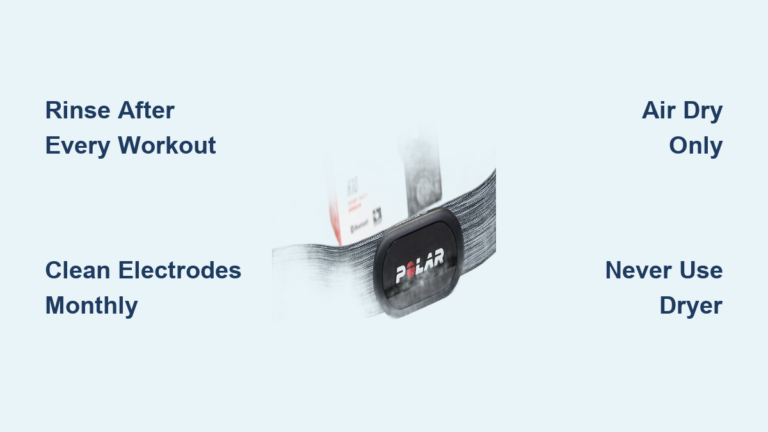
Immediate Rinse After Every Use
Sweat contains salt and minerals that crystallize when dry, forming a film on the electrode patches. This buildup blocks electrical conductivity between your skin and the sensors, leading to inaccurate or dropped heart rate signals. Preventing this starts the moment your workout ends.
Rinse With Lukewarm Water
As soon as you finish exercising, remove the strap and rinse it under lukewarm water. Avoid hot water, which can damage elastic fibers over time. Hold the strap under running water for 30 to 60 seconds, ensuring both sides are flushed, especially the inner side with the electrode patches. This simple step removes the majority of sweat residue before it dries.
Towel Dry and Hang to Air Dry
After rinsing, gently pat the strap dry with a clean towel. Then hang it in a well-ventilated area, preferably stretched out, to air dry completely. Never store a damp strap. Moisture trapped in the fabric encourages mold, mildew, and odor. Hang it on a hook, over a door, or on a drying rack. A full dry typically takes 1 to 2 hours.
Use Your Shower as a Cleaning Routine
Many athletes integrate strap rinsing into their post-workout shower. Simply wear the strap into the shower and let it run under the water while you wash up. It’s convenient, consistent, and ensures you never skip the rinse. Just remember to remove the transmitter first.
Deep Clean Every 7 Uses

Even with daily rinsing, salt and organic residue accumulate over time. That’s why a deeper clean is recommended every 7 uses, or monthly, whichever comes first. This restores conductivity and prevents long-term damage.
Hand Wash With Mild Soap
Fill a small bowl with lukewarm water and add a drop of mild hand soap. Avoid harsh detergents, bleach, or fabric softeners; they degrade elastic and leave residues that irritate skin or block signals. Soak the strap for 1 to 2 minutes, then gently rub the fabric between your fingers.
Scrub Electrodes With a Fingernail Brush
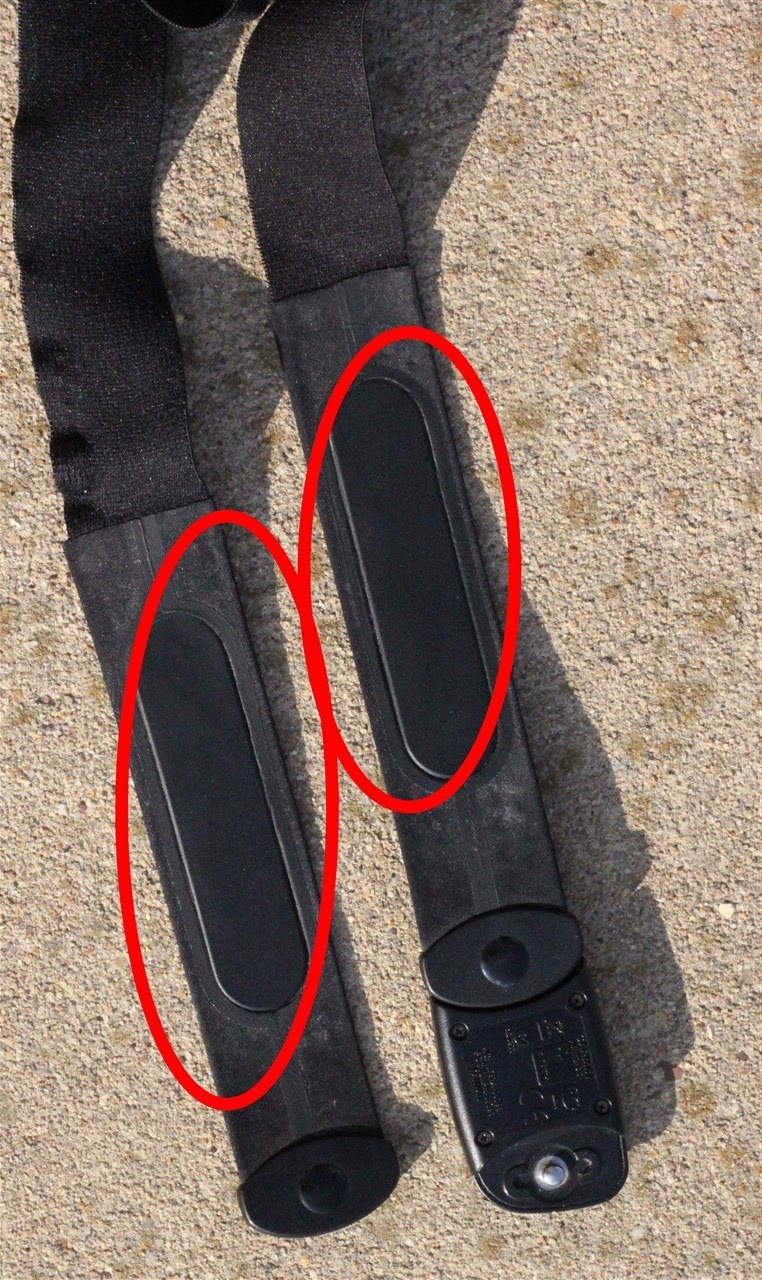
The electrode patches are the most critical part of the strap. Over time, they develop a filmy or gritty texture from salt deposits. Use a soft-bristled fingernail brush to gently scrub these areas in circular motions. This mechanical action dislodges stubborn buildup that rinsing can’t remove. Rinse thoroughly afterward to eliminate all soap traces.
Remove Transmitter Before Washing
Always detach the electronic module before any cleaning. Even if your model claims water resistance, prolonged exposure to soapy water increases the risk of internal moisture damage. Set the transmitter aside on a dry surface. Never submerge it or run it under water.
Machine Washing With Caution
While hand washing is ideal, some users successfully machine wash their straps, especially when laundering workout gear. If you choose this method, strict rules apply.
Wash Only the Strap, Never With Transmitter
Double-check that the transmitter is removed. Washing it inside the strap can lead to water intrusion, corrosion, or complete failure. Even anecdotal reports of transmitters surviving accidental washes aren’t a reason to risk it.
Use Cold or Lukewarm Water Cycle
Set your washing machine to cold or lukewarm water, with a maximum of 40°C (104°F). This temperature limit is specified by Garmin for newer models and is a safe standard for all heart rate straps. High heat breaks down elastic and weakens fabric over time.
Skip the Dryer, Always
Never put the strap in a tumble dryer. The combination of heat and tumbling can:
- Shrink or warp the elastic
- Damage electrode adhesion
- Cause internal fraying
- Create noise from loose components
Air drying is the only safe method.
Care for Key Components
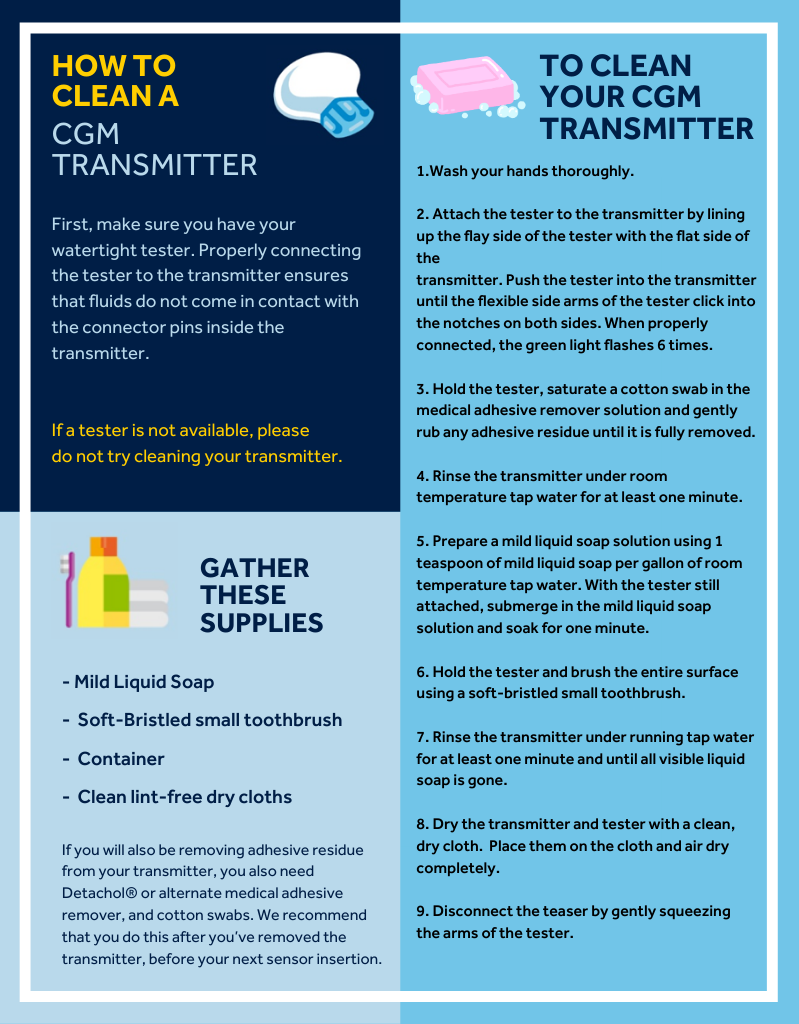
Each part of your heart rate monitor has unique vulnerabilities. Knowing how to care for them extends the device’s life and keeps readings accurate.
Maintain Electrode Patches
These conductive zones are where your body’s electrical signals are picked up. Keep them clean and free of grime. Avoid soaking the strap for long periods, especially the electrode areas, as prolonged water exposure may weaken the conductive coating or adhesive. After cleaning, inspect them visually. They should look smooth and uniform, not cracked or flaky.
Protect the Transmitter Module
Handle the transmitter gently. Wipe it occasionally with a dry or slightly damp cloth if it gets sweaty, but never immerse it. Check the metal snap connectors on both the strap and transmitter for corrosion or residue. If you spot white crusty deposits (dried salt), clean them with a cotton swab dipped in rubbing alcohol, lightly, and only on the metal parts.
Preserve Elastic Fabric
The strap’s snug fit is essential for good contact. Heat, UV light, and detergents degrade elasticity. To preserve the stretch:
- Avoid direct sunlight during drying
- Never use a dryer
- Don’t store it bunched up when damp
- Rotate straps if you train daily
Drying and Storage Best Practices
Proper drying and storage prevent odor, mold, and premature wear.
Hang to Dry Completely
After rinsing or washing, hang the strap in a dry, airy space. Stretch it slightly to help it dry evenly and maintain shape. Do not wrap it around anything or fold it while wet. Complete drying usually takes a few hours, so don’t rush it.
Store Only When Dry
Never reattach the transmitter or roll up the strap for storage until it’s fully dry. Moisture trapped inside promotes bacterial growth, which causes persistent odors and fabric breakdown. If you must store it quickly, lay it flat on a clean towel until dry.
Rotate for Longevity
If you work out daily, consider owning two straps and rotating them. This gives each one time to dry thoroughly and reduces wear. It also ensures you always have a backup if one needs cleaning or fails.
Troubleshoot Common Issues
When your heart rate monitor acts up, the fix is often a cleaning issue, not a hardware failure.
Fix Inconsistent Readings
If your strap frequently loses signal or shows erratic values, salt buildup on electrodes is the likely cause. Deep clean with a brush and mild soap. As a pro tip, test conductivity by wearing the strap damp, since dry fabric increases resistance.
Eliminate Odors
A smelly strap means bacteria have taken hold. This is caused by incomplete drying or infrequent cleaning. Wash immediately with mild soap, rinse well, and air dry fully. To prevent recurrence, rinse after every use and never store damp.
Address Loose Fit
If the strap no longer feels snug, elastic degradation from heat (dryer) or age is the cause. Replace the strap. A loose fit causes motion artifacts and poor signal quality.
Silence Noisy Connectors
If the transmitter rattles or clicks when worn, damage from tumbling (such as in a dryer) is the likely cause. Inspect for loose parts; if noise persists, replace the strap or transmitter.
When to Replace the Strap
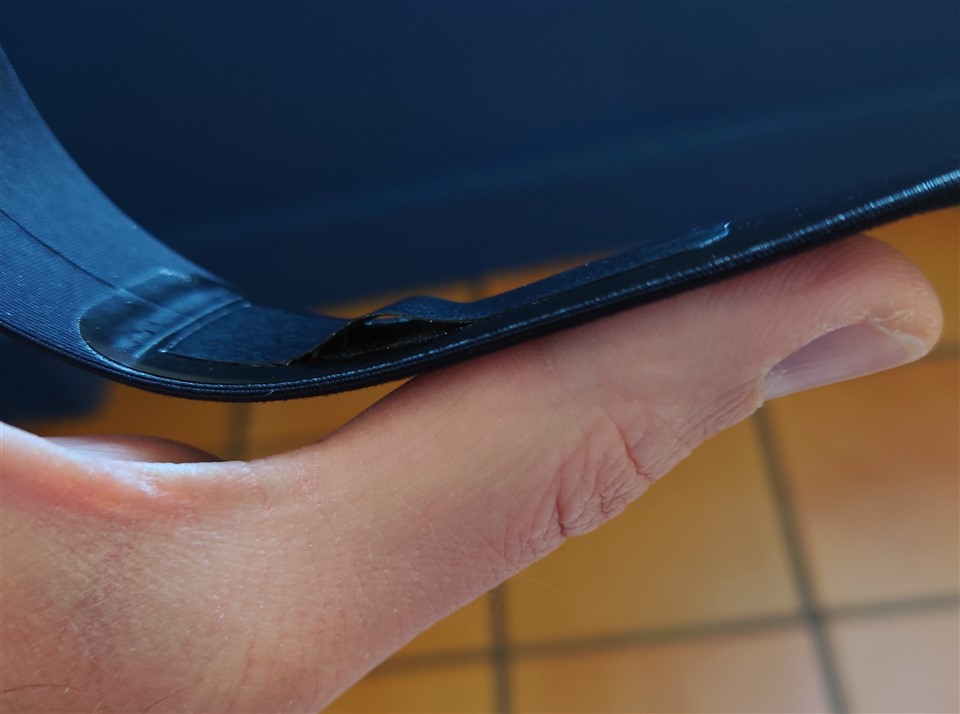
Even with perfect care, heart rate monitor straps wear out. Signs it’s time for a new one include:
- Fabric is frayed or stretched out
- Electrode patches are peeling or discolored
- Persistent odor despite cleaning
- Frequent signal loss even when damp and properly worn
Most straps last 1 to 3 years with regular use. Transmitters often last longer, sometimes 5+ years, so you may only need to replace the band.
Frequently Asked Questions About Heart Rate Monitor Strap Cleaning
How often should I clean my heart rate monitor strap?
Rinse it after every use to prevent salt buildup. Perform a deep clean with mild soap and a fingernail brush every 7 uses, or monthly, to remove accumulated residue that rinsing alone can’t eliminate.
Can I machine wash my heart rate monitor strap?
Yes, but only the strap itself, never with the transmitter attached. Use cold or lukewarm water at a maximum of 40°C (104°F) and skip the dryer entirely. Air drying is the only safe method.
What should I do if my heart rate readings become inconsistent?
Inconsistent readings usually indicate salt buildup on the electrode patches. Deep clean with mild soap and a soft fingernail brush, then test conductivity by wearing the strap slightly damp. Dry fabric increases resistance and can cause signal drops.
Is it safe to wear my strap in the shower?
Yes, wearing the strap in the shower is an effective way to rinse it after workouts. Just make sure to remove the transmitter first to avoid water damage to the electronics.
How long do heart rate monitor straps typically last?
With proper care, most straps last 1 to 3 years. Transmitters often last longer, sometimes 5+ years. Signs you need a replacement include frayed fabric, peeling electrodes, persistent odor, or frequent signal loss.
Key Takeaways for Cleaning Your Heart Rate Monitor Strap
Keeping your heart rate monitor strap clean is the easiest way to ensure accurate data and extend its life. Rinse it after every workout, deep clean every 7 uses, always remove the transmitter, and air dry completely. Avoid heat, harsh chemicals, and dryers at all costs.
With just a few minutes of maintenance per week, your strap will perform reliably for years, keeping your training data precise and your gear fresh. Start with a simple rinse after your next workout and build the habit from there.