How to Take Fitness Tracking Measurements
You started eating clean, hitting the gym consistently, and showing up every day. Yet the scale barely budges, leaving you wondering if your effort is actually working. Before you spiral into frustration, understand this: your body tells a story the scale cannot read. Real progress hides in shrinking waistlines, growing biceps, and clothes fitting looser, none of which a number on a scale can detect.
Learning how to take measurements for fitness tracking gives you the clarity to see invisible wins. This guide breaks down exactly what to measure, when to measure, how to measure accurately, and how to interpret your results. By the end, you’ll have a complete system to track real progress and make smarter adjustments along the way.
Why the Scale Alone Fails You
Muscle vs. Fat: The Numbers Game You Can’t Win
Muscle is denser than fat, meaning it takes up less space on your frame. You can lose inches and shed body fat while simultaneously building lean mass, leaving your total weight unchanged or even slightly higher. This is called body recomposition, and it’s a major goal for anyone serious about long-term fitness. If you rely only on the scale, this progress stays invisible, often causing people to quit right before breakthrough results.
Daily Weight Swings Are Noise, Not News
Your weight can swing 2 to 5 pounds in a single day due to hydration levels, sodium intake, glycogen storage, and undigested food. These fluctuations have nothing to do with fat gain or loss. Tracking weekly averages and circumferences cuts through this daily noise and reveals the actual direction of your progress.
Progress You Can See Beats Progress You Assume
Your brain adapts to gradual changes, making daily mirror checks unreliable. But comparing photos from 8 weeks ago to today, or noticing your waist dropped from 34 to 32 inches, delivers undeniable evidence. This visual and numerical feedback fuels motivation and reinforces consistency when willpower fades.
Set Up a Measurement Routine That Works
Lock Down Your Timing and Conditions
Variables destroy data accuracy. To get reliable readings, measure every time under the same conditions:
- Measure in the morning, right after using the bathroom
- Measure before eating or drinking anything
- Wear minimal clothing like underwear or a swimsuit
- Place your scale on a hard, flat surface, never carpet
Standardization ensures your numbers reflect real changes rather than random daily shifts.
Gather the Right Tools
Using the wrong equipment leads to bad data. Here’s what you actually need:
- A non-elastic cloth measuring tape or a MyoTape for self-measurement
- A digital scale placed in the exact same spot every time
- A camera (same device, same lighting) for progress photos
- A spreadsheet or app to log everything consistently
Avoid sewing tapes since they stretch, and skip rigid construction tapes that won’t conform to your body.
Choose a Frequency That Prevents Obsession
Measuring too often breeds anxiety. Too rarely, and you miss important trends. Follow this rhythm:
- Weight: Daily, then calculate your weekly average
- Circumference: Weekly or bi-weekly
- Photos: Every 4 weeks
- Body fat checks: Monthly using calipers or Bod Pod
This schedule balances accuracy with your mental well-being.
Measure Each Body Area the Right Way
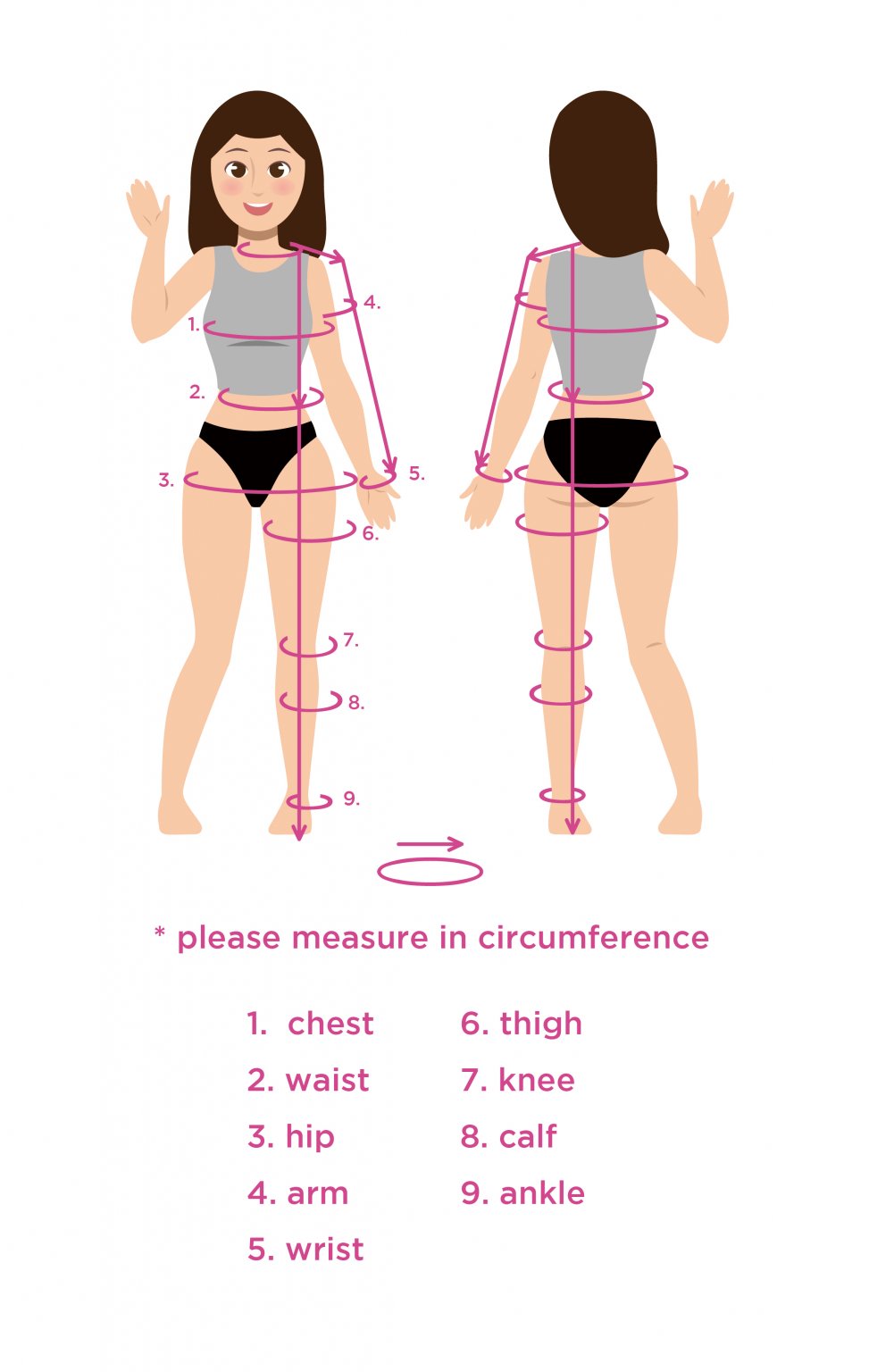
Neck Measurement
The neck helps estimate body fat percentage using military formulas. Wrap the tape around the middle of your neck, just below the Adam’s apple. Keep your head straight, the tape level, and apply no tension. Record to the nearest 0.1 inch or cm.
Chest Measurement
This tracks upper body muscle growth or fat changes. For men, measure across the nipple line. For women, measure the fullest part of the bust. Keep your arms at your sides, the tape parallel to the floor, and exhale normally before recording.
Waist Measurement
The single most important health-related metric you can track. Find the narrowest part between your ribs and hips. If there’s no obvious narrowest point, measure at the belly button. Keep the tape snug but not compressing skin, and stand relaxed. Do not suck in your stomach.
A waist over 40 inches for men or 35 inches for women signals elevated risk for heart disease and type 2 diabetes.
Hips and Glutes
This tracks lower body fat and muscle development. Measure around the widest part of your buttocks with feet together. Keep the tape level all the way around and avoid tilting your hips or arching your back.
Arms (Biceps)
This shows upper arm muscle growth. Let your arm hang naturally with your palm facing forward. Measure the thickest part of the upper arm. Do not flex unless you’re specifically tracking flexed size separately.
Thighs
This reflects leg muscle and fat changes. Stand evenly balanced and measure midway between your hip crease and the top of your kneecap. A precise alternative is to measure 10 inches (25 cm) above the kneecap. Keep the tape level and untwisted.
Calves
Often overlooked, but shows lower leg development. Stand with feet slightly apart and wrap the tape around the widest part of the calf. Measure at rest without flexing.
Go Beyond the Tape With Advanced Metrics
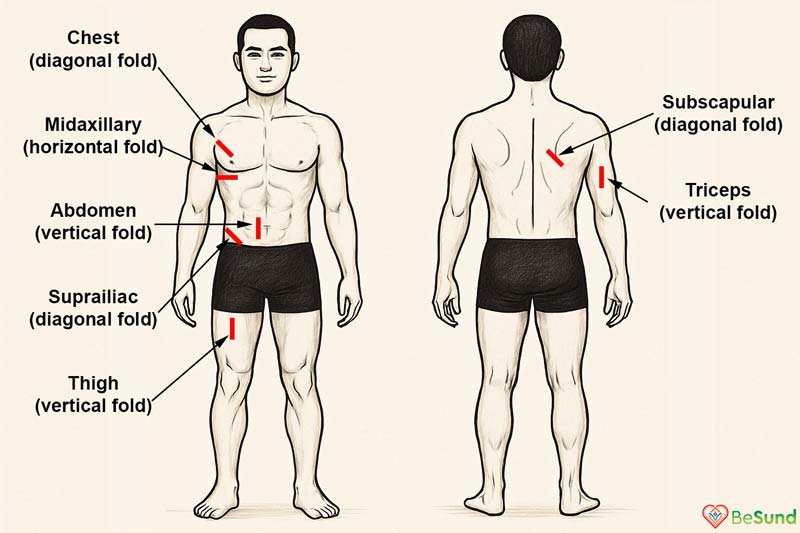
Estimate Body Fat Percentage
Tracking body fat trends confirms whether weight loss comes from fat or muscle. Several methods exist, each with tradeoffs.
Skinfold calipers pinch fat at sites like the abdomen, triceps, thigh, and chest. The skill of the tester heavily influences accuracy, so use the same person consistently. Monthly testing works best since daily changes are meaningless.
Bod Pod testing uses air displacement and ranks among the most accurate methods. Sessions cost $40 to $60, making it ideal for serious trackers who test every 4 to 8 weeks.
Smart scales using bioelectrical impedance are highly sensitive to hydration and can vary by 5 to 10% daily. They’re not recommended for precise tracking. Use them only for rough trends.
Take Progress Photos Like a Pro

Photos don’t lie, but poor technique distorts the truth. Follow these best practices:
- Use the same day, same time, and same lighting (morning near a window works great)
- Use the same camera and distance, ideally with a tripod
- Strike the same pose: front, side, and rear (optional)
- Keep a neutral expression and relaxed posture. No sucking in
Store photos in a dated folder and review them every 4 to 8 weeks.
Track Behavior, Not Just Body Stats
Log Your Weekly Diet Adherence
Tracking meals isn’t enough. You need to track calorie accuracy to know if your plan actually works.
- Calculate your weekly target calories
- Add up your actual intake
- Divide actual by target to get adherence percentage
- 90% means a slight deficit
- 100% means maintenance
- 110% means a surplus
A single 1,500-calorie cheat meal can wipe out an entire week’s deficit, so calorie-based tracking is the only accurate method.
Monitor Your Training Consistency
Progress requires effort. Track these elements weekly:
- Workouts completed versus planned
- Progressive overload: Are you lifting more over time?
- RPE (Rate of Perceived Exertion): Was the session harder than usual?
If your adherence drops below 85%, your program may be too aggressive and needs adjustment.
Rate Your Recovery Every Week
Rate these factors on a 0 to 5 scale:
- Sleep quality (0 = great, 5 = poor)
- Stress level
- Hunger
- Energy and fatigue
High stress or poor sleep causes water retention that masks fat loss. Fix recovery before cutting calories.
Interpret Your Data Like a Pro

Spot Real Trends Instead of Daily Noise
Don’t react to one day’s weight. Instead:
- Compare weekly averages
- Look for 2 to 4 week trends
- Combine data points: If weight is stable but your waist is shrinking, you’re successfully recomposing
Diagnose Stalls Quickly
| Weight | Measurements | Adherence | Likely Issue | Action |
|---|---|---|---|---|
| Stable | Shrinking | High | Body recomposition | Keep going |
| Stable | Stable | Low | Diet not followed | Improve tracking |
| Stable | Stable | High | Plateau | Adjust calories or training |
| Up | Up | High | Surplus too big | Recalculate TDEE |
| Down | Down | High | Deficit too aggressive | Risk muscle loss |
This table helps you make smart, data-driven decisions without guessing.
Understand Your Body Type
Genetics influence how you lose fat and gain muscle:
- Ectomorph: Lean build, struggles to gain mass. Focus on a caloric surplus and heavy lifting.
- Endomorph: Stores fat easily. Needs strict adherence and consistent activity.
- Mesomorph: Builds muscle easily. Responds well to most programs.
No body type is better. Each simply requires a tailored approach.
Avoid These Common Measurement Mistakes
Don’t Measure Too Often
Daily tape measurements lead to obsession. Circumference changes take weeks to become meaningful. Stick to weekly or bi-weekly checks.
Don’t Use the Wrong Tape
Stretchy sewing tapes add 0.5 to 1 inch to your readings. Always use a non-elastic cloth or fiberglass tape.
Don’t Ignore Non-Scale Victories
Looser clothes, better energy, and strength gains are real progress. Celebrate them instead of dismissing them because the scale didn’t move.
Don’t Eat Back Calories From Fitness Trackers
Most wearables overestimate calories burned by 20 to 50%. Don’t adjust your intake based on these numbers. Stick to your TDEE-based plan.
Follow a Simple Weekly Tracking Plan

| Metric | When | How |
|---|---|---|
| Daily Weight | Morning | Record on scale, calculate weekly average |
| Circumference | Weekly | Neck, chest, waist, hips, arms, thighs, calves |
| Photos | Monthly | Front, side, rear in consistent setup |
| Body Fat | Monthly | Calipers or Bod Pod with same tester |
| Diet Adherence | Weekly | Percentage of calorie target hit |
| Workouts Done | Weekly | Number completed versus planned |
| Recovery Score | Weekly | Sleep, stress, hunger, energy (0 to 5) |
This system gives you everything you need without overwhelming you with data.
Frequently Asked Questions About Fitness Measurements
How often should I measure my waist for fitness tracking?
Measure your waist once per week or every two weeks. Daily measurements produce meaningless fluctuations that can cause unnecessary stress. Weekly readings under consistent conditions give you reliable trend data.
What time of day should I take body measurements?
Take all measurements in the morning, right after using the bathroom and before eating or drinking. This timing minimizes variables from food volume, hydration, and daily swelling, giving you the most accurate and comparable readings.
Can I trust smart scales for body fat percentage?
Smart scales are not reliable for precise body fat tracking. They use bioelectrical impedance, which is highly sensitive to hydration and can vary by 5 to 10% daily. Use them only for rough trends, not for decision-making.
Where exactly should I measure my waist?
Measure at the narrowest part of your torso, typically between your ribs and hip bones. If you can’t identify a narrowest point, measure directly across your belly button. Keep the tape snug but not compressing, and stand relaxed without sucking in.
Should I measure my arms flexed or relaxed?
Measure your arms in a relaxed, natural position with your palm facing forward. Only measure flexed if you’re specifically tracking bodybuilding-style flexed size, and track both relaxed and flexed separately for clarity.
How long before I see changes in my measurements?
Most people see measurable changes in 4 to 8 weeks when following a consistent program. Circumference changes happen slowly, which is why weekly or bi-weekly tracking works best. Comparing data over 2 to 4 week blocks reveals real trends.
Key Takeaways for Tracking Fitness Measurements
Knowing how to take measurements for fitness tracking transforms your journey from guesswork into strategy. The scale is just one piece of the puzzle. By measuring body circumferences, tracking behavioral adherence, and reviewing progress photos, you gain a complete picture of results that numbers alone can’t show.
When the scale stalls but your waist shrinks and your strength climbs, you’ll know you’re winning. And when data reveals a plateau, you can adjust early instead of wasting months on a plan that isn’t working.
Start today: grab a non-elastic tape measure, take your first set of baseline readings, and log them in a spreadsheet. In 4 weeks, you’ll have proof of progress and the confidence to keep pushing forward.