How to Jump Rope for Cardio
Jumping rope isn’t just for kids on playgrounds. It’s a high-efficiency, full-body cardio workout that torches calories, builds endurance, and sharpens coordination in a fraction of the time compared to other exercises. If you want to boost heart health without spending hours on the treadmill, jumping rope for cardio delivers unmatched results in minimal time. Research shows that just 10 minutes of daily jump rope equals 30 minutes of jogging in cardiovascular benefit.
You’ll learn how to choose the right rope, master proper form, structure workouts by fitness level, and avoid common mistakes. Plus, we cover nutrition, recovery, and how to integrate jump rope into your routine for lasting results.
Choose the Right Jump Rope for Your Goals

Match Rope Type to Your Experience Level
Using the wrong rope type can lead to frustration or injury. Here’s a breakdown of the main options:
- Beaded ropes are ideal for beginners. Their weight provides feedback, helping you time your jumps and build rhythm.
- Speed ropes with thin wire cables are built for fast, high-intensity workouts. They demand precision but deliver maximum calorie burn.
- Weighted ropes add resistance, turning your cardio session into a strength-building workout. Recommended weight for beginners is between 1/4 lb and 1/2 lb.
- Cordless ropes eliminate tripping and space issues, making them perfect for apartments or travelers. While they don’t improve coordination like real ropes, they still offer solid cardio benefits.
Size Your Rope Correctly
A poorly sized rope ruins your form and increases tangles. Follow this simple protocol:
- Stand on the center of the rope with both feet and pull the handles up. They should reach your armpits.
- As an alternative rule, the rope length should be no more than three feet longer than your height.
- If between sizes, pick the longer rope. You can shorten it, but not extend it.
- Beginners may start slightly longer for easier clearance, while advanced users prefer shorter ropes for speed.
Prioritize Handle and Surface Quality
- Choose non-slip, ergonomic handles that fit comfortably in your grip.
- Jump on shock-absorbing surfaces like gym mats, wooden floors, or rubberized turf. Avoid concrete.
- Wear supportive cross-training or running shoes with good ankle support, especially if you have flat feet or joint concerns.
Master Proper Jump Rope Form
Maintain Optimal Posture
Good form prevents injury and boosts efficiency. Keep these points in mind:
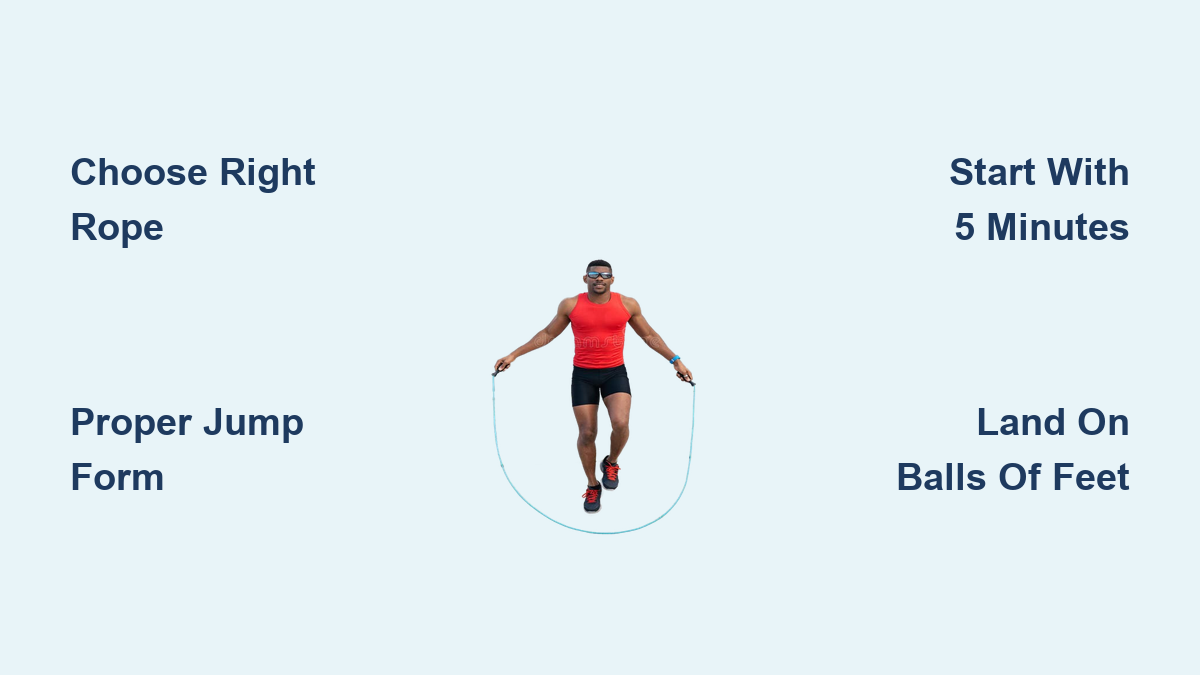
- Stand tall with chest up, shoulders back and relaxed, and gaze straight ahead. Avoid looking down at your feet.
- Keep elbows tucked close to your ribs. Power comes from your wrists and forearms, not your shoulders.
- Position hands roughly hip-width apart with palms facing inward or upward.
⚠️ Common Mistake: Swinging arms from the shoulders wastes energy and slows rotation.
Jump and Land Safely
- Jump only 1–2 inches off the ground, just enough to clear the rope.
- Land on the balls of your feet with knees slightly bent to absorb impact.
- Never land on your heels, as this increases joint stress and injury risk.
✅ Pro Tip: Think “quiet feet.” Soft, quick landings reduce fatigue and protect joints.
Find Your Rhythm
- Use a metronome app or play music at 120–140 BPM to stay consistent.
- Start slow. Accuracy beats speed at first.
- If you trip, pause, reset, and continue. Don’t rush.
Warm Up and Cool Down Properly
Warm Up: Prep Your Body
Jumping rope is high-impact, so always warm up for 5 minutes to activate muscles and joints:
- Jog in place
- Jumping jacks (2 sets of 30 seconds)
- Arm circles and shoulder rolls
- Bodyweight squats (2 sets of 15)
- Calf raises (2 sets of 20)
🔥 Why It Matters: Warming up increases blood flow and reduces risk of calf strains and ankle rolls.
Cool Down: Recover Faster
After your session, spend 5 minutes cooling down to prevent dizziness and muscle soreness:
- Walk slowly for 2–3 minutes
- Stretch major muscle groups:
- Calves: Wall stretch, 30 seconds per leg
- Quads: Standing quad pull, 30 seconds per leg
- Hamstrings: Seated toe touch, 30 seconds
- Shoulders: Cross-body arm stretch, 30 seconds
💡 Expert Note: Cooling down helps return your heart rate to normal and clears metabolic waste from muscles.
Build Cardio Fitness with Level-Based Workouts
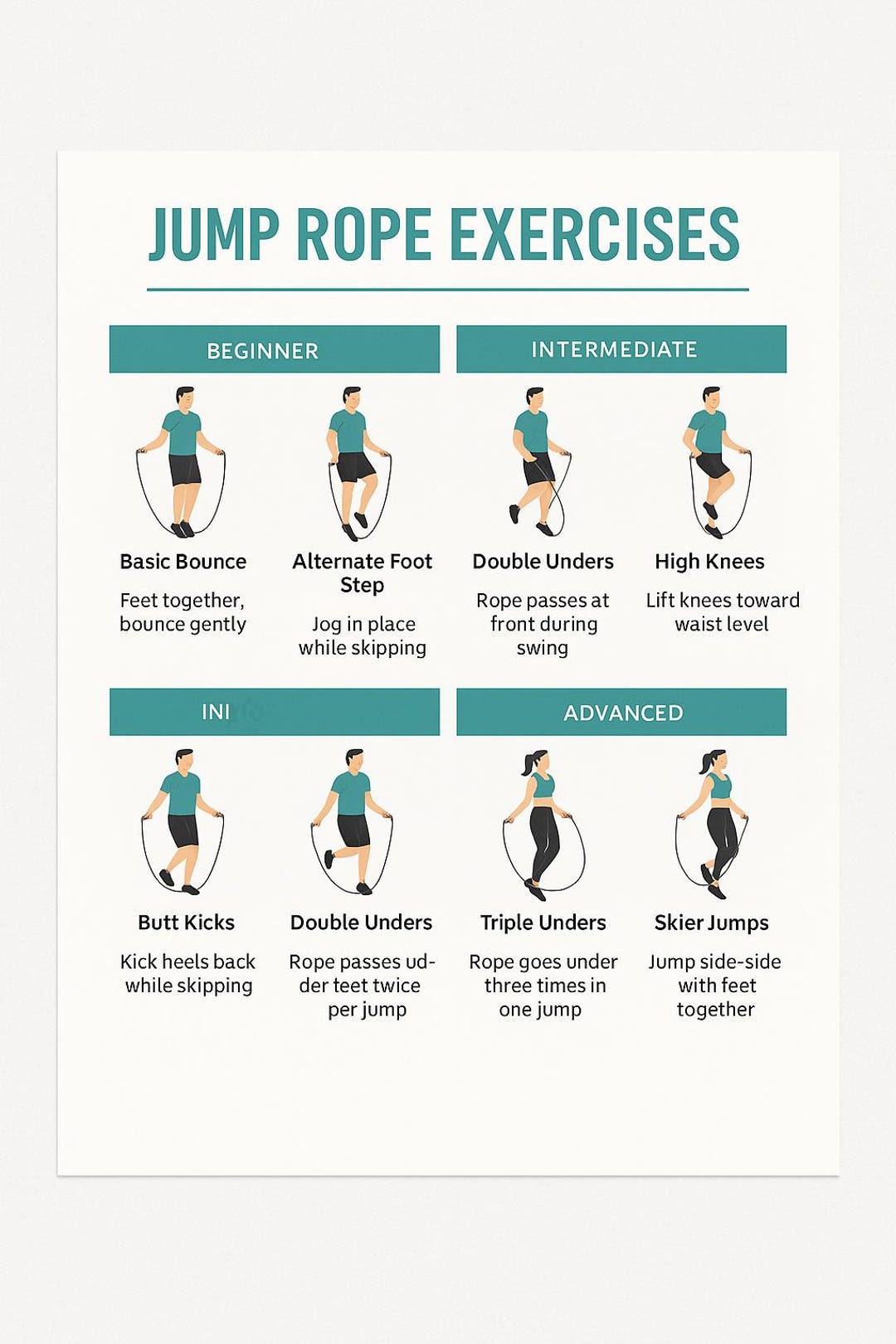
Beginner: Learn the Basics
Goal: Build coordination, endurance, and confidence.
Routine A: 10-Minute Interval Jump
- Warm-up: 5 minutes
- Jump: 30 seconds (basic two-foot jump)
- Rest: 30 seconds
- Repeat: 10 rounds
- Cool-down: 5 minutes
🕒 Time Commitment: 20 minutes total
🔁 Frequency: 2–3 times per week
Routine B: Starter HIIT Circuit
- Jump: 20 seconds
- Rest: 10 seconds
- Repeat: 10 rounds (5 minutes total)
- Focus on completing the time rather than speed
Intermediate: Increase Intensity and Agility
Goal: Improve footwork, reduce rest, and boost stamina.
Routine A: Alternating Foot Intervals
- Warm-up: 5 minutes
- Jump: 30 seconds (basic)
- Rest: 15 seconds
- Jump: 30 seconds (running step—alternate feet)
- Rest: 15 seconds
- Repeat: 10 rounds
- Cool-down: 5 minutes
Routine B: 12-Minute Skill Circuit
- Work: 45 seconds
- Rest: 15 seconds
- Rotate through:
- Regular skip
- Alternate foot
- High knees
- One-leg skip
- Criss-cross
- Goal: Complete all 12 minutes without stopping
Advanced: HIIT and Full-Body Conditioning
Goal: Maximize calorie burn and build athleticism.
Routine A: HIIT Strength Combo
- Jump: 1 minute (double-unders if possible)
- Push-ups: 30 seconds
- Rest: 30 seconds
- Jump: 1 minute (high knees)
- Squats: 30 seconds
- Rest: 30 seconds
- Repeat: 5 rounds
🔥 Calorie Burn: Up to 20 calories per minute (roughly 300 calories in 15 minutes)
Routine B: The AMRAP (20 Minutes)
- 10 push-ups
- 20 bodyweight squats
- 30 double-unders (or 60 regular jumps)
- Repeat as many rounds as possible in 20 minutes
🏆 Challenge Mode: Track rounds weekly to measure progress.
Prevent Injury and Avoid Burnout

Listen to Your Body
- Normal fatigue: Muscle burn, increased breathing
- Warning signs: Sharp joint pain, dizziness, or chest discomfort. Stop immediately.
🚨 When in doubt, rest. Overtraining leads to injury and stalled progress.
Modify for Joint Sensitivity
- Land softly and keep jumps low (1 inch).
- Use a mat and supportive shoes.
- Reduce session length if knees or ankles ache.
- Try cordless ropes or march in place with rope swings if impact is too high.
Progress Gradually
- Start with 5–10 minutes if new.
- Add 1–2 minutes weekly.
- Limit intense HIIT sessions to 1–2 times per week to avoid cortisol spikes and overuse injuries.
Fuel and Hydrate for Performance
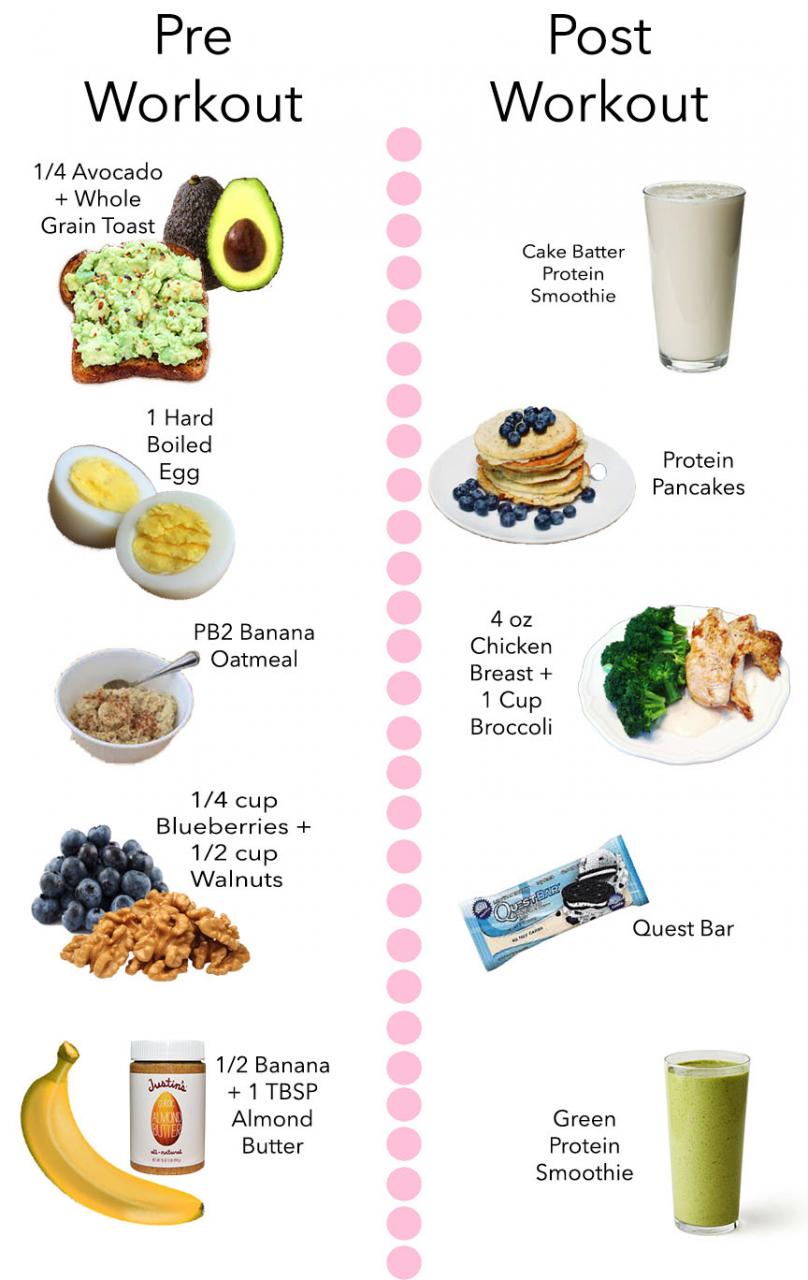
Pre-Workout: Power Up
- 2–3 hours before: Eat a balanced meal with carbs and protein (e.g., oatmeal with banana and peanut butter).
- 30–60 minutes before: Have a light snack like fruit or a slice of bread with honey.
❌ Avoid heavy, fatty, or fibrous foods right before jumping. They cause cramps.
During Workout: Stay Hydrated
- Drink 8 oz of water every 20 minutes.
- For sessions over 45 minutes, use an electrolyte drink like sugar-free Gatorade or coconut water.
💧 Dehydration reduces endurance and increases injury risk.
Post-Workout: Recover and Rebuild
- Eat within 30–60 minutes post-jump.
- Include carbs to refuel and protein to repair:
- Turkey sandwich on whole grain
- Greek yogurt with berries
- Chickpea wrap with veggies
🍽️ No recovery meal? Muscle soreness increases and gains slow.
Make Jump Rope a Sustainable Habit
Set Clear Goals
- Endurance: “Jump continuously for 10 minutes”
- Skill: “Land 10 double-unders in a row”
- Calorie burn: “Burn 200 calories in 15 minutes”
Track progress weekly to stay motivated.
Integrate Into Your Routine
- Warm-up: 3–5 minutes before leg day or boxing
- Cardio replacement: Swap a 20-minute jog for jump rope intervals
- Home workout staple: Combine with bodyweight circuits
Jump Rope Frequency Guide
| Fitness Level | Sessions Per Week | Session Duration |
|---|---|---|
| Beginner | 2–3 | 5–10 minutes |
| Intermediate | 3–4 | 10–20 minutes |
| Advanced | 4–5 | 15–30 minutes |
🎯 Ideal: Hit 150 minutes of moderate cardio weekly. Jump rope helps you reach it fast.
Troubleshoot Common Challenges
Rope Keeps Tangling
- Cause: Arms flaring out or jumping too high
- Fix: Keep elbows in, use wrists to spin, jump only 1–2 inches
✅ Practice tip: Swing the rope without jumping to master timing.
Can Can’t Keep Rhythm
- Use music at 120–140 BPM
- Try counting aloud: “1, 2, 3…”
- Record yourself to spot form flaws
Limited Space or Noise
- Use a cordless rope or indoor-specific mat
- Jump on a rubber gym mat to reduce noise
- Try low-impact marching with rope swings if ceiling is low
Feeling Frustrated
- Jump rope is coordination-heavy. Progress takes days, not minutes.
- Commit to 5 minutes daily. Improvement comes fast with consistency.
- Celebrate small wins: “I only tripped twice!”
Frequently Asked Questions About Jumping Rope for Cardio
Is jumping rope actually good for cardio?
Yes. Research shows that 10 minutes of daily jump rope delivers cardiovascular benefits equivalent to 30 minutes of jogging. It elevates heart rate, improves cardiac efficiency, and can burn up to 20 calories per minute.
How long should a beginner jump rope for cardio?
Beginners should start with 5–10 minute sessions, 2–3 times per week. Focus on mastering basic form before increasing duration or intensity.
What type of jump rope is best for beginners?
Beaded ropes are ideal for beginners. Their weight provides feedback that helps develop timing, rhythm, and control. A rope weighing between 1/4 lb and 1/2 lb works well for learning.
How do I size a jump rope correctly?
Stand on the center of the rope with both feet and pull the handles upward. The handles should reach your armpits. Alternatively, the rope should be no more than three feet longer than your height.
Can jumping rope help with weight loss?
Yes. Jump rope can burn approximately 300 calories in a 15-minute session. A 2021 study found that adding jump rope to a calorie-restricted diet significantly improved weight loss outcomes compared to diet alone.
How often should I jump rope each week?
Beginners should aim for 2–3 sessions per week. Intermediate users can do 3–4 sessions, while advanced users may do 4–5. Limit intense HIIT sessions to 1–2 times weekly to avoid overtraining.
Key Takeaways for Jumping Rope for Cardio
Jumping rope is one of the most time-efficient cardio workouts available. Choose the right rope for your level, size it correctly, and focus on proper form: light jumps, wrist-driven rotation, and soft landings on the balls of your feet. Structure your training by fitness level, starting with simple intervals and progressing to HIIT circuits as your coordination and endurance improve.
Fuel your sessions with balanced pre- and post-workout nutrition, stay hydrated, and warm up and cool down every time. Most importantly, stay consistent. Even 5 minutes daily builds the rhythm and stamina you need to see real results. Grab your rope, find your beat, and start jumping today.