How to Make Cardio Less Boring
You’re not alone if you’ve ever stared at a treadmill like it owes you money. Cardio often feels like the chore of the fitness world, something you know you should do, but rarely enjoy. The good news is that making cardio less boring is not about willpower, it is about strategy. With the right mindset, structure, and tools, you can turn your least favorite workout into one of the most energizing parts of your day.
The key is to stop fighting boredom and start outsmarting it. Whether you walk, run, cycle, or row, monotony kills motivation, not effort. This guide reveals science-backed, real-world tactics, from gamification to social workouts, that transform cardio from a slog into something you genuinely look forward to. You will learn how to reframe your mindset, redesign your workouts, and use entertainment, technology, and environment to keep your brain engaged and your feet moving.
Reframe Your Mindset First
Stop Viewing Cardio as Punishment
Cardio should never feel like penance for last night’s pizza. When you treat it like punishment, your brain actively resists it. Instead, reframe it as a privilege, a daily gift to your heart, brain, and energy levels. Think of it as mental maintenance. Cardio boosts mood, sharpens focus, and reduces anxiety. You are not “burning calories.” You are building resilience.
Shift your internal language. Say, “I get to move today,” instead of “I have to work out.” This small change reduces resistance and increases consistency. Remember that gentle movement counts. A 20-minute walk with deep breaths is better than skipping cardio because you don’t have time for an “ideal” 45-minute run.
Embrace the Longevity Flex
Strength training gives you visible results fast. Cardio, on the other hand, offers an invisible superpower: it extends your life. Consistent cardio reduces the risk of heart disease, stroke, and even cognitive decline. In your 40s, 50s, and beyond, cardio is the ultimate long-term health flex.
Keep this in mind when motivation dips. You are not just training for today. You are investing in your future self. A 2021 study found that starting dedicated cardio in middle age can reverse heart damage from years of inactivity. It is never too late. That is powerful motivation.
Make It Sustainable, Not Extreme
If you dread every second, you will not stick with it. The goal is not maximum pain. It is maximum enjoyment. Choose workouts that feel good. If sprinting feels awful, walk. If the gym bores you, dance in your living room. Consistency beats intensity every single time.
Ask yourself one question: Does this feel sustainable? If the answer is no, scale back. Joyful movement lasts a lifetime. Misery does not.
Distract Your Brain with Audio
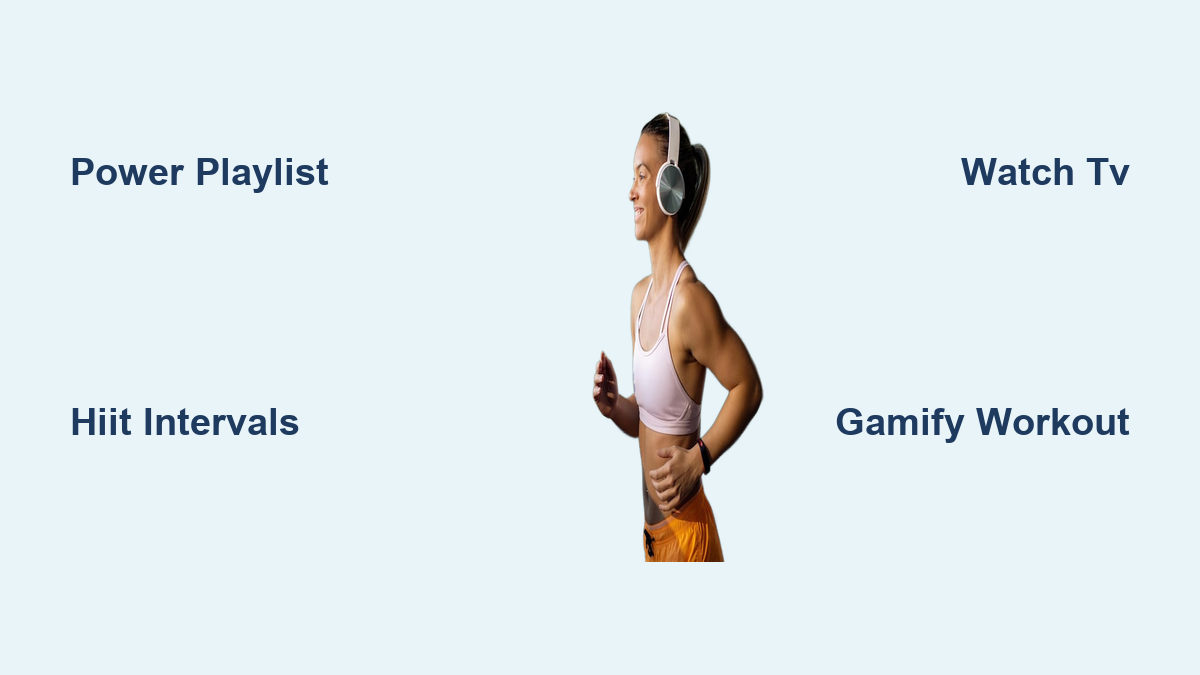
Build a Power Playlist
Music is your number one boredom buster. It reduces perceived effort and keeps you moving longer. The trick lies in curating playlists that match your workout phases.
Start with warm-up tracks at a moderate BPM, then layer in high-energy songs for hard intervals. Save your favorite bangers for the final push. Use apps like Spotify or Apple Music to create “Cardio Fire” or “Run or Die” playlists updated weekly.
Pro tip: Match tempo to movement. Aim for 120 to 140 beats per minute (BPM) for jogging and 160+ BPM for sprints. Fast beats drive faster legs.
Listen to Podcasts or Audiobooks
Turn cardio into learning time. Pick a gripping podcast or audiobook you would want to listen to, whether true crime, self-improvement, or comedy. Engage your mind, not your muscles.
The goal is to get so absorbed in the story that you forget you are working out. Many people finish 45-minute runs thinking, “Wait, that’s it?” That is the magic of cognitive distraction.
Try this: only allow yourself to listen during cardio. It creates a reward loop where exercise unlocks entertainment.
Use Visuals to Stay Engaged
Watch TV or Movies While Working Out
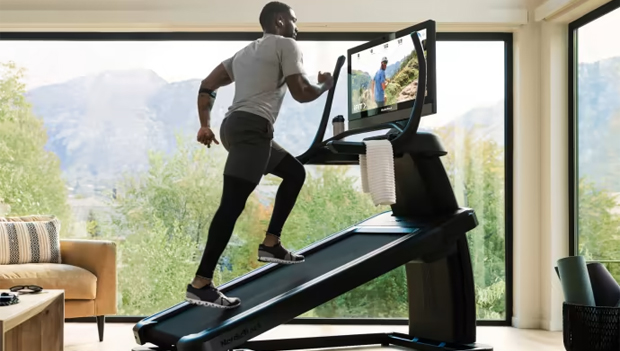
Merge fitness with leisure. Binge your favorite show on a treadmill or stationary bike. Suddenly, “I need to work out” becomes “I need to see what happens next.”
Use a tablet mount or smart TV at the gym. At home, pair your workout with new episode releases. No more choosing between Netflix and fitness. Do both.
For longer sessions, try the “4-On-1-Off” Movie Method:
– Warm up for 4 minutes
– Work for 1 minute hard during intense scenes
– Recover for 4 minutes easy
– Repeat until credits roll
– Finish strong by sprinting during credits
You will get a solid workout without noticing the time.
Sync Workouts to Live Sports
Sports fans, turn game time into cardio time. Use the “Big Game Protocol” to match your effort to the action on screen.
– Your team on offense? Go hard. Sprint or increase resistance.
– Defense or opponent has the ball? Drop to recovery pace.
– Commercial break? Do tempo intervals at moderate effort for each ad.
You will stay alert, root harder, and burn calories, all while watching the game.
Rethink Your Workout Structure

Try High-Intensity Interval Training (HIIT)
HIIT kills boredom by keeping your brain busy. Short bursts of max effort followed by recovery force you to focus on timing, not tedium.
There is no mental space for “this is boring” when you are counting seconds. Try this sample routine:
– 30 seconds sprint
– 90 seconds walk
– Repeat 8 to 10 times
Total time is 20 to 30 minutes. Total impact is massive. Studies show HIIT improves heart health and burns more calories post-workout.
Best for treadmills, bikes, jump rope, or outdoor runs.
Use the Pyramid Protocol
Structure your intervals like a pyramid by building up, then tapering down. This gives you a psychological win as intervals get shorter.
Sample set:
1. 1 min hard / 2 min easy
2. 3 min hard / 4 min easy
3. 5 min hard / 4 min easy
4. 3 min hard / 2 min easy
5. 1 min hard
Repeat 2 to 3 times. By the final hard interval, you are only doing 1 minute. You know you can crush it.
Mix Cardio with Strength Moves
Break the monotony with hybrid workouts. Combine cardio bursts with bodyweight exercises to keep your body and mind guessing.
Try the Treadmill Hurricane:
– 30 seconds: max incline and speed run
– 1 minute: off-treadmill exercises like push-ups, squats, or mountain climbers
– Repeat 8 to 10 times
Or the Elliptical Soup:
– 30 sec: arms only (no legs)
– 30 sec: legs only (no arms)
– 30 sec: full motion
– 30 sec: alternate limbs
– Repeat for 10 to 15 minutes
You are never doing the same thing twice in a row.
Gamify Your Cardio
Play AR or Fitness Games
Turn cardio into play. Apps like Pokémon GO, Ingress, or Zombies, Run! make you move to progress in a game.
Walk or run to:
– Catch virtual creatures
– Complete missions
– Escape zombies (yes, really)
You will cover miles without noticing. Perfect for people who hate “exercise” but love gaming.
Use Interactive Fitness Apps
Platforms like Peloton, Nike Training Club, or Apple Fitness+ turn workouts into guided experiences. A coach tells you when to push, when to recover, and where to look.
There is no planning and no boredom. Just follow along. Many apps include scenic outdoor runs or rides, like virtually biking through the Alps from your living room.
Bonus: track progress. Seeing your pace, heart rate, or distance improve builds motivation.
Visualize an Adventure
Your mind is powerful. Use mental imagery to transform a dull run into a quest.
Try these scenarios:
– “Escaping a zombie horde” triggers sprint intervals
– “Climbing Everest” justifies hill climbs on the treadmill
– “Exploring Tokyo” turns a brisk walk into curiosity-driven movement
Give your workout a story. Suddenly, it is not cardio. It is an adventure.
Change Your Environment

Take It Outside
Switch from treadmill to trail. New scenery equals new energy. Trails, parks, beaches, or city streets engage your senses through sights, sounds, and smells.
Even a 10-minute walk around the block resets your mind. Different terrain challenges your body in new ways, reducing injury risk and boosting engagement.
Pro tip: Explore a new route weekly. Make it a game by seeing how many different paths you can find.
Try Unusual Indoor Spots
Break the gym routine. Use:
– Office stairwells for step climbs
– Mall walking before stores open
– Rooftop jogs (if safe)
– Dance studios for cardio dance sessions
A new space makes the same movement feel fresh.
Go Social
Find a Workout Buddy
Cardio with a friend flies by. Conversation distracts from effort, and accountability keeps you consistent.
Even texting “I’m starting my run” to a friend increases follow-through. Schedule weekly walks or runs and make it a social date.
Join a Group Class
Dance, kickboxing, Zumba, or spin classes add rhythm, music, and community. You are not “doing cardio.” You are dancing like nobody’s watching.
The energy of a group pushes you harder than you would go alone. You are also less likely to skip when others expect you.
Compete in Virtual Challenges
Use apps to challenge friends. Compete on:
– Steps
– Distance
– Workout streaks
A little friendly rivalry sparks motivation. Try a 7-day step challenge or a weekend “move streak” contest.
Try Non-Traditional Cardio

Play a Sport
Cardio does not mean machines. Play basketball, tennis, soccer, or racquetball. You will burn calories, improve coordination, and have fun.
The game’s flow keeps your brain engaged, leaving no time to get bored. Plus, you will build skills, not just stamina.
Try Martial Arts or Dance
Kickboxing, boxing fitness, or hip-hop dance combine cardio with self-defense or rhythm. Complex movements challenge your brain and body.
You are learning, not just enduring. And the endorphin rush is off the charts.
Integrate Movement into Daily Life
You do not need a formal workout. Cardio “snacking” breaks activity into micro-sessions:
– 10-minute walk after breakfast
– 10-minute jog during lunch
– 10-minute dance party before dinner
Three 10-minute sessions equal 30 minutes of cardio. No gym, no boredom.
Set Goals and Track Progress
Define Clear Mini-Goals
Vague goals like “get fit” lead to boredom. Specific targets create purpose. Try:
– “Run 5K without stopping”
– “Walk 10,000 steps daily for a week”
– “Dance through 3 full playlists”
Break big goals into small wins. Each completed mini-goal builds momentum.
Track and Celebrate Wins
Use a fitness tracker or app to log:
– Distance
– Time
– Heart rate
– Route maps
Seeing progress, like a faster pace or longer duration, makes progress tangible. Celebrate with non-food rewards:
– New workout gear
– Massage
– Favorite smoothie
Even a mental high-five works. Say, “I did it!”
Choose the Right Equipment
Invest in Engaging Gear
You do not need expensive gear, but the right tools help. Consider:
– Smartwatch: tracks heart rate, pace, and progress
– Tablet mount: for watching shows on stationary bikes
– Noise-canceling headphones: for immersive audio
– Affordable rower ($250): full-body cardio with variety
Or go $0 with walking, jumping rope, dancing, or bodyweight circuits.
Use Free Resources
Websites like ExRx.net offer free exercise guides, form tips, and workout ideas. Learn proper technique to stay safe and effective.
Apps like Apple Health track steps and distance automatically with no extra effort.
Follow Science-Backed Guidelines
Meet Weekly Cardio Targets
The American Heart Association recommends:
– 150 minutes of moderate activity per week, like brisk walking
– OR 75 minutes of intense activity, like running
– OR a mix of both
Break it into 3 sessions of 25 minutes or 5 sessions of 30-minute walks. Consistency matters more than duration.
Include Zone 2 Training
Not all cardio has to be hard. Low-intensity, steady-state (Zone 2) training builds endurance and heart health. Yes, it can feel boring, but pair it with podcasts or audiobooks to stay engaged.
Try 30 to 60 minutes at a “conversational pace” where you can talk but not sing.
Frequently Asked Questions About Making Cardio Less Boring
What is the fastest way to make cardio less boring?
The fastest way is immediate distraction. Add a power playlist, a gripping podcast, or a favorite TV show to your workout. Audio-visual stimuli redirect your brain’s focus away from repetitive movement and onto engaging content, making time pass quickly.
How long should a cardio session be to avoid boredom?
Keep sessions between 20 and 45 minutes. Shorter sessions paired with HIIT or the Pyramid Protocol reduce mental fatigue. You can also break longer targets into “snacks” of 10 minutes spread throughout the day.
Does music really help during cardio?
Yes. Music reduces perceived effort, delays fatigue, and increases endurance, power, and strength. Matching BPM to your pace (120 to 140 for jogging, 160+ for sprints) maximizes the performance boost.
What if I hate running but still want cardio benefits?
Try non-traditional cardio. Dance, martial arts, sports like basketball or tennis, hiking, or swimming all elevate your heart rate without feeling like a treadmill slog. The best cardio is the kind you will actually do consistently.
How do I stay motivated to do cardio long-term?
Combine three strategies: set specific mini-goals, track visible progress in an app, and add social accountability through a workout buddy or group class. Layering these tactics creates a sustainable habit loop.
Is it normal to find cardio boring?
Absolutely. Cardio is often called the “vegetables of gym work” because it lacks the immediate visual feedback of strength training. Boredom is a common response to repetitive movement, isolation, and intangible progress, all of which can be solved with the strategies in this guide.
Key Takeaways for Making Cardio Less Boring
Making cardio less boring comes down to three core shifts. First, reframe your mindset so cardio feels like a privilege and a long-term investment, not punishment. Second, distract your brain with music, podcasts, TV, or gamified apps that keep your mind busy while your body works. Third, redesign your structure with HIIT, pyramid intervals, hybrid strength-cardio moves, or non-traditional activities like dance and martial arts.
Start with one strategy today. Put on a power playlist, try a 20-minute HIIT session, or text a friend to schedule a walk. The best cardio is the kind you will actually do, and when it is enjoyable, you will not just stick with it. You will look forward to it.