Chest Pain After Cardio: Causes & Quick Fixes
You crush your cardio session, heart pounding and lungs burning, then a sharp squeeze lands in your chest as you cool down. Your first thought: Is this normal? Chest pain after cardio is surprisingly common, and while many cases are harmless muscle strain or acid reflux, some signal a heart emergency. Knowing the difference can save your life.
This guide breaks down every major cause of chest pain after cardio, from pulled muscles to heart attacks. You will learn which symptoms demand a 911 call, how doctors pinpoint the real problem, and the smartest training habits to keep your heart safe for the long run.
Stop and Assess: Your First 60 Seconds

The moment chest pain hits during or after cardio, your body is sending an alarm. Ignoring it is never worth the risk.
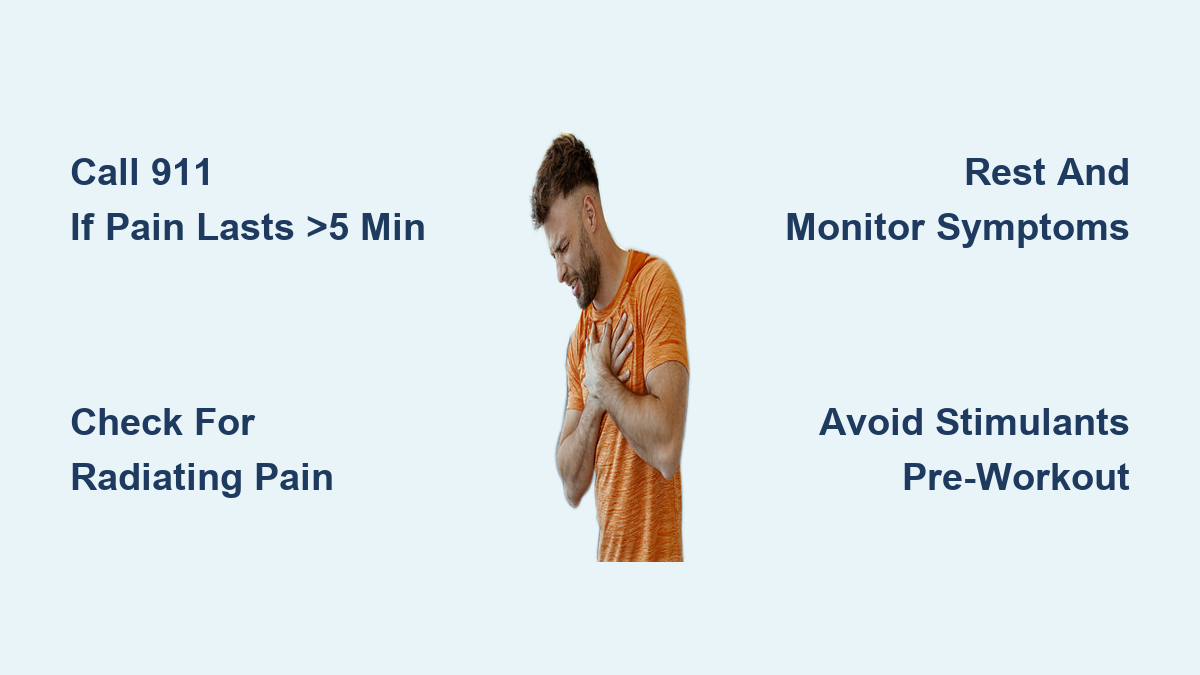
Red Flags That Demand a 911 Call
Call emergency services right away if you notice any of these warning signs:
- Pain lasting more than 5 minutes that does not ease with rest
- A crushing, squeezing, or heavy pressure in the center of your chest
- Pain radiating to your left arm, neck, jaw, shoulder, or back
- Shortness of breath, dizziness, or fainting
- Nausea, vomiting, or cold sweats
- A rapid, irregular heartbeat paired with lightheadedness
Even if symptoms fade, get checked out. A heart attack can begin with brief, intermittent pain. Never drive yourself to the hospital. Emergency responders can start life-saving treatment on the way.
Signs the Pain Is Likely Less Serious
The discomfort may be musculoskeletal or digestive if it is:
- Sharp and localized to one specific spot
- Reproducible when you press on the area
- Worse with movement, breathing, or coughing
- Quick to resolve with rest, stretching, or position changes
Even so, schedule a doctor visit to confirm. A pulled muscle can feel identical to something far more dangerous.
Cardiac vs. Non-Cardiac: Identifying the Source
Only a doctor can diagnose the true cause, but recognizing patterns helps you react faster.
When the Heart Is the Culprit
Cardiac chest pain often feels like pressure, heaviness, or squeezing centered in the chest. It frequently links to exertion and may radiate outward.
Angina and Coronary Artery Disease
Coronary artery disease (CAD) is the leading cause of cardiac chest pain in adults over 35. Plaque buildup narrows the arteries, choking blood flow to the heart during exercise.
- Symptoms: Tightness, heaviness, or pressure that starts with exertion and fades with rest
- Pattern: Predictable, appearing at similar effort levels each time
- Hidden danger: Research shows up to 73% of people with CAD have no symptoms before a cardiac event
Stable angina is a warning. Unstable angina, meaning pain at rest or with minimal effort, is an emergency.
Heart Attack (Myocardial Infarction)
A heart attack happens when a coronary artery becomes fully blocked. Unlike angina, the pain does not let up with rest.
- Symptoms: Crushing pressure, radiating pain, sweating, nausea, shortness of breath
- Key clue: Pain lasts longer than 15 to 20 minutes and steadily worsens
- Action: Chew aspirin (if you are not allergic) and call 911. Every minute counts.
Arrhythmias in Athletes
Endurance athletes face a 2 to 10 times higher risk of atrial fibrillation (AFib) due to long-term structural heart changes.
- Symptoms: Palpitations, skipped beats, fluttering, sudden racing heart
- Common triggers: Dehydration, stimulants, fatigue, or the cool-down phase
- Risk: Untreated AFib can lead to stroke
Structural Heart Conditions (Under 35)
In younger athletes, sudden cardiac death usually traces back to undiagnosed congenital issues:
- Hypertrophic Cardiomyopathy (HCM): Thickened heart muscle that impairs pumping
- Anomalous Coronary Arteries (AAOCA): Blood vessels that originate in the wrong place
- Myocarditis: Heart inflammation, often following a viral infection
Watch for chest pain, fainting during exercise, unexplained shortness of breath, or a family history of sudden death.
Non-Cardiac Causes: Common but Still Important
Most post-cardio chest pain is not heart-related, yet it can still disrupt your training and daily life.
Musculoskeletal Pain
The chest wall takes a beating during vigorous cardio.
Muscle Strains and Side Stitches
Intense cardio can strain the intercostal muscles (between the ribs) or the diaphragm.
- Symptoms: Sharp, localized pain that worsens with breathing, coughing, or movement
- Side stitch: Sudden stabbing pain, common in beginners or after hard intervals
- Recovery: Usually clears up in 24 to 48 hours with rest
Costochondritis
Inflammation of the cartilage linking the ribs to the sternum.
- Triggers: Repetitive motion, heavy lifting, or intense cardio
- Symptoms: Tender, aching pain that worsens with deep breaths or pressure
- How it differs: Pain improves with position changes, unlike cardiac pain
Rib Injuries
Bruised or fractured ribs can result from impact or overuse.
- Symptoms: Persistent pain with breathing, coughing, or twisting
- Healing: Takes weeks; avoid movements that aggravate the area
Gastrointestinal Triggers
GERD is a frequent impersonator of heart pain, especially after exercise.
Why Exercise Sparks Reflux
- Abdominal pressure rises during cardio, pushing stomach acid upward
- The lower esophageal sphincter relaxes under exertion
- Bending over or lying down post-workout makes symptoms worse
Symptoms of Exercise-Induced GERD
- Burning behind the breastbone
- Sour taste in the mouth, burping
- Chest tightness rather than pressure
- Worsens when bending forward
- Often linked to eating 2 to 3 hours before exercise
Avoid acidic, fatty, or carbonated foods pre-workout. Over-the-counter antacids can help, but chronic symptoms need a medical review.
Other GI Contributors
- NSAIDs: Ibuprofen or naproxen can irritate the stomach lining
- Hiatal hernia: Part of the stomach pushes into the chest cavity
- Gas and bloating: Can cause referred chest discomfort
Respiratory Causes
Your lungs work overtime during cardio, so any dysfunction can trigger chest pain.
Exercise-Induced Bronchospasm (EIB)
Also called exercise-induced asthma, EIB narrows the airways during or after exertion.
- Triggers: Cold, dry air, pollution, high pollen
- Symptoms: Chest tightness, wheezing, coughing, shortness of breath
- Onset: Usually starts 5 to 10 minutes into exercise or during cool-down
Diagnosed with lung function tests and managed with inhalers and proper warm-ups.
Pleurisy and Infections
Inflammation of the lung lining causes sharp, stabbing pain with breathing.
- Causes: Viral or bacterial infections, pneumonia
- Symptom: Pain worsens on inhalation
- Action: Requires medical diagnosis and treatment
Pulmonary Emergencies
- Pneumothorax (collapsed lung): Sudden chest pain and shortness of breath that needs urgent care
- Pulmonary embolism (blood clot): Sharp pain with deep breaths and sudden breathlessness. Call 911 immediately.
Psychological and Metabolic Factors
Mind and body are deeply connected, especially under physical stress.
Anxiety and Panic Attacks
High-intensity workouts can trigger or amplify anxiety.
- Symptoms: Chest tightness, rapid heartbeat, tingling, sense of doom
- Post-exercise effect: Lingering adrenaline mimics heart attack symptoms
- Key clue: Hyperventilation (rapid, shallow breathing) often shows up
If cardiac causes are ruled out, anxiety may be the driver. Breathing exercises and stress management help.
Stimulant Overload
Pre-workout supplements, energy drinks, or heavy caffeine intake can cause:
- Palpitations
- Increased blood pressure
- Chest discomfort
- Anxiety-like symptoms
Limit stimulants, especially if you are prone to heart sensations.
Dehydration and Electrolyte Imbalance
Heavy sweating without proper fluid replacement strains the cardiovascular system.
- Effects: Reduced blood volume, faster heart rate, muscle cramps
- Symptoms: Palpitations, lightheadedness, a fluttering heartbeat
- Prevention: Hydrate before, during, and after long or intense sessions
- Electrolytes: Add sodium, potassium, and magnesium for sessions over 60 minutes
How Doctors Diagnose the Cause
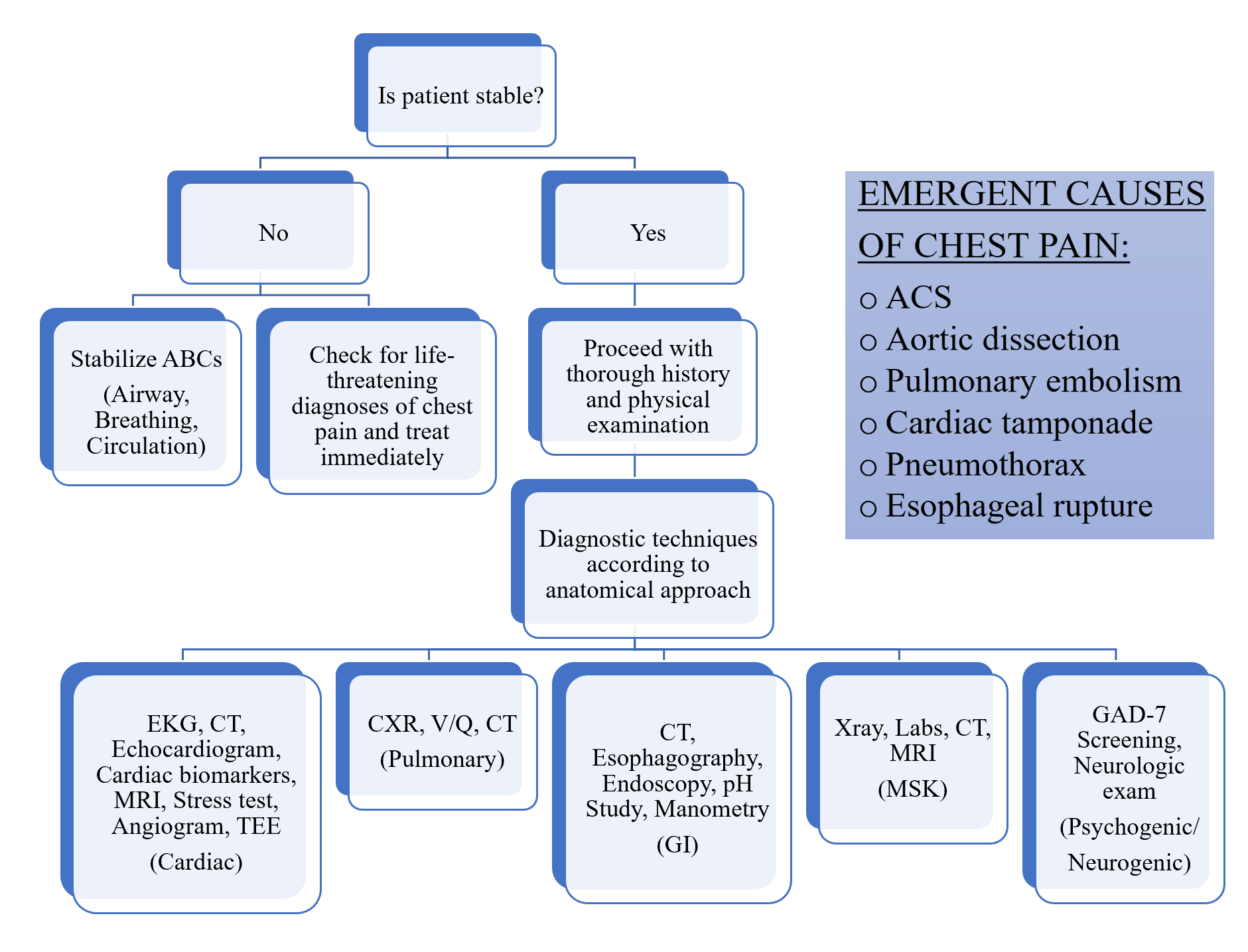
Self-assessment is helpful, but only medical testing can confirm the diagnosis.
Clinical Evaluation
Your doctor will ask about:
- Quality of pain: Burning, pressure, or sharp
- Timing: During, after, or at rest
- Triggers and relief: Exercise, food, or position
- Radiation: Does the pain spread
- Associated symptoms: Sweating, nausea, or palpitations
They will also press on your chest to check for tenderness. Reproducible pain points strongly toward a musculoskeletal origin.
Common Diagnostic Tests
- Electrocardiogram (ECG/EKG): Records the heart’s electrical activity and detects arrhythmias or prior damage
- Stress Test (Exercise ECG): Monitors the heart during controlled exertion to catch exertion-induced angina
- Echocardiogram: Ultrasound that evaluates structure, valve function, and detects HCM
- Coronary CT Angiography (CCTA): Non-invasive imaging to check for artery blockages
- Holter Monitor: Wearable device that records heart rhythm for 24 to 48 hours
- Blood Work: Checks troponin (heart damage marker), electrolytes, thyroid, and inflammation
- Lung Function Tests: Spirometry or bronchoprovocation tests for asthma
Prevention: Train Smart, Stay Safe
Avoiding chest pain starts with smart habits and self-awareness.
Warm Up and Cool Down Properly
- Warm-up: 5 to 10 minutes of light cardio to gradually raise your heart rate
- Cool-down: 5 to 10 minutes of low-intensity movement to prevent sudden blood pressure drops
Skipping these phases increases strain on both the heart and muscles.
Follow the 10% Rule
Increase weekly training volume (time, distance, or intensity) by no more than 10%. Rapid progression raises injury and cardiac stress risk.
Monitor Your Heart Rate
Use the 220 minus your age formula to estimate your maximum heart rate.
- Moderate intensity: 50% to 70% of max
- Vigorous intensity: 70% to 85% of max
You can also use the Talk Test: you should be able to speak in full sentences during moderate cardio.
Optimize Nutrition and Hydration
- Avoid large meals 2 to 3 hours before exercise
- Choose light, low-fat snacks if eating close to a workout
- Stay hydrated and match fluid intake to sweat rate
- Limit caffeine and pre-workout stimulants
Know Your Risk Factors
Get screened if you:
- Are over 35 and starting intense training
- Have a family history of heart disease or sudden death
- Experience unexplained fatigue, fainting, or palpitations
Annual check-ups with ECG or stress testing may be advised.
Frequently Asked Questions About Chest Pain After Cardio
How do I know if my chest pain is heart-related or muscular?
Cardiac pain usually feels like pressure, heaviness, or squeezing in the center of the chest and may radiate to the arm, jaw, or back. Muscular pain is typically sharp, localized, and reproducible by pressing on the area. When in doubt, seek medical evaluation.
Should I be worried about chest pain after cardio if I am under 35?
Yes, but the most common causes are musculoskeletal or respiratory. However, structural heart conditions like hypertrophic cardiomyopathy can affect young athletes. Any chest pain during or after exercise warrants a doctor’s visit.
Can dehydration cause chest pain during exercise?
Yes. Low fluid volume forces the heart to work harder, leading to palpitations, lightheadedness, and chest discomfort. Replenishing fluids and electrolytes usually resolves symptoms.
When is chest pain after cardio a medical emergency?
Call 911 if the pain is severe, lasts more than 5 minutes, radiates to the arm or jaw, or comes with shortness of breath, sweating, nausea, dizziness, or fainting.
Can acid reflux really feel like a heart attack?
Absolutely. GERD can cause burning, tightness, or pressure in the chest that mimics cardiac symptoms. The key difference is that reflux often worsens after eating or lying down and may improve with antacids.
How long should I rest before returning to cardio after chest pain?
Only return to exercise after a doctor has cleared you. The required rest period depends on the cause, ranging from a few days for muscle strain to several months for cardiac conditions.
Key Takeaways for Managing Chest Pain After Cardio
Chest pain after a cardio workout is your body’s alarm system. It might be a false signal like a strained muscle or reflux, but it could also be your heart asking you to slow down.
Never ignore it. Even if it has happened before and resolved, each episode needs evaluation. What was musculoskeletal last time could be cardiac this time.
Trust your instincts. If something feels seriously wrong, it probably is. Call 911. It is always better to be safe.
Keep a workout journal tracking symptoms, triggers, and recovery. This helps doctors spot patterns and gives you a clearer picture of your health.
Most importantly, train for longevity, not just performance. Smart habits today protect your heart for decades to come.