How to Breathe During Cardio: Quick Steps
You’re halfway through a run, and your lungs are burning. You’re gasping, shoulders heaving, mouth wide open, yet you still can’t catch your breath. Sound familiar? The problem isn’t your fitness. It’s your breathing.
How to breathe during cardio is one of the most overlooked skills in exercise, yet it directly controls your stamina, fatigue, and performance. Most people default to rapid, shallow chest breathing, which starves muscles of oxygen, spikes heart rate, and triggers side stitches. But when you train your breath correctly, you can run longer, recover faster, and feel stronger without increasing effort.
This guide reveals the science-backed techniques elite runners and endurance athletes use to optimize oxygen delivery, reduce breathlessness, and stay in control even at high intensity. You’ll learn how to sync breath with movement, use your diaphragm efficiently, and avoid the trap of overbreathing that sabotages performance. Whether you’re walking, cycling, or sprinting, mastering your breath transforms your cardio from exhausting to effortless.
Diaphragmatic Breathing Basics
Activate Your Diaphragm Correctly
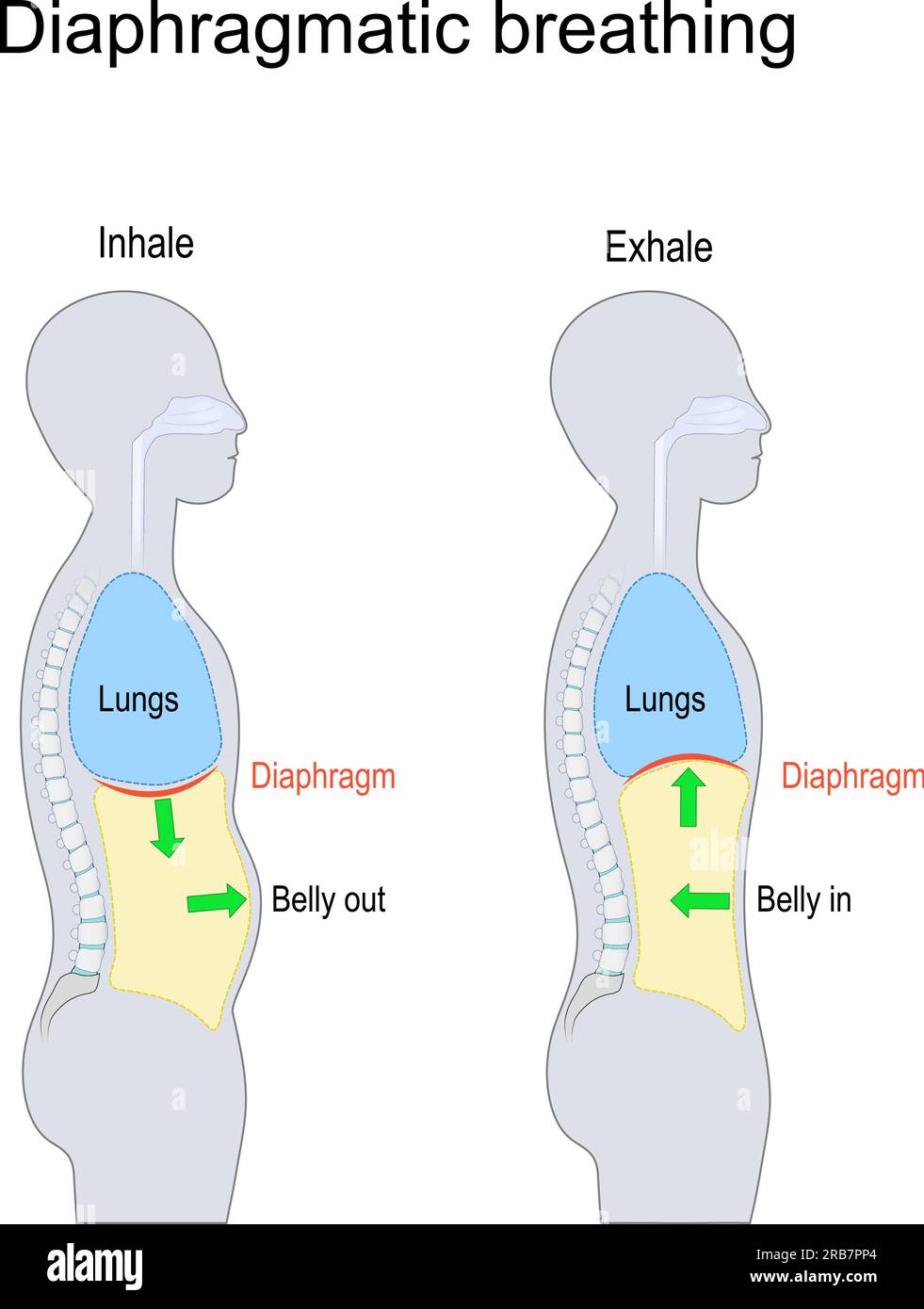
Most people breathe into their chest, lifting shoulders with each inhale. This shallow pattern limits oxygen intake and stresses the heart. Diaphragmatic breathing, also called belly breathing, uses the primary respiratory muscle to draw air deep into the lungs.
To do it:
1. Place one hand on your chest, the other on your belly.
2. Inhale slowly through your nose, letting your belly rise, not your chest.
3. Exhale fully, engaging your core to push air out from the bottom of your lungs.
When done right, your lower ribs and back expand outward in a 360-degree motion. This maximizes tidal volume (air per breath), improves oxygen exchange, and stabilizes your spine during movement.
Why Belly Breathing Wins
Shallow chest breathing reduces blood flow to your legs and increases injury risk. In contrast, diaphragmatic breathing:
– Increases oxygen delivery to working muscles
– Engages core muscles for better posture and stability
– Lowers heart rate and perceived effort
– Delays lactic acid buildup
Practice this at rest first, lying down for 5 minutes daily, until it becomes automatic. Then apply it during light cardio like walking or slow jogging.
Rhythmic Breathing Patterns
Sync Breath With Stride
Your breathing rhythm affects how impact forces travel through your body. Every footstrike generates 2 to 3 times your body weight in force. If you always exhale when the same foot hits the ground, you create uneven stress, raising injury and side stitch risk.
Odd-numbered breathing patterns fix this by alternating the foot that strikes during exhalation.
Use the 3:2 Breathing Ratio
At a moderate pace, breathe in for 3 steps, out for 2 steps:
– Inhale: Left, Right, Left
– Exhale: Right, Left
– Inhale: Right, Left, Right
– Exhale: Left, Right
This 3:2 pattern ensures inhalation (when the diaphragm is most stable) absorbs the impact on alternating sides, balancing stress and protecting your core.
Switch to 2:1 at High Intensity
As pace increases, shift to a 2:1 rhythm:
– Inhale for 2 steps, exhale for 1
– Example: Inhale (Left, Right), Exhale (Left), Inhale (Right, Left), Exhale (Right)
This maintains the odd-numbered advantage, preventing repetitive strain even during tempo runs or hill climbs.
Fix Side Stitches Fast
If you get a stitch (sharp pain under the ribs), it’s often due to diaphragm fatigue from uneven breathing or impact.
Immediate fix: Exhale when the foot opposite the pain strikes.
– If pain is on the right, exhale on left footfall
– If on the left, exhale on right footfall
This reduces tension on the ligament connecting the liver to the diaphragm, often relieving pain in seconds.
Nasal vs. Mouth Breathing

Breathe Through Your Nose First
Nasal breathing isn’t just for rest; it’s a performance tool. Despite lower airflow, it delivers 10% to 20% more oxygen to muscles than mouth breathing because it:
– Releases nitric oxide, which widens blood vessels and boosts oxygen uptake
– Filters, warms, and humidifies air, protecting airways
– Promotes CO₂ retention, essential for oxygen release via the Bohr Effect
When you hyperventilate through your mouth, you lose too much CO₂. Blood becomes alkaline, hemoglobin clings to oxygen, and muscles starve even if blood oxygen is high.
Bottom line: Nasal breathing keeps oxygen available, not just present.
When to Open Your Mouth
Nasal breathing is ideal for low-to-moderate intensity. But during sprints, intervals, or race finishes, you may need more airflow.
Use “Power Breathing”:
– Inhale through the nose to capture nitric oxide and regulate volume
– Exhale forcefully through the mouth to clear CO₂ quickly
This hybrid method supports high demand without fully triggering the stress response.
Fix Overbreathing Mistakes
Common signs of dysfunctional breathing:
– Gasping at moderate pace
– Dizziness or lightheadedness
– Tight chest, dry throat
– Needing to stop frequently
Correction: Slow your pace until you can breathe comfortably through your nose. If you must mouth-breathe, it means intensity exceeds your current aerobic capacity, not that you need more air.
Train Your Breathing Like a Muscle

Measure Your Control Pause
The Control Pause (CP) test reveals your breathing efficiency:
1. Sit quietly for 2 minutes.
2. Breathe normally, then exhale gently.
3. Pinch your nose and count seconds until you first feel the urge to breathe.
4. Release. This is your CP.
- CP under 20 seconds: Poor breathing, high overbreathing risk
- CP 20 to 40 seconds: Moderate efficiency
- CP above 40 seconds: Excellent CO₂ tolerance and endurance
Test your CP before and 30 minutes after cardio. If it drops, you overbreathed during exercise.
Build CO₂ Tolerance
To improve endurance, train your body to stay calm with less air. This is called “air hunger” training.
How to practice:
– Walk or jog while breathing only through your nose
– Focus on keeping breaths small and slow
– If you feel strong air hunger, slow down, but don’t stop
– Resume when nasal breathing feels comfortable
Over time, your body adapts. You’ll breathe less, feel calmer, and sustain higher effort with lower heart rate.
Try Breath Holds Safely
Short breath holds strengthen the diaphragm and improve CO₂ tolerance.
Walking breath hold protocol:
1. Take a normal inhale and exhale.
2. Hold your breath after exhaling.
3. Walk 10 to 20 steps, then resume breathing.
4. Rest until breath is normal, then repeat 5 times.
Warning: Avoid if you have heart disease, high blood pressure, or CP under 10 seconds.
Avoid Common Breathing Errors
Stop Chest Breathing
Chest breathing raises shoulders, tightens neck muscles, and reduces core stability. It also increases perceived effort and fatigue.
Fix: Place a hand on your belly during cardio. If it doesn’t rise on inhale, reset to diaphragmatic breathing. Practice daily at rest until it becomes automatic.
Never Hold Your Breath
Holding breath during effort (like sprinting or climbing) spikes blood pressure and reduces oxygen flow. It’s common in beginners trying to push through.
Fix: Breathe continuously. Count steps or recite a phrase to maintain rhythm. Inhale on the easier phase (e.g., arm swing back), exhale on exertion (arm forward).
Prevent Overbreathing
Taking big, rapid gulps of air worsens performance by dropping CO₂ levels. This causes:
– Reduced blood flow to brain (dizziness)
– Muscle cramps
– Early fatigue
Fix: Breathe gently through your nose. Imagine sipping air through a thin straw. Slower, smaller breaths deliver more oxygen than gasping.
Optimize for Health Conditions
Manage Exercise-Induced Asthma
EIA isn’t just about lungs; it’s about breathing habits. Cold, dry air from mouth breathing triggers airway constriction.
Prevention:
– Warm up with 5 to 10 minutes of nasal-only walking
– Breathe exclusively through your nose during moderate cardio
– Use saline spray before exercise to keep nasal passages clear
Many athletes eliminate EIA symptoms entirely by switching to nasal breathing.
Adapt for COPD or Lung Disease
If you have COPD, emphysema, or chronic bronchitis:
– Exercise at 40% to 60% of max capacity
– Use a pulse oximeter and stop if SpO₂ drops below 85%
– Take frequent breaks and focus on controlled exhalations
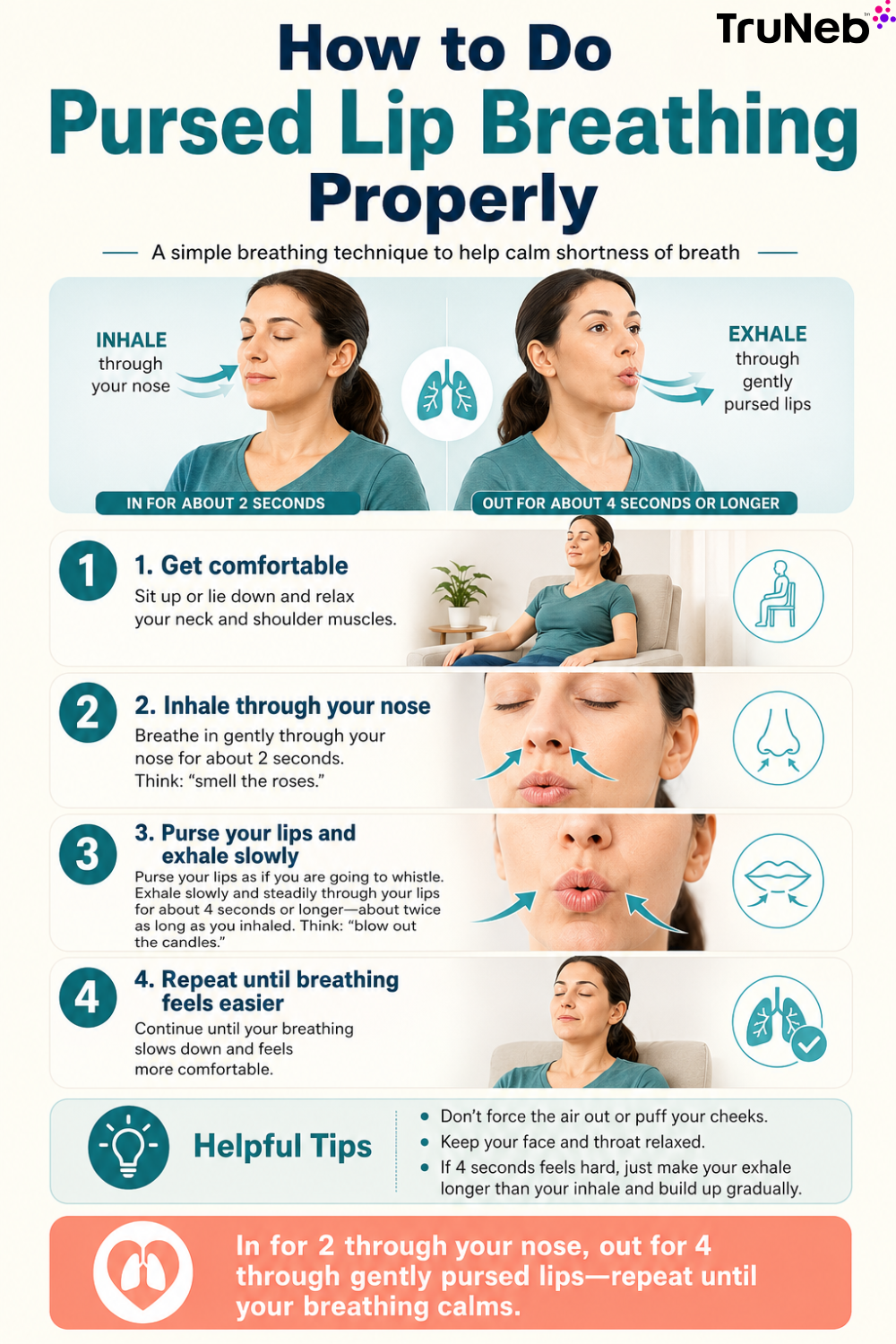
– Try pursed-lip breathing: Inhale through nose, exhale slowly through pursed lips (like blowing out a candle)
Consult a pulmonologist before starting any program.
Support Pelvic Floor Health
For those with pelvic floor weakness, the standard “exhale on exertion” rule may increase downward pressure.
Alternative: Try inhaling during effort (e.g., as you push off during a stride) to reduce intra-abdominal pressure. Adjust based on comfort. Your body knows best.
Boost Performance and Recovery
Know Your Ventilatory Threshold
The first ventilatory threshold is when breathing becomes uneven. Inhales get shorter than exhales, and talking gets hard.
- Untrained individuals may hit this during a brisk incline walk
- Trained athletes can maintain conversation while jogging uphill
With consistent breathing training, you push this threshold higher, meaning you can work harder before gasping.
Recover Faster With Breath Control
After a hard set or workout:
– Stand tall, hands behind head to open chest
– Take slow, deep diaphragmatic breaths
– Avoid bending over, which compresses the diaphragm
This activates the parasympathetic nervous system, lowering heart rate and speeding recovery.
Train Respiratory Muscles
Respiratory Muscle Training (RMT) uses devices to strengthen the diaphragm and intercostals.
Studies show RMT:
– Delays breathlessness
– Improves endurance
– Enhances performance, especially in cyclists and runners
Use 5 to 10 minutes daily as a supplement, not a replacement, for proper breathing technique.
Frequently Asked Questions About Breathing During Cardio
What Is the Best Breathing Pattern While Running?
The 3:2 pattern (inhale for 3 steps, exhale for 2) works best for moderate running. This odd-numbered rhythm alternates which foot strikes during exhalation, distributing impact evenly and reducing side stitch risk. At higher intensity, shift to a 2:1 ratio to maintain this benefit.
Should You Breathe Through Your Nose or Mouth During Cardio?
Breathe through your nose whenever possible. Nasal breathing delivers 10% to 20% more oxygen to muscles, releases nitric oxide for better circulation, and maintains CO₂ levels needed for oxygen release. Mouth breathing is acceptable only during maximum-effort sprints or intervals.
How Do You Stop Getting Side Stitches When Running?
Side stitches often result from uneven breathing or impact timing. Use rhythmic breathing to alternate which foot strikes during exhalation. If a stitch appears, exhale forcefully when the foot opposite the pain hits the ground. This relieves pressure on the diaphragm ligament.
How Long Does It Take to Adapt to Nasal Breathing During Exercise?
Most people need 2 to 3 weeks of consistent practice before nasal breathing feels manageable. Full adaptation, where you can sustain higher intensities through the nose alone, typically takes 8 weeks to 6 months. Expect a temporary drop in pace during this transition.
Can Breathing Techniques Help With Exercise-Induced Asthma?
Yes. Exercise-induced asthma is often triggered by cold, dry air entering through the mouth. Switching to exclusive nasal breathing warms and humidifies air while reducing CO₂ loss that causes airway constriction. Many athletes eliminate symptoms entirely with this approach.
What Is the Control Pause Test and Why Does It Matter?
The Control Pause measures how long you can comfortably hold your breath after a normal exhale. It reflects your CO₂ tolerance and breathing efficiency. A CP above 40 seconds indicates excellent endurance potential. A CP below 20 seconds suggests dysfunctional breathing and a need to prioritize nasal-only training.
Key Takeaways for Mastering Breath During Cardio

Mastering how to breathe during cardio comes down to three core shifts. First, replace shallow chest breathing with diaphragmatic belly breathing to maximize oxygen intake and core stability. Second, adopt odd-numbered rhythmic patterns (3:2 or 2:1) to balance impact forces and prevent side stitches. Third, prioritize nasal breathing at low-to-moderate intensity to boost oxygen delivery through nitric oxide and CO₂ retention.
Your next step: Measure your Control Pause today. If it’s below 20 seconds, commit to nasal-only breathing during walks for the next two weeks. Track your CP weekly and watch your endurance transform as your breathing efficiency improves.