Cardio Step Workout: Quick Steps
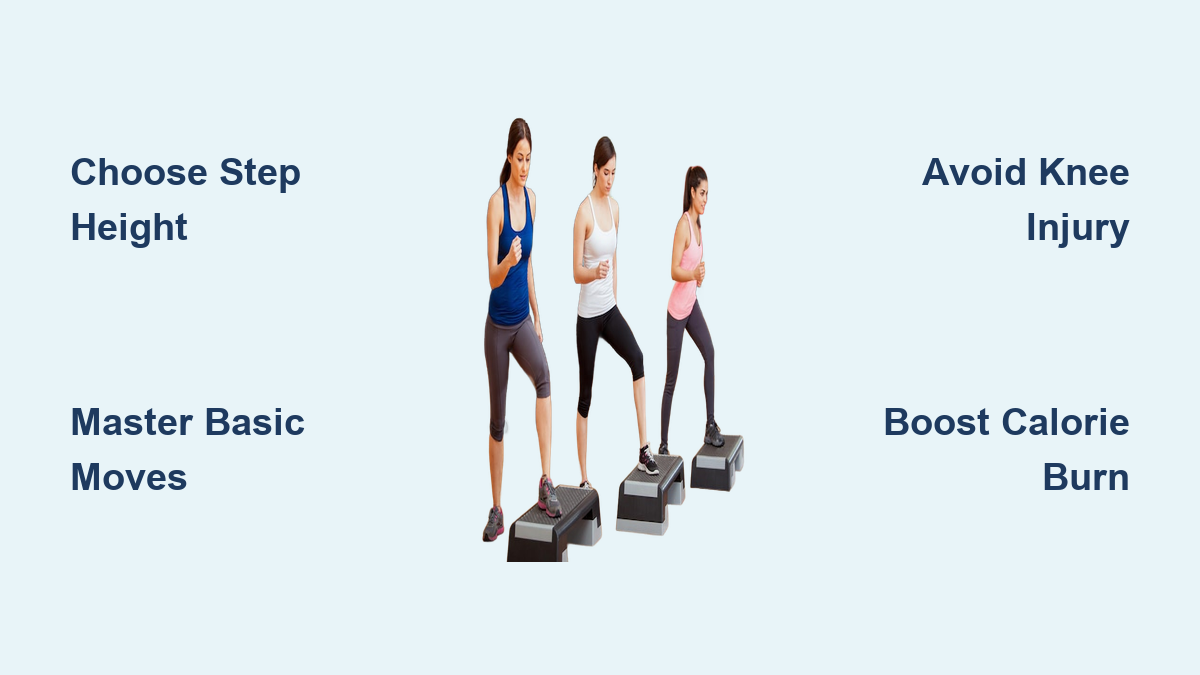
If you’re looking for a dynamic, effective way to elevate your heart rate, strengthen your legs, and torch calories, a cardio step workout delivers exceptional results. Built around a simple raised platform, this high-energy routine combines rhythmic stepping patterns with strength and agility moves to engage your entire body. Whether you’re a beginner or an advanced exerciser, the versatility of the step makes it easy to scale intensity by adjusting height, speed, and movement complexity.
Backed by research and trusted by fitness professionals, cardio step workouts improve cardiovascular endurance, enhance balance, build lean muscle, and even support bone density, especially valuable for adults over 50. With just 30 minutes a day, you can burn up to 588 calories, boost metabolism, and sharpen coordination. In this guide, you’ll learn how to set up safely, perform top exercises, follow proven routines, and avoid common mistakes so you get maximum benefit with minimal risk.
Choose the Right Step Height
Match Height to Your Fitness Level
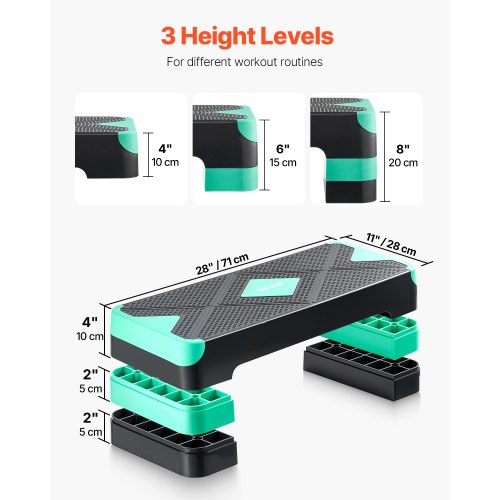
Your step height directly impacts joint stress, calorie burn, and workout safety. Use this simple guide:
| Fitness Level | Recommended Height | Why It Matters |
|---|---|---|
| Beginner | 4–6 inches | Keeps knee angle above 90°, reduces strain |
| Intermediate | 6–8 inches | Balances intensity and control |
| Advanced | 8–10+ inches | Increases range of motion and power output |
Start low. Even flat on the floor using just the platform base is acceptable for beginners. Only increase height when you can maintain proper form for 20 or more minutes.
Avoid Knee Injury With Proper Form
Never let your knee bend past 90 degrees when your foot is on the step. If your knee dips below your hip or pushes far beyond your toes, the platform is too high. This rule prevents cartilage damage and protects ligaments.
Visual cue: When stepping up, your thigh should be roughly parallel to the floor or slightly higher. If it’s pointing downward, lower the risers.
Maximize Calorie Burn & Heart Health

Burn 400+ Calories in 30 Minutes
Step aerobics outpaces walking in energy expenditure due to vertical movement and muscle activation. Here’s what you can expect:
- 125 lb person: ~210 calories in 30 minutes
- 185 lb person: ~294 calories in 30 minutes
- 60-minute session: Up to 588 calories burned
For even greater burn, add jumps, hops, or light dumbbells during strength-integrated moves.
Improve Cardiovascular Function
Regular cardio step workouts:
- Lower blood pressure
- Reduce LDL (bad) cholesterol
- Raise HDL (good) cholesterol
- Enhance insulin sensitivity, helpful for prediabetes and Type 2 diabetes
Aim for 30 minutes most days to support long-term heart and metabolic health.
Strengthen Legs, Glutes & Core
Target Major Lower Body Muscles
Every step-up, lunge, and squat engages:
- Quadriceps: Front thigh muscles power your ascent
- Hamstrings & Glutes: Drive hip extension on the way up
- Calves: Stabilize and push off during each rep
- Inner/Outer Thighs: Activated during lateral and corner moves
The constant up-and-down motion builds endurance and tone without bulky muscle gain.
Activate Your Core With Every Move
You don’t need crunches to work your abs. The unstable nature of stepping patterns forces your core stabilizers, including abs, obliques, and lower back, to fire continuously to keep you balanced.
Add twisting variations like lunge holds with a twist or wood chops to intensify core engagement.
Prevent Falls & Boost Balance
Enhance Proprioception for All Ages
Cardio step workouts challenge your body’s ability to sense position and movement, known as proprioception. This is especially beneficial for older adults, reducing fall risk through improved:
- Single-leg stability
- Reaction time
- Joint awareness
Seniors report increased confidence walking stairs, getting up from chairs, and navigating uneven terrain after consistent practice.
Modify for Joint Sensitivity
If you have arthritis or joint pain:
- Use a 4–6 inch height
- Eliminate jumps and hops
- Focus on slow, controlled movements
- Hold onto a chair or wall for balance
Always consult your doctor before starting if you have hip, knee, ankle, or foot issues.
Essential Step Workout Exercises
Master Cardio Foundations
These moves elevate your heart rate and build coordination.
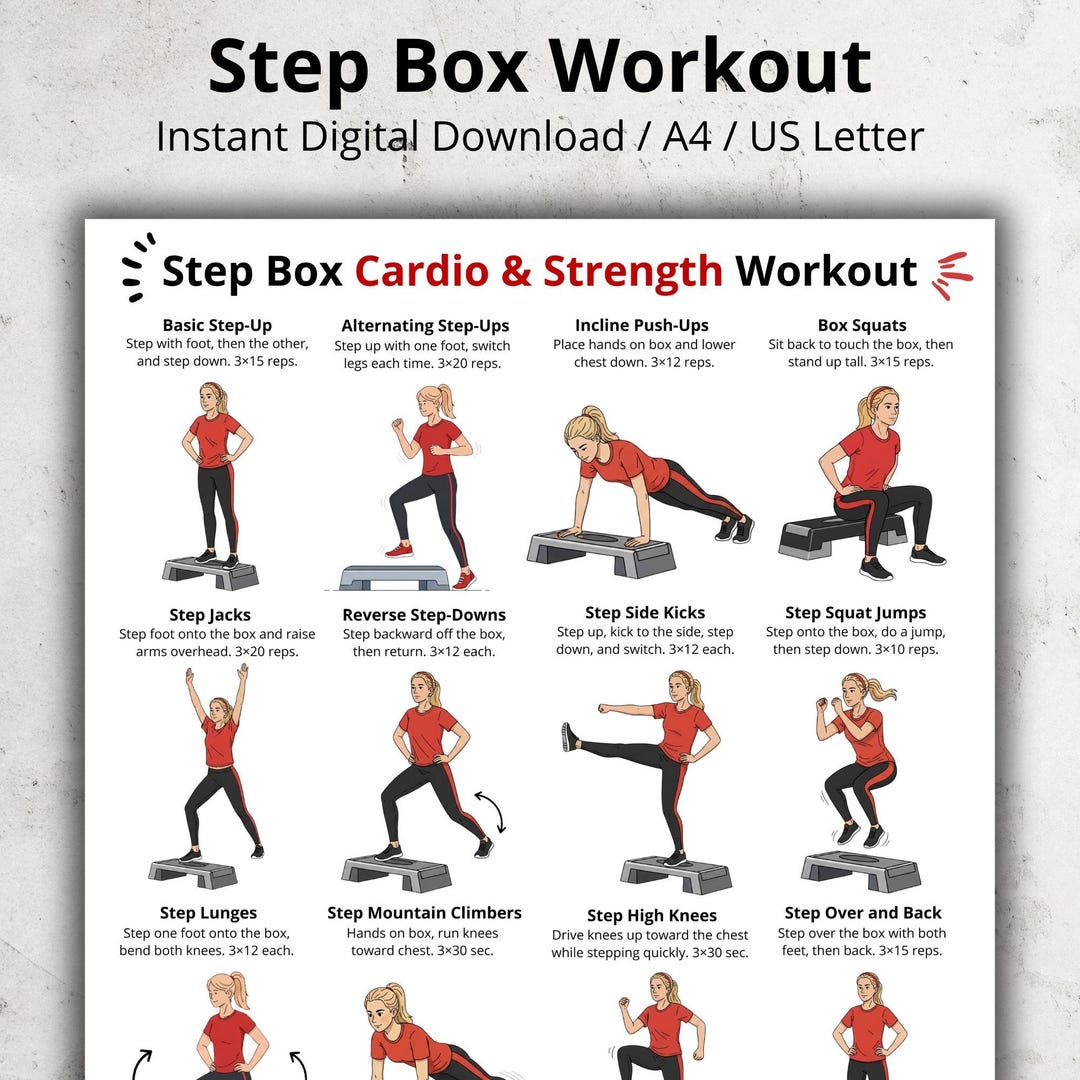
Basic Step
Step right foot up, left up, step down right, then left. Alternate lead legs. Keep chest up, core tight.
V-Step
Step right foot to front-right corner, left to front-left. Step back to center. Maintain knee alignment.
Over-the-Top
Face the long side of the step. Step right, then left across to the other side. Reverse to return.
Jump Up to Step Down
Jump both feet onto the step. Step down one at a time with control. High intensity, so use sparingly.
Fixed Lateral Bench Jumps
Jump side-to-side over the step. Land softly, knees bent. Great for power and agility.
Build Lower Body Strength
Use these to sculpt and strengthen.
Bulgarian Split Squat
Place one foot behind you on the step (laces down). Lower front leg until thigh is parallel to floor. Push through heel to rise.
Explosive Step-Up
Step up forcefully, drive opposite knee high, and add a small hop. Land softly. Builds power.
Deficit Reverse Lunge
Stand on step, step back with one foot, and lower into a lunge. The “deficit” increases range of motion.
Lateral Box Squat
Stand sideways with one foot on step, one on floor. Sit hips back, weight in heels. Push through both feet to stand.
Engage Core & Stability
No crunches needed. Use the step for anti-rotation and balance.
Plank Step-Ups
Start in plank position with hands on floor, feet on step. Step one foot to floor, then the other. Reverse to return.
Mountain Climber on Step
Hands on step, drive knees to chest rapidly. Keep hips level and avoid bouncing.
Side Plank With Rear Tap
Bottom foot on step, elbow under shoulder. Tap top foot behind you without rotating hips.
Seated Russian Twist
Sit on step, lean back 45°, lift feet. Rotate torso to tap floor beside hip.
Add Upper Body Power
Turn your step into a functional strength tool.
Triceps Push-Up
Hands on step, perform push-ups. Shifts load to arms and shoulders.
Offset Push-Up
One hand on step, one on floor. Creates instability that boosts core and shoulder activation.
Follow Proven Workout Templates
10-Minute Quick Start (Beginner)
Perfect for warm-ups or short sessions. Do the circuit twice.
- Basic Step (Right Lead) – 60 sec
- Basic Step (Left Lead) – 60 sec
- Corner Knee Raise – 10 reps/side
- Hamstring Curl Step – 10 reps/side
- March on Top – 60 sec
Tip: Keep movements slow and controlled. Focus on form over speed.
3-Day Beginner Routine
Ideal for new users. Progress over 4–6 weeks.
- Warm-up: March or step-touch – 3 min
- Main Circuit (2 rounds): 20 sec work / 40 sec rest
- Basic Step
- Hamstring Curl
- Corner Knee
- March on Top
- Cool-down: Stretch quads, hamstrings, calves – 3 min
Use 4–6 inch height. Add risers only when fatigue doesn’t compromise form.
4-Day Intermediate Plan
Balances cardio, strength, and core.
- Cardio Block: 5 moves from “Cardio Staples”
- 30 sec work / 15 sec rest × 3 rounds
- Strength Superset (3 sets):
- Step-Up + Press: 8 reps
- Bulgarian Split Squat: 8 reps
- Core Finisher: Plank Toe Tap – 3 sets × 30 sec
Progression: Increase step height to 8 inches, add light dumbbells.
2-Day Advanced HIIT
High-intensity interval training for fat loss and power.
- Structure: 40 sec work / 20 sec rest
- Volume: 5 moves × 4 rounds (~24 min total)
- Sample Moves:
- Jump Up to Step Down
- Burpees With Step Jump
- 180 Jump to Hurdle Jumps
- Explosive Step-Up
- Lateral Power Step-Up
Safety: Use only if you have mastered form and joint control.
15-Minute Step & Sculpt (All Levels)
Efficient full-body routine.
- Warm-up: Light jog in place – 1 min
- Step Aerobics Block (8 min):
- Step-Ups (alternating)
- Step-Ups with Under Thigh Clap
- Sidestep Overs to High Knees
- Corner-to-Corner Steps with Forearm Tap
- Step-Up to Two-Way AB March
- Standing Core Block (4 min):
- Squat Oblique Crunches
- Wood Chops
- Cyclones
- Standing Bicycles
- Lunge Hold with Twist
- Cool-down: Calf stretch, Deep lunge stretch – 2 min
Adjust speed and height to match your level.
Avoid Common Mistakes

Don’t Lock Your Knees
When stepping down or standing tall, keep a slight bend in your knees. Locking them transfers shock to joints and increases injury risk.
Prevent Knee Collapse
Your knees should track over your toes and never cave inward. This protects your ACL and prevents patellar stress.
Skip Heavy Weights While Stepping
Holding dumbbells during complex choreography increases shoulder strain. Instead, use weights only during dedicated strength moves like step-up presses.
Breathe Steadily
Holding your breath spikes blood pressure and reduces endurance. Exhale on effort (stepping up), inhale on descent.
Check Step Stability
Before jumping or dynamic moves, ensure risers are locked securely. A wobbly platform can tip and cause falls.
Safety First: Who Should Be Cautious?
Pregnancy Modifications
If cleared by your doctor:
- Lower step height as belly grows
- Reduce pace and eliminate jumps
- Stay hydrated and avoid overheating
- Use wall or chair for balance
Heart Conditions
Consult your physician before starting if you have diagnosed heart disease, high blood pressure, or previous cardiac events.
Use RPE (Rate of Perceived Exertion) to monitor effort. Aim for 6–8 on a 1–10 scale.
Arthritis & Joint Pain
Step aerobics can be beneficial if intensity is adjusted to comfort, no pain is felt during or after, and movements are low-impact and controlled.
Avoid if you have active hip, knee, or ankle pain.
Track Progress Like a Pro
Use DEXA Scans, Not Just the Scale
Body weight doesn’t tell the full story. A DEXA scan measures:
- Body fat percentage
- Lean muscle mass
- Bone density changes
- Visceral fat levels
These metrics show real progress, especially for women over 50 building bone and muscle.
Monitor Your RPE
Rate of Perceived Exertion helps you stay in the optimal zone:
- 6–8/10: Ideal for cardiovascular benefit
- Below 5: Too easy
- Above 8: Risk of overexertion
Adjust height, speed, or rest time to stay in range.
Frequently Asked Questions About Cardio Step Workouts
How many times a week should I do step aerobics?
- Beginners: 3 days
- Intermediate: 4 days
- Advanced HIIT: 2 days (with recovery in between)
- General health: 30 minutes most days
Can I do step workouts outdoors?
Not recommended. The surface must be flat, stable, and non-slip. Outdoor ground can shift, causing the step to tilt or collapse. Use indoors on hardwood, tile, or carpet (with a mat).
Do I need special shoes?
Yes. Wear athletic shoes with good lateral support, cushioned soles, and non-slip grip. Avoid bare feet or socks.
Does step aerobics help with weight loss?
Absolutely. It combines cardio and resistance to burn calories and build muscle, boosting metabolism. Pair with balanced nutrition for best results.
Is step aerobics safe for seniors?
Yes, when modified. It improves balance, strength, and bone density. Start at 4–6 inches, use a chair for support, and avoid jumps.
Can I use dumbbells?
Yes, but only during strength-focused moves like step-up presses. Avoid holding weights during fast, complex choreography to prevent shoulder strain.
Key Takeaways for Your Cardio Step Workout Journey
A cardio step workout is one of the most efficient, scalable, and joint-friendly ways to improve fitness at any age. From burning hundreds of calories to building stronger bones and sharper balance, the benefits are backed by science and real-world results. Start low, move with control, and progressively challenge yourself using the routines and tips above.
With consistency, you’ll not only see changes in your body, you’ll feel them in your energy, confidence, and daily mobility. Now step up and get moving.