Best Cardio Exercises for Sciatica Pain Relief
Sciatica pain can stop you in your tracks. That sharp, shooting sensation running from your lower back down your leg makes even simple tasks feel impossible. You might want to lie down and wait for it to pass, but staying still often makes things worse. The right cardio exercises for sciatica can reduce inflammation, improve nerve mobility, and speed up your recovery without straining your spine.
Research shows that about 75% of people with sciatica improve within a few weeks through gentle, consistent movement. The trick is picking low-impact activities that boost blood flow and release endorphins while protecting your lower back. This guide covers the safest cardio options, how to do them correctly, and which exercises to skip so you can heal faster and prevent future flare-ups.
Choose Low-Impact Cardio That Protects Your Spine

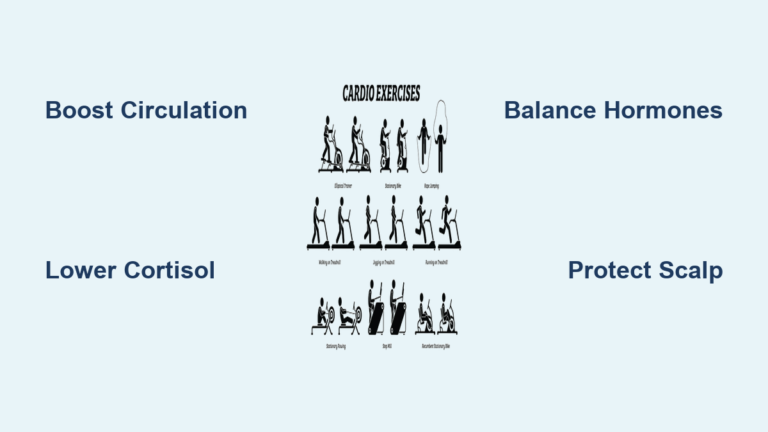
Low-impact cardio keeps your heart rate up without sending jarring forces through your vertebrae. These activities minimize pressure on the sciatic nerve, making them perfect for both acute pain and long-term management.
Walking: The Easiest Place to Start

Walking is the most accessible cardio exercise for sciatica. It gently mobilizes your spine, improves posture, and encourages fluid exchange in spinal discs. Best of all, it requires no special equipment.
- Start with 5–10 minute walks during a flare-up.
- Gradually increase to 20–30 minutes daily as pain decreases.
- Keep your head up, shoulders relaxed, and core slightly engaged.
- Land on your heel, roll through your foot, and push off your toes.
- Wear supportive shoes to absorb shock.
Pro Tip: If outdoor walking bothers your back, try a treadmill with cushioning or walk indoors on carpet.
Walking promotes “nerve gliding,” which helps the sciatic nerve move more freely through tight tissues. Even short walks prevent stiffness and muscle loss.
Stationary Cycling: Back-Friendly Cardio

A stationary bike gives you a controlled workout that strengthens your legs without loading your spine. Recumbent bikes offer extra back support if you need it.
- Adjust the seat so your knee bends slightly at the bottom of the pedal stroke.
- Keep your back upright; avoid hunching forward.
- Start with 10–15 minutes at low resistance.
- Increase duration gradually as you build endurance.
Avoid: Outdoor cycling on rough terrain or steep hills, which can jar your spine.
Cycling also warms up tight hamstrings and hip flexors, two common culprits behind sciatic nerve irritation.
Swimming: Zero-Gravity Relief
Water buoyancy offloads up to 90% of your body weight from the spine. This makes swimming one of the best cardio options for sciatica, especially if standing or sitting worsens your symptoms.
- Choose freestyle or backstroke; skip breaststroke if it strains your knees or hips.
- Swim in warm pools (82–86°F) to relax tight muscles.
- Try water aerobics if swimming feels too challenging.
Water immersion reduces inflammation, improves circulation, and lets you move through a full range of motion without compressive forces.
Avoid High-Impact Cardio That Worsens Sciatica

Some cardio activities put too much stress on your spine, especially during the first 6 weeks of recovery. Knowing what to skip prevents setbacks.
Exercises to Avoid
- Running or jogging: Repeated heel strikes send shockwaves up your spine and increase disc pressure.
- Jumping jacks, HIIT, plyometrics: Sudden impacts compress nerve roots and worsen inflammation.
- Fast stair climbing: Repeated forward leaning tightens the piriformis muscle, which can compress the sciatic nerve.
- Rowing machines with poor form: Forward bending under resistance mimics lifting and can aggravate herniated discs.
Exception: If you were already a runner and have chronic, stable sciatica, talk to a physical therapist before resuming. With proper form and core engagement, some runners can tolerate it.
Pair Cardio With Targeted Stretches
Cardio alone won’t solve the problem. Adding nerve-friendly stretches releases muscle tension that contributes to sciatic pain.
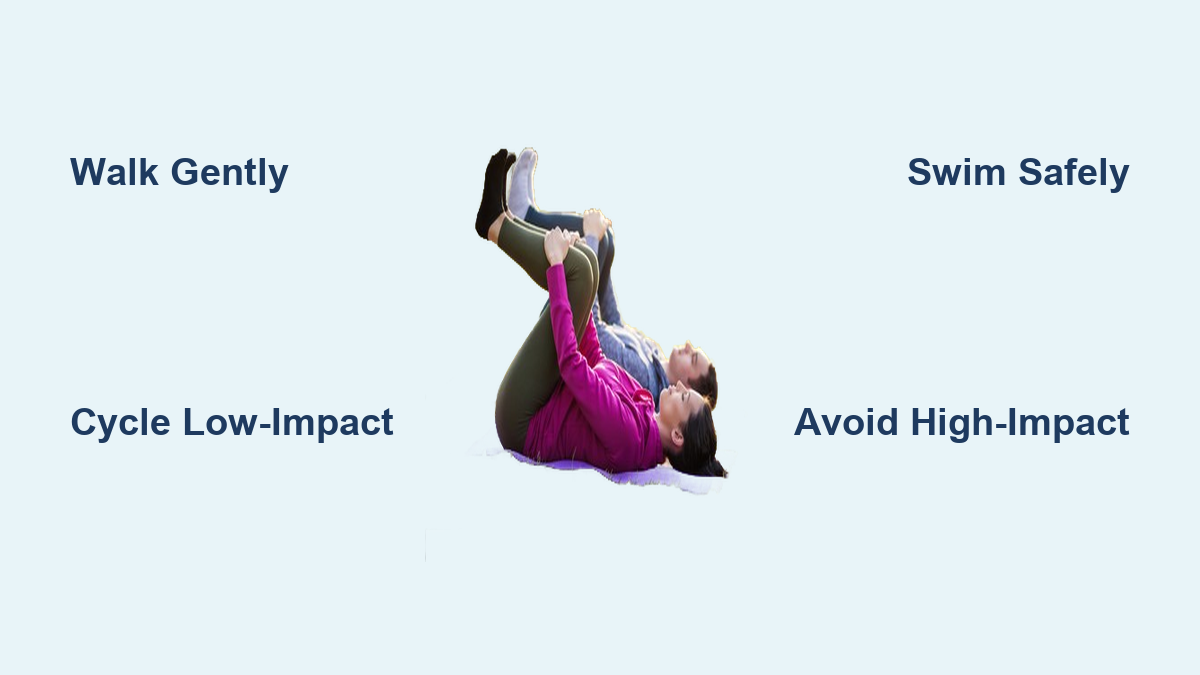
Supine Hamstring Stretch
Tight hamstrings pull on your pelvis and increase lower back strain. This towel-assisted stretch safely lengthens them.
- Lie on your back with one leg extended flat.
- Loop a towel around the ball of your other foot.
- Gently pull the leg toward you until you feel a stretch in the back of your thigh.
- Keep your knee slightly bent if needed.
- Hold for 20–30 seconds and repeat 2–3 times per leg.
Visual cue: Your lower back should stay flat on the floor; no arching.
Figure-Four Glute Stretch
The piriformis muscle sits deep in your buttock. When tight, it can entrap the sciatic nerve. This stretch releases it.
- Lie on your back with knees bent and feet flat.
- Cross your right ankle over your left thigh, just above the knee.
- Gently pull your left thigh toward your chest.
- Feel the stretch in your right buttock.
- Hold for 20–30 seconds and switch sides.
Modification: Loop a strap around your thigh if you can’t reach it with your hands.
Child’s Pose
This gentle yoga pose decompresses your lumbar spine and relaxes tight back muscles.
- Kneel on the floor and sit back on your heels.
- Extend your arms forward and lower your chest toward the ground.
- Rest your forehead on the mat.
- Breathe deeply and let your spine lengthen.
- Hold for 30 seconds to 2 minutes.
Caution: Place a folded towel under your knees if they feel sensitive.
Build Core Strength for Long-Term Protection
Cardio and stretching ease current pain, but a strong core prevents future episodes. Weak core muscles force your spine to bear more load, increasing disc pressure and nerve irritation.
Pelvic Tilt
This move teaches you to engage your transverse abdominis, your body’s natural back brace.
- Lie on your back with knees bent and feet flat.
- Tighten your lower abs as if pulling your belly button toward your spine.
- Gently press your lower back into the floor by tilting your pelvis upward.
- Hold for 5 seconds and relax.
- Repeat 10–15 times.
Breathe normally throughout; never hold your breath.
Glute Bridge
Strong glutes reduce strain on your lower back and improve pelvic alignment.
- Lie on your back with knees bent and feet hip-width apart.
- Press through your heels and squeeze your glutes to lift your hips.
- Form a straight line from shoulders to knees.
- Hold for 5–10 seconds and lower slowly.
- Perform 2–3 sets of 8–10 reps.
Avoid arching your back or lifting too high. Focus on glute activation, not height.
Bird-Dog
This exercise improves coordination and core control, which protects your spine during daily movements.
- Start on hands and knees with hands under shoulders and knees under hips.
- Engage your core and keep your back flat.
- Extend your right arm forward and left leg back, keeping hips level.
- Pause for 2–3 seconds and return slowly.
- Alternate sides for 8–10 reps per side.
If your back sags, reduce the range of motion. Quality matters more than quantity.
Know the Difference Between Safe and Unsafe Pain
Not all discomfort during exercise is harmful. Learning to read your body’s signals helps you exercise wisely.
Pain Response Guide
- Mild stretch or ache: Safe to continue. This is normal tissue adaptation.
- Sharp, shooting, or electric pain: Stop immediately. This signals nerve irritation.
- Pain radiating down the leg: Modify or discontinue the exercise.
- Pain improves after movement: A good sign that movement is helping.
- Pain worsens 1–2 hours post-exercise: You did too much. Scale back next time.
Golden rule: Exercise should not increase your pain more than 2 points on a 10-point scale.
Follow a Safe Progression Plan
Recovery isn’t linear. A phased approach helps you rebuild endurance without setbacks.
Phase 1: Acute Flare-Up (Days 1–7)
- Goal: Reduce inflammation and maintain gentle movement.
- Cardio: 5–10 minute walks or seated pedaling with no resistance.
- Stretches: Child’s pose, single knee-to-chest, and glute stretch.
- Avoid: Sitting longer than 20 minutes or forward bending.
Phase 2: Subacute Recovery (Weeks 2–6)
- Goal: Increase mobility and build endurance.
- Cardio: 15–30 minute walks, stationary cycling at low resistance, or water walking.
- Add: Hamstring and hip flexor stretches, pelvic tilts, and glute bridges.
- Frequency: 3–5 days per week.
Phase 3: Maintenance and Prevention (Week 6+)
- Goal: Restore full function and prevent recurrence.
- Cardio: 30–45 minutes of swimming, brisk walking, or cycling.
- Strength: Add bird-dog, clamshells, and core endurance exercises.
- Lifestyle: Practice proper lifting mechanics and change posture every hour.
Success marker: You can walk 3 miles at a brisk pace without increased leg pain.
When to Seek Professional Help
Most sciatica improves with self-care, but certain symptoms require immediate medical attention:
- Loss of bladder or bowel control (possible cauda equina syndrome; seek emergency care).
- Severe leg weakness or foot drop (inability to lift the front of your foot).
- Numbness in the saddle area (inner thighs, genitals, or anus).
- Fever, chills, or unexplained weight loss with back pain.
- No improvement after 6 weeks of consistent exercise and self-care.
Seeing a physical therapist early can help. They identify your specific sciatica type (herniation versus stenosis) and tailor a program to your needs.
Frequently Asked Questions About Cardio Exercises for Sciatica
What cardio exercises are safe for sciatica?
Low-impact activities like walking, stationary cycling, and swimming are the safest options. These exercises boost circulation and release endorphins without jarring the spine. Start with short sessions and gradually increase duration as tolerated.
Is walking good for sciatica nerve pain?
Yes, walking is one of the best cardio exercises for sciatica. It promotes blood flow, encourages spinal disc nutrition, and helps the sciatic nerve glide more freely. Begin with 5–10 minute walks and progress to 30 minutes daily.
Can I do cardio during a sciatica flare-up?
Gentle movement is encouraged even during flare-ups. Short walks or seated pedaling help reduce stiffness and speed recovery. Avoid high-impact activities and stop if you feel sharp or shooting pain.
How long should I do cardio each day for sciatica relief?
Start with 5–10 minutes during acute pain and gradually work up to 20–30 minutes daily. The goal is consistency, not intensity. Listen to your body and scale back if pain worsens after exercise.
What exercises should I avoid with sciatica?
Avoid running, jumping, heavy lifting, and any movement that involves twisting or aggressive forward bending. These activities increase spinal pressure and can worsen nerve irritation, especially during the first 6 weeks of recovery.
When should I see a doctor for sciatica?
See a doctor if you experience loss of bladder or bowel control, severe leg weakness, numbness in the groin area, or pain that doesn’t improve after 6 weeks of self-care. These may signal a more serious condition requiring professional treatment.
Key Takeaways for Using Cardio to Relieve Sciatica
Cardio exercises for sciatica are both safe and essential when chosen correctly. Walking, stationary cycling, and swimming reduce inflammation, improve flexibility, and rebuild strength without straining your spine. Pair these activities with targeted stretches and core strengthening for a complete recovery plan.
Start slow and stay consistent. Avoid high-impact movements and twisting motions. Mild discomfort during exercise is acceptable, but sharp pain means stop. If progress stalls or red flag symptoms appear, seek professional guidance.
With the right approach, most people regain pain-free movement within weeks. Stay active, move wisely, and let motion guide your healing.