Best Cardio Exercises for Arm Fat (2026 Guide)
You’ve been grinding out bicep curls and tricep kickbacks, yet the jiggle under your arms refuses to budge. Here’s the hard truth: cardio exercises for arm fat work, but not the way most people think. You cannot spot-reduce fat from your arms by exercising them alone. Instead, fat loss happens systemically across your entire body, and the most effective strategy combines high-intensity cardio that engages your upper body with resistance training to build the lean muscle hiding underneath.
The good news? You don’t need a gym membership or expensive equipment to see real change. With the right mix of HIIT workouts, cardio-strength hybrid movements, and smart nutrition, most people notice tighter, more defined arms within 4 to 8 weeks. This guide breaks down exactly which exercises work, why they work, and how to structure a plan that delivers visible results without wasting your time.
Arm Fat Loss: Separating Myth from Science
Why Spot Reduction Doesn’t Work
Your body does not let you choose where fat disappears from. When you perform bicep curls, you strengthen the muscle beneath the fat, but the fat itself remains untouched. Fat loss occurs systemically, meaning your body pulls energy from fat stores across multiple regions, not just the one you’re training. This is why endless arm exercises alone won’t eliminate underarm flab.
To shrink your arms, you must lower your overall body fat percentage by creating a calorie deficit. Cardio accelerates this process by increasing daily energy expenditure. Pair it with resistance training, and you build lean muscle underneath, which creates tighter, more sculpted arms once the fat layer thins out.
How Muscle Toning Reveals Lean Arms
Cardio burns fat, but resistance training builds shape. The triceps make up roughly two-thirds of your upper arm mass and are the key to tightening the back of the arm. The biceps add front definition, while the deltoids (shoulders) create balance and lift. Strengthening these areas doesn’t burn fat directly, but it ensures your arms look sculpted when fat finally comes off.
Think of it this way: cardio strips away the canvas, and strength training paints the image beneath.
Realistic Timeline for Visible Results
With consistent effort, including 3–5 workouts per week, proper nutrition, and progressive overload, most people notice tighter sleeves and improved arm definition in 4 to 8 weeks. Progress isn’t always reflected on the scale because muscle gain can offset fat loss. Track changes using these methods:
- Arm circumference measurements taken weekly
- Progress photos taken monthly
- Clothing fit, such as looser T-shirt sleeves
- Strength gains, like more push-ups or heavier lifts
Genetics influence fat distribution, but consistency always wins.
Why HIIT Outperforms Steady-State Cardio
The Afterburn Effect Explained
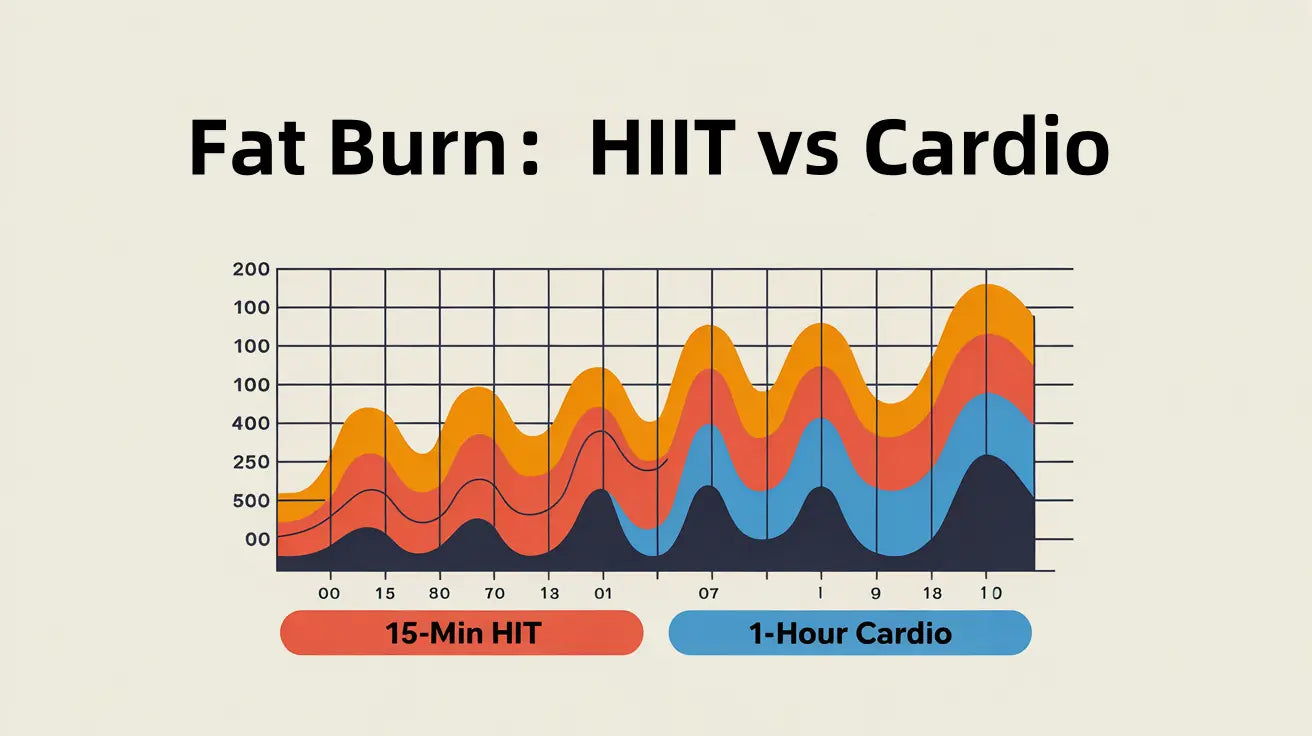
Not all cardio delivers the same results. While walking or light cycling burns calories, High-Intensity Interval Training (HIIT) is superior for fat loss because of the afterburn effect, scientifically known as EPOC (Excess Post-exercise Oxygen Consumption). After a hard HIIT session, your body continues burning calories for up to 24 to 48 hours as it recovers.
HIIT also preserves lean muscle mass, unlike long, slow cardio sessions, which can lead to muscle breakdown. Since muscle boosts metabolism, keeping it intact helps you burn more fat over time, especially around stubborn areas like the arms.
How to Structure an Effective HIIT Session
An effective HIIT workout alternates short bursts of maximal effort with brief recovery periods. A common ratio is 30 seconds of work followed by 30 seconds of rest, repeated for 15 to 20 minutes. For arm-focused fat loss, choose movements that engage upper-body muscles while spiking your heart rate.
Here’s a sample format:
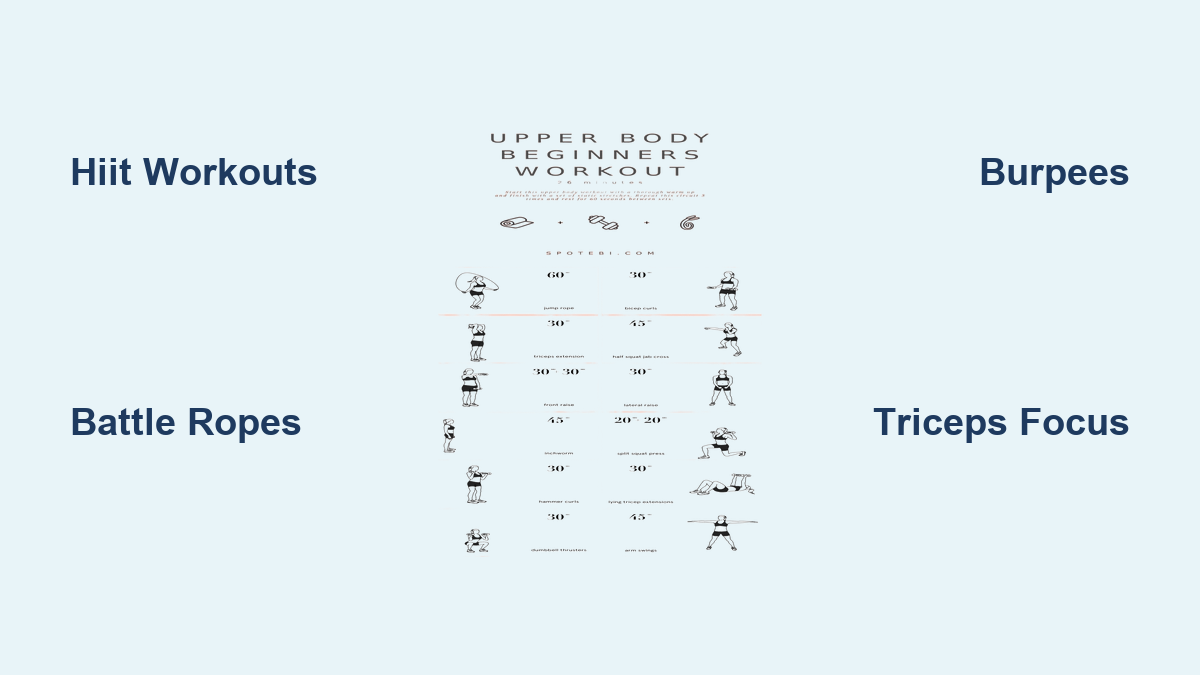
– 30 sec battle rope waves
– 30 sec rest
– 30 sec burpees with push-ups
– 30 sec rest
– 30 sec mountain climbers
– 30 sec rest
Repeat for 4 to 6 rounds. This keeps your arms active while driving systemic fat loss.
Best Upper-Body HIIT Moves
To maximize arm engagement during HIIT, prioritize exercises that involve pushing, pulling, or punching motions. These not only raise heart rate but also fatigue arm muscles, enhancing tone over time.
Top picks include:
– Battle rope waves
– Burpees with push-ups
– Cross punches
– Medicine ball slams
– Knee drivers with overhead reach
These movements combine cardiovascular intensity with resistance-like muscle activation, making them ideal for revealing lean arms.
Cardio-Strength Hybrid Exercises That Torch Fat

What Makes Hybrid Moves So Effective
Hybrid exercises blur the line between cardio and strength. They elevate your heart rate like running but use bodyweight or resistance to build muscle like weightlifting. These are your best weapons against arm fat because they burn significant calories, target major arm muscles, improve muscular endurance, and require minimal or no equipment.
They work especially well in circuit or superset formats, where rest is limited and intensity stays high.
Mountain Climbers: Core and Arm Power
Mountain climbers work the triceps, shoulders, and biceps while spiking your heart rate. Done fast, they become a full-body cardio blast.
How to do it:
1. Start in a high plank with hands under shoulders and body in a straight line.
2. Drive one knee toward your chest, then switch legs rapidly.
3. Keep hips level and core tight; don’t let them sag or rise.
Pro Tip: Imagine “screwing” your hands into the floor to stabilize your shoulders and increase triceps engagement.
Protocol: 30 seconds on, 15 seconds off for 4 rounds.
Burpees: The Full-Body Fat Burner
Burpees are brutal but effective. They engage your arms, chest, shoulders, core, and legs, making them one of the highest-calorie-burning exercises per minute.
Cardio-focused version:
1. Squat down and place hands on the floor.
2. Kick feet back into a plank position.
3. Jump feet forward toward your hands.
4. Explode upward into a jump.
For more arm work: Add a push-up while in the plank position.
Protocol: 10 reps for 4 rounds with 30 seconds of rest.
Seal Jacks: Shoulder Sculptor
Seal jacks mimic jumping jacks but emphasize shoulder and chest engagement. The constant arm motion keeps your heart rate high while shaping the upper body.
How to do it:
1. Stand with feet wide and arms out at shoulder height.
2. Jump feet together while clapping hands in front of your chest.
3. Jump feet back out and return arms to your sides.
Visual Cue: Imagine hugging a beach ball during the clap-in phase to activate your chest and front deltoids.
Protocol: 30 seconds for 3 sets.
Target Triceps With Dynamic Movements

Why Triceps Matter for Arm Tone
The triceps run along the back of your upper arm and account for two-thirds of its mass. If your arms appear flabby, weak or underdeveloped triceps are often the culprit. Strengthening this area tightens the entire arm line, especially the region between your shoulder and elbow.
While isolation exercises like tricep dips help, dynamic cardio-integrated moves deliver faster results by combining fat burn with muscle activation.
Bench Dips: Simple But Effective
Bench dips are a beginner-friendly way to isolate the triceps while adding light cardio when done in circuits.
How to do it:
1. Sit on the edge of a bench with hands next to your hips.
2. Slide off, supporting your weight on your arms.
3. Lower your body until your elbows reach 90 degrees.
4. Push back up to the starting position.
Avoid: Letting your shoulders rise toward your ears. Keep them down and back.
For intensity: Extend your legs or add ankle weights.
Protocol: 3 sets of 10 to 15 reps.
Arm Slides: Core and Triceps Killer
Using sliders or towels on a smooth floor, arm slides force your triceps and core to stabilize as you extend forward.
How to do it:
1. Kneel on a mat with hands on sliders.
2. Engage your core and slide your arms forward without bending your elbows.
3. Pull back to the starting position.
Warning: If your back arches, stop. Form is broken.
Protocol: 3 sets of 12 reps.
Triceps Press-Downs With Bands
Resistance bands provide constant tension, making them ideal for triceps activation during cardio circuits.
How to do it:
1. Anchor a band overhead.
2. Grip the handles with elbows at your sides.
3. Push down until your arms are straight.
4. Slowly return to the start.
Use in HIIT: Pair with jump squats or mountain climbers.
Protocol: 3 sets of 15 reps.
Equipment-Based Cardio for Maximum Arm Engagement
Battle Ropes: Upper-Body Inferno
Battle ropes create intense arm and shoulder fatigue while spiking your heart rate. Just 30 seconds of waves can feel like a full minute of sprinting.
How to do it:
1. Stand with feet shoulder-width apart and knees slightly bent.
2. Hold the ropes and generate waves by moving your arms up and down or side to side.
3. Keep your core tight and back straight.
Variations:
– Alternating waves (one arm at a time)
– Slam waves (both arms down forcefully)
Protocol: 30 seconds of work, 45 seconds of rest for 5 rounds.
Medicine Ball Slams: Power and Cardio
Slams combine explosive arm movement with core engagement, making them perfect for torching calories and toning shoulders.
How to do it:
1. Hold the ball at chest height.
2. Lift it overhead and slightly behind your head.
3. Slam the ball down with full force.
4. Squat to pick it up and repeat.
Safety: Use a durable ball and ensure you have clear space.
Protocol: 10 reps for 4 sets.
Rowing Machine: Low-Impact, High Reward
Rowing is one of the best cardio machines for arm fat because it uses 60 percent legs and 40 percent upper body, pulling with your back, biceps, and shoulders.
Proper form:
1. Drive with your legs first.
2. Lean back slightly.
3. Pull the handle to your lower ribs while squeezing your shoulder blades together.
Fat-loss tip: Use interval settings, such as 1 minute hard and 1 minute easy.
Time-efficient: 20 minutes of rowing burns approximately 300 calories.
Best Cardio Machines for Arm Engagement
Elliptical With Moving Handles
Most ellipticals have moving handles that allow you to push and pull with your arms while stepping. This dual motion increases upper-body calorie burn.
Maximize arm work:
– Focus on pulling the handles back hard.
– Keep your chest up and shoulders back.
– Use higher resistance settings.
Ideal for: Low-impact, joint-friendly cardio with arm toning.
Duration: 20 to 30 minutes at moderate intensity.
Swimming: Full-Body Resistance
Swimming, especially freestyle and butterfly, forces your arms to push against water resistance, which acts as a natural form of strength training.
Benefits:
– Burns 400 to 500 calories per hour
– Tones arms, shoulders, and back
– Zero impact on joints
Best strokes for arms:
– Butterfly: Highest arm engagement
– Freestyle: Continuous motion
– Breaststroke: Emphasizes chest and front deltoids
Tip: Add swim paddles to increase resistance.
Boxing or Shadow Boxing
Throwing punches rapidly works the shoulders, triceps, and biceps while delivering a serious cardio workout.
How to do shadow boxing:
1. Stand in a fighting stance with fists at your cheeks.
2. Alternate jabs and crosses.
3. Add hooks and uppercuts for variety.
4. Keep your feet moving to stay light.
For intensity: Wear 1 to 2 pound gloves or do it in HIIT format.
Protocol: 3 minutes on, 1 minute rest for 5 rounds.
Sample Arm-Focused Cardio Plans

Beginner Routine: No Equipment Needed
Start here if you’re new to fitness or returning after a break. Focus on form, consistency, and building endurance.
Workout A (3x per week):
1. March in place for 2 minutes
2. Arm circles for 30 seconds forward, 30 seconds back
3. Seal jacks for 30 seconds
4. Mountain climbers for 30 seconds
5. Cross punches for 20 reps
6. Squat to overhead reach for 30 seconds
7. Rest 1 minute, then repeat for 2 more rounds
Duration: Approximately 15 minutes
Progress: Add 1 round weekly.
Intermediate Circuit: Add Dumbbells
Step up intensity with weights that increase calorie burn and muscle activation.
Workout B (3 to 4x per week):
1. Push-ups for 10 reps
2. Dumbbell thrusters for 10 reps
3. Lunge with bicep curl for 10 reps per side
4. Dumbbell row for 10 reps
5. Burpees for 8 reps
6. Rest 30 seconds, then repeat for 3 rounds
Equipment: Pair of dumbbells
Time: Approximately 20 minutes
Advanced HIIT: Max Fat Burn
For those with solid fitness, this routine burns maximum calories in minimal time.
Workout C (3x per week):
1. Battle ropes for 30 seconds
2. Rest for 30 seconds
3. Push-up burpees for 30 seconds
4. Rest for 30 seconds
5. Medicine ball slams for 30 seconds
6. Rest for 60 seconds
Repeat 5 times.
Calorie burn: Approximately 250 to 300 calories in 20 minutes.
Common Mistakes That Sabotage Arm Fat Loss
Relying Only on Isolation Exercises
Curls and extensions build muscle but burn few calories. Relying solely on them delays fat loss. Prioritize compound movements like push-ups, rows, and thrusters that work multiple muscles at once.
Skipping Progressive Overload
If you use the same weights, reps, or speed forever, your body adapts and progress stalls. Every 2 to 3 weeks, increase weight, reps, or decrease rest time.
Neglecting Nutrition
You cannot out-train a poor diet. Without a 300 to 500 calorie daily deficit, arm fat won’t budge. Eat more protein from sources like chicken, eggs, and Greek yogurt, drink water, and avoid sugary drinks and processed snacks.
Sacrificing Form for Speed
In cardio circuits, many sacrifice technique to finish faster. This reduces muscle activation and raises injury risk. Slow down if form breaks. Quality always beats speed.
Skipping Rest Days
Muscles grow during recovery, not during workouts. Training arms daily leads to fatigue and overuse injuries. Take at least 1 to 2 rest days per week and sleep 7 to 8 hours nightly.
Fuel Fat Loss With Smart Nutrition
Create a Sustainable Calorie Deficit
To lose arm fat, you must burn more calories than you consume. A 300 to 500 calorie deficit per day leads to 1 to 2 pounds of fat loss per week, which is safe and maintainable.
How to achieve it:
– Swap soda for water
– Replace white bread with whole grains
– Choose grilled over fried foods
– Fill half your plate with vegetables
Avoid crash diets because they slow metabolism and cause muscle loss.
Prioritize Protein Intake
Protein repairs muscle, keeps you full, and has a high thermic effect, meaning your body burns calories just digesting it.
Daily goal: 0.7 to 1 gram of protein per pound of body weight
Examples:
– 3 oz chicken breast = 26g protein
– 1 cup Greek yogurt = 20g
– 1 scoop whey protein = 25g
Eat protein within 1 hour post-workout to maximize recovery.
Stay Hydrated for Performance
Dehydration reduces strength, endurance, and fat-burning efficiency. Sip water throughout the day rather than waiting until you’re thirsty.
Daily target: At least 8 to 10 cups, more if you’re sweating heavily.
Track Progress Beyond the Scale
Measure Arm Circumference
Use a soft tape measure around the fullest part of your upper arm, usually the mid-bicep. Measure weekly at the same time of day. A decrease over time indicates fat loss, even if your weight stays the same.
Take Progress Photos
Clothing fit and arm tone are visual changes. Take front and side photos monthly in consistent lighting and attire. Look for tighter sleeves, less jiggle, and more definition.
Monitor Strength Gains
If you can do more push-ups, lift heavier dumbbells, or complete circuits faster, you’re gaining muscle and burning fat, even if the scale doesn’t move. Going from 5 to 10 push-ups in a minute is real progress.
Frequently Asked Questions About Cardio Exercises for Arm Fat
How long does it take to lose arm fat?
With consistent training (2 to 5 times per week), cardio, and a caloric deficit, visible results typically appear in 4 to 8 weeks. Genetics and starting body composition influence the exact timeline.
Can I target arm fat specifically with exercise?
No. Spot reduction is a myth. You must reduce overall body fat through a calorie deficit while toning arm muscles to reveal definition. Cardio accelerates fat loss, and resistance training builds the muscle underneath.
What are the best exercises for flabby arms?
Tricep dips, bicep curls, push-ups, rows, overhead presses, and battle ropes are top choices for building the muscle definition needed to combat the appearance of flab. Pair them with HIIT for maximum fat burn.
Should I use light or heavy weights?
A combination works best. Lighter weights with higher reps improve muscular endurance and tone, while heavier weights with lower reps build strength and boost metabolic rate. Rotate between both styles.
Is cardio necessary if I lift weights?
Yes. While lifting builds muscle, cardio accelerates the calorie deficit required to burn the fat covering those muscles. Combining both yields the fastest, most visible results.
What is the best cardio for arm fat?
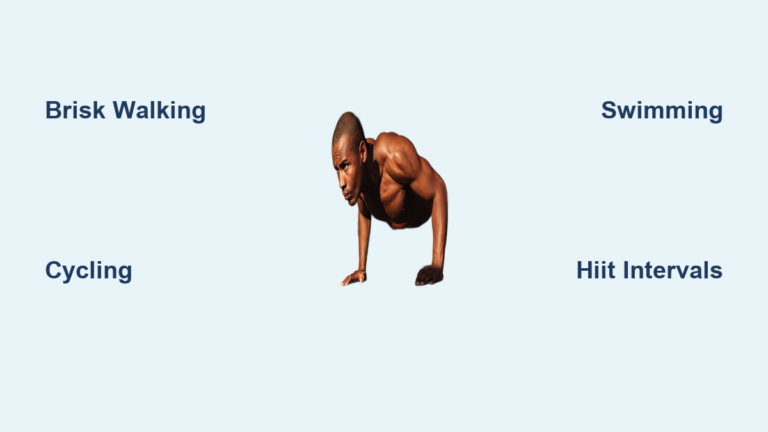
Activities that engage the upper body while raising heart rate are superior. These include rowing, swimming, battle ropes, boxing, and HIIT circuits incorporating arm movements like burpees and mountain climbers.
Key Takeaways for Toning Your Arms With Cardio
Losing arm fat comes down to three core principles: systemic fat loss through cardio, muscle definition through resistance training, and consistent nutrition to maintain a calorie deficit. Focus on high-intensity, upper-body-engaged cardio like battle ropes, burpees, and rowing, combined with strength work that targets your triceps, biceps, and shoulders.
Track progress beyond the scale using measurements, photos, and strength gains. Stay patient and trust the process. In 4 to 8 weeks of consistent effort, you’ll see tighter, stronger, more defined arms, naturally and sustainably.
Your next step: Pick one workout from this guide and commit to doing it three times this week. Consistency starts with a single session.