Best Heart Rate Monitors for Fat Loss (2026 Guide)
You’ve probably seen the “fat-burning zone” labeled on gym machines or in fitness apps. You hop on the treadmill, aim for that green heart rate range, and assume you’re torching fat. But here’s the truth: using a heart rate monitor for fat loss isn’t just about staying in one zone. It’s about training smarter across intensities. While low-intensity workouts burn a higher percentage of fat, high-intensity efforts burn more total fat calories over time. The real key is combining both, guided by your heart rate, to create a sustainable, effective fat-loss plan.
A heart rate monitor helps you stay in the right zone at the right time, avoiding wasted effort, overtraining, or underperforming. It transforms guesswork into precision, especially if you’re “overfat” (carrying excess body fat despite regular exercise) or struggling to see results. This guide cuts through the myths, shows you how to calculate your true fat-burning zone, and gives you a science-backed strategy to use your monitor effectively. Let’s turn your heart rate into a fat-loss tool.
Decode Your Fat-Burning Zone
What Is the Fat-Burning Zone?
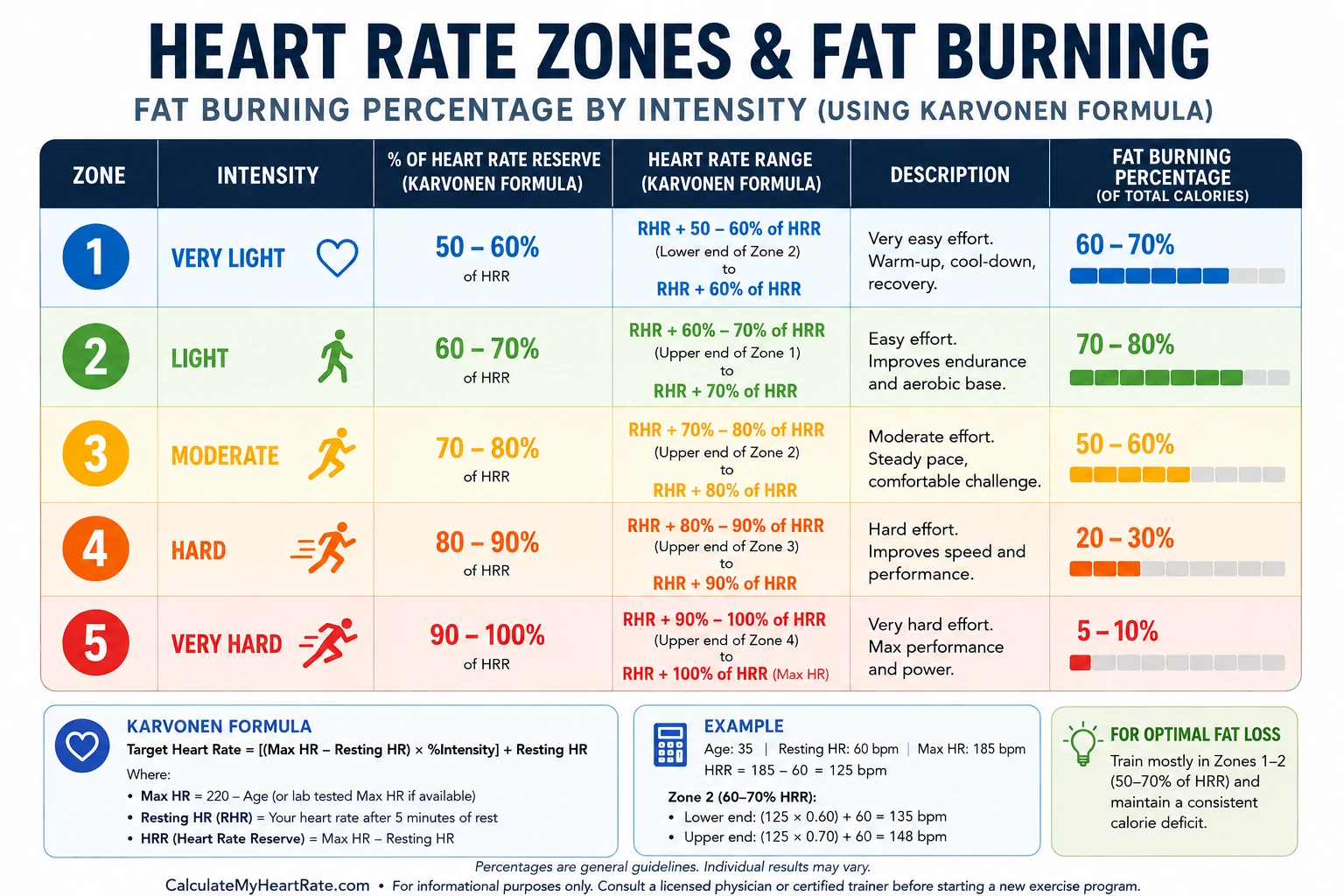
The fat-burning zone refers to the heart rate range where your body burns the highest percentage of calories from fat, typically between 60% and 70% of your maximum heart rate (MHR). At this intensity, oxygen is plentiful, and your body efficiently converts stored fat into energy. This makes Zone 2 ideal for building endurance and teaching your metabolism to rely less on sugar.
But here’s the catch: while fat makes up a larger portion of fuel burned, the total calories burned per minute are lower than in high-intensity zones. So, you must exercise longer to match the fat loss from a shorter, harder workout.
Why Percentage Isn’t the Whole Story
Focusing only on fat percentage is misleading. Total fat loss depends on total calories burned and sustained deficit, not just fuel source. For example:
- A 30-minute Zone 2 walk might burn 200 calories, with 60% from fat = 120 fat calories.
- A 20-minute HIIT session might burn 400 calories, with 40% from fat = 160 fat calories.
Even though the HIIT session used less fat proportionally, it burned more fat in total, and triggered EPOC (afterburn), continuing to burn calories post-workout.
Zone 2 Builds Metabolic Flexibility
Beyond calorie burn, Zone 2 training improves metabolic flexibility, which is your body’s ability to switch between fat and carbs efficiently. Many “overfat” exercisers rely too much on glucose, even at rest. Training in Zone 2 enhances mitochondrial function, so you burn fat all day long, not just during workouts.
This is why endurance athletes and fitness experts prioritize Zone 2: it trains the body to become a fat-burning machine.
Calculate Your Target Zones Accurately

Find Your Maximum Heart Rate
To use a heart rate monitor effectively, you need a reliable maximum heart rate (MHR) estimate. While lab testing is most accurate, these formulas offer practical estimates:
- Fox Formula (Common): 220 − Age
- Tanaka Formula (More Accurate): 208 − (0.7 × Age)
For a 40-year-old:
– Fox: 220 − 40 = 180 bpm
– Tanaka: 208 − (0.7 × 40) = 180 bpm (coincidentally the same)
Your true MHR may vary by ±10–15 bpm due to genetics, fitness, and medications like beta-blockers.
Map Your Heart Rate Zones
Use your MHR to define training zones. Here is a breakdown using a 180 bpm max:
| Zone | % of MHR | Target HR | Primary Fuel | Best For |
|---|---|---|---|---|
| Zone 1 | 50–60% | 90–108 bpm | Fat | Recovery, warm-up |
| Zone 2 | 60–70% | 108–126 bpm | Fat (max %) | Fat adaptation, endurance |
| Zone 3 | 70–80% | 126–144 bpm | 50% fat, 50% carbs | Aerobic fitness |
| Zone 4 | 80–90% | 144–162 bpm | Carbs | HIIT, speed |
| Zone 5 | 90–100% | 162–180 bpm | Carbs | Max effort |
Zone 2 is your fat-burning sweet spot, but only when paired with consistency and diet.
Use the Talk Test as Backup
No monitor? Use the Talk Test to estimate intensity:
– Zone 2: You can speak in full sentences, even sing.
– Zone 3: You can talk, but not sing.
– Zone 4–5: You can’t say more than a few words.
This helps when your monitor lags or fails during intervals.
Choose the Right Monitoring Tool
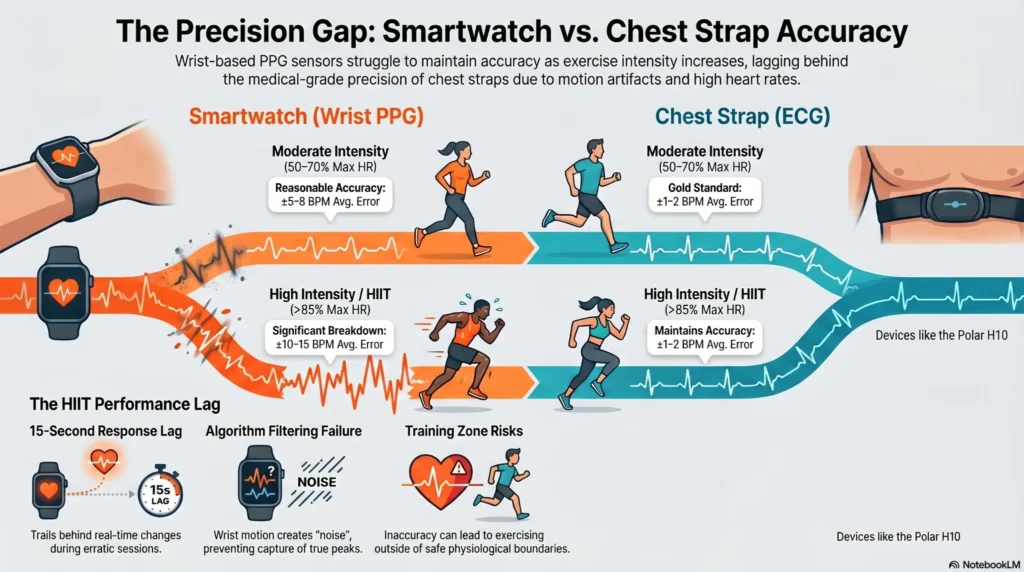
Chest Strap vs. Wrist Monitor
Accuracy matters, especially when chasing fat loss.
Chest Strap (ECG-Based)
– Pros: Most accurate, real-time response, minimal lag.
– Cons: Can feel uncomfortable, requires moist sensors.
– Best for: Serious training, HIIT, Zone 2 pacing.
Wrist-Based (Optical Sensor)
– Pros: Convenient, continuous tracking, smart features.
– Cons: Less accurate during intervals, affected by movement, skin tone, and fit.
– Best for: General use, daily activity tracking.
For fat-loss precision, a chest strap is worth the investment.
Gym Machine Sensors: Avoid
Handgrip sensors on treadmills or bikes are notoriously inaccurate due to inconsistent contact and movement. They often read 10–20 bpm too low or too high. Use your own monitor instead.
Smartphone Apps: Use as Supplements
Apps like MyFitnessPal, Strava, or Garmin Connect can sync with heart rate monitors and track zone time, calories, and trends. Some, like “Fat Burn in Zone 2”, give real-time feedback.
But don’t rely on phone camera-based HR apps during exercise. They are highly inaccurate.
Train Smarter: Zone 2 and Beyond
Master Low-Intensity Steady State (LISS)
Zone 2 cardio, like brisk walking, cycling, or swimming, is the foundation of sustainable fat loss.
Why LISS Works
– Burns fat directly at the highest percentage.
– Low stress on joints and nervous system.
– Highly repeatable, so you can do it daily.
– Improves aerobic base, making higher intensities easier later.
How to Do It
– Duration: 45–90 minutes.
– Frequency: 3–5 times per week.
– Pace: Comfortable, conversational.
Pro Tip: If your HR spikes too fast, slow down or walk. It’s normal for beginners.
Add High-Intensity Interval Training (HIIT)
HIIT burns more total fat by maximizing calorie burn and EPOC.
Sample HIIT Protocol (20 Minutes)
– Warm-up: 5 min Zone 1–2
– Intervals: 30 sec Zone 5 (sprint), 90 sec Zone 1–2 (recovery)
– Repeat: 6–8 rounds
– Cool-down: 3 min
This protocol burns 2–3x more calories per minute than steady-state.
Caution
– Limit to 1–2 times per week.
– Requires 48 hours recovery.
– Not for beginners or those with heart issues.
Follow the 80/20 Rule

The most effective fat-loss strategy? 80% low-intensity, 20% high-intensity.
Weekly Plan Example
| Day | Workout |
|—–|——–|
| Mon | 60 min brisk walk (Zone 2) |
| Tue | 20 min HIIT (Zone 5 + 1) |
| Wed | 45 min cycling (Zone 2) |
| Thu | Rest or light walk |
| Fri | 30 min jog (Zone 3) |
| Sat | 90 min hike (Zone 2) |
| Sun | Rest |
This mix builds endurance, boosts metabolism, and prevents burnout.
Optimize Diet and Lifestyle
Eat for Fat Oxidation
No amount of heart rate training will overcome a poor diet.
To Maximize Fat Burning:
– Cut refined carbs and sugar, as they spike insulin and block fat breakdown.
– Eat more healthy fats like avocados, nuts, olive oil, and fatty fish.
– Prioritize protein to preserve muscle during fat loss.
– Stay in a caloric deficit and track intake if needed.
Zone 2 works best in a low-carb or balanced whole-food diet.
Manage Stress and Sleep
Chronic stress raises cortisol, which promotes fat storage, especially around the belly.
To Support Fat Loss:
– Sleep 7–9 hours/night, since poor sleep increases hunger hormones.
– Practice stress reduction through meditation, deep breathing, or nature walks.
– Avoid overtraining, as an elevated resting HR is a red flag.
Your heart rate monitor can track resting HR trends. A rising baseline may signal overtraining or poor recovery.
Stay Hydrated
Dehydration increases heart rate. A 3–5% drop in hydration can raise exercise HR by 5–10 bpm, making Zone 2 feel like Zone 3.
Drink water before, during, and after workouts.
Avoid Common Fat-Loss Mistakes
Myth: “Stay in the Fat-Burning Zone to Lose Weight”
Truth: While Zone 2 burns the highest percentage of fat, total fat loss requires total calorie deficit. HIIT and strength training often deliver better results in less time.
Fix: Use Zone 2 for base training, but add variety.
Myth: “More Sweat = More Fat Burned”
Truth: Sweat is about temperature regulation, not fat loss. You can burn fat in a cool room with no sweat.
Fix: Don’t judge workouts by sweat. Use heart rate and effort instead.
Myth: “My Monitor Is Always Right”
Truth: All devices have error margins. Wrist monitors can be off by ±10–20 bpm during intervals.
Fix: Use trends, not single readings. A chest strap improves accuracy.
Myth: “Lower HR Is Always Better”
Truth: A low resting HR is good (a sign of fitness), but a workout HR that’s too low means you’re not working hard enough.
Fix: If your HR is stuck in Zone 1 during walking, increase incline or pace.
Adapt for Your Body and Goals
Adjust for Medications
Beta-blockers lower heart rate, making standard zone calculations useless.
If You’re on Beta-Blockers:
– Ignore percentage-based zones.
– Use perceived exertion or the talk test.
– Consult your doctor for personalized targets.
Track Progress Beyond the Scale
Fat loss isn’t just about weight. Use these metrics:
- Resting Heart Rate (RHR): Should decrease over time.
- Workout Speed at Same HR: Faster equals better aerobic fitness.
- MAF Test: Run or cycle at 180 − age bpm. Time how long to cover 1 mile. Faster times mean improved fat-burning ability.
- Waist Circumference: More accurate than weight for fat loss.
Know Your User Profile
You Benefit Most From Heart Rate Training If You:
– Are “overfat” despite exercising.
– Hit a fat-loss plateau.
– Want to improve endurance.
– Need structure to avoid overtraining.
Choose Your Strategy:
– Beginners: Start with Zone 2 walking.
– Time-Crunched: Prioritize HIIT plus daily movement.
– Endurance Athletes: Focus on Zone 2 base building.
Frequently Asked Questions About Heart Rate Monitor Fat Loss
What Heart Rate Burns the Most Fat?
The fat-burning zone, typically 60% to 70% of your maximum heart rate, burns the highest percentage of calories from fat. However, high-intensity workouts burn more total fat calories in less time. Combining both intensities delivers the best fat-loss results.
Is a Chest Strap Better Than a Wrist Monitor for Fat Loss?
Yes, chest straps are more accurate because they use ECG sensors that detect the heart’s electrical activity. Wrist monitors use optical sensors that can lag and lose accuracy during intervals. For precise Zone 2 pacing and HIIT, a chest strap is the better choice.
How Long Should I Stay in the Fat-Burning Zone?
Aim for 45 to 90 minutes in Zone 2, 3 to 5 times per week. This duration allows significant fat oxidation without excessive fatigue. Consistency matters more than single-session length for long-term fat loss.
Can I Lose Fat Without a Heart Rate Monitor?
Yes. The Talk Test is a reliable backup: if you can hold a full conversation, you’re likely in Zone 2. You can also track perceived exertion or simply monitor your pace and breathing. A monitor adds precision, but it’s not strictly required.
Do Beta-Blockers Affect Fat-Burning Zone Calculations?
Yes. Beta-blockers lower heart rate, making percentage-based zones like 60–70% of MHR inaccurate. If you take these medications, rely on perceived exertion or the talk test, and consult your doctor for adjusted heart rate targets.
How Do I Know If I’m Overtraining?
Watch for a rising resting heart rate over several days, persistent fatigue, poor sleep, and decreased performance at the same heart rate. If you notice these signs, add rest days, reduce intensity, and prioritize recovery before resuming hard training.
Key Takeaways for Using a Heart Rate Monitor to Lose Fat

A heart rate monitor is not a magic fat-loss button, but it’s the closest thing to a metabolic GPS. Used correctly, it guides you to train at the right intensity, avoid burnout, and maximize fat oxidation.
Focus on three core principles. First, Zone 2 builds your fat-burning base, training your metabolism to burn fat efficiently all day. Second, HIIT adds total calorie burn and afterburn, accelerating results when used 1–2 times weekly. Third, diet and recovery determine outcomes, since no monitor can fix a caloric surplus or chronic stress.
Your next step: Calculate your MHR using the Tanaka formula, identify your Zone 2 range, and commit to three Zone 2 sessions this week. Track your resting heart rate daily and adjust intensity based on trends, not single readings. Consistency across zones, nutrition, and recovery will transform your results.