Low Impact Cardio Exercises at Home: Quick Guide
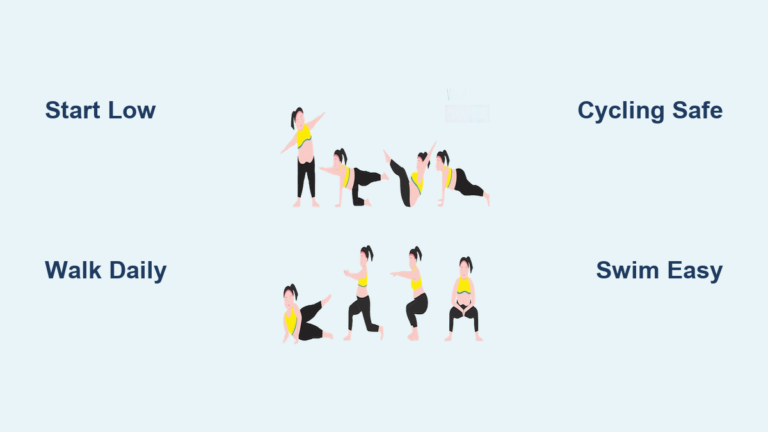
You don’t need to jump, sprint, or risk joint strain to get your heart pumping and build real endurance. Low impact cardio exercises at home offer a proven way to burn calories, strengthen your heart, and boost energy, all while keeping your joints safe and comfortable. Whether you’re managing arthritis, recovering from an injury, returning to fitness after a break, or simply want a sustainable routine you can stick with long-term, these controlled movements deliver serious results without the pounding forces of high-impact workouts.
The real power of low impact cardio lies in its adaptability and accessibility. A 10-minute session during your lunch break can elevate your heart rate into the fat-burning zone using only your body weight. By adjusting tempo, adding resistance, or coordinating upper-body movement, even simple squats or marches become challenging cardiovascular work. Backed by the American Heart Association’s recommendation of 150 minutes of moderate-intensity activity per week, a well-designed home routine can significantly reduce heart disease risk, support weight management, and enhance mental wellbeing, all from your living room.
This guide breaks down the most effective low impact cardio exercises at home, organized by movement type and intensity. You’ll learn how to structure workouts, progress safely, and maximize results without any equipment.
Warm Up Your Body Before Increasing Intensity
A proper warm-up gradually elevates your heart rate, boosts circulation, and loosens stiff joints. Skipping this step increases injury risk and reduces workout quality.
March in Place with Arm Swings
Stand tall with feet hip-width apart and begin marching slowly. Add arm movement by swinging your arms forward and up as your knees lift. Gradually increase speed over 1–2 minutes. This simple motion warms your hips, shoulders, and core while gently raising your pulse.
Visual cue: Keep your chest lifted and avoid hunching. Imagine walking briskly through a park.
Side Taps with Shoulder Rolls
Step your right foot out to the side, tapping the toe lightly, then return to center. Repeat with the left foot. As you step out, raise your arms to shoulder height in a “T” position; lower them as you return.
Pro tip: Add backward shoulder rolls during taps to release upper back tension, a common issue from sitting all day.
Knee Lifts with Opposite Hand Tap
Lift your right knee toward your chest and tap it with your left hand. Alternate sides in a steady rhythm.
Modification: Reduce knee height if balance feels shaky. Hold onto a chair for support.
Step-Out Jacks (Low Impact Jumping Jacks)
Step your right foot out to the side while raising arms overhead. Step back to center, then repeat with the left foot. Unlike traditional jumping jacks, your feet never leave the ground simultaneously.
Key form tip: Keep your core braced and land softly. Imagine minimizing noise with each step.
Build Intensity with Squat-Based Movements
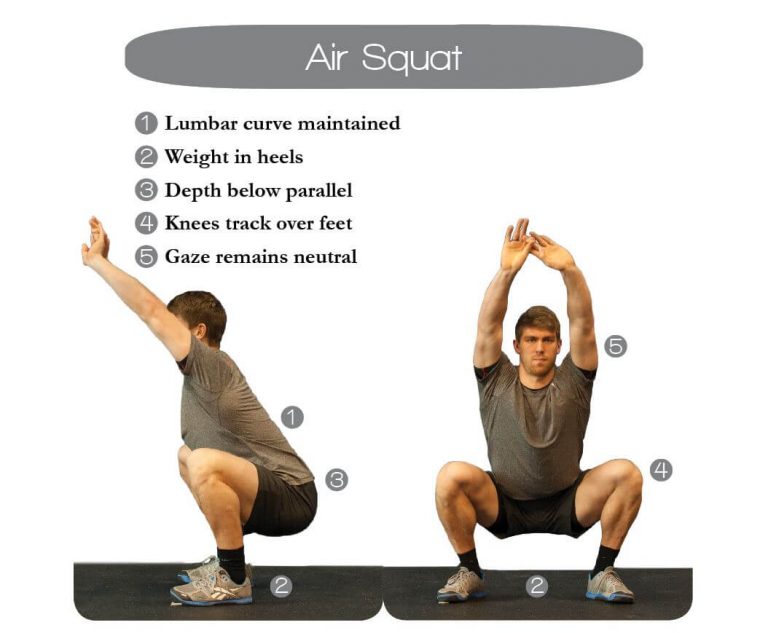
Squats become cardiovascular powerhouses when performed continuously. They engage large lower-body muscles, demanding more oxygen and elevating heart rate efficiently.
Swing Air Squats
Begin with feet just wider than hips. Lower into a squat, sweeping your arms behind you. Drive up explosively, swinging arms overhead.
Intensity boost: Add a calf raise at the top. This small tweak increases heart demand significantly.
Common mistake to avoid: Letting knees cave inward. Push knees outward in line with your toes.
Squat to Overhead Reach
Sit your hips back into a squat, reaching hands toward the floor. Press through your heels to stand, raising arms straight up.
Why it works: The full range of motion activates glutes and quads while the arm lift forces deeper breathing.
Squat to Oblique Crunch
From a wide squat, stand and twist your torso, driving your left knee toward your right elbow. Return and repeat on the other side.
Expert note: Exhale sharply during the twist to engage deep core muscles.
Side Step to Squat
Step your right foot out wide, bend both knees, and drop into a lateral squat with hands clasped. Press back to center and switch sides.
Target: Glute medius, often weak in sedentary individuals and critical for hip stability.
Speed tip: Increase tempo to turn this into a cardio burner.
Sumo Squat Hold with Oblique Crunch
Hold a wide, toes-out squat with hands behind your head. Drive your right elbow toward your right knee, then switch sides.
Unique benefit: Isometric leg hold plus dynamic core twist equals elevated heart rate with minimal joint movement.
Boost Heart Rate with Plank Transitions
Plank-based exercises aren’t just for abs; they’re underrated cardio tools. Transitions from plank to standing challenge balance, coordination, and cardiovascular endurance.
Plank to Standing Knee Drive
Start in a high plank. Step your left foot forward between your hands. Lift your hands and stand, driving your right knee toward your chest. Step back to plank and alternate sides.
Pacing: Perform 30 seconds per side in a timed circuit.
Warning: Avoid sagging hips. Keep your core tight to protect your lower back.
Blast-Off Plank to Shoulder Tap
From high plank, bend your knees and push hips back into a crouch with toes down and knees lifted. Push back to plank. Tap your left hand to your right shoulder, then right to left.
Why it’s effective: The blast-off motion increases blood flow while shoulder taps challenge stability.
Form cue: Keep hips still during taps. No rocking side to side.
Mountain Climber Twist
In high plank, drive your right knee toward your left forearm. Return, then switch sides.
Difference from regular climbers: The cross-body motion recruits obliques and forces controlled movement, perfect for keeping impact low.
Tempo control: One foot moves at a time with no hopping.
Inchworm to Modified Push-Up
Stand, bend forward, and walk your hands out to plank. Drop your knees and perform a push-up. Walk your hands back and stand.
Progression: Skip the knee modification and do full push-ups for greater intensity.
Bonus: This full-body sequence improves flexibility in hamstrings and shoulders.
Move Side to Side for Full-Body Engagement

Most daily movement is forward-only. Adding lateral work improves agility, targets underused muscles, and breaks workout monotony.
Low Impact Speed Skaters
Step your right foot diagonally behind and across your body into a curtsy lunge. Push off your left foot to return, swinging arms for momentum.
Visual: Glide like a skater on ice. Smooth, not bouncy.
Balance aid: Shorten your step if you wobble.
Lateral Shuffle with Floor Tap
Shift weight right, push off your left foot, and step right. Bring your feet together. After 3–4 shuffles, tap the floor with your right hand.
Why add the tap? It integrates upper body and forces torso rotation, increasing calorie burn.
Lateral Lunge and Two High Knees
Step wide to the right into a lunge. Drive back to center and perform two fast high knees, left then right. Repeat on the left side.
Cardio effect: The high knees spike your heart rate mid-set.
Time-saving tip: Combines strength and cardio in one move.
45-Degree Jacks
Step your left foot forward and out at a 45-degree angle while jacking arms overhead. Return and repeat on the right.
Target: Outer glutes and obliques, areas often neglected in straight-line cardio.
Punch, Swing, and Slam for Upper Body Cardio
Upper body involvement dramatically increases heart workload. When you move your arms, your heart must pump blood to more muscles.
Jab, Cross, and Speedbag Arms
Stand in a staggered stance. Jab with your lead hand, cross with your rear hand, and rotate hips with each punch. Then rapidly rotate fists in small circles overhead like hitting a speed bag.
Switch sides every 30 seconds.
Pro tip: Punch from the core, not just the arms. This increases power and calorie burn.
Crossover Punch in Squat
Hold a wide squat. Rotate your torso and punch your left arm across your body. Return and repeat on the right.
Key benefit: Isometric squat plus dynamic twist equals joint-safe cardio with serious metabolic demand.
Speed Ball Arms with March
Stand and stack bent arms at shoulder height. Rotate arms around each other as fast as possible for 20 seconds. March in place simultaneously.
Ideal for: Short bursts in interval circuits.
Modification: Slow the pace if shoulder mobility is limited.
Towel Slam (Controlled Version)
Hold a towel with both hands. Lift it overhead and slam it down in front. Bend your knees to pick it up and repeat.
Low impact version: Only lift to shoulder height, or throw onto a chair to eliminate bending.
Caution: Avoid arching your back during the lift. Use your legs to rise.
Adapt for Limited Mobility with Seated and Floor Options
Not everyone can stand or balance. These seated and lying movements deliver cardio benefits with zero joint strain.
Seated Star Jumps
Sit on a sturdy chair with your back straight. Extend both legs out to the sides while lifting arms out wide. Return to start.
Looks like: A seated jumping jack with the same motion but zero impact.
Great for: Beginners, seniors, or post-injury rehabilitation.
Trunk Rotation with Resistance
Sit with feet flat and knees bent. Rotate your torso side to side, keeping hips facing forward.
Add intensity: Hold a water bottle or book in both hands.
Focus: Controlled rotation, not speed, builds core strength.
Supine Snow Angels (Wipers)
Lie on your back with arms and legs extended. Slowly sweep your arms and legs open and closed like a snow angel.
Engages: Chest, shoulders, and abs without straining the spine.
Pace: 10–15 slow reps for activation.
Arm Circles: Seated or Standing
Extend your arms to the sides. Make large forward circles for 20 seconds, then reverse.
Modification: Reduce circle size if shoulders feel stiff.
Tip: Combine with seated marching for added cardiovascular effect.
Structure Your Workouts for Maximum Results
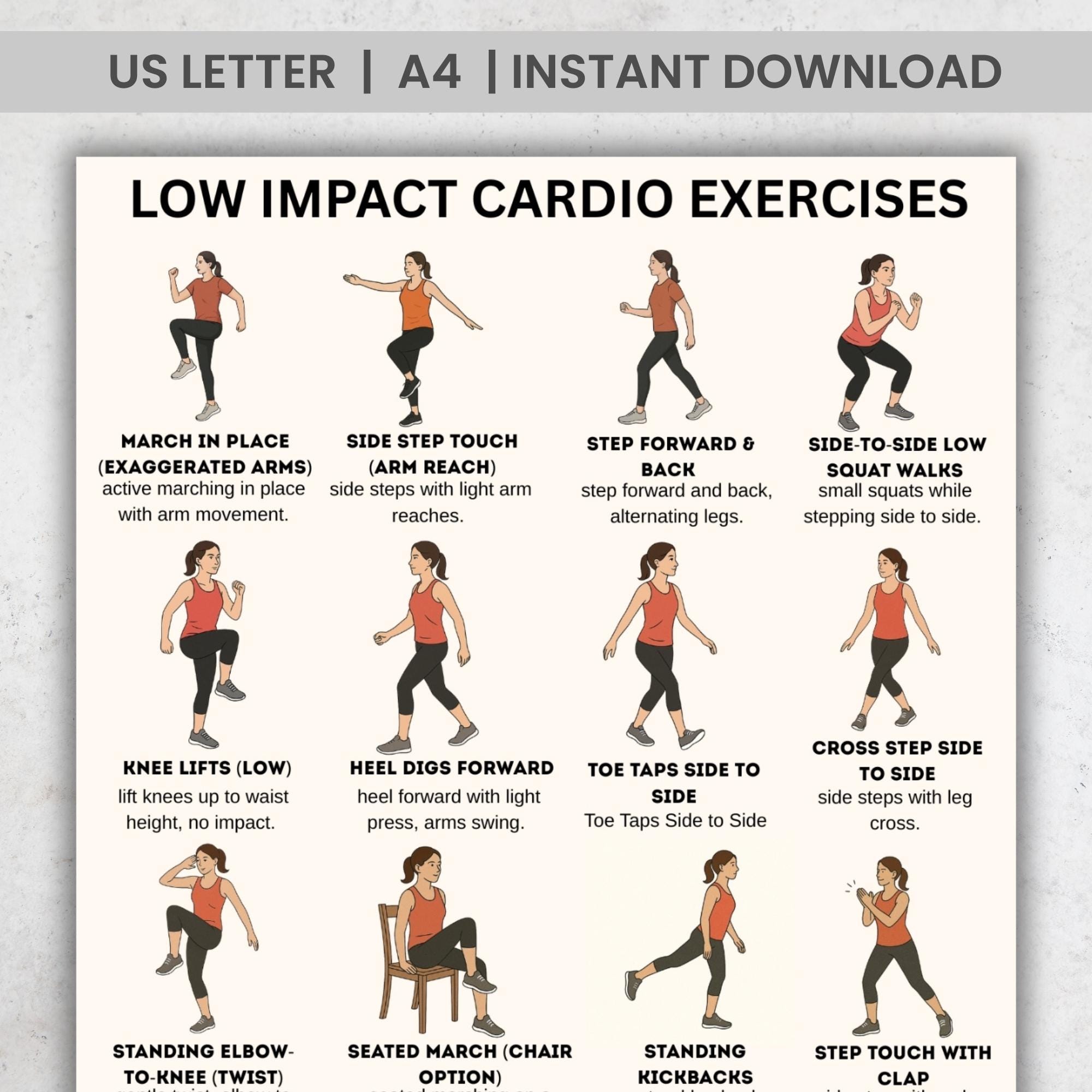
Knowing exercises isn’t enough. You need a plan. Use these proven frameworks to build effective, time-efficient routines.
20-Minute Circuit Model
Ideal for intermediate fitness levels. Keeps heart rate elevated with minimal rest.
Warm-up: 5 minutes of marching, arm circles, and side taps.
Circuit (repeat 3 times):
1. Swing Air Squats – 1 minute
2. Plank to Knee Drive – 1 minute
3. Lateral Shuffle with Tap – 1 minute
4. Jab, Cross, Speedbag – 1 minute
5. Seated Star Jumps – 1 minute
Rest: 1–2 minutes between circuits.
Total: Approximately 20 minutes.
Progression: Add light dumbbells or reduce rest to 30 seconds.
10-Minute Progressive Model
Perfect for beginners or active recovery days.
Structure:
– Perform each exercise for 20 seconds, rest 10 seconds
– Complete 3 rounds
– Exercises: Marching, Side Taps, Knee Lifts, Step-Out Jacks, Seated Rotation
Goal: Build up to 10 minutes of continuous movement within 4–6 weeks.
Track progress: Increase work time by 5–10 seconds weekly.
No-Repeat Interval Model
Prevents boredom and maximizes variety.
Format: 45 seconds work, 15 seconds rest.
Exercises: Pick 8–12 from different categories such as squat, plank, lateral, and seated.
Total rounds: 2–3.
Example combo:
1. Squat to Overhead Reach
2. Mountain Climber Twist
3. Lateral Lunge + High Knees
4. Towel Slam (light)
5. Seated Star Jumps
Benefit: Full-body engagement with zero monotony.
Enhance Results with Smart Intensity Techniques
Low impact doesn’t mean low effort. Use these strategies to make any exercise more challenging without jumping.
Increase Tempo Gradually
Speed up your movements while maintaining form. Faster squats or quicker shuffles elevate heart rate efficiently.
Rule: If form breaks, slow down immediately.
Add Household Resistance
Use items you already own:
– Soup cans for arm work
– Water bottles as light weights
– Towels for resistance pulls
– Backpack filled with books for added load
Example: Hold bottles during squats so your arms work harder and your heart pumps faster.
Expand Your Range of Motion
Deeper squats, higher knee lifts, and wider steps all mean more movement, more muscles, and more calories burned.
Caution: Only go as deep as remains pain-free.
Combine Upper and Lower Body
Add arm swings, punches, or reaches to leg movements. The more muscle groups involved, the greater the cardio effect.
Formula: Lower body move plus upper body action equals instant intensity boost.
Explore Alternative Low Impact Modalities
While bodyweight exercises are highly effective, consider these options if you want variety or have specific needs.
Stationary Cycling
- Why: Zero impact and excellent for knee rehabilitation
- Intensity: Increase resistance or cadence
- Time: 20–30 minutes, 3–5 times per week
Elliptical Trainer
- Why: Mimics running motion without footstrike
- Best for: Joint sensitivity or arthritis
- Tip: Use moving handles to engage upper body
Rowing Machine
- Why: Full-body, seated, and low joint load
- Calorie burn: High due to dual muscle engagement
- Form focus: Drive with legs first, then lean back
Swimming or Water Aerobics
- Why: Buoyancy eliminates joint stress
- Ideal for: Severe arthritis or post-surgery recovery
- Access: Local pools or community centers
Walking or Incline Marching
- Why: Natural, accessible, and mood-boosting
- Boost intensity: Add hills or ankle weights
- Mental health bonus: Nature exposure reduces stress
Cool Down to Prevent Injury and Soreness
Never skip the cool-down. It helps your heart rate return to baseline and reduces next-day stiffness.
Ankle Rolls
Sit or stand. Rotate each ankle 10 times clockwise, then 10 counterclockwise.
Why: Improves circulation and prevents stiffness.
Spinal Rotations
Sit or stand with arms crossed over your chest. Rotate gently side to side.
Target: Thoracic spine, often stiff from prolonged sitting.
Side Body Stretch
Reach one arm overhead and lean to the opposite side. Hold for 10 seconds per side.
Feeling: A long stretch along the ribcage and waist.
Frequently Asked Questions About Low Impact Cardio Exercises at Home
How often should I do low impact cardio at home?
Aim for at least 150 minutes of moderate-intensity exercise per week, spread across 3–5 days. Beginners can start with 2 sessions per week and gradually increase frequency as endurance improves.
Can low impact cardio really help me lose weight?
Yes. Low impact cardio burns calories effectively when performed at sufficient intensity. The key is elevating your heart rate through tempo, resistance, and complex movements rather than relying on impact.
What counts as moderate intensity?
On a 0–10 scale, moderate intensity is a 5–6. You should feel warmer and slightly breathless but still able to talk in short sentences. If you can only say a few words, the intensity is too high.
Do I need any equipment for these exercises?
No. All exercises in this guide use only your body weight. Optional household items like water bottles, soup cans, or towels can add resistance and increase intensity when desired.
Is low impact cardio safe for bad knees?
Yes. Low impact cardio is specifically designed to minimize joint stress. Exercises like seated movements, swimming, and cycling are particularly knee-friendly. Always consult a healthcare professional if you have existing joint conditions.
How long until I see results?
Most people notice improved energy and easier breathing within 2–4 weeks of consistent practice. Visible fitness changes typically appear within 6–8 weeks when combining regular sessions with proper intensity progression.
Key Takeaways for Building Your Low Impact Cardio Routine

Low impact cardio exercises at home are not a compromise. They represent a smart, sustainable strategy for lifelong fitness. You don’t need impact to get results. By choosing controlled, joint-friendly movements and structuring them intelligently, you can build endurance, manage weight, and protect your body without ever leaving your living room.
Start with 10 minutes using the 10-Minute Progressive Model. Add one new exercise each week. Focus on form before speed. Listen to your body and respect its limits.
Within weeks, you’ll notice easier breathing, more energy, and stronger joints. That’s the power of low impact cardio done right.