HIIT Cardio Workout for Weight Loss (2026 Guide)
You want to lose weight, but your schedule is packed. The good news? A HIIT cardio workout for weight loss can torch fat in less time than your favorite TV show. High-Intensity Interval Training delivers a powerful afterburn effect, keeping your metabolism elevated for hours after you finish sweating.
This guide breaks down how HIIT works, gives you ready-to-use routines for every fitness level, and shares the safety tips you need to start burning fat today. No marathon gym sessions required.
How HIIT Cardio Workouts Trigger Rapid Fat Loss
The EPOC Afterburn Effect Explained
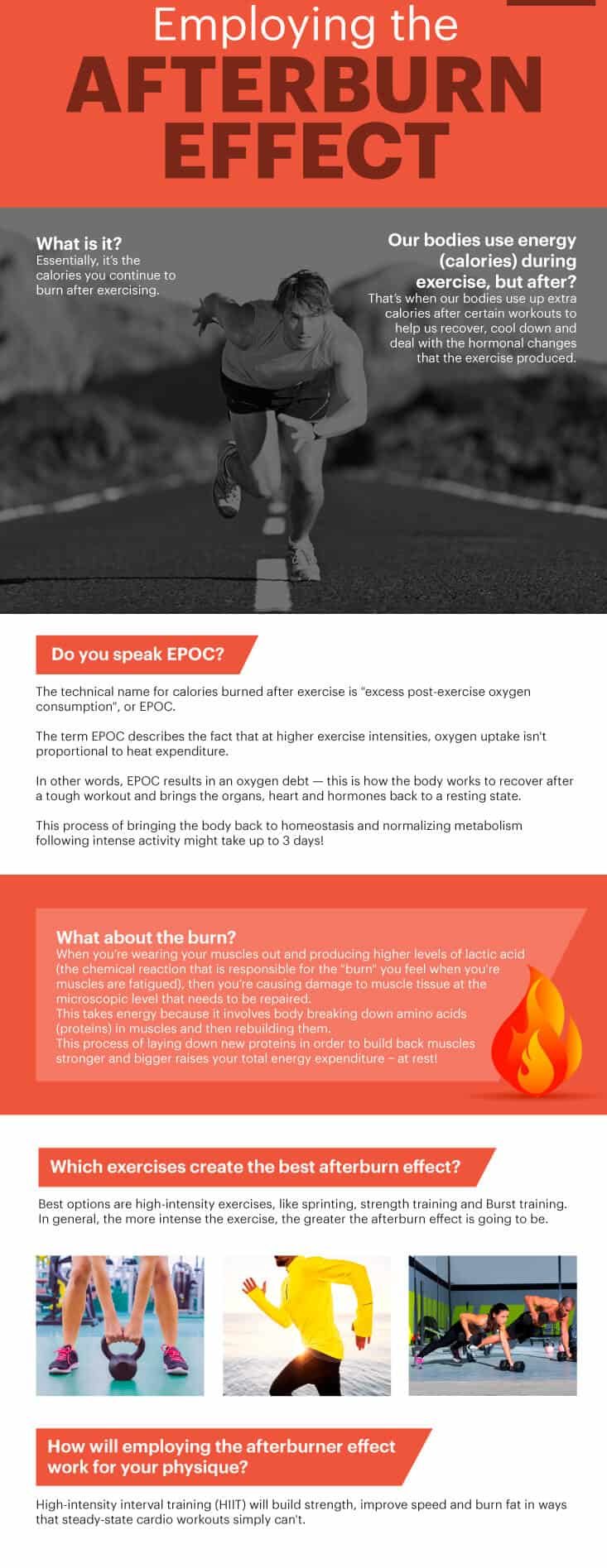
The magic behind every effective HIIT cardio workout for weight loss is called EPOC, or Excess Post-Exercise Oxygen Consumption. During intense intervals, your body creates an oxygen deficit by working anaerobically. Afterward, it works overtime to restore balance, repairing tissues and replenishing energy stores.
This recovery process burns extra calories for up to 24 hours post-workout. Research shows EPOC can boost post-exercise calorie burn by 6–15%. A 20-minute HIIT session can match the calorie burn of a 40–60 minute steady-state jog.
HIIT vs. Steady-State Cardio: The Clear Winner for Fat Loss
| Factor | HIIT | Steady-State Cardio |
|---|---|---|
| Session Duration | 10–30 minutes | 40–60+ minutes |
| Calorie Burn Per Minute | High | Moderate |
| Post-Workout Burn | Significant (EPOC) | Minimal |
| Muscle Preservation | High | Risk of loss |
| Insulin Sensitivity | Sharply improved | Mild improvement |
HIIT burns 25–30% more calories than traditional cardio in the same timeframe. It also targets visceral fat, the dangerous belly fat linked to metabolic disease, even when the scale barely moves.
Hormones That Supercharge Fat Burning
High-intensity efforts trigger powerful hormonal shifts:
– Adrenaline and Noradrenaline: Mobilize stored fat for energy.
– Human Growth Hormone (HGH): Increases fat oxidation and protects lean muscle.
– Improved Insulin Sensitivity: Helps regulate blood sugar and prevents fat storage.
These hormonal responses make HIIT uniquely effective for changing your body composition, losing fat while keeping muscle intact.
Ready-to-Use HIIT Cardio Workouts for Weight Loss
10-Minute Beginner HIIT Routine
This starter workout builds endurance and teaches proper pacing. Complete it three times per week to build a foundation.
Structure: 30 seconds work / 15 seconds rest
- Jumping Jacks – 30s (Modification: step side-to-side, arms overhead)
- Squat Jumps or Bodyweight Squats – 30s (Keep back straight, knees over toes)
- High Plank Hold – 30s (Engage core, avoid sagging hips)
- High Knees – 30s (Drive knees to chest, pump arms)
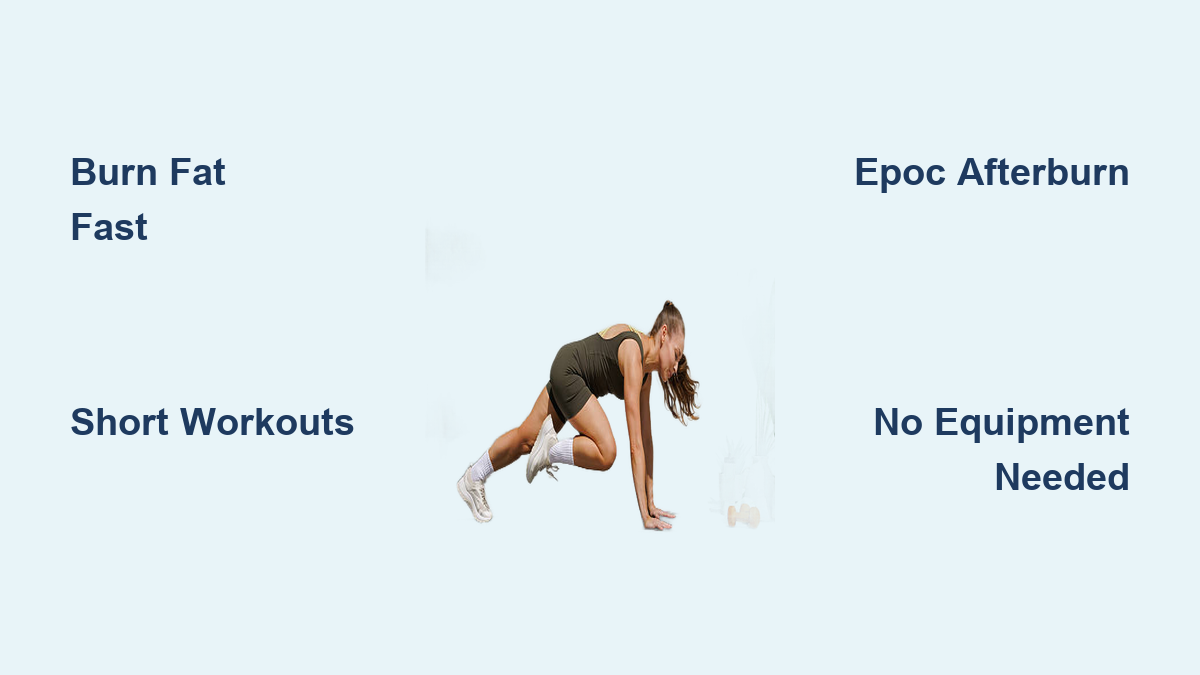
- Mountain Climbers – 30s (Keep hips level, move with control)
- Reverse Lunges – 30s (Step back, lower knee gently)
- Modified Burpees – 30s (Step back, skip the push-up and jump)
- Plank Shoulder Taps – 30s (Tap shoulders without rocking hips)
- Speed Skaters (No Jump) – 30s (Step side, cross leg behind, touch floor)
- Squat Jacks – 30s (Stay low, jump feet in and out)
Rest 1–2 minutes after the circuit. Repeat 1–2 times.
Pro Tip: Consistency beats intensity when starting out. Focus on completing three sessions per week before pushing harder.
10-Minute Low-Impact HIIT (Joint-Friendly)
Perfect for beginners, older adults, or anyone with knee or joint concerns. This routine still elevates your heart rate for fat burning.
Structure: 20 seconds work / 10 seconds rest (complete 3 rounds per exercise)
- Squats – Sit hips back, chest up, knees tracking over toes
- Reverse Lunges – Step back, lower slowly, alternate legs
- Inch Worms – Walk hands out to plank, walk back, stand
- Push-Ups – On knees or against a wall, lower chest with control
- Slow Mountain Climbers – Controlled knee drives, steady pace
- Step-Skaters – Lateral step, tap opposite shin, no jumping
Total time: roughly 12 minutes for all three rounds.
Why It Works: Low-impact doesn’t mean low-results. Maintaining elevated heart rate is what drives fat loss.
12-Minute Resistance HIIT (Muscle-Sparing)

This routine combines strength and cardio to preserve muscle while burning fat, helping you avoid the “skinny-fat” look.
Equipment: Dumbbells
Structure: 40 seconds work / 20 seconds rest
Rounds: 2 (add a third round for an 18-minute session)
- Dumbbell Thrusters – Squat into an overhead press
- Renegade Rows – Plank position, row one arm at a time
- Overhead Sit-Up – Hold weight overhead, curl up to seated
- Bicep Curls – Controlled movement, no swinging
- Dumbbell Deadlifts – Hinge at hips, keep back flat
- Wall Sit or Squat Hold – Static hold for 40 seconds
Key Benefit: Strength training during HIIT protects muscle mass while you burn fat in a calorie deficit.
22-Minute Advanced Fat Burner
For experienced athletes seeking maximum metabolic disruption, this routine uses compound movements and plyometrics.
Structure: 20 seconds work / 10 seconds jog rest
Rest 40 seconds between rounds
Complete 3 rounds per block
Block 1 – Full Body Power
– Pop Squats
– Downward Dog Push-Ups
– Lateral Lunges
– Push-Up Rotation
– Burpees
Block 2 – Core Blast
– Leg Lowers
– Russian Twists
– Hollow Holds
– Sit-Ups
– Bicycle Crunches
Block 3 – Explosive Finisher
– Squat Jumps
– Plank Shoulder Taps
– Plyo Lunges
– Sprawls
Estimated calorie burn: 250–350+ calories in 22 minutes.
Proper Form and Smart Modifications

Mastering High-Intensity Moves Safely
Poor form leads to injuries and reduced results. Follow these cues for the most demanding exercises.
Burpees
- Correct Form: Squat, hands down, jump back to plank, optional push-up, jump feet in, explosive jump up
- Avoid: Sagging hips, flared elbows, stiff-legged landings
- Modification: Step back and forward, skip the push-up or vertical jump
Jumping Lunges
- Execution: Lunge, explode upward, switch legs mid-air, land softly
- Safety Cue: Land with bent knees and hips back
- Modification: Regular alternating lunges without the jump
Mountain Climbers
- Form Tip: Keep hips low, core tight, shoulders over wrists
- Common Mistake: Letting your butt rise reduces core engagement
- Modification: Slow your pace or march in place
Dumbbell Thrusters
- Sequence: Squat with weights at shoulders, stand, press overhead
- Watch For: Arching your lower back during the press
- Modification: Use lighter weights or perform a bodyweight squat with arm raise
Golden Rule: Form always comes before speed. If your technique breaks down, reduce intensity immediately.
How Often Should You Do HIIT for Weight Loss?
Optimal Frequency: 2–3 Sessions Per Week
More is not better when it comes to HIIT. This training style places heavy stress on your nervous system and joints. Doing it daily spikes cortisol, a stress hormone linked to belly fat storage and poor recovery.
Recommended Weekly Structure:
– 2–3 HIIT sessions (10–25 minutes each)
– 2–3 strength training sessions (full body or split routine)
– 1–2 active recovery days (walking, stretching, yoga)
– 1 full rest day
Example Weekly Schedule:
– Monday: HIIT
– Tuesday: Strength training
– Wednesday: Walk and stretch
– Thursday: HIIT
– Friday: Strength training
– Saturday: Light activity or yoga
– Sunday: Rest
Warm-Up and Cool-Down Essentials
5-Minute Dynamic Warm-Up (Before Every Session)
Skipping your warm-up increases injury risk. Use these moves to prep your body:
- March in Place – 30 seconds
- Arm Circles – 30 seconds (forward and backward)
- Leg Swings – 30 seconds per leg (front-to-back and side-to-side)
- High Knees – 30 seconds
- Bodyweight Squats – 30 seconds
- Inch Worms – 30 seconds
5-Minute Cool-Down (After HIIT)
Bring your heart rate down gradually and speed recovery:
- Slow Walk – 2 minutes
- Standing Quad Stretch – 30 seconds per leg
- Hamstring Stretch – 30 seconds
- Chest Opener – 30 seconds
- Child’s Pose – 1 minute
Bonus Tip: Foam roll tight areas like quads, glutes, and back the following day to reduce soreness.
Who Should Approach HIIT With Caution?
HIIT is powerful, but it isn’t right for everyone. Consult a doctor before starting if you have:
- Heart disease or uncontrolled high blood pressure
- Type 2 diabetes, especially if you use insulin
- Joint injuries affecting knees, hips, or back
- Recent surgery or a history of prolonged inactivity
Safer Alternatives:
– Brisk walking intervals (3 minutes fast, 1 minute slow)
– Cycling with resistance changes
– Water aerobics
Rule of Thumb: During work intervals, you should struggle to speak more than a few words. During recovery, you should be able to chat briefly.
Nutrition: The Partner HIIT Can’t Work Without
A HIIT cardio workout for weight loss cannot outrun a poor diet. Fat loss requires a calorie deficit, meaning you burn more than you consume.
How HIIT Fits Into Your Fat Loss Plan:
- Increases “calories out” through EPOC and muscle preservation
- Improves insulin sensitivity to reduce fat storage
- Boosts motivation with short, rewarding sessions
Dietary Tips to Maximize Your Results:
- Track Calories Temporarily: Use an app to confirm you’re in a deficit.
- Prioritize Protein: Aim for 1.6–2.2g per kilogram of body weight to protect muscle.
- Limit Ultra-Processed Foods: Cut sugary snacks, fast food, and sodas.
- Stay Hydrated: Dehydration mimics fatigue and slows your metabolism.
- Time Carbs Around Workouts: Eat complex carbs like oats or sweet potatoes before or after HIIT sessions.
Myth Buster: You don’t need a post-workout shake. A balanced meal within 1–2 hours is enough.
What HIIT Can and Cannot Do for You
What HIIT Will Deliver:
- Significant calorie burn in minimal time
- Reduced waist circumference and visceral fat
- Improved cardiovascular fitness and insulin response
- Fat loss while preserving lean muscle
What HIIT Won’t Do:
- Spot-reduce belly fat (genetics determine fat loss patterns)
- Replace dedicated strength training for muscle growth
- Compensate for poor eating habits
- Work if done daily (overtraining stalls progress)
Bottom Line: HIIT is a powerful tool, not a magic solution. Combine it with smart nutrition and strength training for the best results.
Frequently Asked Questions About HIIT Cardio Workouts for Weight Loss
How many calories does a 20-minute HIIT workout burn?
A 20-minute HIIT session typically burns 250–350+ calories during the workout itself. Thanks to EPOC, your body continues burning extra calories for up to 24 hours afterward, increasing total calorie expenditure by 6–15% above your resting baseline.
Can beginners do HIIT for weight loss?
Yes, beginners can safely do HIIT by starting with low-impact modifications and a 1:1 work-to-rest ratio (such as 20 seconds work, 20 seconds rest). Progress gradually by increasing work intervals or reducing rest as your fitness improves.
Is HIIT better than running for losing belly fat?
HIIT is more time-efficient for reducing total and visceral belly fat compared to steady-state running. Research shows HIIT burns 25–30% more calories in the same timeframe and triggers a significant afterburn effect that running does not.
How long until I see results from HIIT workouts?
Most people notice improved fitness and energy levels within 2–3 weeks. Visible fat loss typically appears within 4–8 weeks when HIIT is combined with a calorie deficit and strength training. Consistency matters more than perfection.
Should I do HIIT every day for faster weight loss?
No. Doing HIIT daily spikes cortisol, increases injury risk, and can stall fat loss. Stick to 2–3 sessions per week with rest days in between for optimal recovery and results.
Do I need equipment for a HIIT cardio workout?
No equipment is required. Bodyweight HIIT workouts using moves like squats, jumping jacks, mountain climbers, and burpees are highly effective for fat loss. Dumbbells or kettlebells can add resistance for muscle preservation.
Final Thoughts on HIIT Cardio Workouts for Weight Loss
A well-designed HIIT cardio workout for weight loss delivers unmatched efficiency, burning fat, boosting metabolism, and preserving muscle in just minutes a day. The science is clear: short bursts of intense effort trigger hormonal and metabolic changes that steady-state cardio simply cannot match.
The real secret is consistency. Start with one 10-minute beginner session this week. Build from there. Over time, HIIT becomes a sustainable habit that fuels lasting fat loss and better health, without demanding hours of your day.
Your next step: Pick one routine from this guide and schedule it for tomorrow. Three sessions this week is all it takes to begin transforming your body.