HIIT Cardio Training on Treadmill Guide
You’re short on time but want maximum fat burn, better endurance, and improved heart health. Enter HIIT cardio training on treadmill, a scientifically backed, high-impact approach that delivers more results in less time than traditional steady-state cardio. Whether you’re a beginner or advanced, the treadmill offers precise control over speed and incline, making it one of the most effective tools for high-intensity interval training.
HIIT cardio training on treadmill alternates short bursts of near-maximum effort with active recovery periods. Research shows it boosts VO₂max faster than moderate cardio, increases calorie burn long after the workout ends, and improves insulin sensitivity. A 2010 University of New South Wales study found women doing HIIT lost significantly more subcutaneous fat than those doing steady cardio, even with less total exercise time.
This guide breaks down everything you need: how to structure workouts by fitness level, customize intensity, avoid injury, and get the most from your treadmill. You’ll learn proven routines, gear essentials, and science-backed tips to make every session count.
Warm Up Properly Before Intervals
Skipping warm-up before HIIT increases injury risk and reduces performance. A proper warm-up readies your cardiovascular system, loosens joints, and primes muscles for explosive movement.
Start With Light Movement
Begin with 3 to 10 minutes of walking or slow jogging at 3.0 to 3.5 mph. This gradually elevates heart rate and blood flow to working muscles. For beginners or high-intensity plans, extend to 5 to 10 minutes.
Add Dynamic Stretches
After initial walking, perform dynamic movements for 2 to 3 minutes:
- Leg swings (front-to-back and side-to-side): 10 per leg
- Walking lunges: 10 steps
- Butt kicks: 20 reps
- High knees in place: 20 seconds
- Hip circles: 10 each direction
Avoid static stretching before HIIT, as it can reduce power output. Save deep stretches for the cool-down.
Structure Work Intervals for Maximum Impact
The work phase is where transformation happens. This is when you push to 80 to 95% of your max effort, triggering metabolic and cardiovascular adaptations.
Set Correct Intensity
Your pace should feel challenging, breathless but controlled. You should not be able to speak in full sentences. Use perceived exertion (8 to 9 out of 10) over strict speed targets, as treadmill calibration varies.
Key form cues:
- Look forward, not down
- Keep back straight, core engaged
- Swing arms naturally
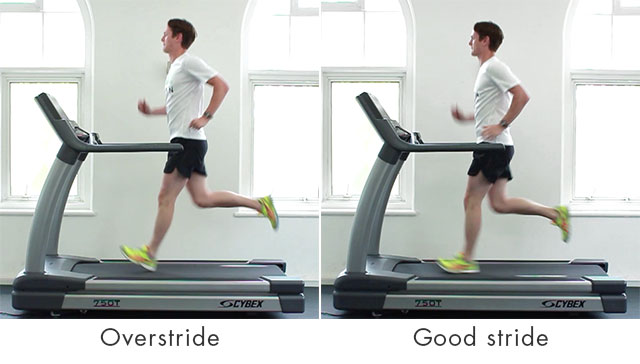
- Land mid-foot, not on heels
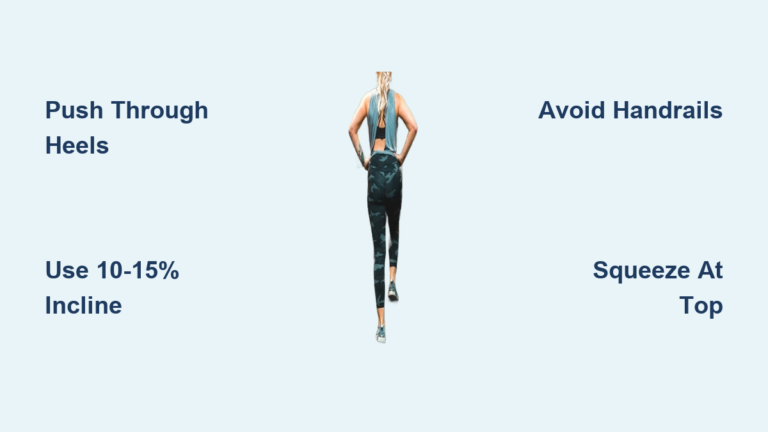
- Never grip handrails, as this reduces effort and distorts running mechanics
If balance requires holding on, reduce speed or incline.
Choose Interval Duration
Work intervals typically last:
- Beginners: 20 to 30 seconds
- Intermediate: 30 to 60 seconds
- Advanced: 60 to 90 seconds
Use shorter bursts for sprints, longer ones for incline climbs. Push hard, but stop before total exhaustion to maintain form.
Optimize Recovery to Sustain Performance
Recovery intervals allow partial restoration so you can repeat high-quality efforts. Skipping recovery defeats HIIT’s purpose.
Use Active Recovery
Stay moving with a brisk walk (3.0 to 3.5 mph) or easy jog (4.0 to 4.5 mph). Passive recovery (standing) increases stiffness and reduces circulation.
Time Recovery Correctly
Match or slightly exceed work duration early on:
- Beginner ratio: 1:2 (e.g., 30s sprint, 60s walk)
- Intermediate: 1:1 (e.g., 45s sprint, 45s jog)
- Advanced: 2:1 (e.g., 60s sprint, 30s walk)
Heart rate should drop to 50 to 65% of max by the end of recovery. Aim for a perceived exertion of 3 to 4 out of 10.
Customize Workouts by Fitness Level

Tailor your HIIT treadmill sessions to match your current ability. Progress gradually to avoid burnout and injury.
Beginner: Build Endurance Safely
Start with moderate effort and longer recovery. Focus on consistency, not speed.
Sample Routine (20 Minutes Total):
- Warm-up: 5 min walk (3.0 mph)
- Intervals: 6 rounds of:
- 1 min jog (5.0 to 5.5 mph)
- 2 min walk (3.0 to 3.5 mph)
- Cool-down: 4 min walk with static stretching
Tips:
- Use flat or 1 to 2% incline
- Increase work time or reduce rest weekly
- Limit sessions to 2x/week
Intermediate: Add Incline and Speed
Introduce resistance and faster paces to boost power and calorie burn.
Sample Routine (22 Minutes Total):
- Warm-up: 5 min light jog (5.0 mph)
- Intervals: 8 rounds of:
- 1 min at 4.5 mph, 8% incline
- 1 min at 3.5 mph, 2% incline
- Cool-down: 5 min walk
Tips:
- Alternate flat sprints and hill climbs
- Try pyramid or escalating effort formats
- Train 2 to 3x/week with rest days
Advanced: Maximize Power Output
Push limits with high speeds, steep inclines, and minimal recovery.
Sample Routine (25 Minutes Total):
- Warm-up: 3 min base jog (6.0 mph)
- Intervals: 5 rounds of:
- 90s sprint at 8.0 to 9.0 mph, 6% incline
- 2 min recovery at 3.5 mph, 0% incline
- Cool-down: 5 min walk and stretch
Tips:
- Use perceived effort (80 to 90% max) over numbers
- Try “base pace recovery” instead of walking
- Limit to 3x/week max
Try Proven HIIT Treadmill Variations
Mix up your routine to stay motivated and target different fitness goals.
Sprint Interval Blast
Build speed and cardiovascular power.
- 30s all-out sprint (8 to 10 mph)
- 90s walk recovery (3.0 mph)
- Repeat 8 to 10 times
- Total high-intensity time: ~5 minutes
Best for: Fat loss, anaerobic capacity
Incline Climber
Low-impact, joint-friendly, glute-focused.
- 1 min walk/jog at 4.0 mph, 10 to 15% incline
- 2 min walk at 3.0 mph, 0% incline
- Repeat 6 to 8 times
Best for: Strength endurance, stair climbing ability
Pyramid Intervals
Mental challenge with progressive load.
- 30s work → 1min → 1.5min → 2min → 1.5min → 1min → 30s
- Equal recovery at each stage
- Intensity: 6 to 8 mph or high incline
Best for: Focus, pacing, aerobic development
Escalating Effort
Ideal for intermediate transition.
- 1 min moderate jog (60 to 70% effort)
- 1 min fast jog/sprint (80 to 90% effort)
- 2 min slow walk
- Repeat 4 to 6 times
Best for: Building work capacity
Full-Body Hybrid
Combine cardio and strength.
- 30s high knees on treadmill (step off or straddle belt)
- 10s walk rest
- Repeat 5x
- Add push-ups or squats off-treadmill between sets
Best for: Total-body conditioning
Track Performance With Key Metrics
Monitor progress to stay motivated and adjust training.
Use Heart Rate Zones
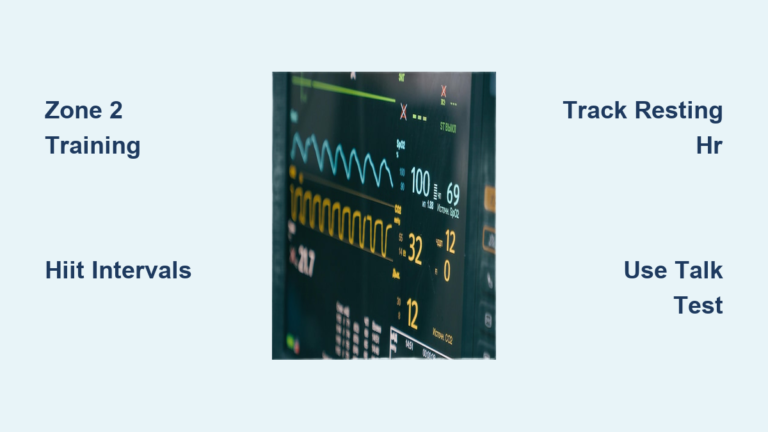
- High-intensity target: 80 to 95% of max heart rate
- Recovery zone: 50 to 65% of max
- Max HR estimate: 220 minus age (use as guide)
Pair data with perceived exertion; your body knows effort better than a monitor.
Log Speed and Incline
Track weekly:
- Max sprint speed achieved
- Longest interval sustained
- Highest incline used
- Perceived effort (1 to 10 scale)
Goal: Gradually increase one variable each week.
Measure Session Duration
Keep high-intensity work between 15 and 30 minutes. More isn’t better; overtraining leads to injury.
Choose the Right Treadmill and Gear

Your equipment affects safety, performance, and long-term results.
Pick a Treadmill for HIIT
Motorized Treadmills:
- Look for 3.0+ CHP motor for durability
- Quick speed/incline adjustment buttons
- Emergency stop clip required
Curved/Manual Treadmills (e.g., REP Strive™):
- No motor; belt moves only when you do
- More natural sprinting motion
- Higher effort at lower speeds
- Ideal for athletic power training
Smart Treadmills (NordicTrack, iFIT):
- Auto-adjust speed/incline
- Guided HIIT programs
- Scenic routes boost engagement
- Subscription may be required
Wear Proper Running Shoes
Choose lightweight, breathable shoes with:
- Arch support
- Heel cushioning
- Traction to prevent slipping
- Energy return for rebound
Replace every 300 to 500 miles.
Dress for Performance
- Clothing: Moisture-wicking fabric (polyester, nylon)
- Socks: Grippy, breathable athletic socks
- Headband/Hat: To keep sweat out of eyes
- Sports Bra (Women): High-impact support essential
Prevent Injury and Overtraining
HIIT is demanding. Respect recovery to stay safe and consistent.
Maintain Perfect Form
Breakdown leads to strain. Watch for:
- Leaning forward or backward
- Overstriding (landing heel-first)
- Holding handrails
- Shuffling instead of lifting knees
If form slips, reduce intensity immediately.
Limit HIIT Frequency
Do 2 to 3 HIIT sessions per week, with at least one rest day between. More increases injury and burnout risk.
Use other days for:
- Steady-state cardio
- Strength training
- Active recovery (walking, yoga)
Recognize Pain vs. Discomfort
Discomfort (heavy breathing, burning legs) is normal. Sharp pain is not. Stop immediately if you feel:
- Joint pain
- Side stitches that don’t resolve
- Dizziness or nausea
Hydrate well and consult a doctor if pain persists.
Fuel and Hydrate for HIIT Success
Your body needs proper support to perform and recover.
Stay Hydrated
Dehydration increases perceived effort and reduces performance. Drink:
- 16 to 20 oz water 1 to 2 hours before
- 7 to 10 oz every 10 to 20 minutes during
- Replenish with electrolytes if workout exceeds 45 minutes
Eat for Energy and Recovery
- Pre-workout (1 to 2 hours): Carb + protein (e.g., banana with peanut butter)
- Post-workout (within 45 min): 3:1 carbs to protein (e.g., protein shake + fruit)
Avoid heavy meals right before HIIT.
Cool Down and Stretch Fully
The cool-down helps your body transition to rest and speeds recovery.
Walk to Normalize Heart Rate
Spend 5 to 10 minutes walking at 2.5 to 3.5 mph. Breathing and heart rate should return to near-resting levels.
Perform Static Stretches
After stepping off, hold each stretch 20 to 30 seconds:
- Calf stretch: Against wall, back leg straight
- Quad stretch: Standing, pull heel to glute
- Hamstring stretch: Seated, reach for toes
- Hip flexor stretch: Low lunge position
- Shoulder rolls: Forward and backward
This reduces soreness and improves flexibility.
Maximize Results With Smart Habits

Turn your HIIT treadmill workouts into lasting progress.
Focus on Effort, Not Speed
Treadmill speeds vary. A 7.0 mph sprint on one machine may feel like 8.0 on another. Train by feel (8 to 9 out of 10 effort), not numbers.
Increase Intensity Gradually
Use the 10% rule: Don’t increase total work volume (time, speed, or incline) by more than 10% per week.
Use Automated Programs
If your treadmill has iFIT, Peloton, or preset HIIT modes, use them. They adjust speed and incline automatically, letting you focus on effort.
Combine With Strength Training
HIIT burns fat; strength builds muscle. Pair them for a leaner, stronger physique. Example weekly split:
- Mon: HIIT treadmill
- Tue: Lower-body strength
- Wed: Rest or walk
- Thu: HIIT or upper-body strength
- Fri: Full-body strength
- Sat: Long walk or yoga
- Sun: Rest
Frequently Asked Questions About HIIT Cardio Training on Treadmill
How Often Should You Do HIIT on a Treadmill Each Week?
Most experts recommend 2 to 3 HIIT sessions per week with at least one rest day between sessions. This frequency allows adequate recovery while delivering consistent fitness gains. Going beyond 3 sessions increases the risk of overtraining and injury.
Is HIIT on a Treadmill Better Than Steady-State Cardio?
HIIT is more time-efficient and produces greater improvements in VO₂max and post-exercise calorie burn (EPOC effect). However, steady-state cardio remains valuable for building an aerobic base and active recovery. Many fitness programs combine both for optimal results.
What Is a Good HIIT Treadmill Workout for Beginners?
A beginner routine includes a 5-minute warm-up walk, 6 rounds of 1-minute jogging (5.0 to 5.5 mph) alternated with 2 minutes of walking (3.0 to 3.5 mph), and a 4-minute cool-down. This totals about 20 minutes and builds endurance safely.
Why Should You Avoid Holding the Handrails During HIIT?
Gripping the handrails reduces the actual effort your body experiences, alters your running mechanics, and decreases calorie burn. If you need to hold on for balance, the speed or incline is too high and should be reduced immediately.
Can Seniors Benefit From Treadmill HIIT?
Yes. Mayo Clinic research found HIIT can reverse some age-related muscle deterioration in adults over 65. Seniors should use low-impact variations like incline walking rather than sprinting, and consult a doctor before starting.
What Speed and Incline Should Beginners Use?
Beginners should start with walking speeds of 3.0 to 3.5 mph and jogging speeds of 4.5 to 5.5 mph on flat surfaces or a slight incline up to 2%. Focus on perceived effort rather than fixed numbers.
Key Takeaways for Your HIIT Treadmill Journey
HIIT cardio training on treadmill is one of the most efficient ways to improve fitness, burn fat, and boost heart health. With just 20 minutes, 2 to 3 times a week, you can achieve more than hours of steady cardio. Start at your current fitness level, prioritize proper form, track your progress, and let effort, not ego, guide your pace.
Whether you’re using a basic treadmill or a high-tech model with automated programming, consistency is the foundation of lasting results. Pick one beginner routine from this guide, commit to it for two weeks, and log your perceived exertion after each session. Once it starts feeling easier, increase one variable (speed, incline, or interval length) by no more than 10%. Stick with it, and you’ll see real results: faster runs, better endurance, and more energy every day.