Dumbbell Cardio Exercises Guide
You’re short on time but want a workout that torches calories, builds muscle, and boosts heart health. Enter dumbbell cardio exercises—a high-intensity, full-body fusion of strength and cardiovascular training that delivers maximum results in minimal time. Unlike long treadmill sessions, these workouts use resistance to spike your heart rate, keep it elevated, and trigger the afterburn effect (EPOC), where your body continues burning fat for up to two hours post-exercise.
Dumbbell cardio blends metabolic conditioning with functional movements. By performing compound lifts in rapid succession with minimal rest, you challenge both muscular endurance and cardiovascular stamina. Whether you’re working out at home or in a gym, all you need is a set of dumbbells and a timer. This guide breaks down the best exercises, proven workout structures, and smart scaling tips so you can start building a stronger, leaner body—fast.
Circuit Timer Method (AMRAP Style)
This high-octane format keeps your heart racing while building total-body strength through non-stop movement.
How to Structure the Workout
Choose 10 exercises that target different muscle groups including legs, core, push, and pull. Set a timer for 60 seconds per exercise and perform as many reps as possible (AMRAP). Rest only 5 seconds between movements before starting the next. Complete all 10 exercises to finish one round; aim for 2–3 rounds total.
For a slightly less intense version, use a 45-second work / 15-second rest interval. This gives more recovery but still maintains metabolic pressure. Both formats are ideal for fat loss and endurance gains.
Why It Works
The short rest prevents full recovery, forcing your heart and lungs to work harder. As fatigue builds, your body recruits more energy systems, exactly what you want for fat-burning and conditioning. The AMRAP style also creates natural progression: the more reps you log over time, the fitter you become.
Pro Tip: Lay out multiple dumbbell pairs before starting. Use heavier weights for squats and deadlifts, lighter ones for curls and lateral raises.
Sample 10-Exercise Circuit
- Goblet Squat
- Dumbbell Romanian Deadlift
- Alternating Reverse Lunge
- Dumbbell Floor Press
- Bent-Over Row
- Single Arm Overhead Press
- Devil’s Press
- Mountain Climber
- Dumbbell Russian Twist
- Plank (hold)
Perform each for 60 seconds, rest 5 seconds, move to next. Repeat 2–3 times.
EMOM Protocol for Power & Pace
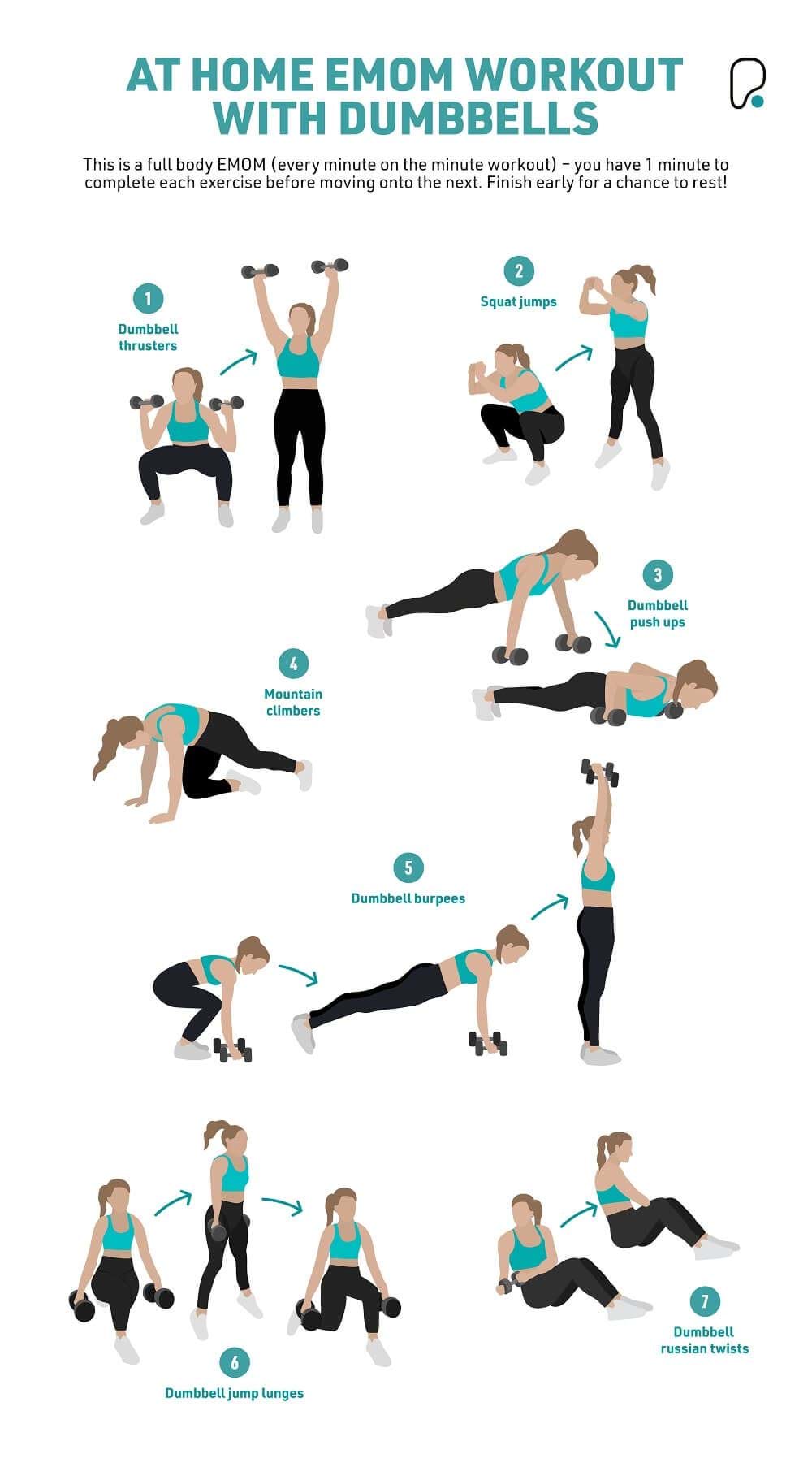
This method builds consistency, power output, and pacing while keeping your heart in the fat-burning zone.
What Is EMOM?
EMOM stands for Every Minute On the Minute. At the start of every minute, you perform a fixed number of reps (e.g., 10–12). Whatever time remains is yours to rest. If you finish fast, you get more recovery. If you’re slow, you’ll be working into the next minute, intensifying the challenge.
How to Apply It
Split your workout into two 6-exercise circuits. Perform 2 rounds of each circuit using EMOM timing. After finishing the last rep of the first circuit, rest 2 minutes before beginning the second.
Example:
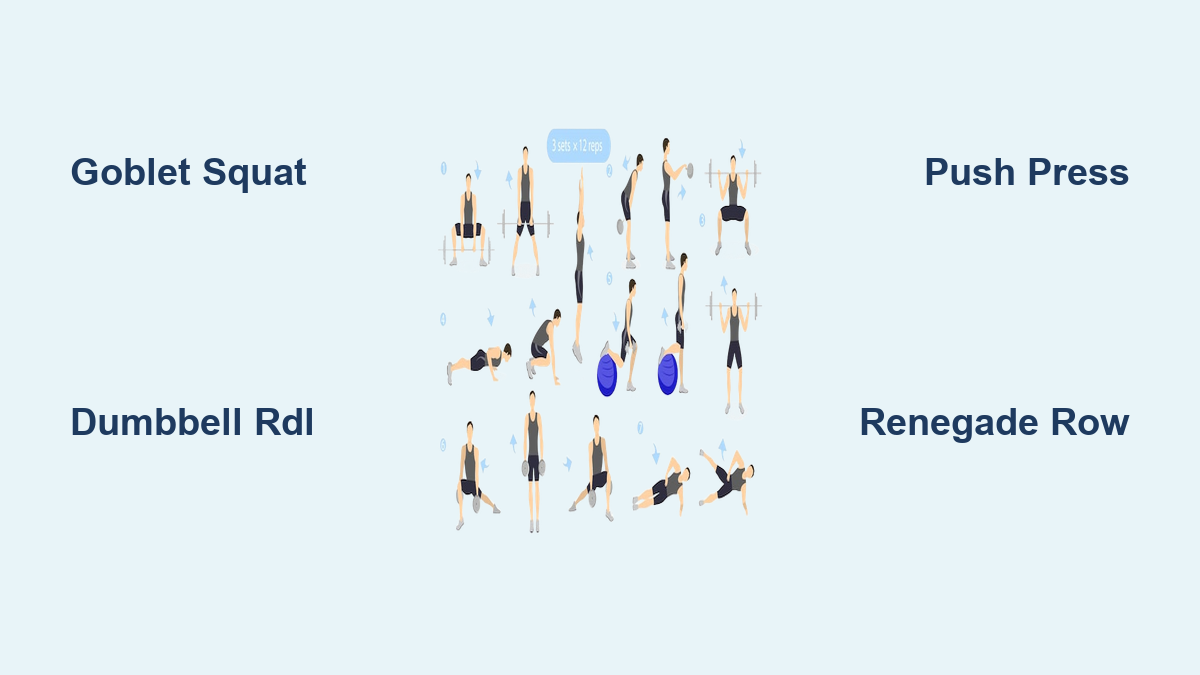
At 0:00 – 10 Goblet Squats
At 1:00 – 10 Push Presses
At 2:00 – 10 RDLs
Continue this pattern through all exercises.
Benefits Over Traditional Circuits
EMOM enforces rhythm and quality. Since you must complete reps on time, it discourages sloppy form. But if you’re efficient, you earn rest, rewarding speed and control. This balance makes EMOM perfect for intermediate to advanced lifters.
Warning: Don’t sacrifice form for speed. If your back rounds or knees cave, reduce the weight.
Rotational Minute Method for Focus

This streamlined format sharpens technique and builds stamina with precision.
How It Works
Select 5 exercises. At the top of every minute, perform exactly 10 reps of the current movement. Rest for the remainder of the minute. Rotate through all 5 moves to complete one round. Repeat for 4–6 rounds.
Because the rep count is fixed, the focus shifts from volume to control and pacing. Use challenging weights, ones that make 10 reps feel tough but doable within 20–30 seconds.
Ideal Exercise Pairings
- Goblet Squat
- Dumbbell Push Press
- Bent-Over Row
- Dumbbell Skier Swing
- V-up (with or without dumbbell)
This combo hits legs, shoulders, back, core, and cardio in under 30 minutes.
Who Should Use It?
Beginners can use lighter weights to learn movement patterns. Advanced users can increase load or reduce rest by boosting reps to 12–15. The structure supports both strength and endurance goals.
Best Lower Body Dumbbell Moves
These exercises drive major calorie burn by engaging large muscle groups.
Goblet Squat
Hold one dumbbell vertically against your chest. Feet shoulder-width apart, toes slightly out. Squat deep with hips below knees, keeping chest up and heels down. Drive through the heels to stand.
Form Cue: Imagine sitting back into a chair. Keep elbows inside knees as you descend.
Use this as a warm-up or strength builder. It’s joint-friendly and teaches proper squat mechanics.
Curtsy Lunge
Hold one dumbbell at chest level. Step one leg diagonally behind the other into a lunge, lowering until the back knee nearly touches the floor. Return to start and alternate.
This move targets glutes and hips more than standard lunges. It’s great for sculpting lower body curves.
Dumbbell Romanian Deadlift (RDL)
Stand with two dumbbells in front of thighs. Hinge at hips, pushing butt back. Lower weights down legs while keeping back flat. Feel the stretch in hamstrings. Squeeze glutes to return.
Avoid: Bending knees too much (turns it into a squat) or rounding the spine.
This move strengthens posterior chain and improves deadlift form, which is critical for injury prevention.
Split Jump (Jump Lunge)
Start in a staggered stance. Lower into a lunge, then explode upward, switching legs mid-air. Land softly with opposite leg forward.
This adds plyometric power to leg training. It boosts agility and cardiovascular demand instantly.
Modification: Perform without weights if coordination is an issue.
Upper Body Pushing Exercises
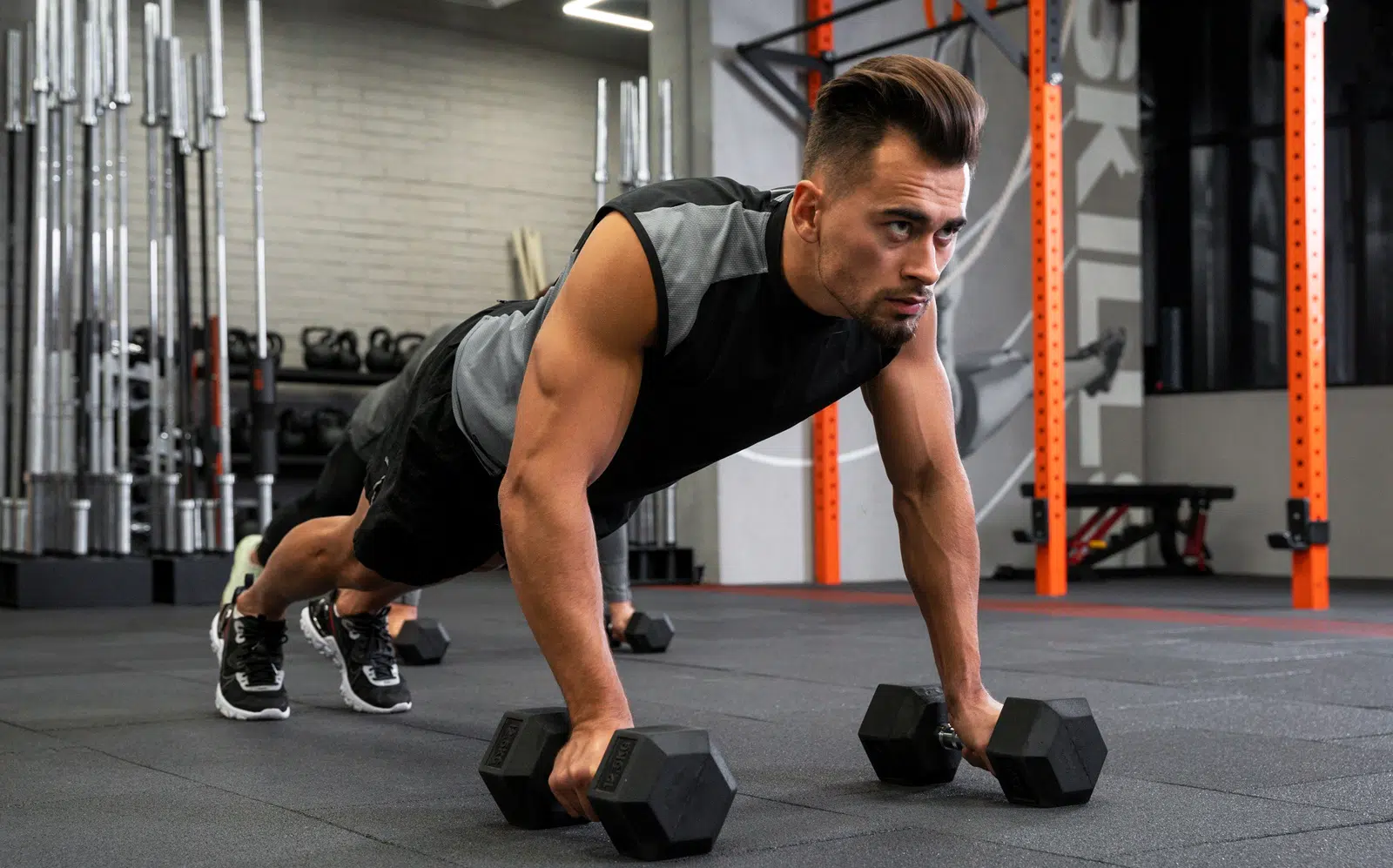
These moves build chest, shoulders, and triceps while spiking heart rate.
Dumbbell Push Press
Hold dumbbells at shoulder height. Dip knees slightly, then drive upward, using leg momentum to press weights overhead. Lock arms at the top, lower under control.
This is more powerful than a strict press and ideal for metabolic circuits.
Key: Don’t arch your lower back. Keep ribs down.
Floor Press
Lie on your back, knees bent, feet flat. Press dumbbells straight up from chest level. Lower until upper arms touch the floor, then press back up.
The shorter range than bench press makes this safer for shoulders and great for home workouts.
Renegade Pushup
Place hands on dumbbells in plank position. Perform a pushup, then row one dumbbell to your side. Lower and repeat on the other side.
This is a full-body burner that works chest, back, core, and cardio simultaneously.
Challenge: Keep hips stable with no twisting.
Upper Body Pulling Exercises
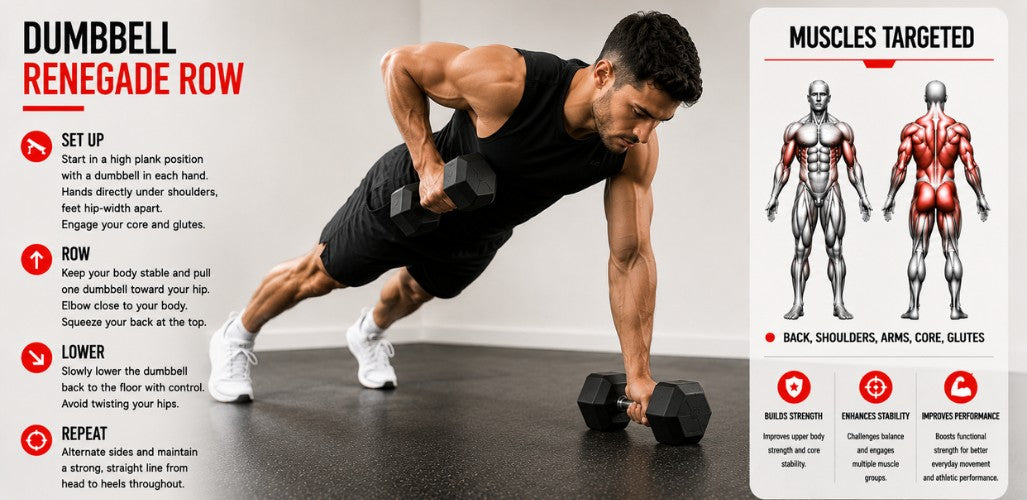
Pulling movements balance pushing work and protect shoulder health.
Bent-Over Row
Stand with dumbbells, hinge at hips to 45 degrees. Pull weights to lower ribs, squeezing shoulder blades. Lower slowly.
This engages lats, rhomboids, and rear delts, which are key for posture and back definition.
Avoid: Jerking the weight or using momentum.
Renegade Row
Same setup as renegade pushup. From plank, row one dumbbell to the hip, keeping hips square. Alternate sides.
This delivers superior core activation. It’s one of the best total-body dumbbell moves.
Form Fix: If your hips rotate, reduce the weight or perform standing rows instead.
Core & Dynamic Finishers
These moves amplify intensity and shred belly fat.
Devil’s Press
From standing, place dumbbells down, jump to plank, do a pushup, jump feet back to hands, then press dumbbells overhead.
This is a full-body explosion. Use moderate weights since form breaks down fast when fatigued.
Beginner Option: Skip the jump or press; do a step-back burpee with press.
Dumbbell Skier Swing
Hold two dumbbells, hinge at hips, swing weights between legs. Thrust hips forward to stand, swinging weights up to chest.
This mimics Nordic skiing and is fantastic for hamstrings, glutes, and rhythm.
Mountain Climber
In plank, drive knees toward opposite elbows fast. Keep hips level and core tight.
This elevates heart rate fast. Add dumbbells under hands for extra resistance.
Equipment & Setup Essentials
You don’t need much, just smart preparation.
What You Need
- Dumbbells: Multiple pairs recommended (light to heavy)
- Timer: Phone app, watch, or wall clock
- Mat: For floor work (plank, V-up, floor press)
- Shoes: Stable cross-trainers for jumping and lifting
Space Tip: Clear a 6×6 ft area. Most circuits require no more.
Weight Selection Guide
- Legs (Squats, RDLs): Heavier dumbbells
- Shoulders (Presses, Lateral Raises): Moderate to light
- Arms (Curls, Extensions): Light
If you can breeze through reps with no breathlessness, go heavier. If form fails, go lighter.
Intensity & Progression Tips
Maximize results by training smart, not just hard.
Gauge Your Effort
- Heart Rate: Should be elevated throughout
- Breathing: Fast but controlled; you should be able to speak one word at a time
- Fatigue: Muscles should burn; lungs should work
Warning: Never sacrifice form for speed. Injury kills progress.
Scale Up or Down
Beginner?
– Do 1 round instead of 3
– Increase rest to 10–15 seconds
– Use bodyweight for jumps or burpees
Advanced?
– Add a third round
– Drop rest to 0 seconds (back-to-back)
– Increase reps or weight
Track Progress
Record total reps per circuit weekly. More reps means better conditioning. Over time, you’ll do more work in less time, which is proof of fitness growth.
Safety First: Avoid Injury
Even intense workouts must be safe.
Protect Your Spine
- Keep neutral spine during hinges (RDL, rows)
- Engage core on every rep; imagine bracing for a punch
- Avoid rounding back when fatigued
Shoulder Safety
- Depress shoulders (down and back) during presses and planks
- Don’t lock elbows violently at the top of presses
Control the Eccentric
Lower weights slowly, even in fast circuits. A 2-second descent increases muscle damage and growth.
Breathe Right
- Inhale on lowering phase (e.g., down in squat)
- Exhale on exertion (e.g., standing up or pressing)
Never hold your breath during intense efforts.
Frequently Asked Questions About Dumbbell Cardio Exercises
What are the best dumbbell cardio exercises for fat loss?
The best dumbbell cardio exercises for fat loss combine large muscle groups with minimal rest. Goblet squats, dumbbell Romanian deadlifts, and Devil’s Presses deliver the highest calorie burn. Pair these in circuit or EMOM formats to keep your heart rate elevated for 20–30 minutes.
How long should a dumbbell cardio workout last?
A dumbbell cardio workout should last 20–30 minutes for optimal fat burning and conditioning. This timeframe is long enough to trigger the afterburn effect (EPOC) but short enough to maintain high intensity throughout.
Can beginners do dumbbell cardio exercises?
Yes, beginners can do dumbbell cardio exercises by starting with lighter weights, fewer rounds (1 instead of 3), and longer rest periods (10–15 seconds). Focus on mastering form before increasing intensity or load.
Do dumbbell cardio exercises build muscle?
Yes, dumbbell cardio exercises build and maintain muscle while burning fat. Unlike steady-state cardio, which can cause muscle loss, this modality uses resistance to preserve lean tissue and stimulate growth, especially when you control the eccentric (lowering) phase.
How often should I do dumbbell cardio workouts?
You should do dumbbell cardio workouts 3–4 times per week, with at least one rest day between sessions. This frequency allows for recovery while maximizing fat loss and cardiovascular improvements.
What weight dumbbells should I use for cardio?
You should use lighter dumbbells for isolation moves (curls, lateral raises), moderate weight for presses, and heavier dumbbells for lower body compound moves (squats, RDLs). If you can breeze through reps with no breathlessness, go heavier.
Key Takeaways for Building Your Dumbbell Cardio Routine
Dumbbell cardio exercises are the ultimate time-saver: strength, endurance, and fat loss in one 20–30 minute session. The three proven structures (AMRAP circuits, EMOM pacing, and rotational minutes) offer variety and scalability for any fitness level. The key to success is consistency, smart weight selection, and never sacrificing form for speed.
Start with 2 rounds of the 10-exercise circuit, focus on mastering technique, and gradually increase intensity over time. Pick your structure, choose your moves, grab your dumbbells, and go. Your stronger, leaner body is just 30 minutes away.