Lifting Weights vs Cardio: Which Burns More Calories?
You’re not alone if you’ve ever stood in the gym, dumbbell in one hand and heart rate monitor blinking on the treadmill, wondering which one actually burns more calories. The truth is, the answer isn’t as simple as “cardio wins” or “weights are better.” It depends on when you’re measuring, how long you’re tracking, and what your real goal is, whether that’s quick calorie burn or lasting fat loss.
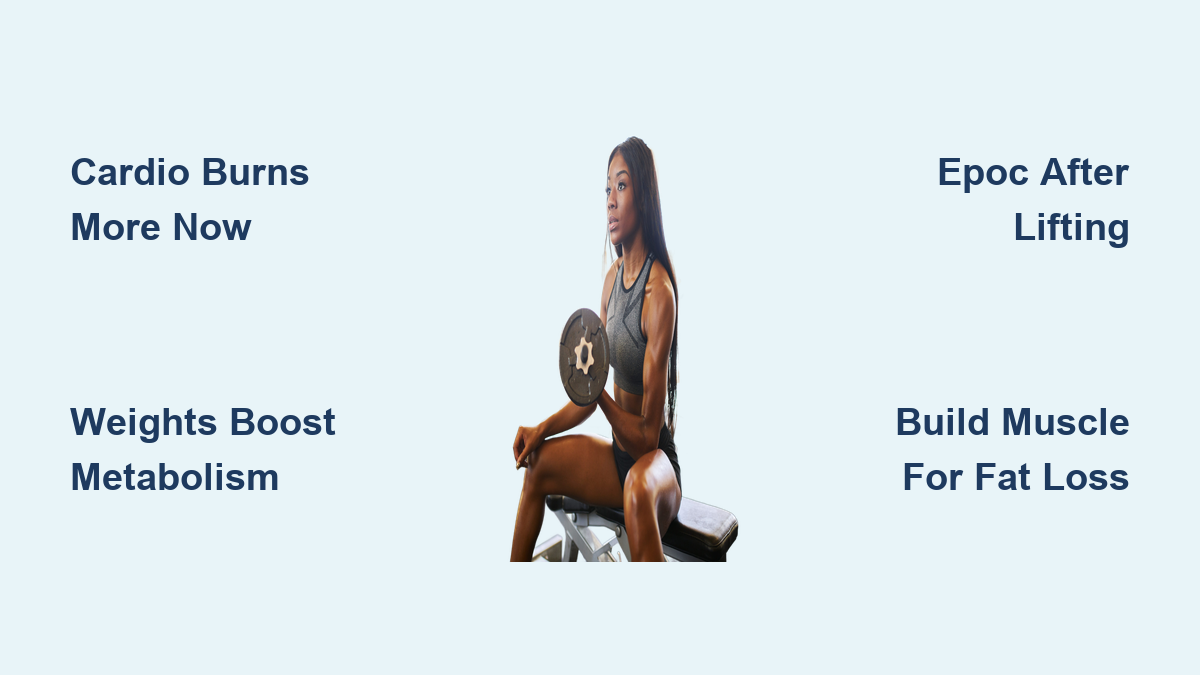
Here is the bottom line: cardio burns more calories during the workout, while lifting weights burns more calories over time. Resistance training reshapes your metabolism, while cardio delivers immediate energy expenditure. This guide breaks down the science so you can choose the right mix of exercise for your body, goals, and lifestyle.
Immediate Calorie Burn: Why Cardio Takes the Lead
When the clock starts, cardio takes the lead. Activities like running, cycling, or rowing keep your heart rate elevated continuously, using oxygen to burn fuel for energy. This sustained effort means more calories burned per minute during the session.
How Cardio Burns Calories Fast
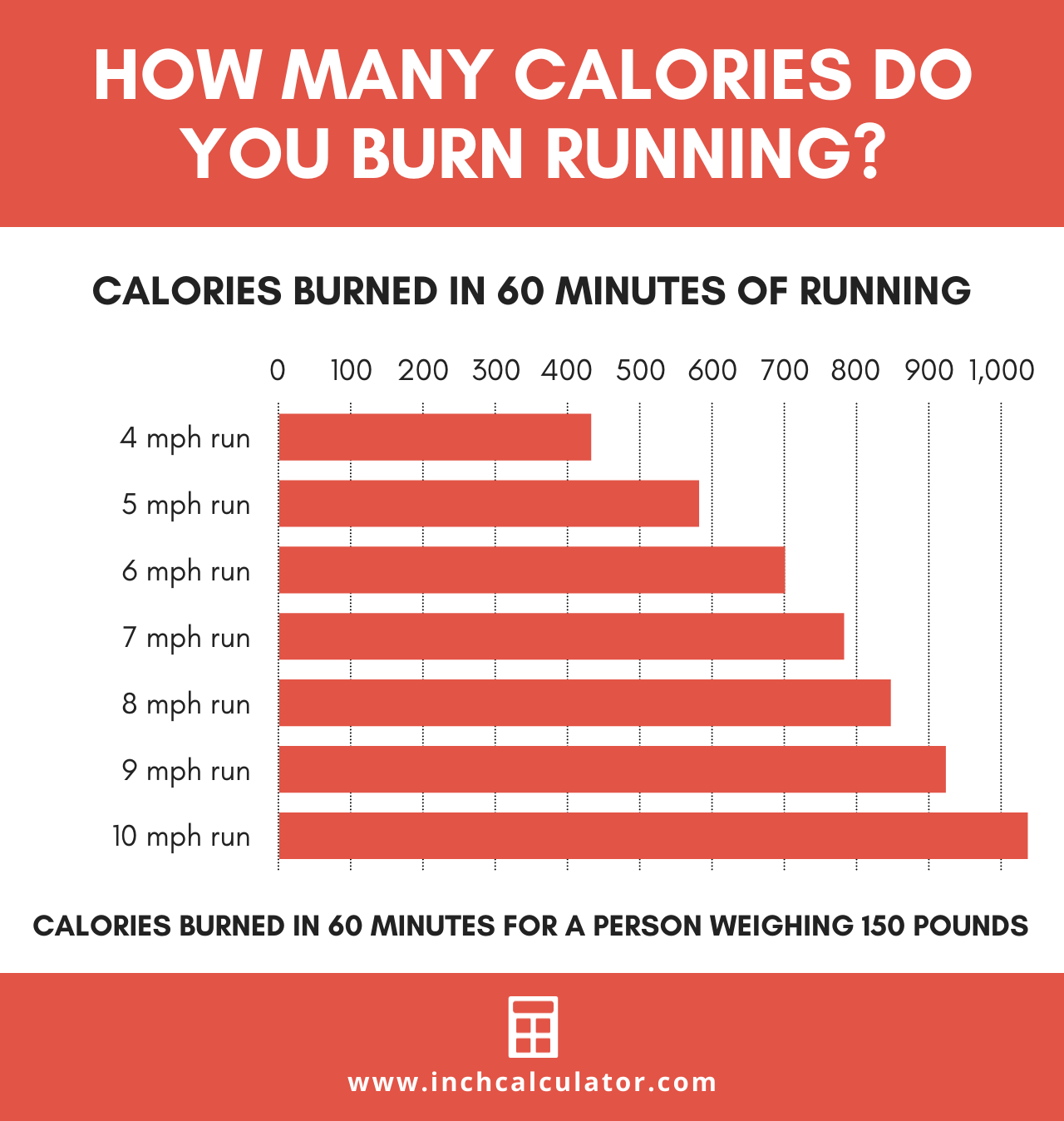
Cardio is aerobic, meaning “with oxygen.” Your body uses oxygen to convert fat and carbs into usable energy over long durations. The longer and more intense the effort, the more calories you burn in real time. For a 155-pound person:
- 30 minutes of jogging at 5 mph burns around 300 calories
- 30 minutes of cycling at a moderate pace burns around 260 calories
- 30 minutes of swimming freestyle burns around 250 calories
Compare that to 30 minutes of general weightlifting at around 110 to 130 calories, or 30 minutes of vigorous lifting at around 220 calories. Even high-intensity lifting cannot match steady-state cardio for in-the-moment burn.
Why Cardio Feels More Exhausting
Cardio keeps your heart and lungs working nonstop with no rest between reps, just continuous motion. This sustained demand explains why many people feel more drained after a 30-minute run than a 30-minute lift.
Pro Tip: If you have 30 minutes and want to burn the most calories right now, hop on the bike, go for a run, or hit the elliptical. Cardio is your best bet for immediate energy burn.
The Afterburn Effect: How Weights Keep Working After You Stop
While cardio finishes burning calories when you stop, weightlifting keeps working thanks to EPOC (Excess Post-Exercise Oxygen Consumption), also known as the afterburn effect.
What Is EPOC?
After intense exercise, your body does not return to rest instantly. It needs extra oxygen and energy to repair damaged muscle fibers, replenish glycogen, normalize body temperature and hormone levels, and clear lactic acid from muscles. This recovery process requires calories, even while you are sitting or sleeping.
Weightlifting vs. Cardio: EPOC Comparison
| Workout Type | Duration of EPOC | Extra Calories Burned |
|---|---|---|
| Steady-State Cardio | 30 minutes to 2 hours | 2–5% of total burn |
| Weightlifting (Vigorous) | Up to 48 hours | 6–15% of total burn |
A 2018 study on sedentary adult women found that resistance training elevated resting metabolism for up to 48 hours post-workout. Another study in the Journal of Applied Physiology showed weightlifting triggered significantly higher EPOC than moderate cardio.
Key Insight: A 45-minute hard lifting session might burn fewer calories during the workout than a 45-minute run, but over the next 24 to 48 hours, it could surpass it due to EPOC.
Muscle Mass and Long-Term Metabolism

This is where weightlifting pulls ahead in the long game, because muscle is metabolically active tissue.
How Muscle Changes Your Metabolism
Every pound of muscle burns approximately 6 to 15 calories per day at rest, compared to fat, which burns about 2 to 3 calories per pound. When you lift weights regularly, you build lean muscle mass, your Basal Metabolic Rate (BMR) increases, and you burn more calories even when doing nothing. A 2020 systematic review confirmed that resistance training increases resting metabolic rate, while aerobic exercise alone does not.
Preventing the “Skinny Fat” Trap
Losing weight through cardio alone can backfire. One study showed that older adults who only walked lost 16 lbs of fat but also 4 lbs of muscle. Those who lifted weights lost 17 lbs of fat and only 2 lbs of muscle. Losing muscle slows your metabolism, making it easier to regain weight. Weightlifting prevents this by preserving and building the metabolic engine.
HIIT: The Best of Both Worlds
High-Intensity Interval Training (HIIT) blends the calorie firepower of cardio with the metabolic punch of resistance training.
Why HIIT Burns More in Less Time
HIIT alternates short bursts of max-effort exercise with brief recovery periods. A typical session lasts 15 to 30 minutes but delivers results comparable to an hour of steady cardio. Research shows that HIIT burns 25 to 30% more calories than steady cardio or weightlifting in the same time, produces a larger EPOC effect, and improves both cardiovascular fitness and muscle endurance.
Sample HIIT Routine (20 Minutes)
- Warm-up: 3 minutes of light jog
- 8 rounds of 30 seconds sprint (or jump squats) followed by 30 seconds walk or rest
- Cool down: 2 minutes of stretching
This routine is perfect for busy schedules, fat loss, and breaking plateaus.
Fat Loss vs. Weight Loss: What Really Matters
Many people focus on the scale, but fat loss is what changes how you look and feel.
Cardio: Loses Weight, Not Always Fat
- Burns calories fast
- Can lead to muscle loss if done in a deficit
- May slow metabolism over time
Weightlifting: Loses Fat, Keeps Muscle
- May not move the scale much since muscle weighs more than fat
- Reduces waist size and improves body composition
- Keeps metabolism high, preventing rebound weight gain
Strategic Workout Order: Why You Should Lift Before Cardio

If you are doing both in one session, lift first, then do cardio.
Why Order Matters
- Preserves Energy for Lifting: Weightlifting requires explosive power and glycogen. Cardio depletes glycogen, leaving you too tired to lift heavy.
- Reduces Injury Risk: Lifting with fatigued muscles increases the chance of poor form and injury.
- May Boost Fat Burning: Some studies suggest lifting first increases fat oxidation during the following cardio session.
Exception: If you are training for a race or endurance event, prioritize cardio. Otherwise, split workouts into different days if needed.
Weekly Routine for Maximum Fat Burn
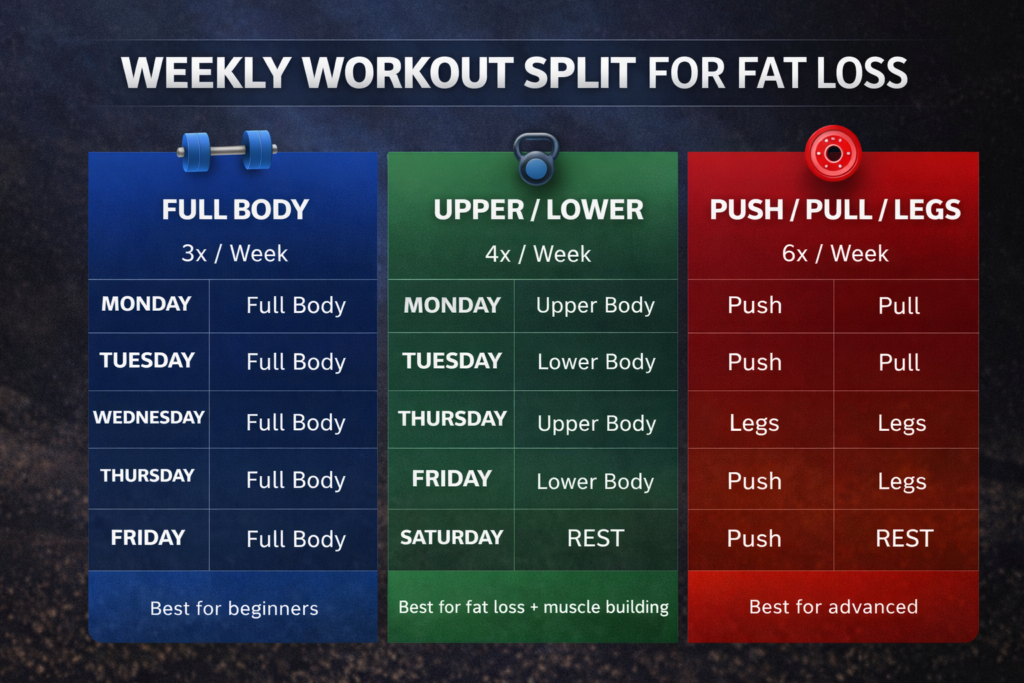
The American College of Sports Medicine (ACSM) and CDC recommend combining both for optimal results.
Ideal Weekly Split
| Day | Workout |
|---|---|
| Monday | Full Body Strength |
| Tuesday | 30 min Moderate Cardio |
| Wednesday | Upper Body Strength |
| Thursday | 20 min HIIT |
| Friday | Lower Body Strength |
| Saturday | Active Recovery (yoga, light walk) |
| Sunday | Rest |
Weekly Goals: 150 minutes of moderate cardio or 75 minutes of vigorous cardio, plus 2 to 3 days of strength training targeting all major muscle groups.
Nutrition: The Real Key to Fat Loss
Exercise helps, but diet drives weight loss. You cannot out-train a bad diet.
Caloric Deficit Is Essential
To lose 1 lb of fat per week, you need a 500-calorie daily deficit. When in a deficit, eat enough protein (0.7 to 1g per pound of body weight) to support muscle repair, prevent muscle loss, and stay full longer.
Warning: Extreme calorie cuts plus excessive cardio lead to muscle loss and a slower metabolism.
Common Myths Debunked
“Lifting Weights Will Make Me Bulky”
No. Most people, especially women, lack the testosterone and training volume to get bulky. Lifting 2 to 4 times a week leads to a toned, lean look, not bodybuilder size.
“Cardio Is the Only Way to Lose Weight”
False. You can lose weight with cardio, but without strength training, you risk losing muscle and slowing your metabolism.
“Weightlifting Doesn’t Burn Fat”
Wrong. While it burns fewer calories during the session, it burns more fat over time by increasing muscle and EPOC.
“I Should Do Cardio on an Empty Stomach to Burn More Fat”
No strong evidence supports this. Workout performance and total calorie burn matter more than timing.
Frequently Asked Questions About Lifting Weights vs. Cardio
Does lifting weights burn more calories than cardio during the workout?
No. Cardio burns more calories during the actual session due to sustained heart rate elevation and continuous oxygen use.
Does weightlifting burn more calories after the workout?
Yes. Weightlifting produces a significantly larger EPOC effect, elevating metabolism for up to 48 hours post-workout compared to a few hours for steady-state cardio.
Will lifting weights help me lose belly fat?
Yes, indirectly. Weightlifting preserves and builds muscle, which raises your resting metabolic rate and helps your body burn more fat over time, including belly fat.
How often should I lift weights to boost my metabolism?
At least 2 to 3 times per week, targeting all major muscle groups, as recommended by the ACSM and CDC.
Can I lose weight by doing only cardio?
Yes, but you risk losing muscle along with fat, which lowers your metabolism and increases the chance of regaining the weight.
Is HIIT better than lifting or cardio alone?
HIIT offers a hybrid approach, burning 25 to 30% more calories in less time while producing a strong afterburn effect, making it highly efficient for fat loss.
Key Takeaways: Combining Strength and Cardio for Lasting Results
So, does lifting weights burn more calories than cardio? During the workout, cardio wins. Over 24 hours, weights pull ahead due to EPOC. Over months and years, muscle mass keeps your metabolism running high.
Your Best Strategy:
- For quick calorie burn: Choose cardio or HIIT
- For lasting fat loss: Prioritize weightlifting
- For overall health: Do both
Bottom Line: Do not choose one over the other. Use cardio to create immediate calorie deficits and improve heart health. Use weightlifting to build a body that burns more calories all the time. Together, they form the ultimate fat-loss combination.
Start lifting, keep moving, eat well, and stay consistent. Your body will transform.