Cardio Workouts for Weight Gain (2026 Guide)
You’re trying to gain weight, but you also want to stay healthy, energetic, and in shape. That is where the confusion kicks in: can cardio actually help you gain weight, or will it sabotage your bulk? The truth is, not all cardio is bad for weight gain. When used strategically, cardio supports muscle growth, improves recovery, and keeps your heart strong without burning away your hard-earned mass.
This guide cuts through the myths. Whether you are a hard gainer struggling to add pounds or someone who packs on fat too easily, you will learn exactly how to use cardio to your advantage. We will break down the best types, timing, frequency, and intensity based on your body type and goals, all backed by physiological science and practical application.
By the end, you will know how to choose the right cardio workout for weight gain, avoid the common pitfalls, and stay on track with your bulking goals.
Who Should Do Cardio While Bulking?
Hard Gainers: Limit Cardio
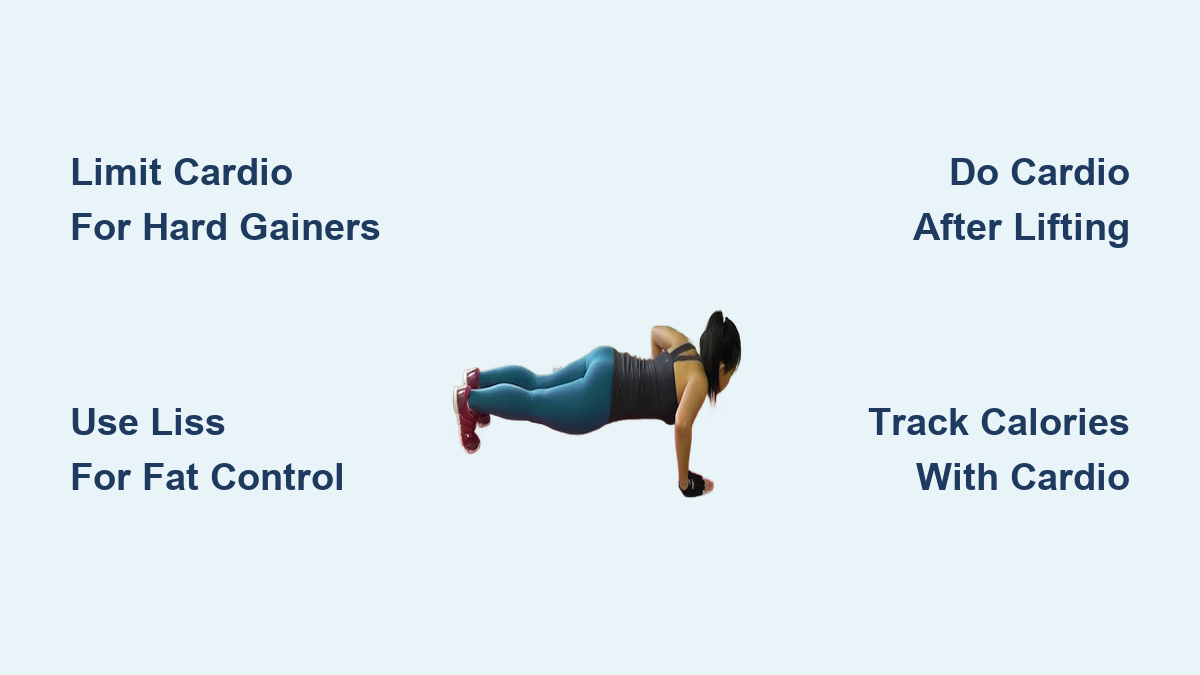
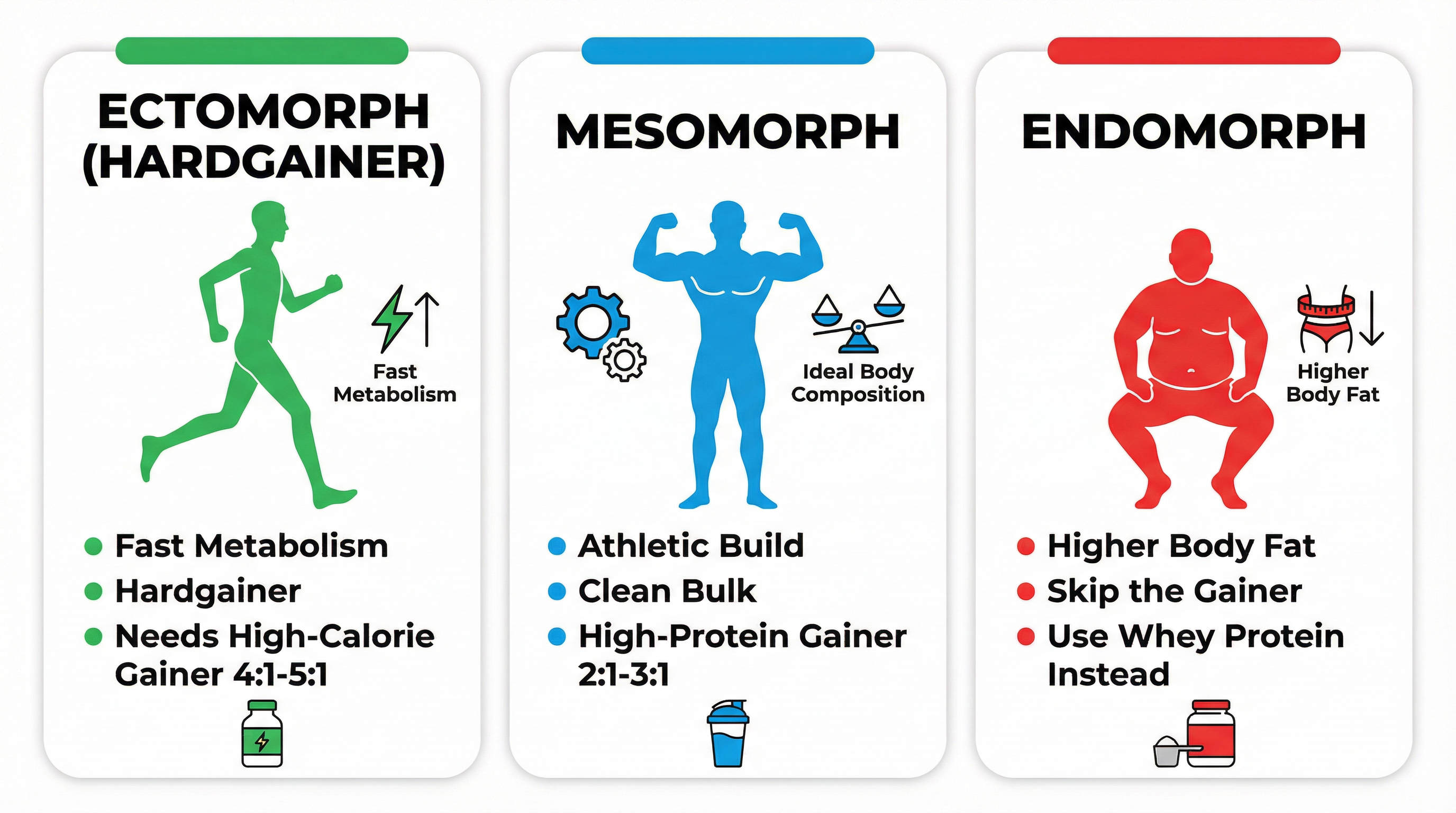
If you are naturally thin, have a fast metabolism, and struggle to gain weight no matter how much you eat, dedicated cardio should be minimized or avoided. Your main challenge is creating a caloric surplus, and adding cardio increases energy expenditure, making it harder to eat enough. Even 20 minutes of brisk walking can burn 150 or more calories you cannot afford to lose.
Signs you are a hard gainer:
– Need 4,000 or more calories daily just to maintain weight
– Little visible fat gain despite high intake
– Frequent hunger or difficulty finishing meals
For you, cardio equals risk. Stick to daily movement like walking, stretching, and light activity, but skip structured sessions.
Easy Gainers: Use Cardio Strategically
If you gain weight quickly, especially fat, cardio is not just helpful but essential. Without it, your bulk may turn into a fat gain phase. Cardio helps manage fat accumulation, improves insulin sensitivity, and boosts recovery between lifts.
Signs you gain fat easily:
– Noticeable fat gain within weeks of bulking
– Struggle with low energy or joint discomfort
– Poor baseline cardiovascular fitness
For you, cardio equals control. Use it to stay lean while building muscle.
Mesomorphs: Moderate Cardio Works
Athletic builds respond well to everything because muscle grows fast and fat stays low. A mesomorph can handle 1 to 2 weekly cardio sessions to maintain heart health and burn minor excess calories without slowing growth.
Your sweet spot: Light to moderate cardio that does not interfere with lifting performance.
How Cardio Can Help (Not Hinder) Weight Gain
Improves Blood Flow and Recovery
Cardio increases capillary density in muscles. More capillaries mean better delivery of oxygen and nutrients, which is exactly what your muscles need to repair and grow after heavy lifting. Think of it like upgrading your body’s internal delivery system.
What to look for:
– Faster recovery between workouts
– Less soreness 24 to 48 hours post-lift
– Improved “pump” during resistance training
This benefit is strongest with low-intensity cardio, done on off-days or after lifting.
Supports Heart Health During High-Calorie Phases
Bulking often means higher sodium, more processed foods, and increased blood volume, all of which can raise blood pressure. Cardio helps regulate blood pressure, reduce inflammation, and improve vascular function.
Key benefit: You build muscle and protect your long-term health with no trade-offs.
Prevents Excessive Fat Accumulation
Even in a bulk, uncontrolled fat gain leads to longer, harder cuts later. Cardio acts as a fat management tool, especially for endomorphs or those with slower metabolisms.
Example: A 30-minute LISS session can burn 200 to 300 calories, just enough to offset some dietary surplus and keep body fat in check.
Best Cardio Types for Weight Gain
Low-Intensity Steady State (LISS)
Best for: Mesomorphs, beginners, or anyone wanting heart health without fatigue
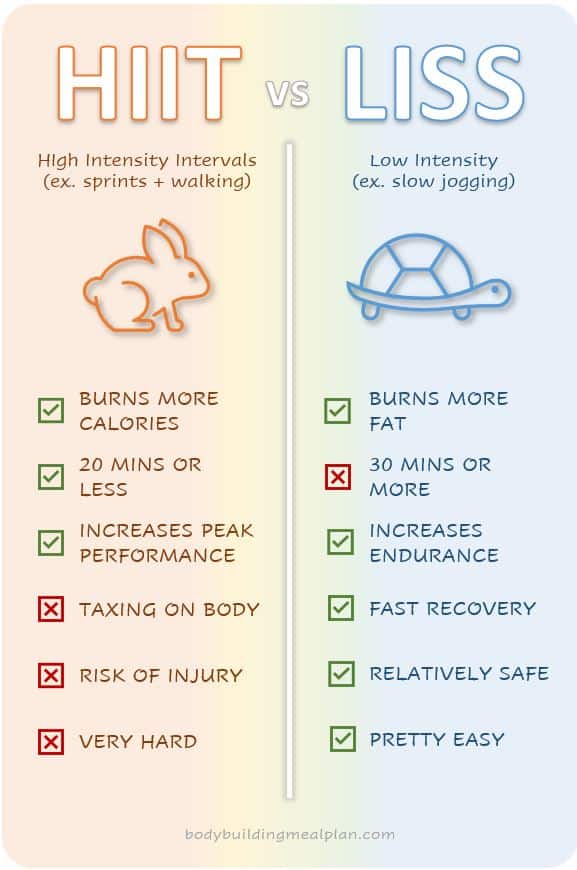
How it works: Maintain a steady pace at 60 to 75 percent of max heart rate for 15 to 45 minutes. You should be able to talk comfortably.
Examples:
– Brisk walking
– Light cycling
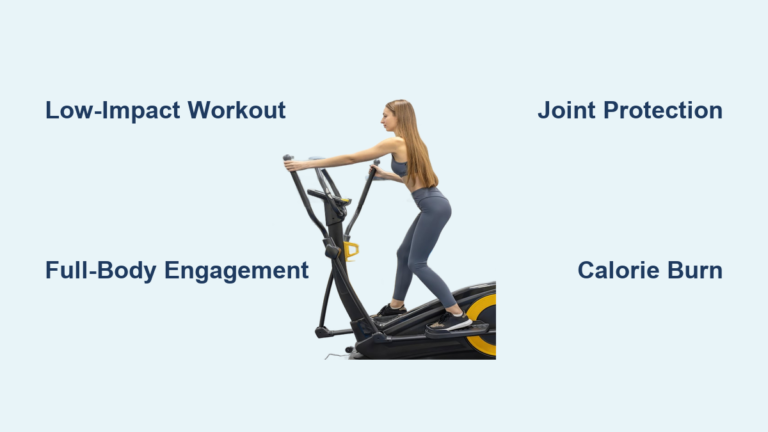
– Slow elliptical
Benefits:
– Boosts circulation without taxing recovery
– Burns 100 to 300 calories per session
– Enhances nutrient delivery to muscles
Pro tip: Do LISS on rest days or 3 to 4 hours after weight training. Never before leg day.
High-Intensity Interval Training (HIIT)
Best for: Endomorphs or those needing aggressive fat control
How it works: Short bursts of max effort (20 to 30 seconds) followed by rest (30 to 60 seconds). Total workout: 10 to 15 minutes.
Examples:
– Sprint intervals
– Battle ropes
– Jump squats
Benefits:
– High afterburn effect (EPOC)
– Preserves muscle while burning fat
– Short duration equals less caloric drain
Risks:
– Increases cortisol and fatigue
– Can impair strength performance if overdone
Rule: Limit to 1 to 2 times per week. Never do HIIT the day before lower-body lifting.
Daily Movement (Non-Exercise Activity)
Best for: Hard gainers who still want health benefits
This is not “cardio” in the traditional sense, but walking, standing, and light activity count toward daily energy use without the metabolic cost of structured workouts.
Ideal routine:
– 8,000 to 10,000 steps per day
– Walk after meals to aid digestion
– Use stairs instead of elevators
Why it works: Keeps metabolism active, supports digestion, and improves mood without burning hundreds of extra calories.
How Much Cardio Is Too Much?
The Calorie Math You Cannot Ignore
Every cardio session raises your Total Daily Energy Expenditure (TDEE). If you do not eat more, you are no longer bulking. You are maintaining or even cutting.
Example:
– Baseline TDEE: 3,000 kcal
– Bulking goal: 3,500 kcal
– Add 3 HIIT sessions (300 kcal each): Now need 4,400 kcal to stay in surplus
Most people cannot or will not eat that much. The result is stalled gains.
Recovery Interference
More cardio means more systemic stress. When combined with heavy lifting, this can:
– Elevate cortisol (a catabolic hormone)
– Delay muscle repair
– Reduce workout intensity
Warning signs you are doing too much cardio:
– Lifting performance drops
– Constant fatigue
– Appetite decreases
– Weight gain stalls or reverses
Solution: Reduce frequency or switch to lower intensity.
When to Do Cardio: Timing Matters

Avoid Cardio Before Weight Training
Doing cardio first thing in the morning or right before lifting depletes glycogen and elevates fatigue. You will lift lighter, do fewer reps, and stimulate less muscle growth.
Never do:
– HIIT before upper-body day
– Long LISS before leg day
Best Times for Cardio
Option 1: After Weights (Same Session)
- Do 15 to 20 minutes of LISS post-lift
- Keeps heart rate up and aids recovery
- Burns minimal extra calories
Ideal for: Upper-body days or light training days
Option 2: On Rest Days
- 30-minute walk or bike ride
- Promotes blood flow without stress
- Keeps you active without taxing recovery
Ideal for: True recovery days
Option 3: Separate Time of Day
- Lift in the evening, do cardio in the morning (or vice versa)
- Allows full recovery between sessions
- Best for advanced lifters with high recovery capacity
Body Type-Based Cardio Plans

Ectomorph Plan: Minimal Cardio
Goal: Maximize mass and conserve calories
Weekly routine:
– 0 dedicated cardio sessions
– 8,000 to 10,000 steps daily (lifestyle movement)
– Optional: 10-minute walk after dinner for digestion
What to avoid:
– Treadmill, elliptical, spin classes
– HIIT, bootcamps, or group fitness
– Any activity that makes you sweat heavily
Focus: Eat big, lift heavy, recover well.
Endomorph Plan: Active Fat Management
Goal: Gain muscle and minimize fat
Weekly routine:
– 3 to 5 cardio sessions
– 2 HIIT (10 to 15 minutes each)
– 2 to 3 LISS (20 to 30 minutes each)
– Example: Mon (HIIT), Wed (LISS), Fri (HIIT), Sun (LISS)
Best timing:
– HIIT on upper-body or rest days
– LISS on off-mornings or post-weights
Nutrition note: Increase calories to match output. Track intake daily.
Mesomorph Plan: Maintenance Cardio
Goal: Stay lean and support recovery
Weekly routine:
– 1 to 2 LISS sessions (20 to 30 minutes)
– Example: Tue (post-weights walk), Sat (brisk walk)
Optional: One HIIT session if fat gain begins
Key rule: If lifting feels harder, cut back.
Common Mistakes to Avoid
Mistake 1: Doing Cardio That Burns Too Many Calories
Not all cardio is equal. A 45-minute spin class can burn 500 or more calories, equivalent to a whole meal. For a hard gainer, that is catastrophic.
Fix: Choose low-energy activities like walking or light biking, and limit duration.
Mistake 2: Doing Cardio Too Close to Lifting
Cardio before lifting equals weaker performance. Even 20 minutes of moderate effort can reduce strength output by 10 to 15 percent.
Fix: Separate cardio and lifting by at least 6 hours, or do cardio on off-days.
Mistake 3: Ignoring Nutrition After Cardio
Cardio depletes glycogen. If you do not replenish, your body may use muscle protein for energy.
Fix: After any cardio session, consume:
– 20 to 30g protein
– 40 to 60g carbs
– Example: Greek yogurt with a banana, or a protein shake with oats
This supports recovery and prevents muscle loss.
Top Resistance Exercises for Weight Gain
Cardio is secondary. Muscle growth comes from resistance training. Focus on compound lifts that stimulate maximum hypertrophy.
Must-Do Upper Body Moves
Bench Press
- Builds chest, shoulders, triceps
- Use barbell or dumbbells
- 3 to 4 sets of 6 to 10 reps
Overhead Press
- Targets shoulders, traps, core
- Can be done seated or standing
- 3 sets of 8 to 12 reps
Pullups
- Builds back, biceps, grip
- Use assisted machine if needed
- 3 to 4 sets to failure
Pushups
- Great for volume and endurance
- Add weight (backpack, vest) for progression
- 3 sets of 10 to 20 reps
Essential Lower Body Lifts
Squats
- King of mass builders
- Hits quads, glutes, hamstrings, core
- Barbell back squat: 4 sets of 6 to 8 reps
Lunges
- Unilateral strength and balance
- Use dumbbells for added resistance
- 3 sets of 10 reps per leg
Pro tip: Train legs 2x per week. Leg day boosts growth hormone and appetite, both key for bulking.
Nutrition: Fueling a Bulk With Cardio
Caloric Surplus Is Non-Negotiable
To gain weight, you must eat more than you burn. Cardio increases your burn, so you must eat more.
Formula: Bulking calories = TDEE + 300 to 500 kcal. With cardio: TDEE + 300 to 500 + cardio calories burned.
Example:
– TDEE: 3,000
– Cardio burns: 200
– Target intake: 3,500 to 3,700 kcal
Use a food tracker like MyFitnessPal or Cronometer to stay accurate.
Macronutrient Targets
| Nutrient | Goal | Sources |
|---|---|---|
| Protein | 1.6 to 2.2g/kg body weight | Chicken, eggs, beef, whey, Greek yogurt |
| Carbs | 4 to 6g/kg | Oats, rice, potatoes, fruit, whole grains |
| Fats | 1 to 1.2g/kg | Avocado, nuts, olive oil, fatty fish |
Sample meal (800 to 1,000 kcal):
– 150g chicken breast
– 150g brown rice
– 1 avocado
– 1 tbsp olive oil
– 1 banana
Eat 5 to 6 meals daily to hit targets.
Recovery: The Hidden Key to Gains
Sleep: 7 to 8 Hours Minimum
Muscles grow during sleep. Poor sleep leads to low testosterone, high cortisol, and stalled gains.
Tips:
– Set a bedtime
– Avoid screens 1 hour before bed
– Keep the room cool and dark
Stress Management
Chronic stress raises cortisol, which breaks down muscle and increases fat storage.
Do this daily:
– 5 to 10 minutes of deep breathing
– Light stretching or yoga
– Walk in nature
Listen to Your Body
If you are tired, eat more. If you are not gaining, eat even more. If lifting feels weak, reduce cardio.
Bulk rule: Progress in the gym outweighs cardio performance.
Frequently Asked Questions About Cardio and Weight Gain
Can I do cardio every day while trying to gain weight?
Daily structured cardio is not recommended during a bulk because it raises your caloric needs and can stall gains. Hard gainers should avoid it entirely. Easy gainers can do light daily movement like walking, but limit formal sessions to 1 to 5 per week depending on body type.
Does cardio burn muscle if I am bulking?
Cardio can lead to muscle loss if it is too intense, too frequent, or paired with insufficient nutrition. Low-intensity cardio done briefly is safe and even helpful. The key is eating enough to offset the calories burned and allowing proper recovery between sessions.
What is the best cardio for hard gainers?
Hard gainers should stick to non-exercise activity like walking, light cycling for enjoyment, or daily step goals of 8,000 to 10,000 steps. Avoid HIIT, spin classes, or any session that leaves you sweaty and exhausted.
Should I do cardio before or after lifting?
Always do cardio after lifting or on a separate day. Doing cardio before weights depletes glycogen, increases fatigue, and reduces strength output by up to 15 percent. If you must combine them, keep cardio to 15 to 20 minutes of LISS post-workout.
How many calories does cardio burn during a bulk?
It depends on the type and duration. LISS burns 100 to 300 calories per session, while HIIT can burn 200 to 400 or more in just 10 to 15 minutes. Every cardio session adds to your TDEE, so you must increase your food intake to stay in surplus.
Can I build muscle and do cardio at the same time?
Yes, but it requires careful planning. Prioritize resistance training, eat in a caloric surplus, and keep cardio low intensity and brief. For most people, 1 to 3 sessions of light cardio per week will not interfere with muscle growth if nutrition is on point.
Final Takeaways: Cardio for Weight Gain Done Right
- Hard gainers: Avoid structured cardio. Walk, live, eat, and lift.
- Easy gainers: Use LISS and HIIT to manage fat. Track calories.
- Mesomorphs: 1 to 2 light sessions weekly for health and balance.
- Timing matters: Never do cardio before lifting. Post-workout or rest days are best.
- Nutrition is king: Every cardio session requires extra food.
- Recovery is non-negotiable: Sleep, eat, repeat.
Cardio is not the enemy of weight gain. It is a tool. Used wisely, it keeps you healthy, lean, and ready to lift harder. Used poorly, it stalls your progress.
Now you know the difference. Your move: adjust your cardio based on your body, goals, and results, not bro science.