Best Cardio Training Exercises for Weight Loss (2026)
Cardio training exercises are essential for building endurance, burning calories, and improving heart health. Whether you’re just starting out or pushing your limits, the right cardio routine can boost energy, sharpen focus, and reduce the risk of chronic disease. The key isn’t intensity alone. It’s consistency, variety, and smart progression. From simple marching in place to explosive burpees, effective cardio doesn’t require a gym membership or expensive gear. You can start today, wherever you are, with little or no equipment.
Research shows that even moderate cardio, like brisk walking or cycling, can reverse heart stiffness linked to aging and sedentary lifestyles, especially in adults aged 40 to 64. With just 150 minutes a week of moderate effort, you can lower blood pressure, manage weight, and improve sleep and mood. This guide breaks down the most effective cardio training exercises by fitness level, explains how to measure intensity, and provides safe, structured routines to keep you progressing without injury or burnout.
Choose the Right Intensity

Match Effort to Your Fitness Level
Cardio effectiveness depends on intensity, not just movement. Too light, and you won’t trigger cardiovascular benefits. Too hard, and you risk injury or quitting. Use the Rate of Perceived Exertion (RPE) scale (0–10) to guide your effort:
- Low (RPE 1–2): Breathing steady, can talk easily. Ideal for warm-ups or recovery.
- Moderate (RPE 3–5): Slightly breathless, can talk but not sing. Optimal for fat burning and endurance.
- Vigorous (RPE 6–7): Breathing hard, can say only a few words. Boosts cardiovascular capacity.
- Max (RPE 8–10): All-out effort. Reserved for short HIIT bursts.
For most adults, aim for moderate to vigorous effort across 150 to 300 minutes weekly. Beginners should start at RPE 3–4 and build gradually.
Use the BORG Scale for Safety
If you have heart conditions or are in cardiac rehab, the BORG Scale (6–20) offers a more precise intensity guideline:
- Below 11: Very light, easy conversation.
- 11–14: Moderate, slightly breathless but sustainable.
- Above 14: High intensity. Avoid unless cleared by a doctor.
Patients with hypertension or post-injury should stay below 11 during initial workouts. Always consult a physician before starting vigorous training if you have chronic health issues.
Spot Intensity by Breathing and Speech
You don’t need a scale to know your effort. Use these cues:
- Low intensity: Can sing and talk effortlessly (e.g., walking, gardening).
- Moderate intensity: Can talk, but not sing (e.g., brisk walking, cycling).
- Vigorous intensity: Can only say short phrases (e.g., running, burpees).
If you’re gasping and can’t speak, slow down. If you’re bored and chatting easily, pick up the pace.
Start with Low-Impact Cardio
Walk Daily for Heart Health
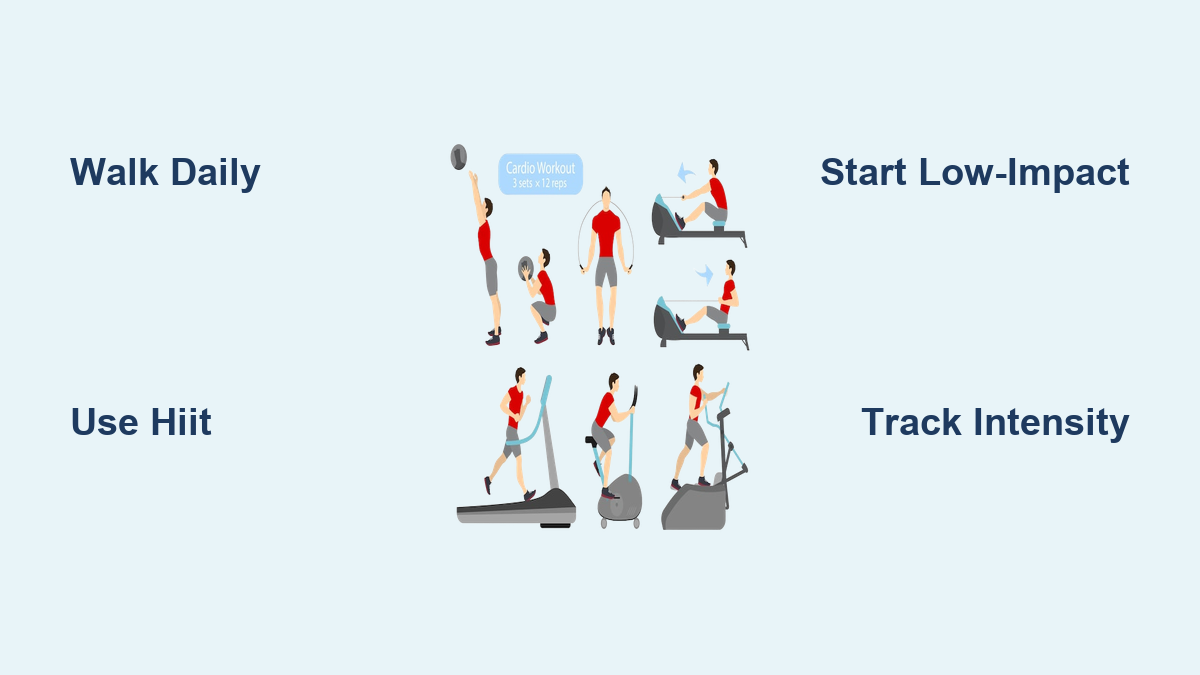
Walking is the most accessible cardio training exercise. It strengthens the heart, lowers blood pressure, and improves mood with zero joint stress. Start with 10-minute walks, 3 to 5 days a week. Gradually increase to 30 to 60 minutes daily.
Pro tip: Use a pedometer or phone app to track steps. Aim for 7,000 to 10,000 steps daily to meet cardio goals.
Walk outdoors for mental refreshment or indoors on a treadmill. Add hills or speed intervals to increase intensity. Walking counts toward your weekly moderate cardio minutes with no extra gear needed.
March in Place for Quick Warm-Ups
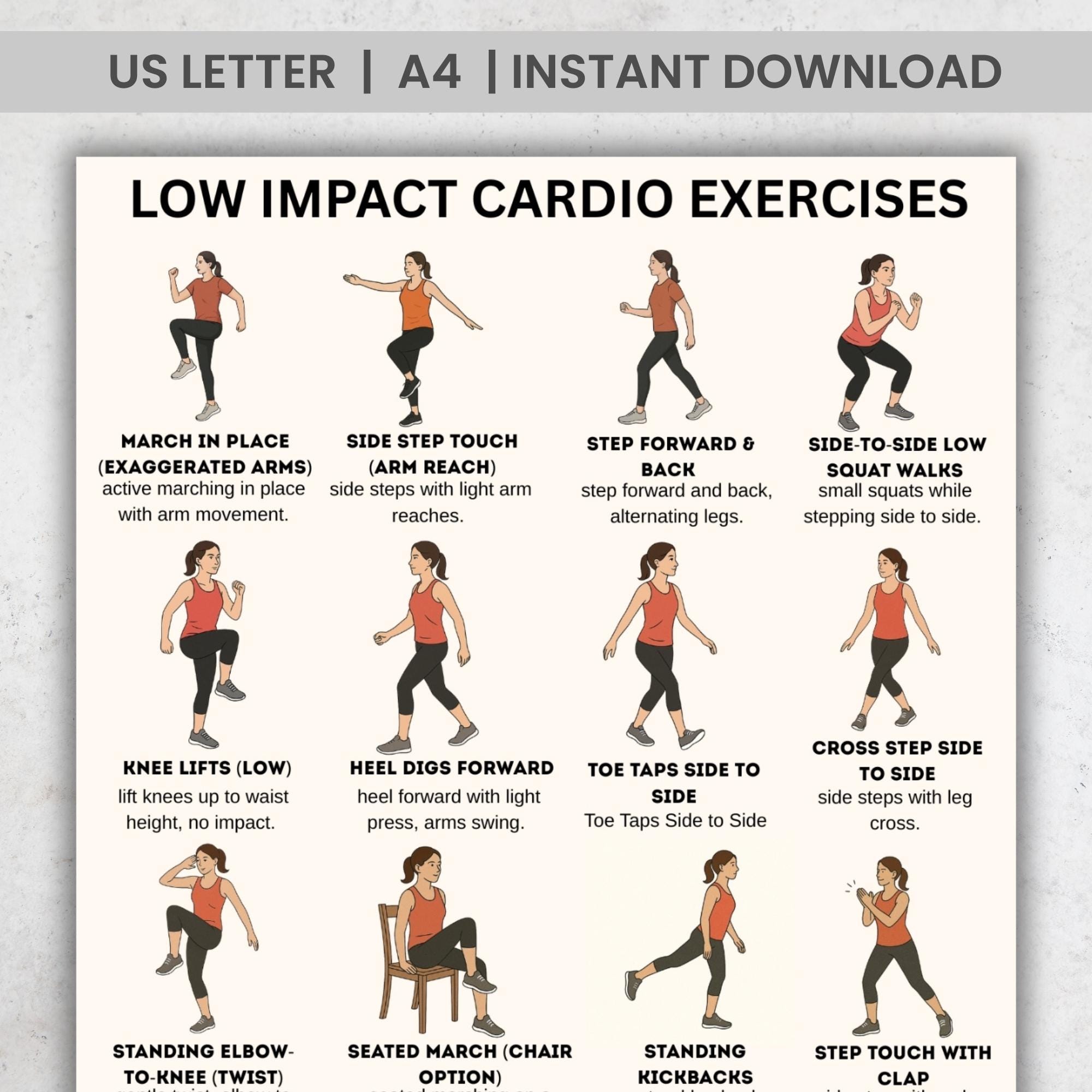
Marching in place elevates heart rate with minimal movement, perfect for beginners or limited spaces. Stand tall, lift knees high, and swing arms.
Modify for mobility: Perform seated marching if standing is difficult. Add shoulder rolls or arm raises to engage upper body.
Use this as a 5-minute warm-up before workouts or a daytime energy booster. It’s low intensity (RPE 2–3) but effective for circulation and joint mobility.
Dance to Boost Mood and Stamina
Dancing combines cardio with joy. Whether freestyle at home or following a Zumba video, it elevates heart rate, improves coordination, and releases endorphins.
Try this: Play upbeat music and move for 10 to 20 minutes. Focus on large movements like side steps, arm swings, and bounces.
Dancing is moderate intensity (RPE 4–5) and sustainable because it’s fun. It’s ideal for those who dislike traditional workouts. Even seated dancing counts if modified.
Cycle for Joint-Safe Conditioning
Cycling, on a stationary bike or outdoors, builds leg strength and cardiovascular endurance with minimal joint impact. It’s excellent for people with arthritis or knee issues.
Set up right: Adjust seat height so your knee is slightly bent at the bottom of the pedal stroke. Wear a helmet outdoors.
Start with 15 to 20 minutes at moderate resistance. Increase time or resistance weekly. Aim for 30 minutes, 3 times a week for optimal results.
Try Seated Cardio Options
For limited mobility or post-injury rehab, seated cardio keeps circulation flowing. Options include:
- Seated star jumps: Extend arms and legs out to sides, then return.
- Arm circles: Rotate arms forward and backward.
- Ball throws: Toss a soft ball against a wall or to a partner.
- Trunk rotations: Twist torso side to side, optionally holding a light weight.
These maintain cardiovascular effort without standing. Ideal for cardiac rehab patients or seniors.
Build Stamina with Intermediate Moves
Jog in Place for Steady Cardio
Jogging in place raises heart rate more than marching. Keep movements light, land softly on balls of feet, and pump arms.
Progress it: Increase speed, add high knees, or jog with arm circles. Do 1 to 3 minutes between strength sets for active recovery.
This is moderate to vigorous (RPE 5–6) and builds endurance. Use it when weather or space limits outdoor runs.
Simulate Jump Rope Without a Rope
“Air jump rope” mimics the motion without equipment. Swing arms in small circles and jump lightly on toes.
Benefits: Improves coordination, agility, and calf strength. Burns more calories than jogging.
Start with 30-second intervals, rest 30 seconds. Repeat 3 to 5 times. Great for HIIT warm-ups or home workouts.
Do Jumping Jacks for Full-Body Activation
Jumping jacks work arms, legs, and core in one move. Jump feet out while raising arms overhead, then return.
Modify intensity: Step instead of jump for low impact. Slow down for beginners.
This is moderate to vigorous (RPE 5–6). Do 30 to 60 seconds between strength exercises or in circuits.
Climb Stairs for Power and Endurance
Stair climbing builds leg strength and cardiovascular fitness fast. Use home stairs or a stair climber machine.
Try this: Walk up and down for 5 to 10 minutes. Progress to taking two steps at a time or running.
It’s vigorous (RPE 6–7) and burns more calories than flat walking. Add it 2 to 3 times weekly.
Swim for Total-Body Conditioning
Swimming is low-impact, high-reward cardio. It engages arms, legs, and core while supporting joints.
Recommendation: 30 minutes, 3 times per week. Freestyle, backstroke, or water aerobics all count.
Ideal for injury recovery, arthritis, or hot climates. Even water walking provides resistance and cardiovascular benefit.
Use the Elliptical for Smooth Cardio
The elliptical combines arm and leg motion with zero joint impact. It mimics running without the pounding.
Tip: Use moving handles to engage upper body. Adjust resistance to reach RPE 4–6.
A 20 to 30 minute session builds endurance and coordination. Great for cross-training or active recovery days.
Push Limits with Advanced Cardio
Jump Rope for High-Intensity Bursts
Using a real jump rope builds speed, coordination, and cardiovascular power. It’s one of the most efficient calorie-burning exercises.
Start slow: Jump with both feet, 30 seconds on, 30 seconds off. Aim for 3 to 5 minutes total.
Advanced variations: Alternate feet, double unders (rope passes twice per jump), or high knees.
Use in HIIT for 20 to 30 second sprints. RPE 7–9. Avoid if you have ankle or knee issues.
Do Squat Jumps for Power
Squat jumps combine strength and cardio. Lower into a squat, then explode upward into a jump.
Form tip: Land softly, knees bent, back straight. Keep chest up.
Targets glutes, quads, and calves. RPE 7–8. Do 10 to 15 reps in circuits. Not for beginners; master bodyweight squats first.
Try “Screamer” Lunges for Agility
Screamer lunges involve jumping to switch legs mid-air. Start in a lunge, jump up, and land in reverse lunge.
Caution: High impact. Only attempt with solid lunge form and joint stability.
RPE 8–9. Builds explosive power, coordination, and heart endurance. Use in advanced HIIT or circuit training.
Perform Mountain Climbers for Core Cardio
In plank position, alternate driving knees toward chest quickly. Keep hips level and core tight.
Modify: Slow down or do from knees. Use in circuits for 30 to 60 seconds.
Engages core, shoulders, and legs. RPE 6–8. Excellent for building endurance and stability.
Master Burpees for Full-Body Burn
Burpees are the ultimate cardio-strength hybrid. Stand, drop to squat, kick back to plank, push-up (optional), jump feet in, jump up.
Beginner version: Step back instead of jumping, skip push-up, stand up instead of jump.
Advanced: Add a push-up and explosive jump. RPE 8–10. Do 5 to 10 reps in HIIT or circuits.
Burns maximum calories and builds mental toughness.
Add Bear Crawls for Core Strength
Move forward on hands and feet, hips high, body in a tabletop position. Keep core braced.
Benefits: Builds shoulder stability, core strength, and cardiovascular endurance.
RPE 7–8. Do 10 to 20 feet forward and back. Use in circuits or as a warm-up drill.
Structure Workouts with Proven Methods
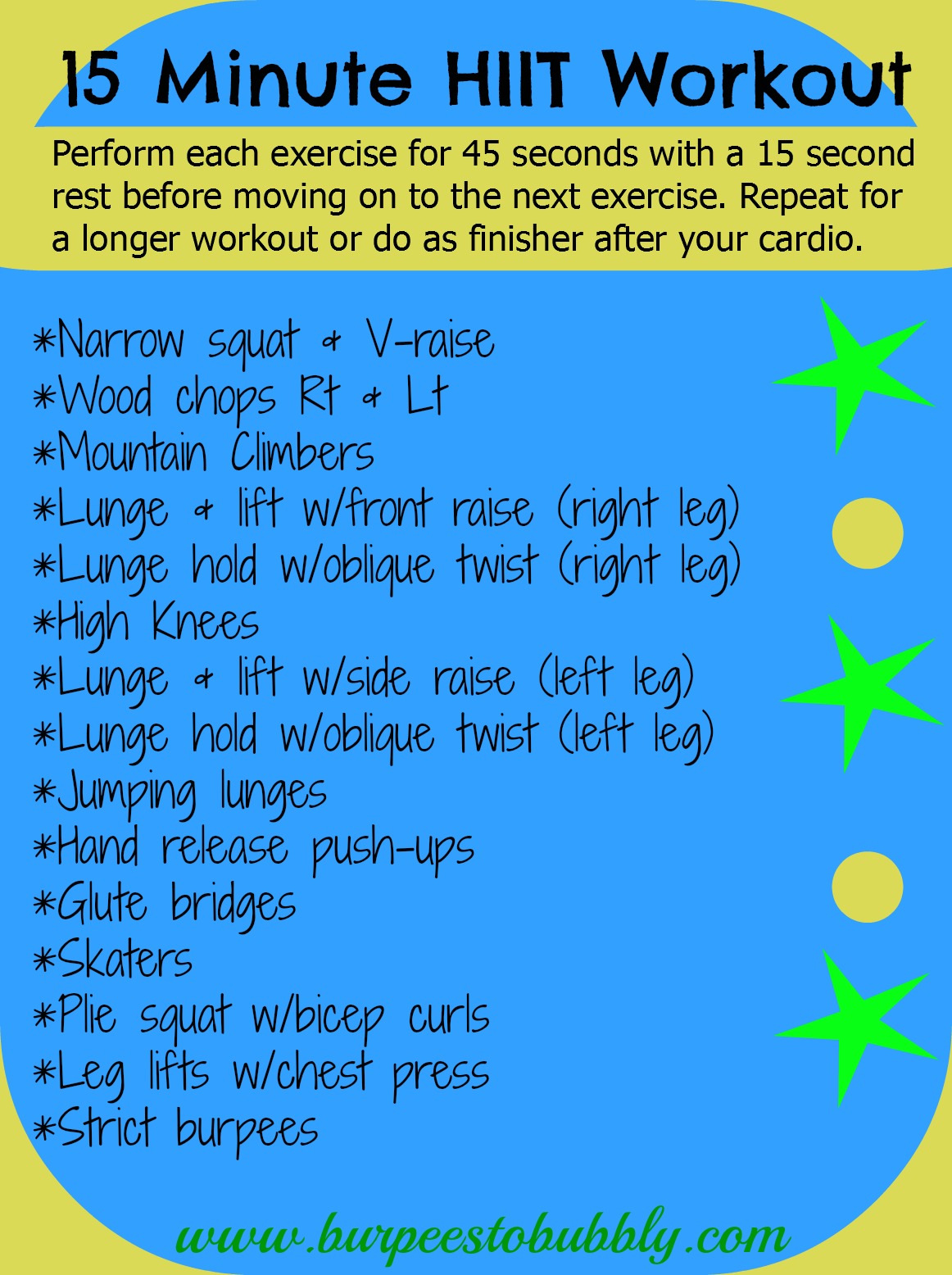
Use HIIT to Save Time
High-Intensity Interval Training (HIIT) alternates short bursts of max effort with recovery. It delivers results in less time than steady-state cardio.
Sample beginner HIIT (15 mins):
– Warm-up: 5 mins marching or arm circles.
– Repeat 3 times:
– 30s high knees
– 30s rest
– 30s mountain climbers
– 30s rest
– 30s modified burpees
– 30s rest
– Cool-down: 5 mins light stretch.
Advanced “4×4” protocol:
– 4 minutes all-out effort (e.g., sprinting, jump squats)
– 3 minutes rest
– Repeat 4 times
HIIT improves heart function, burns fat, and boosts metabolism for hours post-workout.
Build Endurance with Circuit Training
Circuit training combines strength and cardio in a timed sequence with minimal rest.
Sample beginner circuit (20 mins):
– 30s jumping jacks
– 1 min bodyweight squats
– 1 min push-ups (knees or wall if needed)
– 30s plank
– 30s rest
– Repeat 3 to 4 rounds
Keeps heart rate elevated while building muscle. Adjust exercises to fitness level.
Warm Up and Cool Down Right
Skipping warm-up or cool-down increases injury risk.
Warm-up (5–10 mins):
– March in place
– Arm circles
– Leg swings
– Side taps
– Goal: RPE 2–3
Prepares muscles and joints, gently raises heart rate.
Cool-down (5+ mins):
– Light marching
– Ankle rolls
– Spinal twists
– Side stretches
– Goal: RPE 1–2
Helps blood return to heart, prevents dizziness, reduces soreness.
Prevent Injury and Stay Safe
Consult a Doctor First
If you have heart disease, high blood pressure, diabetes, or are new to exercise, talk to your doctor before starting. They may recommend a stress test or refer you to an exercise physiologist.
Cardiac rehab patients should follow prescribed RPE limits (e.g., BORG <11) and avoid vigorous activity without supervision.
Recognize Warning Signs
Stop immediately if you experience:
– Chest pain or pressure
– Severe shortness of breath
– Dizziness or nausea
– Irregular heartbeat
If chest pain lasts more than 10 minutes or worsens, call emergency services.
Keep medications (e.g., nitroglycerin) accessible if prescribed.
Use Proper Form and Footwear
Wear supportive shoes or go barefoot on non-slip surfaces. Avoid socks-only on hardwood or tile.
Maintain good form:
– In squats: Knees over toes, back straight
– In jumps: Land softly, bend knees
– In planks: Hips in line with shoulders
Poor form leads to joint strain and injury.
Progress Gradually
Start with low intensity and short duration. Add 5 to 10 minutes weekly or increase RPE by 1 point every 1 to 2 weeks.
It takes 2 to 5 months to form a lasting habit. Focus on consistency, not perfection.
Stay Motivated and Consistent
Make Cardio a Daily Habit
Treat cardio like brushing your teeth. It’s non-negotiable. Schedule it daily, even if only 10 minutes.
Break it up: Three 10-minute sessions count as one 30-minute workout.
Use reminders, alarms, or calendar blocks to stay on track.
Choose Activities You Enjoy
You’re more likely to stick with cardio if it’s fun. Love music? Dance. Like nature? Hike or bike. Enjoy competition? Try tennis or basketball.
As one expert says: “I don’t care what type of exercise you do as long as you do something.”
Track Progress and Celebrate Wins
Use a journal, fitness app, or pedometer to log workouts. Track:
– Duration
– Intensity (RPE)
– Steps
– Mood
Celebrate milestones: “Walked 5 days this week,” “Completed first burpee,” “Swam 20 minutes.”
Small wins build confidence and motivation.
Mix It Up to Avoid Boredom
Rotate between walking, cycling, dancing, HIIT, and swimming. Change scenery, indoor vs. outdoor, gym vs. home.
Variety prevents overuse injuries and keeps your mind engaged.
Frequently Asked Questions About Cardio Training Exercises
How many minutes of cardio should I do each week?
Most adults should aim for 150 to 300 minutes of moderate-intensity cardio or 75 to 150 minutes of vigorous-intensity cardio per week. You can break sessions into 10-minute chunks throughout the day and still count them toward your weekly total.
What is the difference between moderate and vigorous cardio intensity?
Moderate intensity (RPE 3–5) means you can talk but not sing, and you’re slightly short of breath. Vigorous intensity (RPE 6–7) means you can only say a few words before pausing for breath. Brisk walking is moderate; running is vigorous.
Can I do cardio every day?
Yes, most people can safely do cardio daily, especially at low to moderate intensity. If you’re doing high-intensity sessions like HIIT, allow at least one recovery day per week to let your body rest and rebuild.
What cardio exercises are best for beginners with no equipment?
Walking, marching in place, dancing, air jump rope, and seated movements like arm circles and trunk rotations are excellent starting points. These require no equipment and place minimal stress on joints.
How do I know if I’m working out at the right intensity?
Use the talk test: if you can sing, go harder. If you can only say a few words, you’re in the vigorous zone. If you can speak in full sentences, you’re at moderate intensity. The RPE scale (0–10) gives you a more precise reading.
Is it safe to do HIIT if I have high blood pressure?
If you have hypertension, consult your doctor before starting HIIT. Most cardiac rehab programs recommend staying below 11 on the BORG scale (6–20) during initial workouts. Low and moderate intensity is generally safer until cleared for vigorous effort.
Key Takeaways for Building Your Cardio Training Routine

Cardio training exercises work best when matched to your fitness level, measured by intensity, and built up gradually. Start with low-impact options like walking or cycling if you’re a beginner, progress to jogging or stair climbing as stamina improves, and reserve HIIT bursts and plyometric moves like burpees for advanced sessions. Aim for 150 to 300 minutes of moderate effort weekly, always warm up and cool down, and choose activities you genuinely enjoy.
Your next step is simple: pick one beginner exercise from this guide, schedule it for tomorrow, and track your effort using the RPE scale. Consistency matters far more than perfection, so commit to showing up, even if it’s just 10 minutes a day.