Best Cardio Exercises for Back Pain (2026 Guide)
Back pain keeps millions of people on the sidelines, but the worst thing you can do is stop moving. Smart cardio exercises for back pain reduce stiffness, boost circulation to spinal tissues, and prevent the muscle weakness that makes problems worse. The secret is picking activities that raise your heart rate without jarring your spine or compressing your discs.
This guide breaks down the safest, most effective cardio workouts for back pain based on biomechanics and clinical research. You will learn which exercises to embrace, which to avoid, and how to build a routine that strengthens your back instead of straining it.
Choose Low-Impact Cardio Wisely
Not every cardio workout helps a sore back. High-impact activities like running or jumping compress your discs and can aggravate sacroiliac joint pain. Your goal is to elevate your heart rate while keeping your spine neutral and avoiding sudden jarring forces. You also need to avoid the Valsalva maneuver, which means holding your breath during exertion and spikes pressure inside your discs.
Low-impact does not mean low reward. Consistent, gentle movement often delivers better long-term pain relief than intense, sporadic workouts that trigger flare-ups. Whether you have a herniated disc, spinal stenosis, or general chronic pain, the right modality can change everything.
Avoid Axial Loading and Spinal Bending
Axial loading is the vertical force that compresses your spine during walking, running, or even prolonged sitting. People with spinal stenosis often feel worse when upright and better when reclined. Repetitive bending, whether forward, backward, or twisting, also stresses your discs and ligaments. Avoid exercises like rowing or sit-ups that force constant flexion.
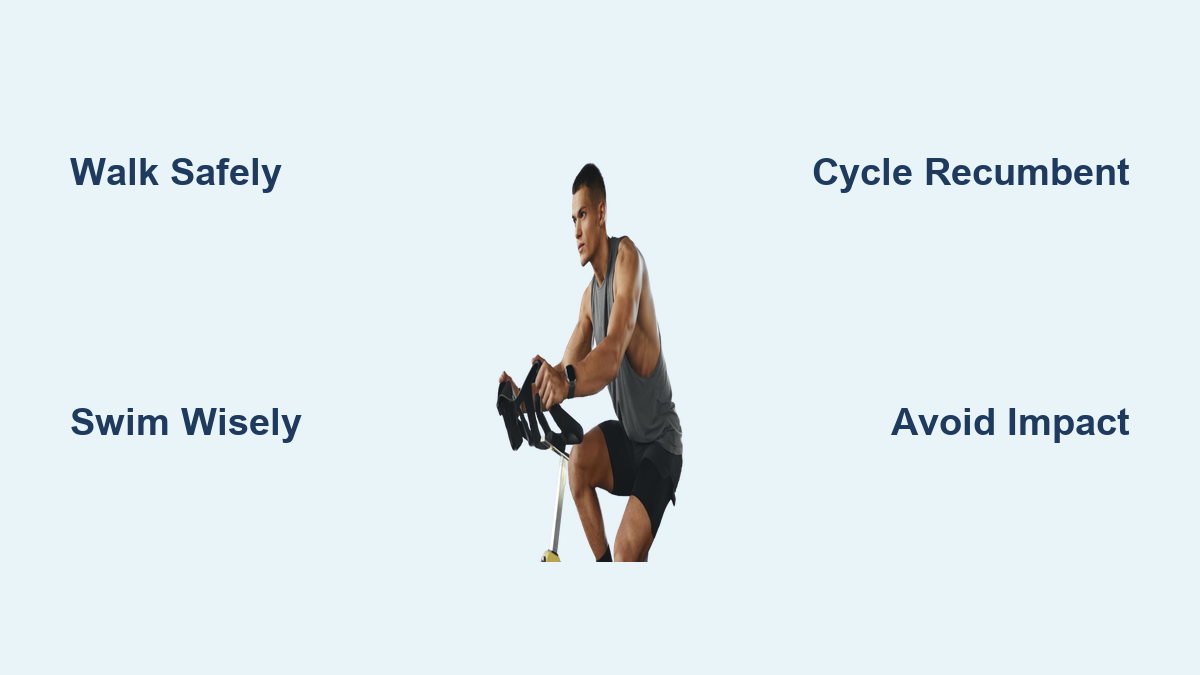
Instead, prioritize activities that unload your spine or support it in a neutral position. Water workouts, recumbent cycling, and elliptical training are ideal because they reduce or redistribute load across your body.
Breathe and Move with Control
Never hold your breath while exercising. The Valsalva maneuver dramatically increases intradiscal pressure and raises your injury risk. Focus on steady, rhythmic breathing to stabilize your core and protect your spine. Pair each exertion with an exhale and keep your posture aligned throughout every movement.
Start with Walking Safely
Walking is the most accessible cardio for back pain, but technique determines whether it helps or hurts. Done correctly, it strengthens supporting muscles and improves circulation. Done poorly, it can aggravate disc or joint issues.
Adjust for Pain Level and Terrain
If your pain is severe, begin with 5 to 10 minute intervals several times a day. Gradually increase your duration as tolerance improves. Aim for 150 minutes of moderate activity per week, broken into manageable sessions.
Choose flat, even surfaces like sidewalks, tracks, or treadmills. Avoid trails with roots, rocks, or steep inclines. Stop immediately if your pain increases by 3 points on a 10-point scale. Invest in supportive shoes with good arch support to reduce spinal jarring.
Maintain Neutral Spine Posture
Keep your head up, shoulders relaxed, and core gently engaged. Avoid slouching or overstriding. Let your arms swing naturally to promote balance. If you feel strain in your lower back, shorten your stride and slow your pace.
Pro Tip: Try “walk-rest-walk” intervals. Walk briskly for 5 minutes, rest 2, then resume. This builds endurance without overloading your spine.
Use Water for Pain-Free Cardio

Swimming and water aerobics are often called the gold standard for back pain. Buoyancy reduces spinal load by up to 90%, allowing free movement with minimal compression.
Pick the Safest Strokes
Not every stroke treats your back equally:
- Backstroke: Keeps your spine neutral and fully supported.
- Sidestroke: Minimizes twisting and flexion.
- Butterfly: Forces repetitive spinal arching, so avoid it.
- Breaststroke: Can strain your back with exaggerated arching.
- Freestyle (Front Crawl): Requires neck rotation and twisting, which is risky for back and neck pain.
If swimming is not your style, try water walking or jogging. March in chest- to shoulder-deep water, moving forward, backward, and side-to-side. The resistance builds strength while protecting your joints.
Try Water Aerobics Classes
Structured workouts combine cardio and light resistance in a safe, social environment. Look for classes labeled “low-impact” or “arthritis-friendly.” The community aspect also boosts mood, a hidden benefit for chronic pain sufferers.
Expert Note: Water temperature matters. Warm pools (83 to 88°F) relax muscles and reduce stiffness. Cold water may increase spasm risk.
Cycle in a Recumbent Position

Cycling is excellent for back pain when you choose the right bike. Recumbent models support your back and reduce lumbar strain.
Why Recumbent Bikes Win
The reclined seat supports your lower back and promotes spinal extension, which is therapeutic for herniated discs. Unlike upright bikes, recumbent models eliminate forward bending and reduce pressure on your spine.
Indoor cycling is safer than outdoor because there are no potholes, curbs, or sudden stops. Use magnetic resistance for a smoother ride. Start with 10 to 15 minutes at low resistance, then increase duration as tolerated.
Set Up Your Bike Correctly
- Seat height: Knee slightly bent at the pedal’s lowest point.
- Handlebar reach: Arms relaxed, no shoulder hunching.
- Back support: Full contact with the seat back, with no gaps.
Avoid bikes with dropped handlebars (racing style), which force neck extension and spinal flexion.
Warning: Stop if you feel numbness, tingling, or radiating leg pain, as these are signs of nerve irritation.
Try the Elliptical for Full-Body Motion
The elliptical mimics running without impact. Your feet never leave the pedals, eliminating the jarring force of foot strikes.
Use Proper Form to Protect Your Back
Stand tall, engage your core, and avoid leaning on the handlebars. Let the machine guide your motion rather than forcing it. Keep your stride natural because over-striding can strain your hamstrings and lower back.
Machines with moving handlebars engage upper body muscles, which is ideal if upper back pain is a concern. For added support, choose models with a seated option or backrest.
Adjust Resistance, Not Speed
Increase resistance gradually to boost intensity without compromising form. Aim for 20 to 30 minutes at a moderate pace where you can talk but not sing.
Common Mistake: Leaning forward or hunching your shoulders shifts load to the spine. Keep your chest open and gaze forward.
Practice Mind-Body Movement

Yoga and Tai Chi are legitimate cardio when done continuously. Both improve balance, flexibility, and mental health, all critical for managing back pain.
Choose Gentle Yoga Styles
Avoid power or hot yoga. Stick to:
- Restorative Yoga: Uses props to support poses, ideal for acute pain.
- Hatha Yoga: Slow, controlled movements with focus on alignment.
- Iyengar Yoga: Emphasizes precision and posture.
Skip poses that involve deep forward bends, backbends, or twists. Focus on cat-cow, child’s pose, and gentle supine twists.
Safety First: Tell your instructor about your back pain so they can help you modify poses as needed.
Learn Tai Chi for Stability
Tai Chi involves slow, flowing movements that enhance proprioception, your body’s sense of position. This sense is often impaired in chronic back pain, leading to poor posture and injury risk.
Practicing Tai Chi improves balance, reduces fear of movement, and calms your nervous system. Start with beginner classes or online videos. Avoid deep stances or sudden weight shifts.
Avoid High-Risk Cardio Moves

Some popular workouts can make back pain worse. Know which to skip or modify.
Skip Running and High-Impact Workouts
Running generates 3 to 5 times your body weight in impact force, which is dangerous for discs and joints. Even jogging on pavement can flare sacroiliac or facet joint pain.
If you miss running, try walking on a treadmill with a slight incline or water running in deep pool areas. Both simulate running motion without the impact.
Steer Clear of Twisting and Heavy Load Activities
Avoid:
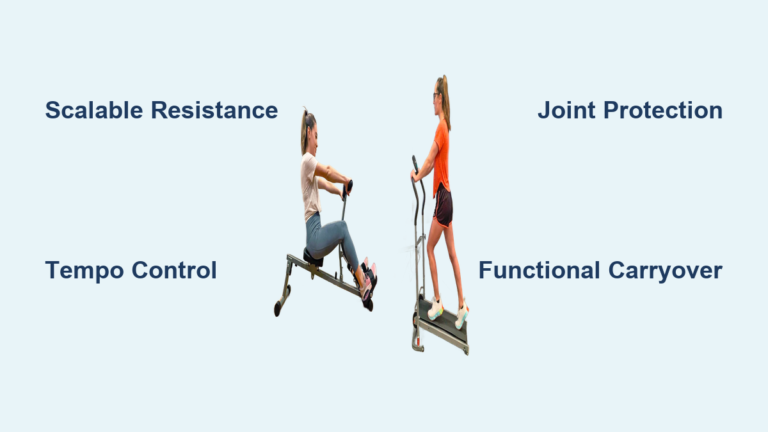
- Rowing machines: Repetitive spinal flexion.
- Step aerobics: High impact and uneven loading.
- Contact sports: Risk of collision and sudden bending.
- Kettlebell swings, shoveling, or digging: Create dangerous shear forces.
Dance styles like Zumba or Tango with deep dips and rapid turns should be avoided. Safer options include Waltz or Salsa with stable spine alignment.
Follow a Safe Exercise Protocol
Success depends not just on choosing the right workout but on how you do it.
Monitor Pain with the 3-Level Rule
If your pain increases by 3 points on a 0 to 10 scale during exercise, stop. For example, if you start at a 2 and rise to a 5, switch to rest or a gentler activity.
Distinguish between:
- DOMS (Delayed Onset Muscle Soreness): General muscle fatigue that peaks 24 to 48 hours post-exercise.
- Pathologic Pain: Sharp, shooting, or radiating pain, especially down the leg, which signals nerve irritation.
Build Consistency, Not Intensity
For back pain, regular moderate activity beats intense sporadic workouts. Aim for 3 to 5 sessions per week, 20 to 30 minutes each. Even 10-minute walks count.
Track your progress in a journal. Note:
- Type of exercise
- Duration and intensity
- Pain level before and after
- Any symptoms like numbness or tingling
This helps identify triggers and safe zones.
Consult Professionals Before Starting
Never begin a new cardio routine after an acute injury, fracture, or surgery without medical clearance.
Get a Personalized Plan
A physical therapist can assess your spine, identify movement restrictions, and recommend safe exercises. They may prescribe specific stretches or core work to complement your cardio.
An acupuncturist or pain specialist can help manage inflammation and nerve-related symptoms.
Seek Instruction for Complex Activities
Take a class or private session for:
- Spin cycling
- Yoga
- Tai Chi
- Elliptical use (if you are new)
Proper form prevents injury and maximizes benefits.
Frequently Asked Questions About Cardio Exercises for Back Pain
What is the best cardio exercise for lower back pain?
Swimming, recumbent cycling, and walking on flat surfaces are widely considered the safest and most effective cardio exercises for lower back pain. These activities elevate your heart rate while minimizing spinal compression and jarring forces.
Is walking good for back pain relief?
Yes, walking is excellent for most types of back pain when done with proper posture on level surfaces. Start with short 5 to 10 minute intervals if you have severe pain, and gradually increase your duration. Avoid hills and uneven terrain if they trigger symptoms.
Can I do cardio if I have a herniated disc?
Yes, but choose activities that promote spinal extension and avoid axial loading. Recumbent cycling is highly recommended because it supports your back and reduces compression. Avoid running, walking for long periods, and any exercise that compresses your vertebrae. Stop immediately if you feel numbness or tingling in your legs.
How often should I do cardio for back pain?
Aim for at least 150 minutes of moderate-intensity cardio per week, broken into 3 to 5 sessions of 20 to 30 minutes each. Consistency matters more than intensity. Even short 10-minute walks throughout the day add up and provide cumulative benefits.
Which swimming strokes should I avoid with back pain?
Avoid the butterfly stroke, breaststroke, and freestyle (front crawl). Butterfly forces repetitive spinal arching, breaststroke strains the back with exaggerated arching, and freestyle requires neck rotation and twisting. Stick to backstroke and sidestroke for the safest options.
Does running make back pain worse?
Running can worsen back pain because it generates 3 to 5 times your body weight in impact force with each step. This compresses your discs and can aggravate sacroiliac joint pain. If you love running, try water running in a deep pool or walking on a treadmill with a slight incline as safer alternatives.
Key Takeaways for Choosing Cardio Exercises for Back Pain

The best cardio exercises for back pain are the ones you can do consistently without flare-ups. Walking, swimming, recumbent cycling, and elliptical training top the list for safety and effectiveness. Avoid high-impact, jarring, or twisting movements that compress your spine.
Focus on posture, breathing, and gradual progression. By staying active within your limits, you break the cycle of pain and de-conditioning, paving the way for lasting relief and stronger spinal health. Start with one short session today, track your response, and build from there.