Best Postpartum Cardio Workouts for New Moms (2026)
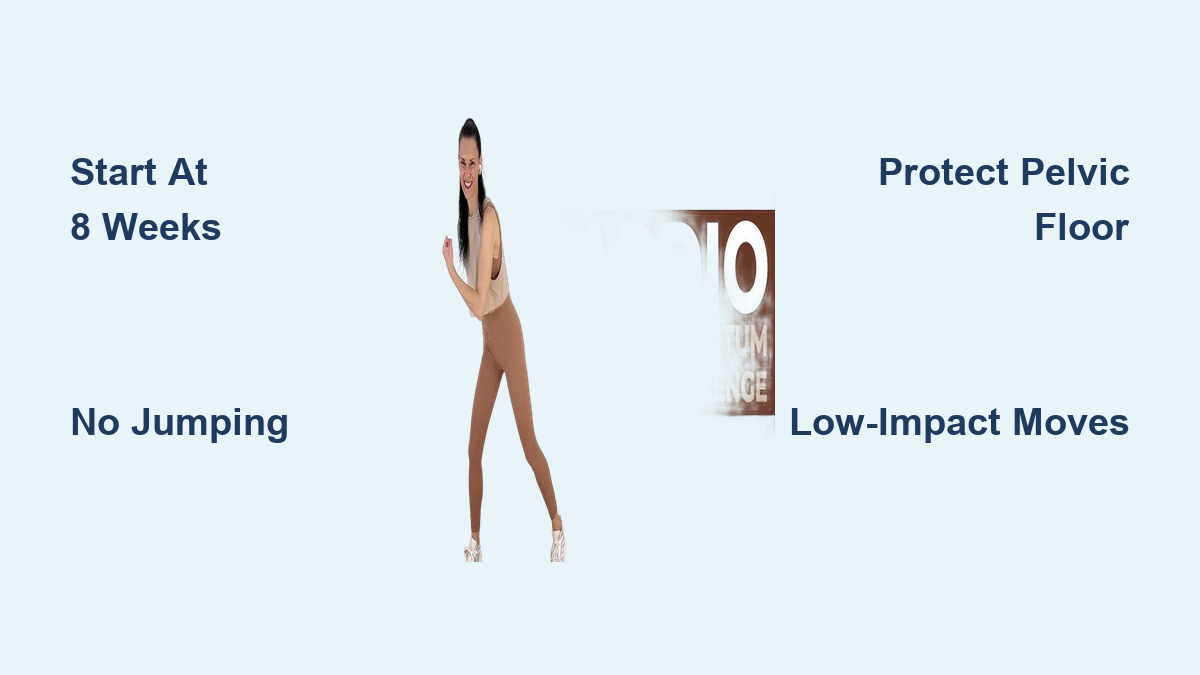
Bringing a baby into the world reshapes your body, energy, and daily rhythm. Once you’re cleared to move, you might wonder when to start postpartum cardio and how to do it without setbacks. The good news: you don’t need hours at the gym or high-impact jumping to rebuild fitness. With the right postpartum cardio workout, you can safely elevate your heart rate, restore core strength, and regain endurance.
The key is starting with low-impact, body-aware movement tailored to your recovery stage. Whether you’re 8 weeks postpartum or returning after a C-section, there is a safe path back to cardiovascular fitness. This guide breaks down exactly what to do, when to do it, and how to progress. From 5-minute indoor walks to strength-integrated LISS sessions, you will learn how to move with purpose, protect your pelvic floor, and build sustainable energy right from home.
Start Safely: Postpartum Cardio Guidelines
Before you lace up, understand the non-negotiables of postpartum exercise. Your body has just performed an incredible feat and now needs intelligent movement, not punishment.
When to Begin Cardio
Most women can start low-impact postpartum cardio 8 or more weeks after delivery, but timing depends on individual healing. Vaginal or cesarean birth, diastasis recti, fatigue, and pelvic floor symptoms all influence readiness. Medical clearance is essential, especially if you had a C-section, prolonged labor, or complications. Never rush into exercise based on the calendar alone.
Key Safety Rules
- No jumping or high impact until you pass a postpartum fitness test, such as a single-leg hop without leakage or pelvic pressure.
- Modify for diastasis recti: Avoid crunching motions and watch for abdominal coning during movement.
- C-section recovery: Delay core-intensive moves and focus on gentle activation and breathwork first.
- Listen to your body: Stop if you feel pain, pelvic heaviness, or increased bleeding.
Phased Progression Plan
- Healing Phase (Weeks 1–8): Focus on walking, breathing, and pelvic floor engagement.
- Reintroduction (Weeks 8–12): Begin low-impact cardio with no jumping.
- Build and Strengthen (Month 3+): Add resistance, duration, or intensity only when symptoms allow.
- Advanced (4+ Months): Consider high-impact only after passing functional testing.
Choose Your Cardio Type: Match to Your Stage
Not all cardio is created equal, especially postpartum. Pick the right style for your recovery level to build fitness without setbacks.
Low-Impact Cardio: No Jumping
This is your foundation. These workouts keep one foot on the ground, minimizing pelvic floor strain while boosting circulation and stamina.
- Best for: Beginners, C-section moms, or those with pelvic floor concerns.
- Examples: Marching in place, step-back lunges, standing leg lifts.
- Workout formats: 10-minute no-jump HIIT, 15-minute indoor walking, 2,000-step routines.
Pro Tip: Use a mirror to check for abdominal doming during movements and stop if you see coning.
Zone 2 and Weighted Cardio
Once you are stable, add light dumbbells to your cardio. This style keeps your heart in Zone 2 (60–70% of max heart rate) while preserving muscle.
- Best for: Weeks 12 and beyond, with consistent energy and no pelvic symptoms.
- Structure: 30-minute LISS (Low-Intensity Steady State) with 2–5 lb weights.
- Moves: Squat rises with bicep curls, overhead presses while marching, weighted lunges.
Why it works: Builds endurance without spiking cortisol, which is ideal for sleep-deprived new moms.
Advanced High-Intensity Options
Only for those who have passed high-impact clearance tests and feel strong.
- Formats: Tabata (20s work, 10s rest), HIIT with rest periods.
- Moves: Jumping jacks (if cleared), plyo lunges, modified burpees.
- Always include low-impact alternatives because your recovery varies day to day.
Warning: If you experience urinary leakage, pelvic pain, or coning, revert to low-impact immediately.
Warm Up Right: Prep Your Body to Move
Jumping into cardio without warming up stresses healing tissues. A proper warm-up activates your core, mobilizes joints, and prevents strain.
Dynamic Warm-Up Routine (5–10 Minutes)
Do this before every session, especially if you have been sitting or feeding.
- Hip Rotations (1 min): Stand with hands on hips and circle hips clockwise and counterclockwise.
- Walk with Knee Pulls (1 min): Step forward, pull knee to chest, then switch legs.
- Walk with Quad Stretch (1 min): Step, grab ankle, and pull heel toward glute.
- Glute Stretch Walk (1 min): Cross one ankle over the opposite knee while standing and lean forward slightly.
- Full Swings (2 min): Swing arms and torso side to side, then forward and back.
Why it matters: Pregnancy stiffens hips and weakens glutes. This sequence reactivates key stabilizers.
Core Activation Cues
Before any movement, engage your deep core:
– Inhale deeply into your ribs.
– On the exhale, gently draw your lower belly toward your spine, like zipping up a tight pair of jeans.
– Keep your pelvic floor lifted, as if stopping a urine stream.
Maintain this engagement during cardio to protect your midline and support your back.
Top Postpartum Cardio Moves (Low-Impact)
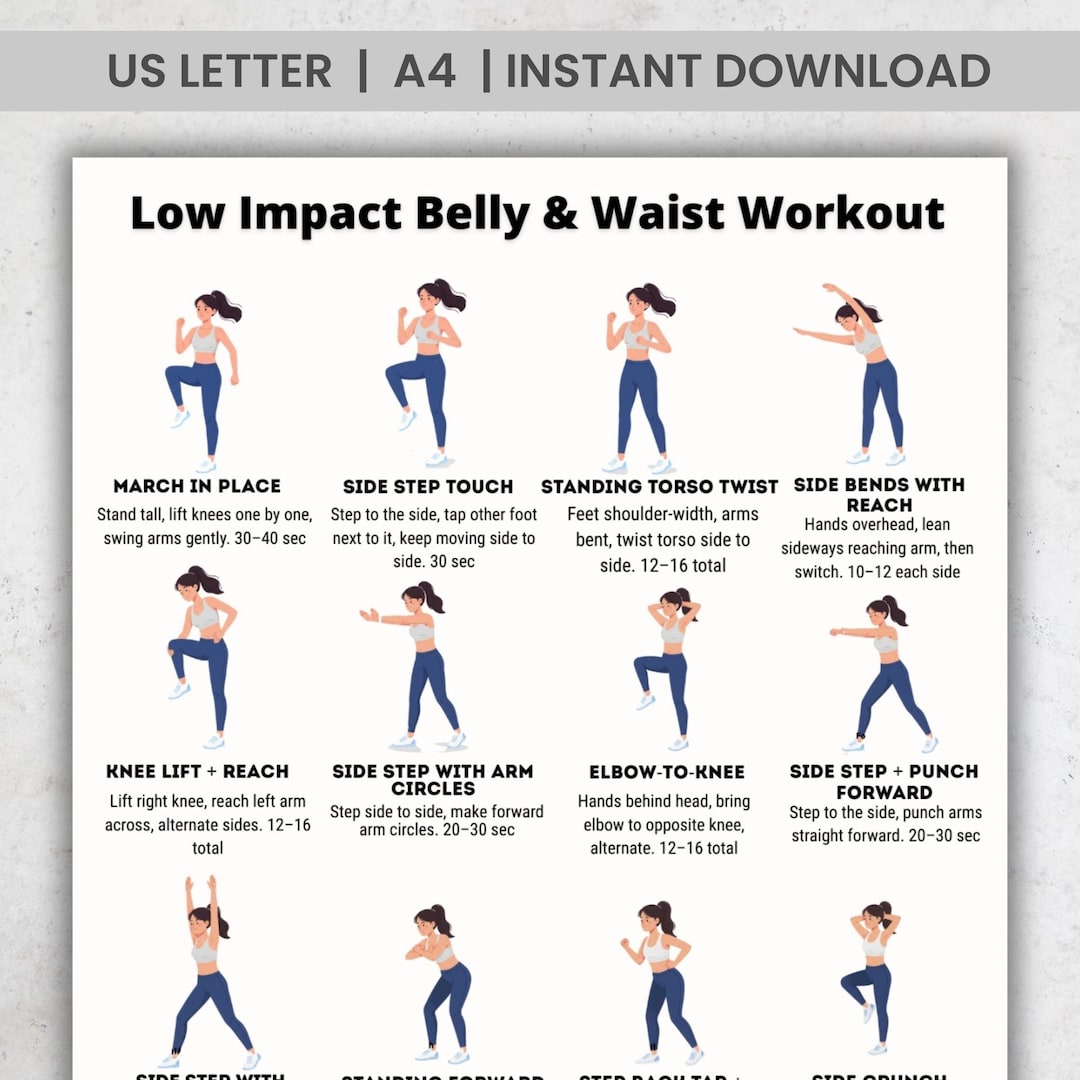
These movements safely raise your heart rate without jumping. Use them in circuits or steady-state formats.
Marching in Place
- How: Stand tall and lift knees alternately to hip height.
- Form tip: Keep core engaged and avoid arching your back.
- Progression: Add arm pumps or light weights.
Perfect for: 5–10 minute energy boosts between feedings.
Standing Knee Lifts
- How: Lift one knee high, then the other, in a controlled rhythm.
- Engages: Hip flexors and lower abs.
- Modify: Hold onto a chair if balance is off.
Step-Back Lunges
- How: Step one foot back, lower into a lunge, then push through the front heel to return.
- Why it’s safe: No jumping means less pelvic floor impact than forward lunges.
- Add weight: Hold dumbbells at your sides.
Standing Side Leg Lifts
- How: Lift one leg out to the side, keep toes forward, and lower slowly.
- Targets: Glute medius, which is key for hip stability.
- Tip: Do not lean. Keep your torso upright.
Standing Mountain Climbers
- How: Stand in a slight forward lean and drive knees toward chest in a climbing motion.
- Cardio benefit: High intensity without floor contact.
- Protect your core: Keep spine neutral with no rounding.
Air Punches and Turns
- How: Pivot on one foot, punch arms forward and up, and alternate sides.
- Engages: Obliques, shoulders, and heart.
- Fun factor: Great for mood-boosting movement.
Squat Rises
- How: Lower into a squat and rise with control.
- Form check: Keep knees over toes and chest up.
- Add pulse: Rise halfway and pulse up and down for extra burn.
Core-Safe Finishers: Rebuild Deep Strength
Never skip core work. Just do it right. These postpartum-specific moves rebuild transverse abdominis strength without straining the midline.
Dead Bug (Modified)
- How: Lie on back with knees bent at 90° over hips and arms toward the ceiling.
- Move: Exhale and extend one arm back and the opposite leg straight while keeping the lower back flat.
- Stop if: Your back lifts or abdomen domes.
Purpose: Teaches anti-extension control, which is critical for diastasis recovery.
Heel Slides
- How: Lie on back with one leg bent and the other straight.
- Move: Slowly slide one heel out, then back, while keeping the pelvis still.
- Focus: Gentle transverse abdominis activation.
Ideal for: Early postpartum or C-section recovery.
Pelvic Tilts
- How: Lie on back with knees bent and feet flat.
- Move: Gently rock the pelvis to flatten the lower back into the floor, then release.
- Breath sync: Exhale to tilt and inhale to release.
Why it works: Restores mind-body connection to the deep core.
Glute Bridges
- How: Lie on back with knees bent and lift hips toward the ceiling.
- Engages: Glutes, hamstrings, and pelvic floor.
- Modify: Place hands under the lower back for support.
Bonus: Strengthens the posterior chain, which is often weakened after pregnancy.
Workout Plans by Time and Goal

No time? No problem. These structured plans fit your schedule and recovery level.
5–10 Minute Routines (Time-Crunch Friendly)
5-Minute Indoor Walk
– March in place, add knee lifts, and include arm circles.
– Great for a post-feeding energy reset.
10-Minute Low-Impact HIIT
– 40s work, 20s rest, 3 rounds:
– Marching
– Standing knee lifts
– Step-back lunges
– Air punches
10-Minute Dynamic Warm-Up
– Hip rotations, knee pulls, quad stretches, and full swings.
– Use as a standalone mobility session.
15-Minute Power Sessions
15-Minute No-Equipment Cardio
– 3 rounds:
– 1 min marching
– 1 min squat rises
– 1 min standing mountain climbers
– 1 min side leg lifts
– 1 min rest
15-Minute Tabata (Postpartum Style)
– 20s work, 10s rest, 8 rounds per move:
– Marching
– Knee lifts
– Lunges
– Side lifts
– Standing climbers
– Glute bridges
– Finisher: 1 min dead bugs, 1 min heel slides, 1 min pelvic tilts
20–30 Minute Builds
20-Minute Low-Impact Cardio (Rosie Stockley Method)
– Warm-up: Hip rotations and walk with stretches (5 min)
– Main: Air punches, run-out to plank (modified), and squat rises (10 min)
– Cool-down: Forward fold and shoulder rolls (5 min)
30-Minute LISS with Weights
– All-standing, Zone 2 effort:
– 5 min warm-up
– 20 min: March with bicep curls, overhead press, weighted squats, and step-back lunges
– 5 min cool-down
Equipment and Space Needs
Good news: you need almost nothing to start.
What You Actually Need
- Workout mat: Optional but helpful for comfort during floor finishers.
- Dumbbells (2–5 lbs): Only for weighted cardio, so start light.
- Water bottle: Stay hydrated, especially if breastfeeding.
- Space: A clear floor area of about 3×6 ft for safe movement in all directions.
What You Don’t Need
- Treadmill
- Jump rope
- Resistance bands (not essential at first)
- Gym membership
All workouts can be done at home with no equipment required.
Customize for Your Recovery
Your body, your rules. Match your workout to your unique postpartum journey.
Beginner or Early Postpartum (8–12 Weeks)
- Start with: 5–10 minute walks, healing workouts, and dynamic warm-ups.
- Focus: Reconnecting with movement and gentle mobility.
- Avoid: High intensity, core crunches, and jumping.
Diastasis Recti or C-Section Recovery
- Do: Low-impact cardio, pelvic tilts, heel slides, and glute bridges.
- Avoid: Planks, sit-ups, burpees, and any move causing coning.
- Test: Place fingers above and below the belly button and feel for a gap during a curl-up.
Advanced or Returning Athlete
- Try: Tabata, weighted LISS, and 30-minute steady-state sessions.
- But remember: Even fit moms need to test for high-impact readiness.
- Rule of thumb: If you leak or feel heaviness, scale back.
Time-Crunch Parent
- Best bets: 5-minute indoor walks, 10-minute HIIT, and 15-minute fly-by sessions.
- Strategy: Stack workouts by doing a 5-minute session after every feeding or nap.
Track Progress and Prevent Setbacks
Success is not just about duration or intensity. It is about how your body responds.
How to Know You’re Ready to Progress
- No pelvic pain, heaviness, or leakage during or after workouts.
- No diastasis coning during movement.
- Energy is stable and not crashing post-exercise.
- You have consistently completed 2–3 low-impact sessions per week for 4 or more weeks.
Warning Signs to Stop
- Urinary leakage: Indicates pelvic floor overload.
- Pelvic pressure or bulging: Could signal prolapse risk.
- Abdominal doming: Sign of diastasis strain.
- Pain anywhere: Not “good pain.” Stop immediately.
Long-Term Sustainability Tips
- Be consistent, not perfect: 10 minutes daily beats one 60-minute weekly session.
- Sync with your baby’s rhythm: Move when they nap or during tummy time together.
- Use modifications daily: Even advanced workouts should have low-impact options.
- Reassess monthly: Your body changes, so adjust workouts accordingly.
Frequently Asked Questions About Postpartum Cardio Workouts
When can I safely start a postpartum cardio workout?
Most women can begin low-impact postpartum cardio 8 or more weeks after delivery, provided they have medical clearance. Individual healing, type of birth, and symptoms like pelvic heaviness or diastasis recti all affect timing. Always consult your healthcare provider before starting.
What is the best type of cardio after giving birth?
Low-impact, no-jumping cardio is the safest starting point. Movements like marching, step-back lunges, and standing knee lifts raise your heart rate without stressing the pelvic floor. As you recover, you can progress to Zone 2 weighted cardio and eventually high-intensity options after passing a postpartum fitness test.
Can I do cardio if I have diastasis recti or a C-section recovery?
Yes, but with modifications. Stick to low-impact movements and core-safe finishers like heel slides, pelvic tilts, and modified dead bugs. Avoid crunches, planks, and any exercise that causes abdominal coning or doming. Gentle core activation and breathwork should come first.
How long should my postpartum cardio sessions be?
Start with 5–10 minute sessions and build gradually. Time-efficient options include 10-minute low-impact HIIT and 15-minute Tabata workouts. As your endurance improves, you can progress to 20–30 minute LISS or weighted cardio sessions.
How do I know if I’m doing too much?
Warning signs include urinary leakage, pelvic pressure or heaviness, abdominal doming, and pain during or after exercise. If you experience any of these, stop and scale back to lower-impact movements. Consistency with shorter sessions is safer than pushing through discomfort.
Do I need equipment for postpartum cardio?
No. Most effective postpartum cardio workouts require no equipment at all. A workout mat is optional for floor finishers, and light dumbbells (2–5 lbs) are only needed for weighted Zone 2 sessions. A small clear floor space and water are all you really need.
Key Takeaways for Building Your Postpartum Cardio Routine
Start low, go slow, and trust your body. The best postpartum cardio workout is one that matches your recovery stage, protects your pelvic floor, and fits your daily rhythm. Begin with 5–10 minute low-impact sessions, add core-safe finishers like dead bugs and pelvic tilts, and only progress to higher intensity after passing a postpartum fitness test. Above all, consistency matters more than duration. Ten mindful minutes each day will rebuild your strength, energy, and confidence far more effectively than one exhausting weekly session.