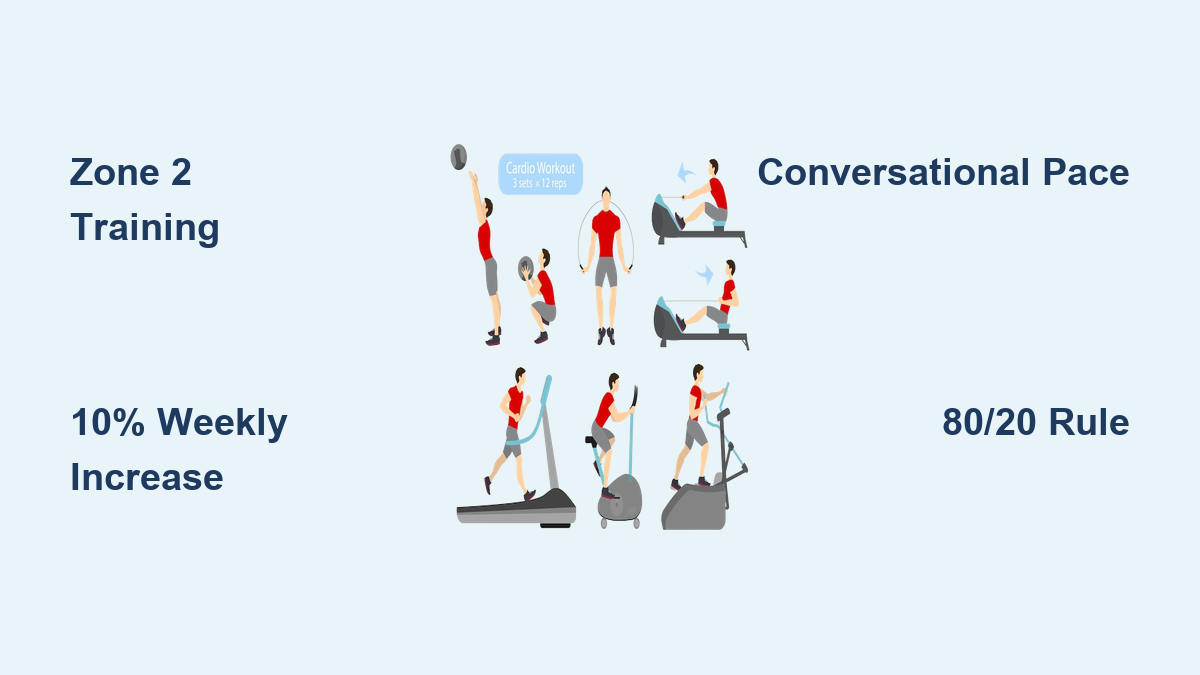
How Long to Build a Cardio Base
You’ve laced up your running shoes, committed to the process, and started logging miles—but you’re not getting faster. In fact, you’re running slower on purpose. That’s the heart of aerobic base building: training easy to get strong over time. The real question isn’t just how to do it, but how long will it take to build a cardio base that actually pays off?
The answer isn’t one-size-fits-all. For some, noticeable gains appear in 4–6 weeks. For others, true endurance mastery takes years or even decades. Your timeline depends on your starting point, consistency, training intensity, and long-term goals. Whether you’re a beginner aiming to run 30 minutes straight or an experienced athlete preparing for a marathon, building a solid aerobic foundation is non-negotiable. In this guide, you’ll learn the science-backed timelines, how to train at the right intensity, and the exact steps to avoid common pitfalls.
Defining the Aerobic Base
What Is an Aerobic Base?
Your aerobic base is the engine of endurance. It’s the ability to sustain low-to-moderate intensity exercise using oxygen efficiently, burning fat, sparing glycogen, and delaying fatigue. This isn’t about speed or power; it’s about stamina, recovery, and resilience.
When you build this base, your body improves at:
– Delivering oxygen to muscles
– Clearing lactate
– Burning fat as fuel
– Supporting higher-intensity efforts later
Without it, you hit the wall early, recover slowly, and increase injury risk.
Why It Matters for All Athletes
Even sprinters and HIIT enthusiasts need an aerobic base. It fuels recovery between bursts, reduces injury risk, and improves overall work capacity. For endurance athletes like runners, cyclists, and triathletes, it’s the foundation of race-day performance.
A strong aerobic system means:
– Lower heart rate at the same pace
– Faster recovery between intervals
– Ability to sustain race pace longer
– Reduced perceived effort
Skipping base training leads to burnout, plateaus, and overuse injuries.
Key Physiological Adaptations

Mitochondrial Growth Explained
Mitochondria are the powerhouses of your cells. Zone 2 training, which is low-intensity and steady-state, stimulates mitochondrial biogenesis: the creation of new mitochondria in slow-twitch muscle fibers.
More mitochondria mean better energy production using oxygen. This results in:
– Greater fat oxidation
– Less reliance on glycogen
– Delayed fatigue
These changes begin within 2–4 weeks but continue to improve for months with consistent training.
Lactate Clearance and Threshold Shift
Lactate isn’t the enemy; it’s a fuel source. The problem is accumulation. At low intensities, your body clears lactate efficiently. At high intensities, it floods the system.
Aerobic base training strengthens slow-twitch fibers to:
– Transport lactate via MCT-1 transporters
– Recycle it into energy via mLDH enzymes
– Raise your aerobic threshold (AeT)
This means you can go harder before lactate spikes, pushing your “easy” pace closer to race pace.
Cardiovascular Efficiency Gains
Your heart gets stronger and more efficient with base training. Adaptations include:
– Increased blood plasma volume
– Higher stroke volume (more blood per beat)
– Lower resting heart rate
– Improved capillary density
These changes allow more oxygen to reach working muscles with less strain, making every effort feel easier over time.
Training Timelines by Experience Level
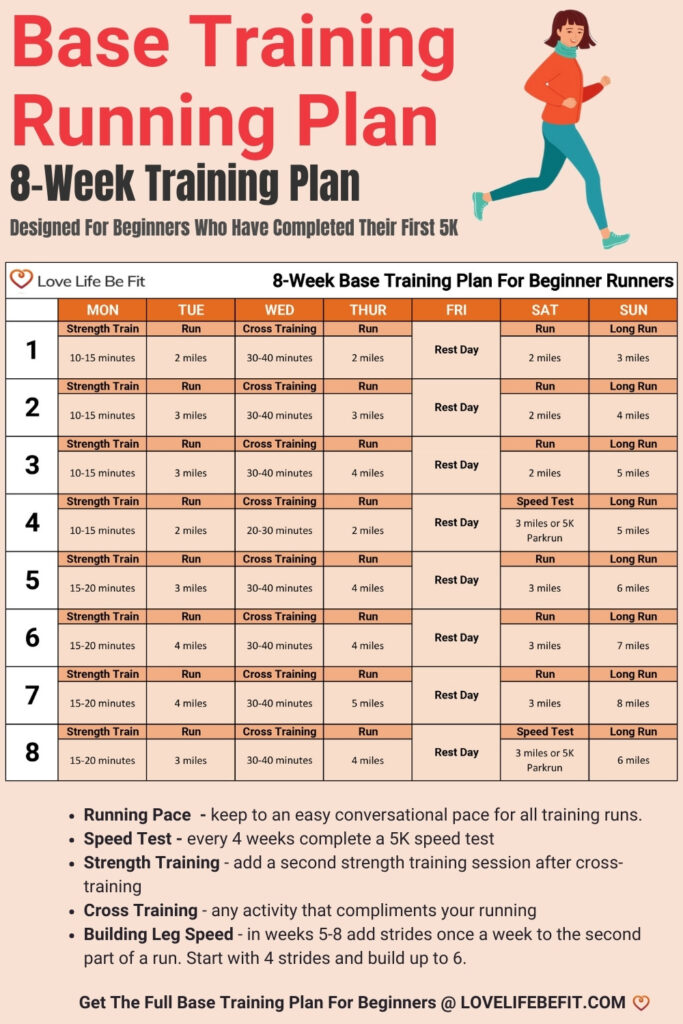
Beginners: 10–16 Weeks to Stability
If you’re new to cardio, expect 10 to 16 weeks to build a functional aerobic base.
Milestone: Running or cycling for 30 minutes straight while speaking in full sentences.
What to expect:
– First 4 weeks: Focus on consistency, not speed
– Weeks 5–8: Heart rate drops at the same pace
– Weeks 9–12: Ability to go longer and slightly faster
– Weeks 13–16: Conversational pace becomes sustainable
Start with run/walk intervals if needed. Aim for 3 days per week, 20–30 minutes, at conversational effort.
Returning Athletes: 3–8 Weeks to Rebuild
If you’ve trained before but took time off, re-establishing your base is faster, typically 3 to 8 weeks.
Your body remembers. Connective tissue, capillaries, and mitochondria reactivate quickly with stimulus.
Strategy:
– Start at 50–60% of previous volume
– Use heart rate to stay in Zone 2 (60–80% max)
– Add 10% volume weekly
– Include one long session per week
By week 6, most can resume structured training plans safely.
Advanced Athletes: 3–6 Months to Optimize
For experienced runners or cyclists, base building isn’t about starting; it’s about optimizing.
A full base phase lasts 12 to 24 weeks, especially before a marathon or race season.
Goals:
– Raise aerobic threshold
– Increase fat-burning efficiency
– Build durability for back-to-back long efforts
Training volume: 150–300 minutes per week of Zone 1/2 cardio. Include cross-training to maintain volume without joint stress.
Progress is measured not by pace, but by:
– Lower heart rate at same effort
– Less pace drop-off in long runs
– Faster recovery
Long-Term Development: Years to Mastery
The 2–3 Year Threshold
Many coaches and physiologists agree: 2 to 3 years of consistent training is the minimum to reach your aerobic potential.
By this point:
– Mitochondrial density is maximized
– Lactate clearance is highly efficient
– Fat oxidation is optimized
– You’ve likely hit your genetic ceiling, unless past errors are corrected
This is when athletes plateau. Further gains come from refining technique, nutrition, and recovery, not just more volume.
The Decades-Long Edge
Elite ultra-endurance athletes who dominate 100-mile races or multi-day events often have decades of aerobic training behind them.
Why?
– Durability: They can handle high volume without breaking down
– Resilience: They recover faster between efforts
– Pacing intuition: They know their body’s limits
A 50-year-old with 30 years of riding can outlast a 30-year-old with 5 years of training, even if the younger athlete has higher FTP (Functional Threshold Power).
Raw power does not equal endurance. Time in the saddle builds a “diesel engine” effect that can’t be rushed.
Determining Your Training Intensity
Use the Conversation Test
The easiest way to stay in your aerobic zone: talk comfortably.
Guidelines:
– Optimal: You can say a full sentence without gasping
– Too fast: You can only speak in one-word bursts
– Too slow: You could recite a poem without effort
If you’re breathless, slow down. This isn’t about ego; it’s about adaptation.
Monitor Heart Rate Zones
For precision, use a heart rate monitor.
Zone 2 = 60–80% of max heart rate
Or, more accurately: 70% of your anaerobic threshold
How to find your zone:
– Use a recent race time (e.g., 5K) with a pace calculator
– Perform a heart rate drift test: maintain pace, watch for HR creep
– Get lab-tested (gold standard): VO2 max and lactate threshold testing
During long runs, it’s normal for heart rate to rise even if pace is steady. Slow down to keep HR in Zone 2. A 30-second/mile drop by the end is common and correct.
Avoid the Gray Zone Trap
The “gray zone” is the no-man’s-land between easy and hard: slightly too fast to build aerobic capacity, too slow to build speed.
Dangers:
– No mitochondrial adaptation
– Increased recovery time
– Reduced total training volume
– Higher injury risk
Most recreational athletes train in this zone by accident. Fix it by going slower than you think you should.
Structuring Your Base Training Plan

Follow the 80/20 Rule
80% of your weekly volume should be low intensity (Zone 1/2).
20% can be higher intensity (tempo, intervals).
This ratio maximizes aerobic gains while allowing some speed development.
Example weekly plan (runner):
– Monday: Rest or strength
– Tuesday: 45-min Zone 2 run
– Wednesday: 30-min easy + strength
– Thursday: Rest or cross-train
– Friday: 60-min Zone 2 run
– Saturday: 20-min fartlek (80/20 effort)
– Sunday: 90-min long run (Zone 2)
Adjust based on experience and recovery.
Weekly Volume Goals
Start with 150 minutes per week of Zone 1/2 cardio. Work toward 300 minutes for full base development.
Guidelines:
– Beginners: 3 days/week, 30–45 mins
– Intermediate: 4–5 days/week, 45–60 mins
– Advanced: 5–6 days/week, 60+ mins
Use the 10% rule: don’t increase weekly volume by more than 10% to avoid injury.
Progress Long Runs Gradually
The long run is the cornerstone of base building.
How to progress:
– Add 1–2 miles every 2 weeks
– Keep effort conversational
– Focus on time, not pace
– Allow 1–2 easy days before and after
This builds connective tissue strength and aerobic capacity safely.
Complementary Training Strategies
Add Strength Training
Strength work is not optional; it’s essential for injury prevention and efficiency.
Benefits:
– Stronger tendons and ligaments
– Improved running economy
– Better power output
– Reduced injury risk
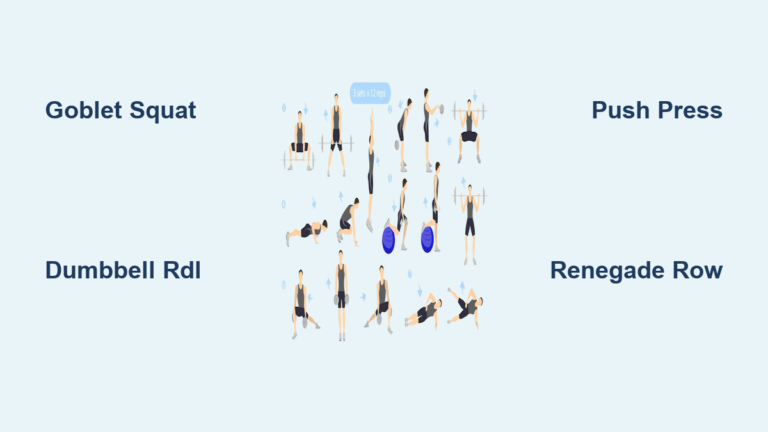
Recommendation: 2–3 sessions per week. Focus on:
– Squats, deadlifts, lunges
– Core stability (planks, Pallof press)
– Single-leg strength (step-ups, single-leg RDLs)
Keep intensity moderate; don’t sacrifice recovery.
Include Mobility and Cross-Training
Mobility prevents imbalances. Cross-training boosts volume without impact.
Mobility: 10–15 minutes, 2–3x/week
Focus on hips, ankles, thoracic spine.
Cross-training options (keep HR in Zone 2):
– Cycling
– Swimming
– Rowing
– Elliptical
– Hiking
– Pickleball (if effort is controlled)
These add aerobic volume while giving joints a break.
Common Mistakes and How to Avoid Them
Starting Too Fast
Many beginners run too hard, too soon, killing aerobic adaptation.
Signs you’re going too fast:
– Can’t speak in full sentences
– Heart rate >85% max
– Need multiple recovery days
Fix: Slow down. Use the conversation test. If in doubt, go slower.
Increasing Volume Too Quickly
More isn’t better if it leads to injury.
Risks of rapid increases:
– Stress fractures
– Tendonitis
– Burnout
Rule: 10% weekly volume increase max. Repeat weeks if needed.
Neglecting Recovery
Adaptation happens during rest, not training.
Recovery essentials:
– 7–9 hours of sleep
– Adequate protein and carbs
– Hydration
– Rest days (1–2 per week)
No base is built on constant grind.
Overemphasizing Speedwork Early
Intervals feel rewarding, but they sabotage base building.
When to add intensity:
– After 4+ weeks of consistent Zone 2
– When conversational pace feels easy
– Only 1–2 sessions per week max
Speed without a base leads to short-term gains and long-term plateaus.
Special Considerations by Demographic
Older Athletes (50+)
Advantages: Often more consistent, better pacing, greater durability.
Challenges: Slower recovery, higher injury risk.
Strategy:
– Prioritize recovery
– Emphasize strength training
– Accept slower progress
– Focus on consistency over intensity
Aerobic base protects joint health and supports longevity.
Late-Start Athletes
Picking up endurance sports in adulthood? You can still excel, but patience is key.
Reality: It may take 5+ years to match the endurance of lifelong athletes.
Why? Decades of movement build resilience that power meters don’t show.
Focus:
– Consistency over years
– Avoid burnout
– Celebrate small gains
– Accept that durability takes time
Measuring Progress and Success

Track Heart Rate at Fixed Pace
One of the best indicators: your heart rate at the same pace drops over time.
This shows improved cardiovascular efficiency.
Monitor Pace at Fixed Heart Rate
Flip it: pace increases at the same heart rate.
This reflects better aerobic capacity.
Observe Fatigue Resistance
You’re making progress if:
– Long runs feel easier
– Pace drop-off happens later
– You recover faster
– You can handle back-to-back long efforts
These are signs of true aerobic maturity.
Frequently Asked Questions About Building a Cardio Base
How long does it take to build a cardio base as a beginner?
Most beginners need 10 to 16 weeks to build a functional aerobic base, with the key milestone being the ability to run or cycle for 30 minutes straight while speaking in full sentences. Initial efficiency gains can appear within 4 to 6 weeks of consistent training.
Can you build a cardio base in 4 weeks?
A 4-week period represents the minimum base period and is considered the absolute floor. While you may notice some early adaptations, meaningful aerobic development typically requires at least 2 to 3 months of dedicated Zone 1/2 training.
Why does it take years to fully develop an aerobic base?
Full aerobic development takes years because adaptations like mitochondrial density, capillary growth, and connective tissue strengthening require prolonged, consistent stimulus. Most athletes approach their genetic ceiling after 2 to 3 years, and true durability for ultra-endurance events often takes decades to cultivate.
What heart rate zone builds a cardio base?
Zone 2, defined as 60–80% of maximum heart rate or approximately 70% of your anaerobic threshold, is the primary zone for aerobic base building. Staying in this zone maximizes fat oxidation and mitochondrial development without excessive lactate accumulation.
How many minutes per week should I train to build a cardio base?
Start with a minimum of 150 minutes per week of Zone 1/2 cardio and work toward 300 minutes for full base development. Frequency should be at least 3 days per week, with most athletes training 4 to 6 days depending on experience level.
Is it possible to build a cardio base without running?
Yes. Cycling, swimming, rowing, hiking, and even pickleball can build an aerobic base as long as heart rate stays in Zones 1 and 2. Cross-training adds volume without repetitive joint stress and counts fully toward aerobic development.
Final Thoughts on Building Your Cardio Base
Building a cardio base isn’t a sprint; it’s a marathon. For most people, 4 to 16 weeks delivers noticeable gains in efficiency and endurance. But true aerobic mastery takes years of consistent, intelligent training.
The key principles to remember:
– Stay in Zone 2 and go slower than feels natural
– Progress volume gradually using the 10% rule
– Prioritize recovery, strength, and consistency over intensity
Your next step: assess your current conversational pace or Zone 2 heart rate, commit to 3 days per week of easy aerobic work, and trust the process. The foundation you build today powers every future performance. Start slow, stay consistent, and let time do the work.