How Accurate Are Cardio Machine Calorie Counters?
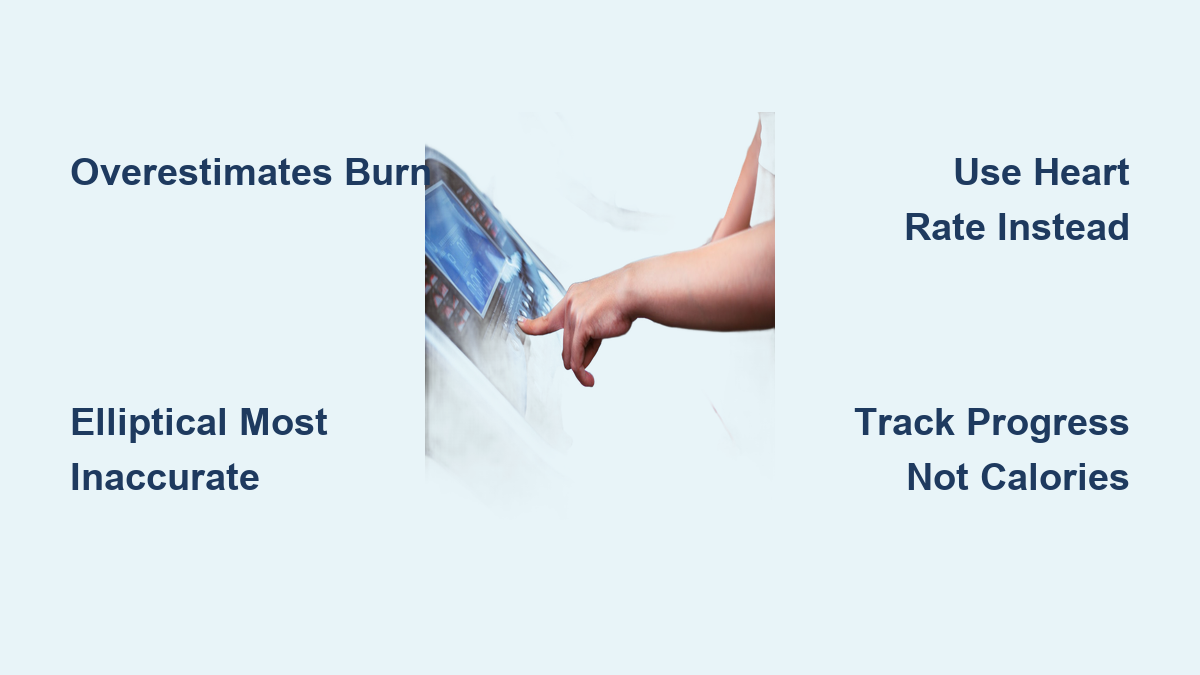
You finish 30 minutes on the treadmill, check the console, and see “Calories burned: 350.” That number feels like proof your hard work paid off. But how accurate are cardio machine calorie counters when the rubber meets the road?
The short answer: not very. Research shows these displays overestimate calorie burn by 7% to 42%, depending on the machine and how you use it. Treadmills, ellipticals, bikes, and stair climbers all calculate differently, yet none can measure your personal metabolic response in real time. The numbers look scientific, but they rely on generalized formulas that ignore your unique body, fitness level, and effort.
In this guide, you’ll learn exactly how machines estimate calories, which ones come closest to reality, and smarter ways to track true effort without trusting a glowing screen.
How Machines Estimate Calories
Cardio equipment does not measure actual energy expenditure the way lab-grade metabolic carts do. Instead, machines rely on pre-programmed algorithms built from standardized data and the few inputs you provide.
The MET Formula Explained
Most machines use Metabolic Equivalent (MET) values drawn from The Compendium of Physical Activities. One MET equals your resting metabolic rate, roughly 1 kcal per kilogram per hour. Jogging at 5 mph carries a value of about 8 METs, meaning it costs roughly eight times more energy than sitting still.
The math looks like this:
(METs × 3.5 × body weight in kg) × duration in hours ≈ estimated calories
So a 155-pound person jogging for 30 minutes at 8 METs gets a tidy estimate. The catch is that this is population-based math, not personalized science. Your actual burn depends on muscle mass, fitness efficiency, and biomechanics, none of which the machine truly sees.
What Inputs Actually Matter?
Machines typically ask for:
- Weight (the most critical variable)
- Age
- Gender
- Heart rate (if sensors are used)
Many users skip entering weight, so machines default to roughly 155 pounds, skewing results for everyone else. Even with correct inputs, the algorithm assumes average metabolic efficiency, ignoring the gap between a beginner and a trained athlete.
Machine Accuracy: Which Can You Trust?
Not all cardio machines are created equal. Some come closer to reality than others, and the differences are significant.
Elliptical Trainers: Least Accurate

Overestimates by 20% to 42%
Ellipticals top the list for inaccuracy because of their artificial motion and misleading arm levers.
Why the Numbers Are Off
- The unnatural movement pattern does not match real-world energy costs.
- Arm levers raise heart rate but contribute little to total calorie burn, since arms make up only about 10% of body mass.
- Stride length varies between brands, yet the formula stays the same.
- There is no weight shift like in running, reducing true effort.
Pro Tip: A 30-minute elliptical session showing 400 calories may only burn 230 to 320 real calories.
Stair Climbers: The Resting Calorie Trap
Overestimates by roughly 20%
Many stair climbers report gross energy expenditure, including resting calories you would burn anyway.
The Hidden Math Problem
- Display reads: 400 calories
- Reality: about 80 of those are your Resting Metabolic Rate (RMR)
- True workout burn: around 320 calories
Poor form makes it worse. Leaning on the rails cuts effort by up to 50%, and short, bouncy steps reduce glute and quad engagement.
Form Fix: Use full leg extension and avoid leaning to maximize real burn.
Treadmills: Moderate Accuracy
:max_bytes(150000):strip_icc()/treadmill-grip-GettyImages-564725065-570695e33df78c7d9e99257f.jpg)
Overestimates by 13% to 20%
Treadmills perform better than ellipticals but still carry flaws.
Common Sources of Error
- Default weight assumption: If you weigh 135 pounds but the machine assumes 155, your burn is overestimated by roughly 15%.
- Handrail use: Lightly touching rails reduces calorie burn by 20%; pulling hard can skew results by 40%.
- No outdoor comparison: Treadmill running burns fewer calories than outdoor runs due to belt assistance and no wind resistance.
Warning: Avoid holding rails. Let your arms swing naturally for more accurate effort.
Walking vs. Jogging Confusion
Machines often treat a 6 mph walk and a slow jog the same, even though jogging is mechanically costlier.
Stationary Bikes: Most Accurate
Overestimates by only about 7%
Bikes come closest to real-world burn thanks to power-based metrics (watts) and restricted movement.
Why Bikes Win
- Power output is measurable and consistent.
- The seated position limits wasted motion.
- Algorithms incorporate resistance levels more precisely.
But Watch Your Form
- Standing climbs burn about 15% more than seated pedaling at the same resistance, yet the machine rarely detects the change.
- Lazy spinning versus purposeful pedaling yields different results the display will not reflect.
Best Practice: Pair your bike with a heart rate monitor for better accuracy.
Why Your Body Defies the Algorithm
No machine can fully capture individual physiology. Several factors throw off the numbers.
Body Composition Matters
- Muscle burns more than fat. Two 160-pound people can differ by 100+ calories per hour based on muscle mass alone.
- Men typically burn more than women due to higher lean mass.
- Weight has a major impact. A 200-pound person burns about 30% more than a 150-pound person at the same speed.
Example: 30 minutes running at 6 mph
– 125 lbs: ~240 cal
– 185 lbs: ~336 cal
Fitness Level Changes Everything
Beginners burn more than experts because of inefficiency. New runners bounce, swing arms wildly, and waste energy. As fitness improves, movement becomes efficient, burning fewer calories at the same pace.
This is the efficiency paradox: getting fitter means you burn less during the same workout.
Solution: Increase speed, resistance, or duration over time to keep the challenge high.
Age and Metabolism Play Roles
- Older adults often burn fewer calories due to muscle loss (sarcopenia).
- Trained athletes may have higher resting metabolism but lower exercise burn due to efficiency.
User Habits That Skew Results
Even with perfect machines, your behavior affects accuracy.
Handrail Dependency
- Treadmill: Holding rails reduces calorie burn by 20% to 40%.
- Stair climber: Leaning cuts effort by up to 50%.
Form Check: Avoid resting hands or leaning forward. Engage your core and let arms move naturally.
Poor Posture and Form
- Slumping reduces lung capacity and core activation.
- Short strides decrease glute and hamstring use.
- Looking down alters spinal alignment and effort distribution.
Machine Wear and Tear
- Older equipment may have degraded resistance.
- A “Level 8” today might feel like “Level 6” five years ago, but the software still credits full effort.
Wearables: Better Than Machines?
Fitness trackers like Fitbit, Apple Watch, and Garmin claim more accurate tracking, but research says otherwise.
Tracker Accuracy Range: 13% to 93% Error
- Walking: Relatively accurate, with about 13% to 20% error.
- Running or elliptical: Less reliable, with 30% to 60% error.
- Complex movements (HIIT, sports): Often “absolutely terrible” at estimation.
One study found the least accurate tracker was off by 93%.
Why They Struggle
- Optical heart rate sensors can lag or misread.
- Algorithms guess activity type, often incorrectly.
- No direct measurement of oxygen consumption (VO₂).
Best Use: Track trends over time, not daily totals.
Better Ways to Measure Workout Intensity
Forget chasing exact calorie numbers. Focus on real indicators of effort.
Heart Rate Monitoring
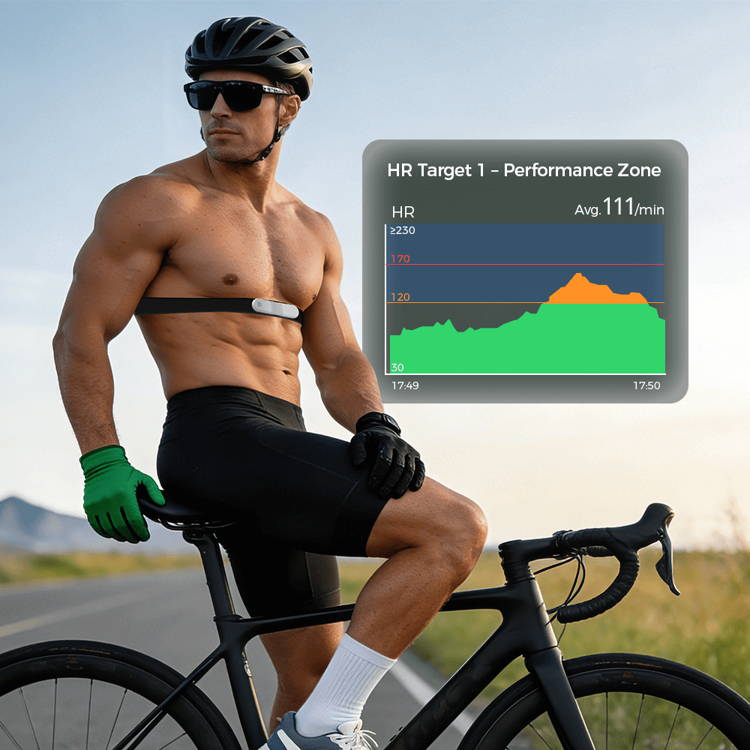
Heart rate reflects actual physiological strain better than any machine counter.
Target Zones
- Moderate intensity: 50% to 70% of max heart rate
- Vigorous intensity: 70% to 85% of max
- Max calorie burn zone: 77% to 93% of max
Formula: Max HR ≈ 220 − age
(A 30-year-old has a max of 190 bpm; moderate zone = 95 to 133 bpm)
Best Tools
- Chest straps: Most accurate
- Wrist-based HR: Good for trends, less precise
- Machine hand sensors: Often unreliable due to loose grip
Rating of Perceived Exertion (RPE)
Use the Borg Scale (6 to 20) to self-assess effort:
- 6 = No effort
- 12 to 14 = Moderate (you can talk)
- 15 to 16 = Hard (you cannot sing)
- 17 to 20 = Max effort
Quick Estimate: Multiply RPE by 10 for a rough heart rate. RPE 15 ≈ 150 bpm.
The Talk Test
A simple field test:
- Can you sing? You are below vigorous intensity.
- Can you speak only short phrases? You are in the calorie-burning zone.
- Gasping for air? You are near maximum effort.
Track Performance Trends
Instead of fixating on calories, monitor:
- Distance covered in 30 minutes
- Speed at the same perceived effort
- Recovery heart rate
- Weekly workout consistency
Progress = doing more with the same effort.
Psychological Risks of Inaccurate Counts
Trusting faulty numbers can backfire mentally and behaviorally.
The “Permission” Trap
Overestimated burn leads to overeating:
- “I burned 850 calories!” then eating a 900-calorie meal
- Result: weight loss stalls or reverses
Reality: You likely burned around 500 to 600 calories.
The “Punishment” Mindset
Seeing a low number after a hard workout triggers guilt, shame, or over-exercising:
- “Only 250 calories? I must do more.”
- Exercise becomes punishment instead of health support.
Shift Your Focus: Beyond Calories
Experts agree: stop using calorie counters as truth. Reframe your goals instead.
Exercise for Health, Not Just Burn
Prioritize:
- Heart health: Lower blood pressure, improve circulation
- Mood boost: Endorphins reduce stress and anxiety
- Consistency: 30 minutes most days beats one heroic session
- Enjoyment: Choose activities you like, because sustainability wins
Better Question: “Did I challenge myself?” rather than “How many calories did I burn?”
Frequently Asked Questions About Cardio Machine Calorie Counters
Which cardio machine has the most accurate calorie counter?
The stationary bike is the most accurate, overestimating by only about 7%. It benefits from power-based metrics and a seated position that limits wasted movement.
Which cardio machine overestimates calories the most?
The elliptical trainer is the least accurate, overestimating by 20% to 42%. Its artificial motion and arm levers inflate heart rate without proportional calorie burn.
Are wrist fitness trackers more accurate than gym machines?
Not necessarily. Wearables can be off by 13% to 93% depending on the activity. They work well for walking but struggle with running, HIIT, and complex movements.
How much do handrails affect treadmill calorie counts?
Holding rails reduces real calorie burn by 20% with a light touch and up to 40% when leaning or pulling hard. The machine still credits you for full effort.
Do stair climbers include resting calories in their count?
Yes. Many stair climbers report gross energy expenditure, which includes your Resting Metabolic Rate. A display showing 400 calories may only represent 320 calories of actual workout burn.
Should I eat back calories shown on cardio machines?
No. Because machines overestimate by 7% to 42%, eating back those numbers often leads to consuming more than you actually burned. Use heart rate or RPE to gauge true effort instead.
Key Takeaways for Understanding Cardio Machine Calorie Counters
Cardio machine calorie counters are convenient but flawed. They overestimate burn, ignore individual differences, and can encourage poor habits like compensatory eating. Stationary bikes come closest to accuracy at roughly 7% overestimation, while ellipticals can inflate numbers by up to 42%.
For lasting results, track progress, not just calories. Measure how you feel, how far you go, and how consistently you show up. That is the real path to health and fitness, no display required.