How to Do Cardio With a Sprained Ankle
You step off a curb wrong, land awkwardly during basketball, or twist your ankle on a trail run—and suddenly, every step hurts. The swelling starts, mobility drops, and your usual cardio routine feels impossible. But staying sidelined for weeks can mean lost endurance, muscle loss, and frustrating weight gain. The good news? You can absolutely keep your heart healthy and calories burning while your ankle recovers.
A sprained ankle typically takes two to twelve weeks to heal, depending on severity. During that window, the right cardio choices can maintain circulation, preserve muscle, and even boost your mood through endorphin release. This guide breaks down exactly how to do cardio with a sprained ankle using safe, non-weight-bearing methods—from swimming and stationary cycling to seated HIIT circuits—so you come back stronger.
Start with Non-Weight-Bearing Cardio Options

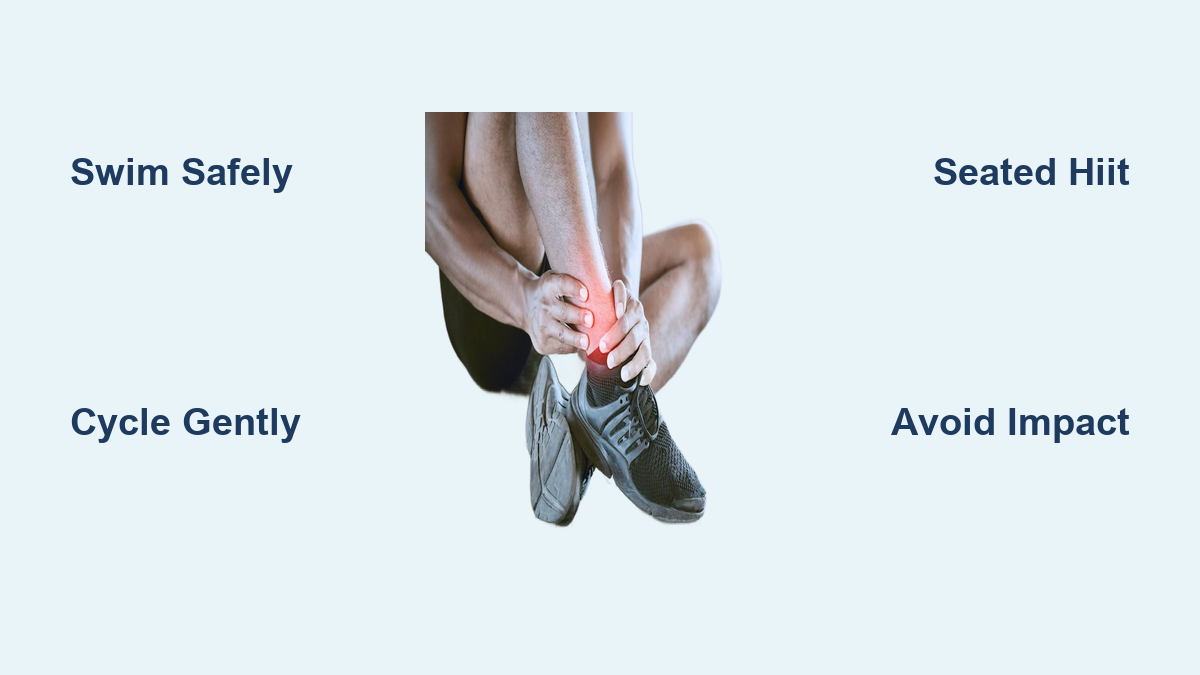
The golden rule for cardio during ankle recovery is avoiding impact and weight-bearing stress. Your ligaments need time to repair, and any twisting or heel-striking motion can re-tear healing tissue. Focus instead on activities where your body weight is supported or completely removed.
Swim for Full-Body Conditioning
Swimming ranks among the most effective cardio options when you have a sprained ankle. Water buoyancy eliminates nearly all pressure on the joint, letting you move freely without pain.
- Lap swimming elevates your heart rate and builds endurance. Freestyle and backstroke work well, especially if you minimize leg kick intensity.
- Water walking in chest-deep water provides natural resistance without impact. Walk forward, backward, and side-to-side to engage different muscle groups.
- Precaution: Avoid swimming if you have an open wound, cast, or surgical site. Always get medical clearance before entering the pool.
Pro Tip: Gentle water movement boosts circulation, reduces swelling, and maintains range of motion—three critical factors in early recovery.
Cycle Safely on a Stationary Bike
Stationary cycling delivers cardio benefits with minimal joint stress. It keeps your legs moving while controlling the range of motion in your ankle.
- Use a recumbent or upright stationary bike rather than outdoor cycling on uneven terrain.
- Keep resistance low to moderate and avoid standing on the pedals.
- If you wear a walking boot, make sure it does not catch on the pedal mechanism. Some users pedal comfortably with a cast, but pain is your stop signal.
Note: Cycling still applies mild rotational stress to the ankle. Check with your doctor before starting, especially with Grade 2 or 3 sprains.
Try Rowing or Kayaking for Upper Body Focus
Rowing—whether on a machine or in a kayak—shifts the cardio workload to your upper body and core, keeping your legs stable and inactive.
- Rowing machine: Secure your uninjured foot in the strap and keep the injured leg relaxed. If strapping causes discomfort, pad the area or skip this modality.
- Kayaking: Naturally immobilizes the legs while engaging arms, shoulders, and torso. It is a great option for outdoor motivation.
Both deliver a strong cardiovascular workout with zero ankle impact, making them ideal mid-recovery choices.
Use Seated Cardio When You Are Immobilized
If you are in a cast, walking boot, or on crutches, seated cardio becomes your best friend. These routines use your arms, core, and breathing to spike your heart rate without any standing or leg power.
Set Up Your Space for Success
- Sit on a sturdy chair with your spine straight and knees at a 90-degree angle.
- Keep shoulders relaxed and your core engaged.
- Use a pillow under your seat if needed to maintain proper alignment.
- Elevate and support your injured foot.
This posture protects your back and maximizes upper-body efficiency.
Follow the 30-Second Seated HIIT Circuit
This high-intensity interval training protocol delivers maximum cardio benefit in minimal time. Perform each exercise for 30 seconds, rest for 30 seconds, and repeat for 4 to 8 rounds.
Do Seated Light Jacks
- Sit tall and rapidly raise both arms overhead, mimicking a jumping jack motion.
- Keep your feet together and do not move the injured ankle.
- Focus on speed and arm elevation to boost your heart rate.
- Progress: Add 1 to 3 pound dumbbells once you are pain-free.
Punch Like a Boxer
- Alternate rapid punches forward, twisting your torso slightly with each strike.
- Engage your obliques and breathe steadily—never hold your breath.
- Aim for shoulder height or higher to activate more muscle.
- Caution: Avoid this exercise if you have high blood pressure or neck issues.
Add Side-to-Side Crunches
- Place your hands behind your head with elbows wide. Twist your torso side to side, engaging your obliques.
- Keep movements slow and controlled.
- Stop if you feel strain on the injured side.
Completing 3 to 4 rounds can burn 150 to 200 calories in about 20 minutes.
Cool Down Properly After Each Session
- Perform slow side crunches for 30 seconds.
- Practice deep breathing: inhale for 4 counts, exhale for 6.
- Stretch your shoulders, neck, and upper back gently.
This gradual cooldown prevents dizziness and helps your heart rate return to baseline.
Turn Strength Training into Cardio

You can transform upper-body strength work into a cardio session by using circuit or Tabata formats. The key is minimal rest and continuous movement.
Build a Seated or Supine Circuit
Perform these exercises back-to-back with 30 seconds of rest between rounds. Aim for 3 to 4 total rounds.
Upper Body Moves
- Seated dumbbell press: 12 reps
- Bicep curls: 12 reps
- Tricep dips using a bench: 10 to 15 reps
- Lat pulldowns with a band or machine: 12 reps
Keep intensity moderate and focus on time under tension rather than heavy weights.
Use Tabata for Core Cardio
Core exercises are often performed lying down, making them perfect for ankle recovery. Try this 4-minute Tabata with 20 seconds of work and 10 seconds of rest.
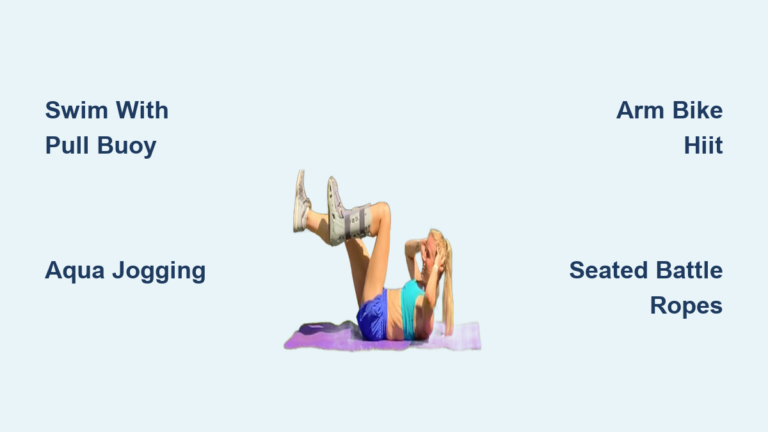
- Dead bugs – Control limb movement and keep your injured leg still or supported.
- Hollow holds – Engage your entire core for 20 seconds.
- Modified bicycle crunches – Rotate your torso and minimize leg motion on the injured side.
- Leg lifts – Only if pain-free, and keep the movement slow.
This protocol spikes your heart rate while building core stability, which helps prevent future injuries.
Rehab Your Ankle While You Train

Cardio should complement your rehab, not replace it. As swelling decreases, integrate gentle mobility and strength work into your routine.
Start Ankle Alphabet Exercises
Once pain allows:
– Sit with your leg extended.
– Trace the alphabet from A to Z in the air using your big toe.
– This improves range of motion without strain.
Do 1 to 2 sets daily, especially during early recovery.
Add Resistance Band Work
Use a light resistance band for these movements:
– Dorsiflexion (pull your foot toward you)
– Plantarflexion (point your foot away)
– Inversion and eversion (move your foot side to side)
Perform 2 sets of 15 reps each. These build stability and help prevent chronic ankle issues.
Practice Balance Drills in Later Stages
Once your doctor clears you:
– Stand on your healthy leg for 30 seconds.
– Progress to closing your eyes or using uneven surfaces.
– This improves proprioception, or your body’s ability to sense joint position.
Avoid These Dangerous Cardio Moves
Some activities seem harmless but can seriously worsen your sprain or delay healing.
Never Run or Jump
- Heel striking generates 3 to 4 times your body weight in force.
- Even light jogging can re-tear healing ligaments.
- The “no pain, no gain” mindset does not apply here.
Skip High-Impact Aerobics
Avoid the following:
– Jumping jacks
– Burpees
– Plyometric drills
– Dance cardio with rapid directional changes
These place unpredictable stress on the ankle joint.
Do Not Attempt Planks Early
Planks require weight on your feet, which can compress the injured ankle. Delay them until the late recovery phase, or modify by resting on your knees with your foot elevated.
Follow a Recovery-Phase Cardio Plan
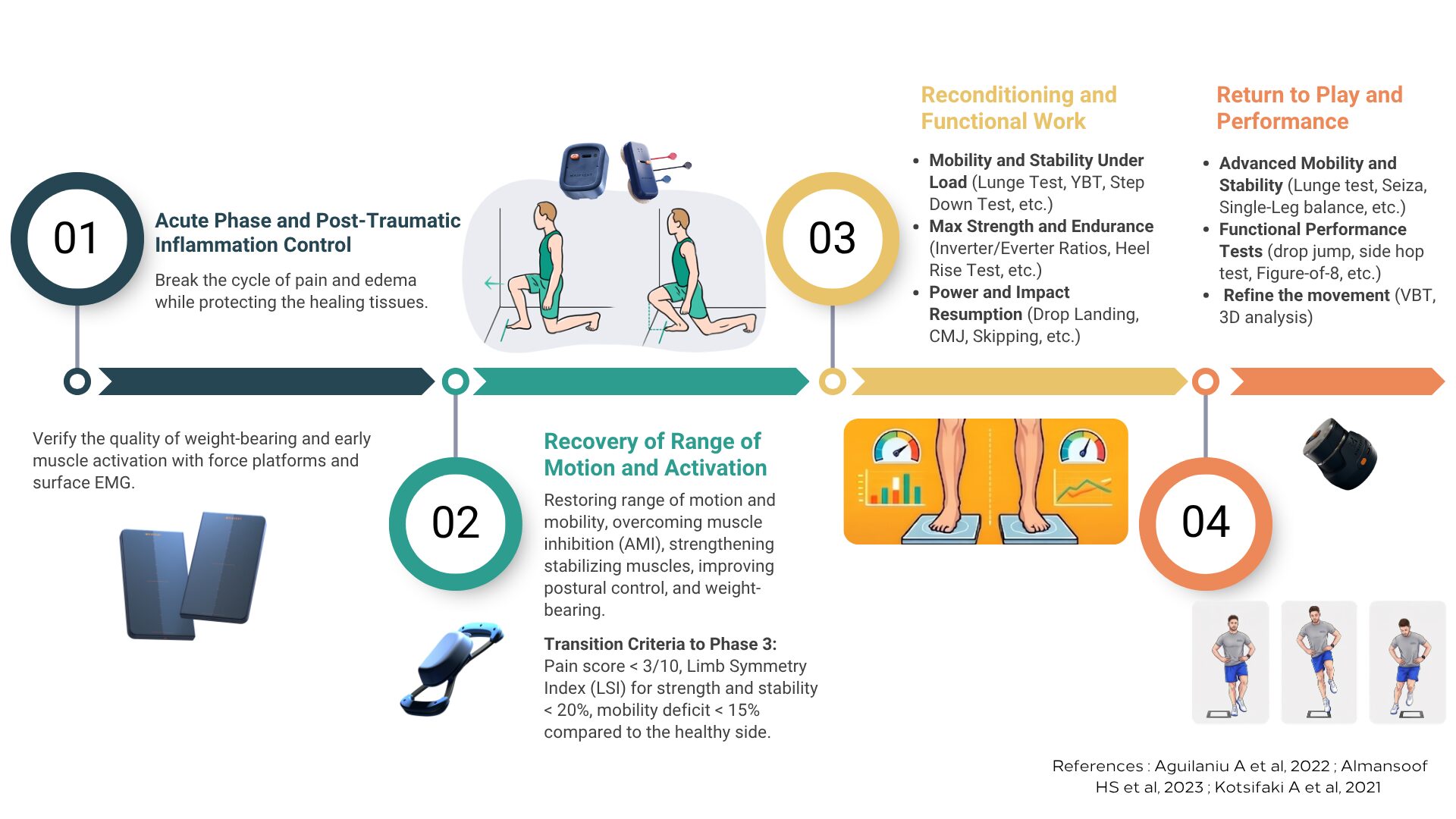
Your ability to do cardio depends on how far along you are in healing. Use this phased approach to stay safe and effective.
Phase 1: Acute (Days 1 to 7)
- Goal: Reduce swelling using the RICE protocol (Rest, Ice, Compression, Elevation)
- Cardio: None or seated breathing exercises only
- Focus: Medical evaluation and immobilization
Phase 2: Early Recovery (Weeks 1 to 4)
- Goal: Prevent deconditioning
- Cardio Options:
- Seated HIIT circuit (light jacks and punches)
- Supine core work (dead bugs and hollow holds)
- Swimming if cleared by your doctor
- Avoid: Cycling if it causes pain
Phase 3: Mid-Recovery (Weeks 4 to 8)
- Goal: Restore mobility and endurance
- Cardio Options:
- Stationary cycling at low resistance
- Water walking
- Elliptical only if there is no ankle pain
- Add: Ankle alphabet and resistance band exercises
Phase 4: Late Recovery (Weeks 8 to 12+)
- Goal: Return to full activity
- Cardio Options:
- Increased cycling or rowing intensity
- Gradual jogging with doctor approval
- Light plyometrics such as box jumps
- Focus: Balance, agility, and sport-specific drills
Prevent Future Ankle Injuries

Once you heal, take steps to avoid re-injury. Chronic ankle instability is common when preventive habits are ignored.
Wear Supportive Footwear
Choose shoes with these features:
– Firm heel counters
– Good arch support
– Stability features rather than just cushioning
– Activity-specific design for running, court sports, or hiking
Warm Up Before Every Workout
Include the following:
– 5 to 10 minutes of light cardio such as arm circles or marching in place
– Dynamic stretches like leg swings and ankle circles
– Activation drills including heel and toe raises
This prepares your muscles and nerves for movement.
Do Daily Ankle Maintenance
Even after full recovery:
– Perform ankle pumps and toe taps daily, especially if you sit at a desk
– Do balance exercises 2 to 3 times per week
– Strength train your calves and stabilizers weekly
These habits reduce fall risk and maintain long-term joint health.
Frequently Asked Questions About Cardio with a Sprained Ankle
Can I do cardio with a Grade 2 ankle sprain?
Yes, but you need to choose non-weight-bearing activities like swimming, seated HIIT, or upper-body circuits. Avoid any movement that causes pain, and get medical clearance before starting.
Is stationary cycling safe for a sprained ankle?
Stationary cycling is generally safe because it keeps your foot in a fixed position with minimal lateral movement. Keep resistance low, avoid standing on the pedals, and stop immediately if you feel pain. Consult your doctor first if you have a moderate or severe sprain.
How soon can I return to running after a sprain?
Most people can begin gradual jogging around weeks 8 to 12, depending on severity. You should be pain-free, have full range of motion, and get clearance from your doctor or physical therapist before attempting any running.
Does working out one leg help the injured leg?
Yes. Research shows that training your healthy limb can produce strength gains in the injured limb through a phenomenon called cross-education. This neural stimulation helps preserve muscle during recovery.
Should I use an elliptical trainer with a sprained ankle?
The elliptical can work during mid to late recovery, but caution is needed. If the machine requires significant push-off force from your toes or ankle, it may aggravate your sprain. Start with low resistance and stop if you feel any discomfort.
How many calories can I burn with seated cardio?
A 20-minute seated HIIT circuit can burn approximately 150 to 200 calories, depending on your intensity and body weight. While this is less than running, it is enough to maintain metabolic health during recovery.
Key Takeaways for Staying Fit During Ankle Recovery
A sprained ankle does not have to derail your cardiovascular fitness. By choosing non-weight-bearing cardio like swimming, stationary cycling, seated HIIT, and upper-body circuits, you can maintain heart health, burn calories, and even build strength in other areas. Always listen to your body, get medical clearance before starting, and progress gradually through each recovery phase. With the right strategy, you will come out of recovery stronger, smarter, and more resilient than before. Your next step: pick one safe cardio option from this guide and try it today.